HYT Fluidic Watchmaking: Lucien Vouillamoz on the Future of HYT

HYT: When Time Learns to Flow

An exclusive EyesOnTime conversation with HYT’s co-founder on risk, fluidic innovation, the future of independent watchmaking and why mechanical timekeeping is becoming an art of expression.

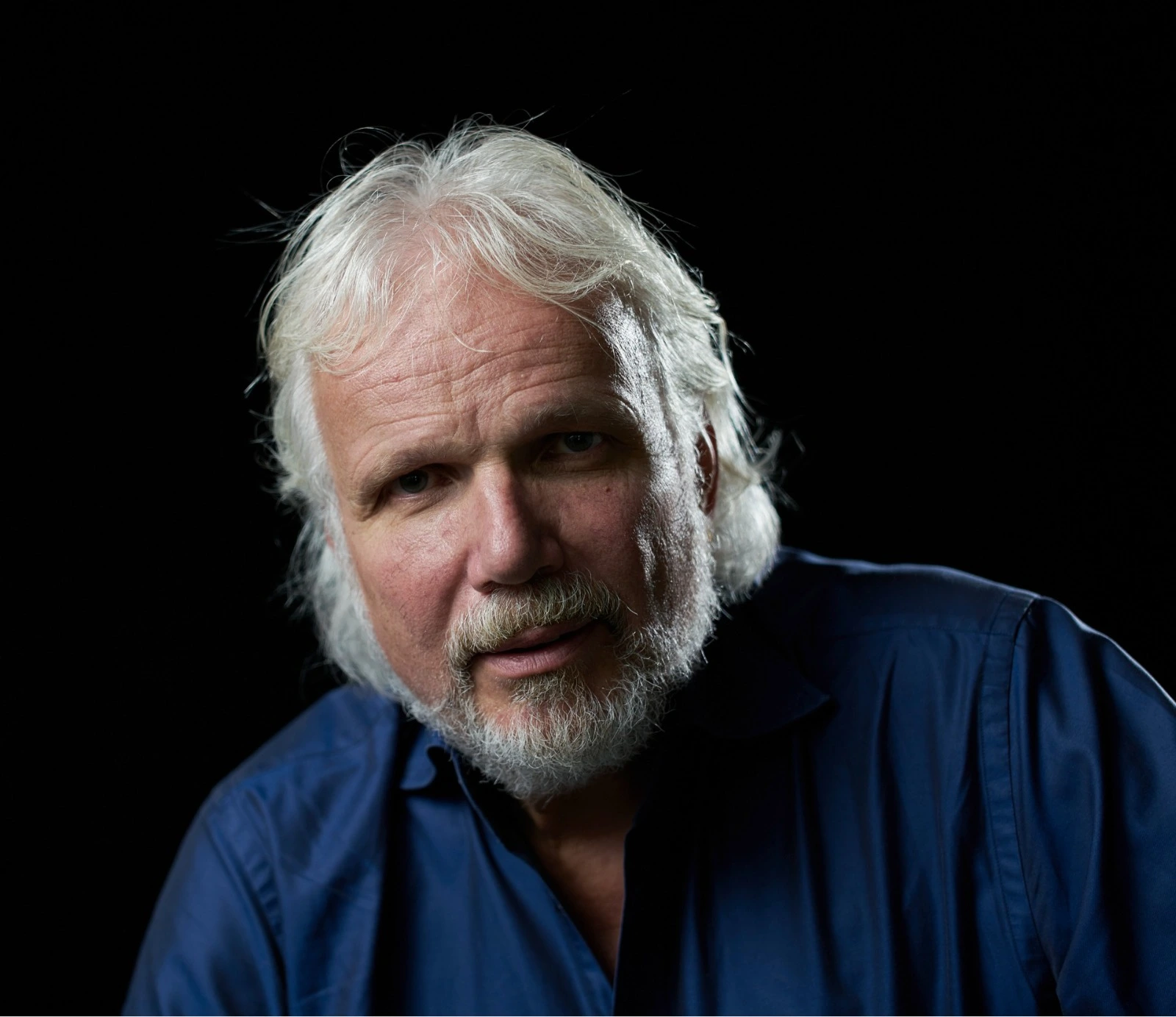
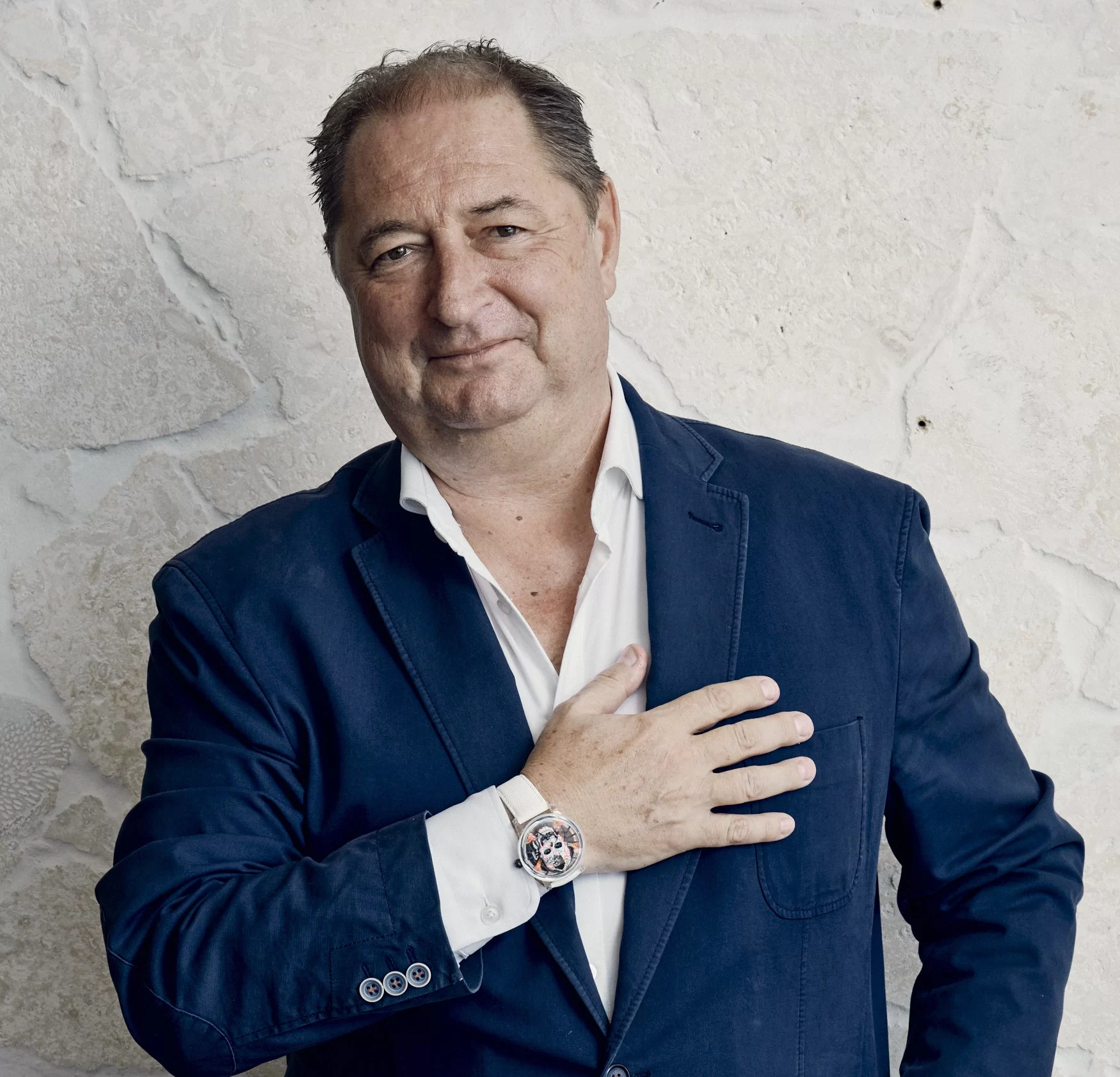
Lucien Vouillamoz — engineer, inventor, entrepreneur, philanthropist

Lucien Vouillamoz is a Swiss engineer, inventor, entrepreneur, and philanthropist.

He is best known as the original creator of the mecano-fluidic technology behind HYT watches—a world-first innovation that united fine watchmaking with the poetry of fluids, redefining the boundaries of timekeeping.

He has also significantly invested in Kairos Technologies Switzerland (KTS), the company that revived the HYT brand. While not a member of its Board of Directors, this commitment reflects his strong belief in HYT as the proud standard-bearer of fluidic watchmaking—the modern heir to the ancient clepsydra, which measured time through water more than 3,500 years ago.

Beyond HYT, Vouillamoz has co-founded and supported several ventures at the crossroads of Swiss precision and innovation, yet his true passion remains the art of horology and the dialogue between mechanics, fluids, and time.

Living in Feusisberg, Switzerland, he is married, with four children and ten grandchildren. A passionate sailor, he spends several weeks each year exploring the seas of the world. Committed to giving back, he founded Ganydar.org, a philanthropic initiative supporting education for young people in Latin America.

At the intersection of invention, heritage, and vision, Lucien Vouillamoz embodies both the spirit of Swiss innovation and the timeless pursuit of horological excellence.

What happens when you put liquid inside a mechanical watch?

For HYT’s co-founder, the answer is wonderfully dramatic: “bringing the devil into the machine.”

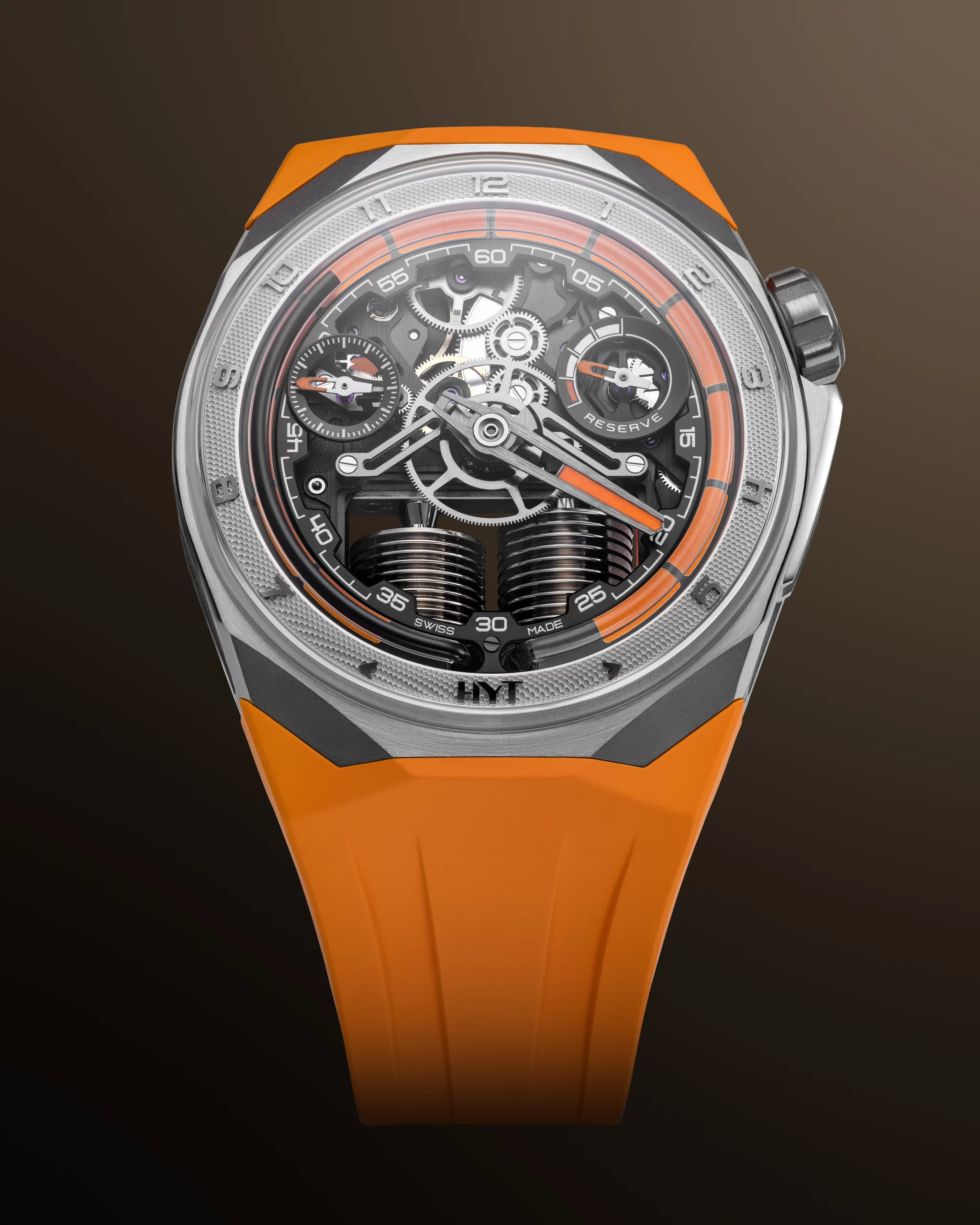
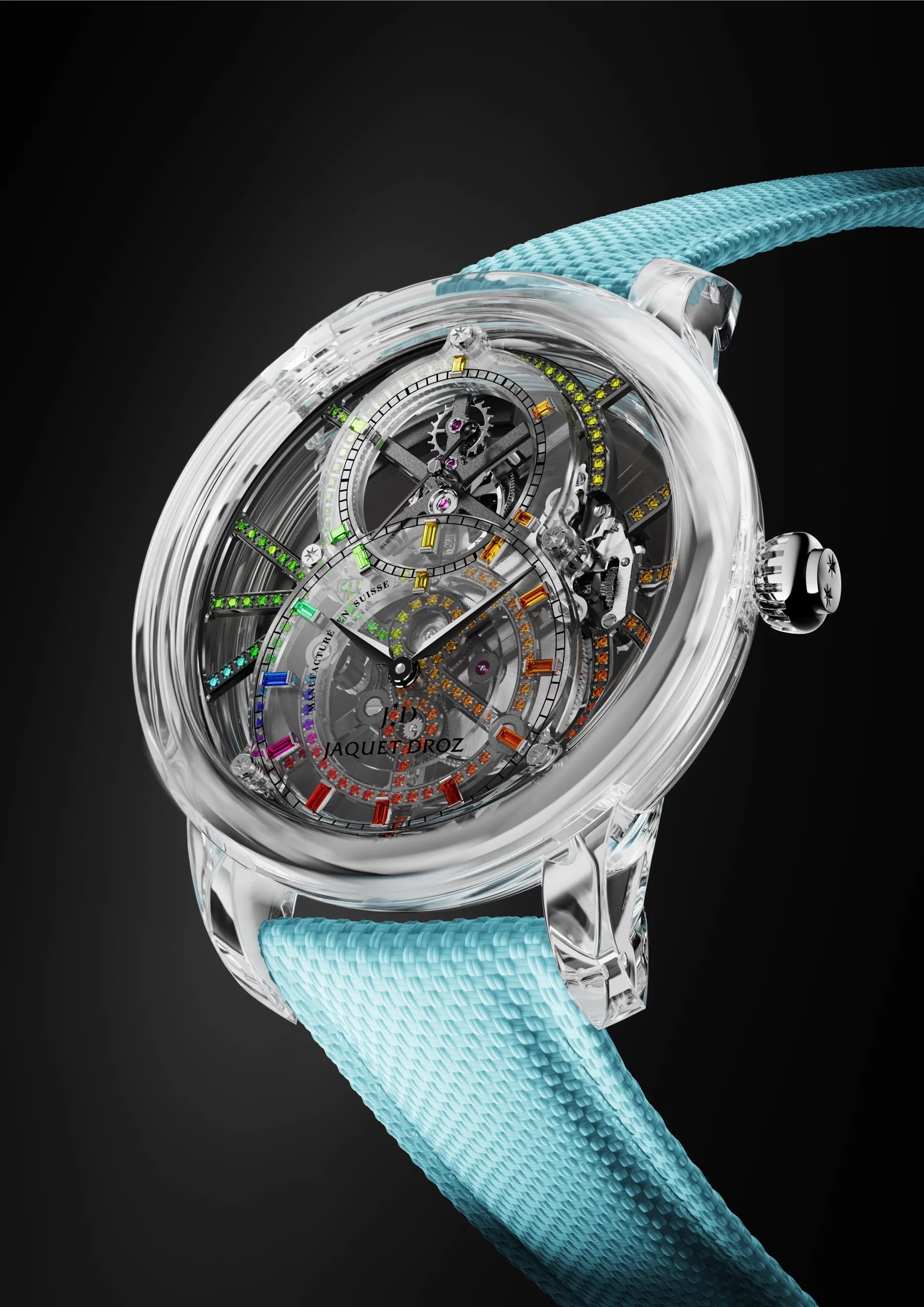
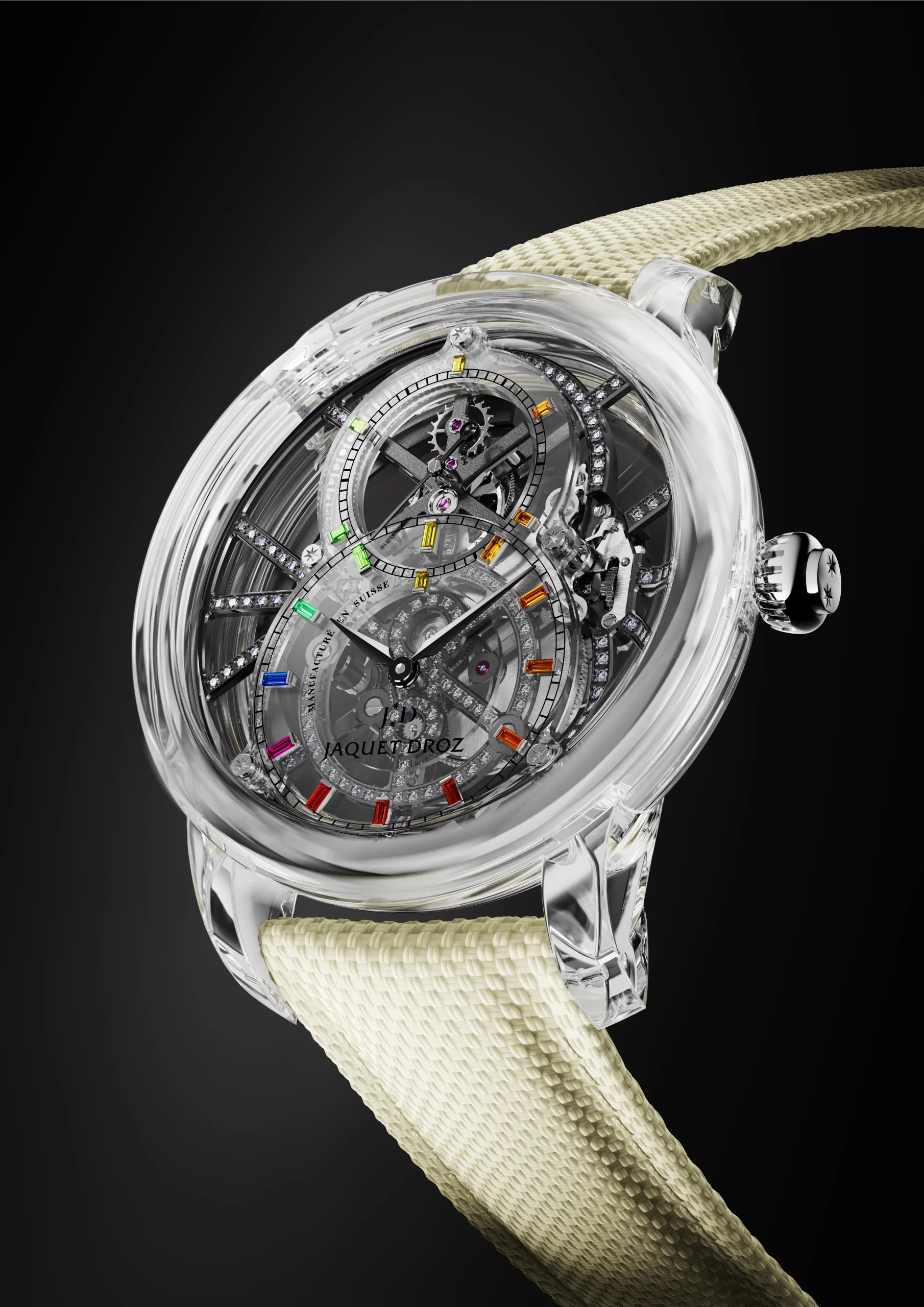
It is also an accurate description of the technological challenge that has defined HYT from the beginning. A mechanical wristwatch is expected to be watertight, precise and reliable. HYT chose to introduce liquid into that equation and, more radically, make the movement of that liquid the means of displaying time.

The idea sounds simple when reduced to a sentence.

Making it work was anything but.

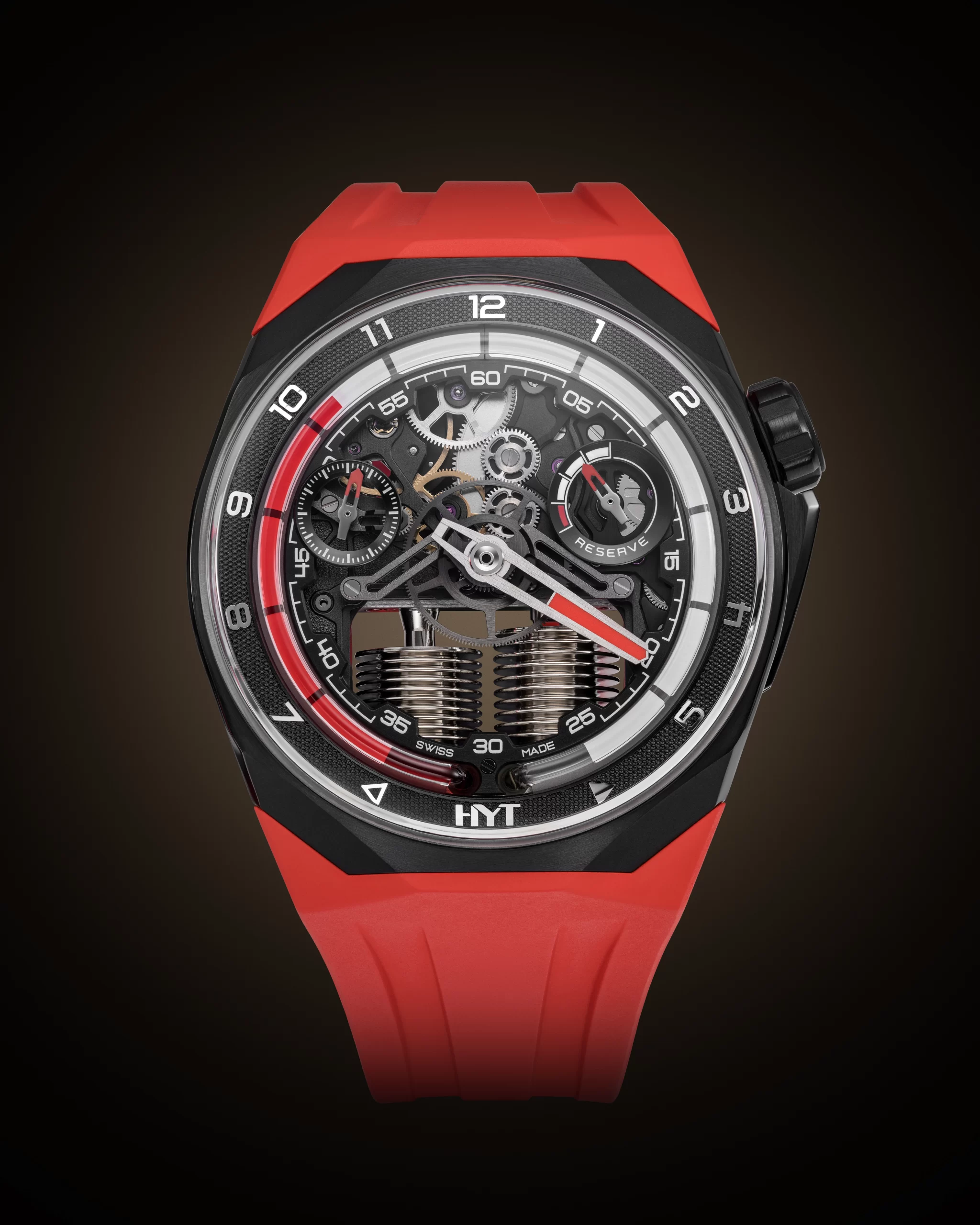
The development required flexible, watertight bellows derived from aerospace technology, precision-formed borosilicate glass, specialised surface treatments to control the interaction between different liquids and glass, and an interface capable of transferring mechanical energy into fluidic motion using very little energy.

HYT was not merely designing a new watch display. It was creating technologies to make that display possible.

And even after the first watches reached the market, the story was far from finished. The company developed the fluidic mechanism as a replaceable module, allowing early owners to have it upgraded as the technology evolved. According to the interview, approximately eight years were required to resolve the fluidic, mechanical and synchronisation challenges.

Today, that history gives HYT an unusual perspective on innovation. The brand has already taken the risk of doing something that traditional watchmaking had never done before. The question now is what happens when that disruptive technology has been mastered.

In this exclusive conversation with EyesOnTime, HYT’s co-founder discusses the risks behind the brand, what a future without liquid might look like, the misconceptions surrounding hydromechanical watchmaking, the company’s turbulent leadership history, the balance between chaos and engineering discipline, and the surprising applications of HYT’s fluidic technology beyond watches.

Because HYT has already done the seemingly impossible once.

The more interesting question now is: what will it do with time next? 

“Many independent brands innovate, but HYT disrupts”

EyesOnTime: Many independent brands innovate, but HYT disrupts. How do you decide which risks are worth taking in a category that already sees you as the outlier?

HYT: It was a very big risk.

To integrate or put liquid inside a wristwatch, which is supposed to be watertight, is, technologically speaking, bringing the devil into the machine.

When we launched HYT, practically none of the technologies we needed existed in the form required for a high-end wristwatch.

Take the bellows, for example. These reservoirs use technology from the space industry. They have to be watertight but extremely flexible because the watch does not have a lot of available energy.

And then there is aesthetics.

The military industry does not necessarily need these bellows to be beautiful. In a high-end wristwatch, they have to be aesthetically pleasing as well. You have to combine functionality, physical difficulties and aesthetics.

There were many other challenges.

HYT uses different liquids, and we had to compensate for their expansion and contraction with temperature. The capillary is made of borosilicate glass, and nobody before us had formed that glass with the precision required by Swiss watchmaking. We had to develop a machine specifically for it.

Even the interaction between the liquids and the glass created a problem. One liquid behaves more like oil and the other more like water, so we needed a special surface treatment inside the capillary to make both behave correctly.

Then there was energy.

Normally, you have enough energy in a mechanical movement to move a needle or a hand. Here, we had to move an entire system. We therefore had to develop an interface between the mechanical movement and the fluidic movement that could move a relatively important amount of liquid with very little energy.

That is what made HYT so risky.

The collectors who took the risk with HYT

There was another group taking a risk alongside the company: its earliest customers.

HYT knew that it was impossible to wait for perhaps ten years of development before putting the technology on the market. The real world had to become part of the development process.

The solution was to separate the mechanical movement from the fluidic system and make the fluidic module replaceable. Early owners could return their watches and have the module replaced as technological problems were resolved.

That meant HYT’s first collectors were not simply buying an unconventional watch.

They were trusting an unconventional technology.

According to the interview, around eight years were required to resolve the various challenges, including the fluidic system, mechanical components and synchronisation between the two. By 2017, the technological problems had been resolved to the point where the wearer could focus on the beauty, history and emotion of the watch rather than the technology itself.

For an independent watchmaker, that is an extraordinary way to build a collector relationship.

The customer did not merely witness the evolution.

The customer became part of it.

What happens if HYT removes the liquid?

EyesOnTime: The fluidic module is HYT’s signature. If you had to reinvent HYT without fluids, but with the same rebellious spirit, what would that vision look like?

HYT: That is exactly the body of the next ten years of HYT.

We are working on using some very unusual technologies to reinterpret the primordial ways humans have used to show time.

I cannot be too precise because we have to be a bit secret about that, but we have a plan for the next ten years with three major jumps.

The spirit will remain exactly the same: disruptive and technologically ambitious. One direction will continue with liquids, while another will explore something without liquids, but with exactly the same spirit.

There is another important lesson we have learned from being on the market.

We have to go smaller.

We are working on technologies that could fit into watches around 36 or 38 millimetres, ideally below 40 millimetres.

Smaller. Thinner.

We are also looking at lower entry prices, ideally from CHF 35,000.

That may be one of the most revealing answers in the interview.

HYT is not suggesting that its future lies in abandoning its identity and becoming conventional. Instead, the challenge is to translate its disruptive philosophy into smaller, thinner watches while exploring new technologies that may not require liquid at all.

The fluidic watch was the first chapter.

It may not be the last.

Is HYT misunderstood?

EyesOnTime: What’s a misconception the industry still has about hydromechanical watchmaking that you wish would disappear?

HYT: Perhaps part of the misconception comes from how we are taught to read watches.

When you are a child, you learn how to read a conventional watch. You learn what the position of the hands represents. It becomes an education.

Within the watch community, there is therefore a certain bias toward hands showing the time.

What has not really been done in high-end watches is the use of gauges.

Gauges are familiar from the automotive industry, but HYT brought that language into watchmaking. We did not only bring liquids. We brought a different way of showing time.

Perhaps that can create the impression that it is a gimmick.

But if you understand that HYT is reinterpreting a water clock on the wrist, the concept becomes different.

That historical connection is something HYT now wants to explore more deeply.

The brand discussed bringing together the history of monumental water clocks, educating people about them and creating events or smaller water clocks connected with HYT. The aim is to take people back to the real origins of water-based timekeeping: the clepsydra.

It is a clever distinction.

HYT is not simply asking people to understand a strange-looking watch.

It is asking them to reconsider something much older: how humanity has always tried to visualise the passage of time.

From complexity to poetry

That historical perspective also explains something fundamental about HYT.

The brand is not trying to compete with atomic clocks on precision.

The interview makes that point quite clearly. From sundials and water clocks to mechanical watches, quartz and atomic timekeeping, humanity has progressively developed more precise ways of measuring time. Today, nobody needs a mechanical watch simply to know the correct time.

Connected watches have taken the wrist in another direction altogether, turning it into a platform for information and personal utility.

So where does that leave the mechanical watch?

For HYT, it leaves room for art.

The interview describes the brand’s contribution as adding a new chapter of “poetry” to high-end horology.

Mechanical watchmaking itself is already a combination of different crafts and forms of artistic expression. HYT adds another axis by using fluidics to create a new visual representation of time.

The evolution of the brand can therefore be seen in two stages.

First, master the complexity.

Then, once the complexity is under control, return to the poetry.

That is where HYT says it finds itself now.
Can chaos and precision coexist?

EyesOnTime: How do you balance the instinct for wild creativity, colours, materials and architecture with the engineering team’s strict performance and reliability requirements?

HYT: The ground of creativity is chaos.

You cannot put an artist or creative person into an entirely structured environment. Creativity needs chaos.

But creativity is the opposite of productivity.

Chaos allows creativity. Structure allows productivity. The secret is therefore having the right people at the right moment in the process Some people create the disruption. Others structure it and make that disruption productive through quality, reliability and cost control.

The history of HYT illustrates exactly why that distinction matters.

When the company began, it could not find a single established industry capable of providing all the technologies it required. Microfluidics, glass forming and micromechanics existed as separate disciplines.

Some of the early technologies even had to come from outside Europe. The bellows were American, while an early coating technology was developed by a company in San Diego.

The coating alone illustrates the extent of the challenge.

One application reportedly cost a significant amount, during the early development phase. It was transparent and hidden inside the glass, but without it, the system could not function.

That is the less glamorous side of disruption.

The idea may be beautiful.

Making it reliable is expensive, difficult and sometimes painfully slow.

What will redefine independent watchmaking?

EyesOnTime: What’s something in HYT’s pipeline, whether technology, material or concept, that you believe will redefine what collectors expect from independent watchmaking in the next three years?

HYT: The company is working on three major technological jumps, including approaches that continue with liquids and others that explore ways of expressing time without them. At the same time, it is working toward smaller and thinner watches, with a target of ideally staying below 40 millimetres, alongside a lower potential entry point.

That restraint is telling.

In an industry where brands often tease future products with carefully calculated hints, HYT’s answer essentially says: the future is coming, but we are not going to tell you everything yet.

What it does reveal is the direction.

Smaller.

Thinner.

Technologically disruptive.

And potentially beyond liquid.

When a watchmaking invention leaves the watch

EyesOnTime: If you could collaborate with any non-watchmaking field, whether space technology, automotive, biotech or gaming, which sector feels most HYT, and why?

HYT: The immediate answer is liquid.

Liquid is life.

When HYT developed its technology, the original concept was about mastering the precise movement of liquid on living bodies. At microlitre precision, the same principles can have applications far beyond watches, including the controlled delivery of medical fluids.

That led naturally into medical technology.

The technology company associated with HYT’s intellectual property, Preciflex, has worked in parallel with the watch industry on medical applications. The interview also refers to PreciHealth and work involving diagnostics and blood analysis.

But the applications do not stop there.

The same thinking has found its way into the cigar industry, where precise control of liquids is important, and into deep geothermal energy, where fluidic systems are used in extracting heat from the Earth.

There is even a project addressing sea-level rise and plastic pollution through platforms on the high seas.

It is one of the most unexpected revelations of the conversation.

HYT’s fluidic technology may have begun as a watchmaking experiment, but the underlying expertise is not limited to watches.

The wristwatch was the proving ground.

The technology can travel much further.
Four CEOs, one idea

EyesOnTime: HYT has gone through a revival and leadership changes. What was the hardest cultural shift you had to introduce inside the company, and what was the most rewarding?

The answer takes the question in a slightly different direction.

Rather than describing one particular cultural shift, HYT’s co-founder reflects on the brand having gone through four different CEOs, each with a distinct personality and interpretation of the same fundamental idea.

Each CEO interpreted the same concept differently.

The underlying expression of time remained, while the creative interpretation changed.

That adaptability may be one of HYT’s greatest strengths.

The concept is strong enough to survive different personalities.

The people who believed before HYT was proven

The story also belongs to the collectors and retailers who were willing to take the risk.

The first customers purchased a completely new type of watch at considerable cost, knowing that the technology was still evolving. HYT remains deeply appreciative of those early owners.

Retailers were equally important.

The interview specifically mentions Laurent Picciotto as one of the early adopters who was willing to believe that HYT’s disruption was strong enough to persuade customers to embrace it.

It is an important reminder about independent watchmaking.

Disruption does not happen because an inventor has an idea.

It happens when enough people are willing to believe in that idea before the market has decided that it makes sense.

And HYT has always had a story that begins with the question of why a mechanical watch should look and behave the way it traditionally does.

When inspiration comes from outside watchmaking

That same philosophy can also be seen in HYT’s more unusual collaborations and limited editions.

The interview discusses an S1 cigar-inspired watch whose design translates elements of cigar culture into horological details.

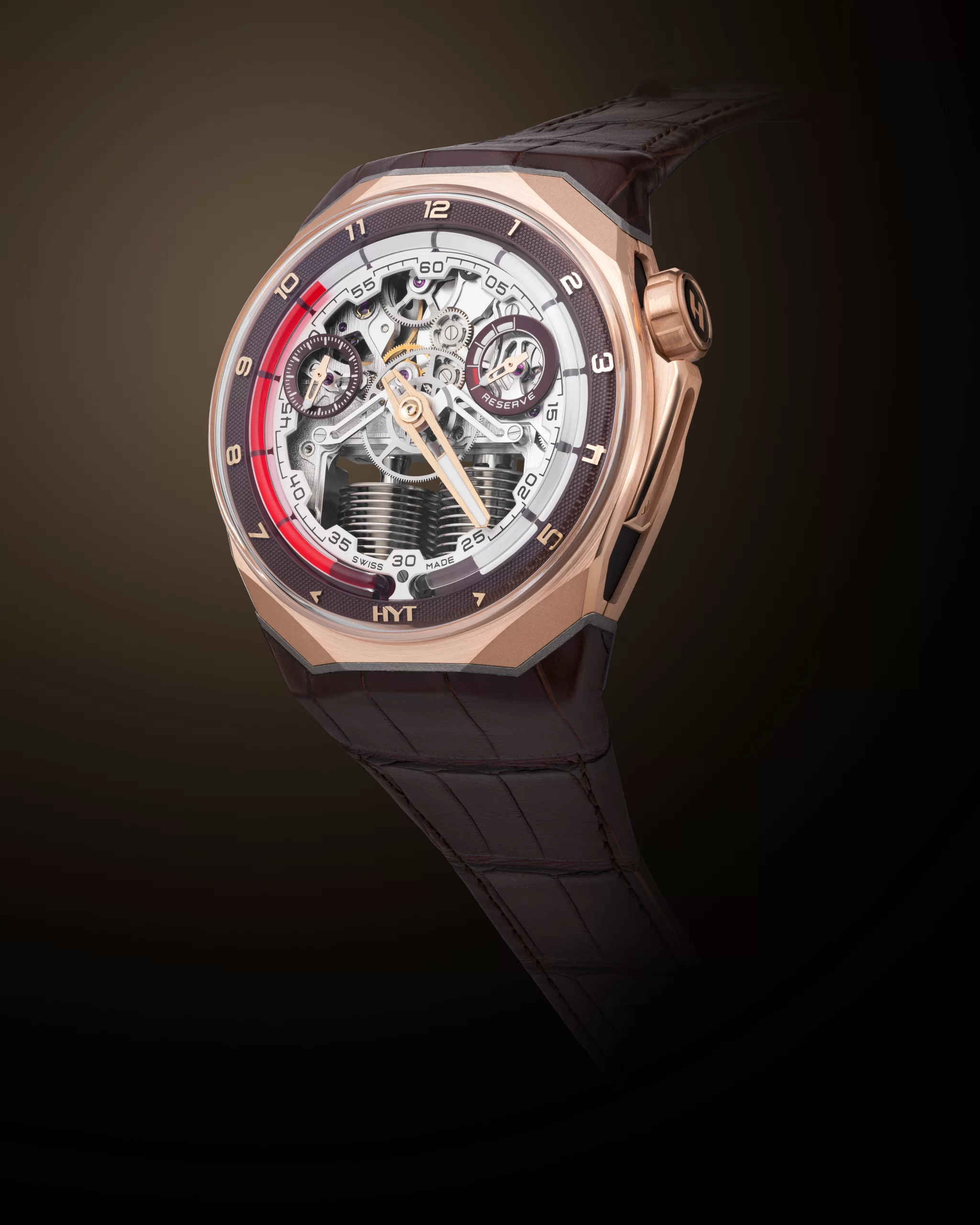
The brown alligator strap recalls cigar leaves. The rose-gold case references the rings associated with cigars, while the red fluid evokes the fire of a lit cigar. A Havana-chocolate dial and rose-gold indexes complete the visual connection.

The edition is limited to eight pieces worldwide.

Here again, the fluid is not merely functional.

It becomes part of the narrative.

That is perhaps the clearest demonstration of HYT’s evolution from complexity toward poetry.

What does the mechanical watch become in a digital world?

EyesOnTime: In a world shifting toward digital timekeeping, how do you ensure that HYT stays relevant while still being unapologetically analogue and mechanical?

The answer lies in rejecting the idea that a mechanical watch must compete with digital technology on digital technology’s terms.

Nobody needs a mechanical watch simply to know the time.

The modern world already has more precise and convenient solutions.

The value of the mechanical watch therefore moves elsewhere.

Into craftsmanship.

Into mechanics.

Into design.

Into the experience of watching something mechanical come alive on the wrist.

For HYT, that means adding another dimension to the artistic language of watchmaking.

The brand’s fluidic display takes one of humanity’s earliest methods of measuring time and places it inside an extraordinarily sophisticated mechanical object.

That is why the future of HYT will not be defined by liquid alone.

If the company’s philosophy is to reinterpret the primordial ways humans have represented time, then liquid is only one possible language.

The next could be something entirely different.

HYT’s story began with an audacious question:
What if time could flow?

Answering it required years of technological development, the creation of components and processes that did not previously exist for watchmaking, the patience of early collectors and the willingness of retailers to support an idea that was far from conventional.

The company has also endured leadership changes and bankruptcy, while continuing to refine the technology at the heart of its identity.

Now, however, the challenge is changing.

The technology has been mastered.

The next stage is about imagination.

HYT’s co-founder describes that transition particularly well: the early years were dominated by the complexity of making the system work. Now, having mastered that complexity, the brand can focus once again on poetry.

That may be the most important thing to understand about HYT.

The liquid is not the destination.

It is a language.

And if HYT’s next decade delivers what this conversation hints at, the brand may eventually prove that its greatest innovation was never simply putting liquid inside a watch.

It was convincing us that there is no single correct way to show time.


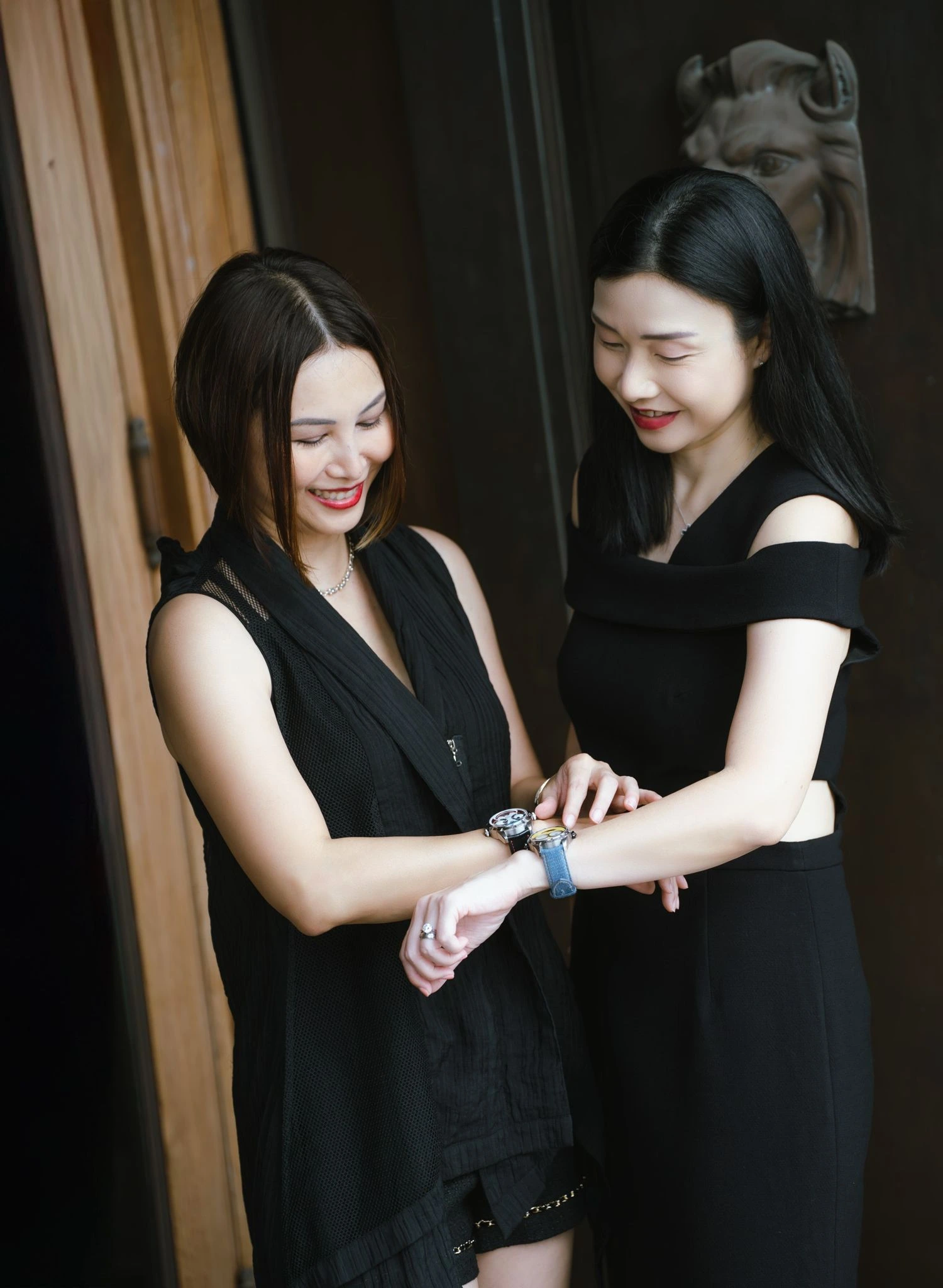
TickTockBelles Deborah Wong & Stephanie Soh on Women in Watch Collecting

Setting the Scene

For decades, the world of watch collecting has been defined by legacy, lineage, and a certain unspoken exclusivity. TickTockBelles doesn’t attempt to disrupt that narrative—it simply rewrites it with quiet precision. Founded by Deborah Wong and Stephanie Soh, the platform brings a new kind of authority to horology—one that feels instinctive rather than inherited, personal rather than performative.

What Deborah and Stephanie have built isn’t about claiming space—it’s about redefining it. Their approach to watch collecting feels intimate, self-assured, and deeply considered, where every piece carries a story and every conversation invites more voices in. In an industry that has often spoken at women, TickTockBelles speaks with them—cultivating a community that is as discerning as it is inclusive.

We spoke to Deborah Wong and Stephanie Soh about what sparked TickTockBelles, the subtle biases still shaping the industry, and what needs to change for the next generation of collectors.

What triggered the creation of TickTockBelles—was it a gap you saw, or a barrier you experienced?

The founding of TickTockBelles in 2022 was triggered by a combination of a gap in the market for a female centric watch community and barrier in the industry for gender inclusivity.

The Gap (Lack of a female centric watch community): As frequent recipients of questions from other women looking for timepieces guidance, we identified a need for a female-focused platform to support interest in watch collecting.

The Barrier (Lack of advocates for gender inclusivity): Depending on the market, we observed that the luxury watch space was historically imbalance in gender inclusivity. Female watch enthusiasts may be perceived as uninterested in mechanical complications or craftsmanship. Sales personnel frequently focus on promoting trends or jewel watches to female clientele, rather than the technical appreciation of the timepiece, which created a less than conducive retail experience for serious women collectors.

In one sentence: what does TickTockBelles stand for that the watch industry currently doesn’t?

TickTockBelles stands for a dedicated, safe, and inclusive community that fosters genuine horological passion among women without the ego, hype, or gender bias often found in the traditionally male-dominated watch industry.

What’s the most subtle form of bias women face in watch collecting today?

The Most Subtle Form of Bias: “Dismissive Retail Experiences”

Mansplaining and Underestimation: The most subtle, yet pervasive, bias is the assumptions that female collectors lack technical knowledge, leading to “mansplaining” about watch complications.

Superficial Targeting: Brands and sales personnel frequently focus on selling to women based on aesthetics—like the number of diamonds or current trends—rather than engaging them in the technical, mechanical, or heritage-worthy aspects of a timepiece.

The “Secondary” Customer: There is a lingering, subtle assumption in many retail environments that women are browsing for gifts or luxury accessories, rather than serious, self-purchasing collectors.

What’s one myth about women collectors that you actively push back against?

“Women Only Buy Smaller, Quartz Watches for Fashion”

The Myth: It is commonly believed that women prefer, or should only wear, small, quartz-powered, or highly embellished “ladies’ watches,” and that these watches are worth less than men’s watches.

The Reality/Pushback: Women are increasingly aware about what type of watches suit their lifestyles and personalities. They are fast developing keen interests in the in mechanical aspects of the timepieces. There is also budding trends of women appreciating independent watchmaking.

No Gender for Horology: We advocate that watches should not bear gender label which commonly give rise to the notion of “male” watch is better than a “female” watch. The appreciation should lie in the movement, design, and history etc.

The “Small is the New Big” Trend: We embrace a trend where “tiny is the new big” while also appreciating larger, historically male-targeted timepieces.

Have you ever changed someone’s perception of women in horology through this platform? Tell us that moment.

Over the last 3 plus years, we were frequently been invited by watch brands, independent watchmakers and microbrands to host female centric get-togethers. This is a prominent shift and a testament that the industry recognises women possesse independent spending capabilities and decision making when it comes to watch acquisitions.

We are most flattered when male collectors feedback that they often recommended their female friends and family to be a part of TickTockBelles community should they are keen to learn more about watch appreciation.

In recent times, we also have male collectors enquiring if they could join our community activities and get-togethers. We are humbled that our advocy has brought about perception shift to more masses and not just confined to a single individual.

What kind of watch conversations excite you the most right now—design, mechanics, or cultural storytelling?

The conversations that excite us most right now are those surrounding cultural storytelling and the broader emotional connection women have with watches. While we appreciate design and mechanics, our primary focus is on shifting the narrative within the watch industry. We are particularly energized by:

Breaking Gender Barriers: We are passionate about inclusivity and to encourage women to pursue watch collecting as a serious hobby and passion.

Community and Connection: We find great excitement in meeting fellow female enthusiasts globally and building a safe space where women can discuss watches at the most basic level. Conversations on how to build authentic engagement and culture within watch community is critical.

Legacy and Personal Narratives: Conversations often center on watches as heirlooms and the “legacy planning” aspect of collecting, where a timepiece’s value is tied to the personal stories it will carry for the next generation.

Which brand or move in the industry recently made you think, “okay, this is progress”?

A move that signals true progress in the watch industry is when brands move beyond gender stereotypes — such as simply adding diamonds or reducing watch case sizes — and instead focus on authentic inclusion and mechanical substance for women. Some key examples and perspectives on progress include:

Gender-Inclusive Marketing: When retailers and brands host female-centric activities, encouraging women to explore watches for their mechanical and artistic value rather than just as accessories.

Mechanical Substance over Aesthetics: When heritage brands invest in both movement and aesthetics for women’s watches, rather than defaulting to quartz movements for the female segment with the excuses that they fit better in smaller watches.

Collaborations and Independent Brands: Our collaboration with the microbrand Awake Concept on the “Cotton Candy” watch—a piece with a hand-mixed lacquer dial that attracted both female and male collectors—represents a move toward gender-neutral appreciation and artistic innovation.

Brands to Watch: Parmigiani Fleurier

What’s one trend in watch culture you think is overrated — or even harmful?

There are two such prominent trends currently – Chasing the hype, and watch as investments which could lead to potential pitfalls:
Financial Loss: Purchasing a watch simply because it is popular especially if they are acquired at premium in secondary markets. If the market shifts South, there may be financial losses.

“Expensive Regret”: If you no longer like the timepiece once the hype dies down, the purchase becomes a regret.

Lack of Personal Affinity: We believe in collecting based on a genuine emotional connection and personal style rather than market trends.

If you had the power to influence one real change across watch brands globally, what would it be?

The one real change we would like to continue to influence is for watch brands to move past the “shrink it and pink it” mentality. Some integrated shifts in how global brands operate could include de-gendering watches, technical inclusion, incorporate form and function as part of brand conversation.

When a young woman discovers watches today, what do you hope her first experience feels like?

We hope for the experience to be inclusive and a discovery of self-expression. TickTockBelles community friends are always eager to help each other to find a timepiece that we have a genuine affinity for. Something that speaks to our hearts, a reminder of a personal story or even to commemorate a milestone in life. We hope she feels empowered to choose unconventional shapes, vintage pieces, or even “men’s” sports models based on what fits her lifestyle and future as a potential heirloom.

The Shift Ahead

If the future of horology is about perspective, not prescription, TickTockBelles is already shaping it. Deborah Wong and Stephanie Soh aren’t just expanding the conversation—they’re making it more thoughtful, more open, and ultimately, more real.


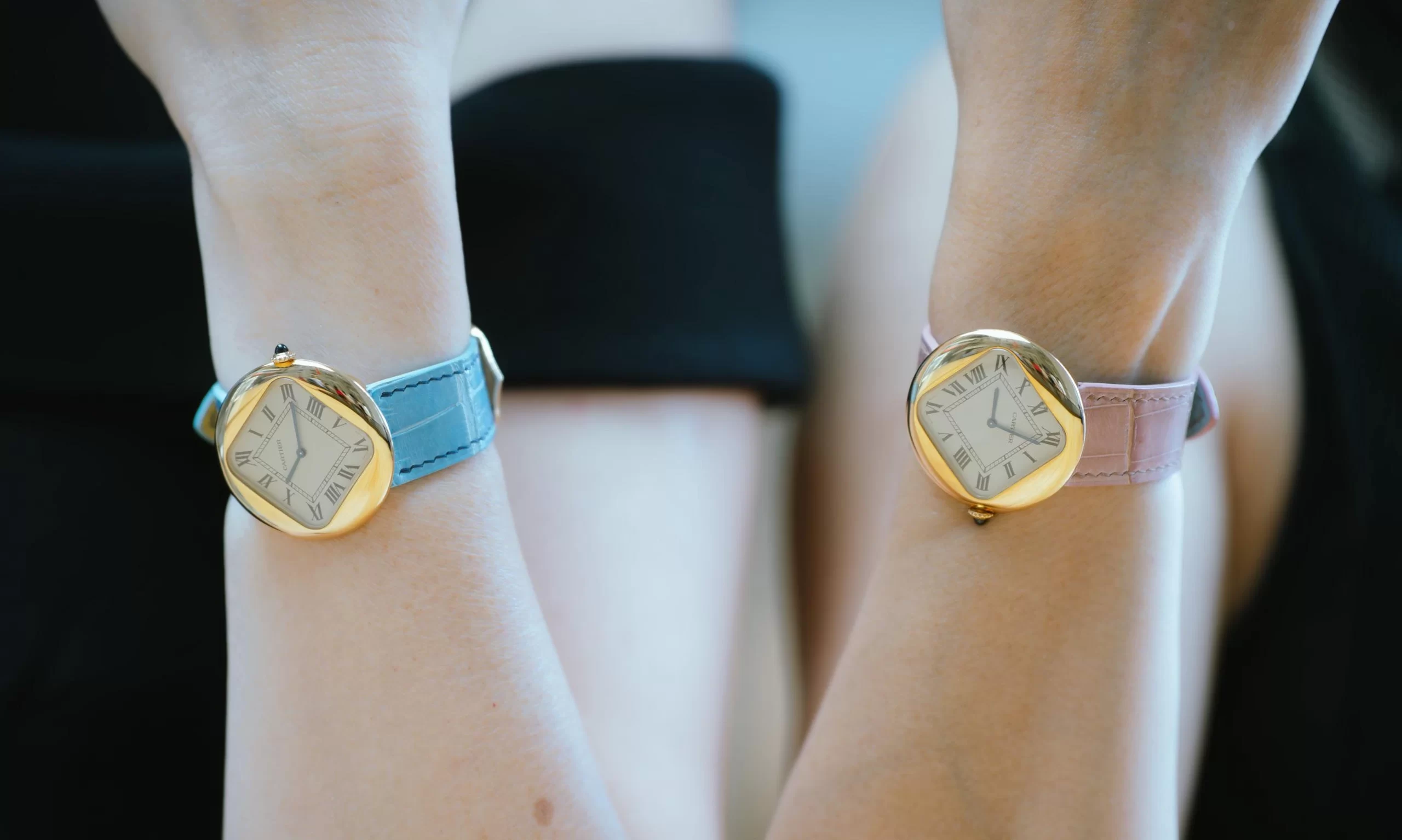
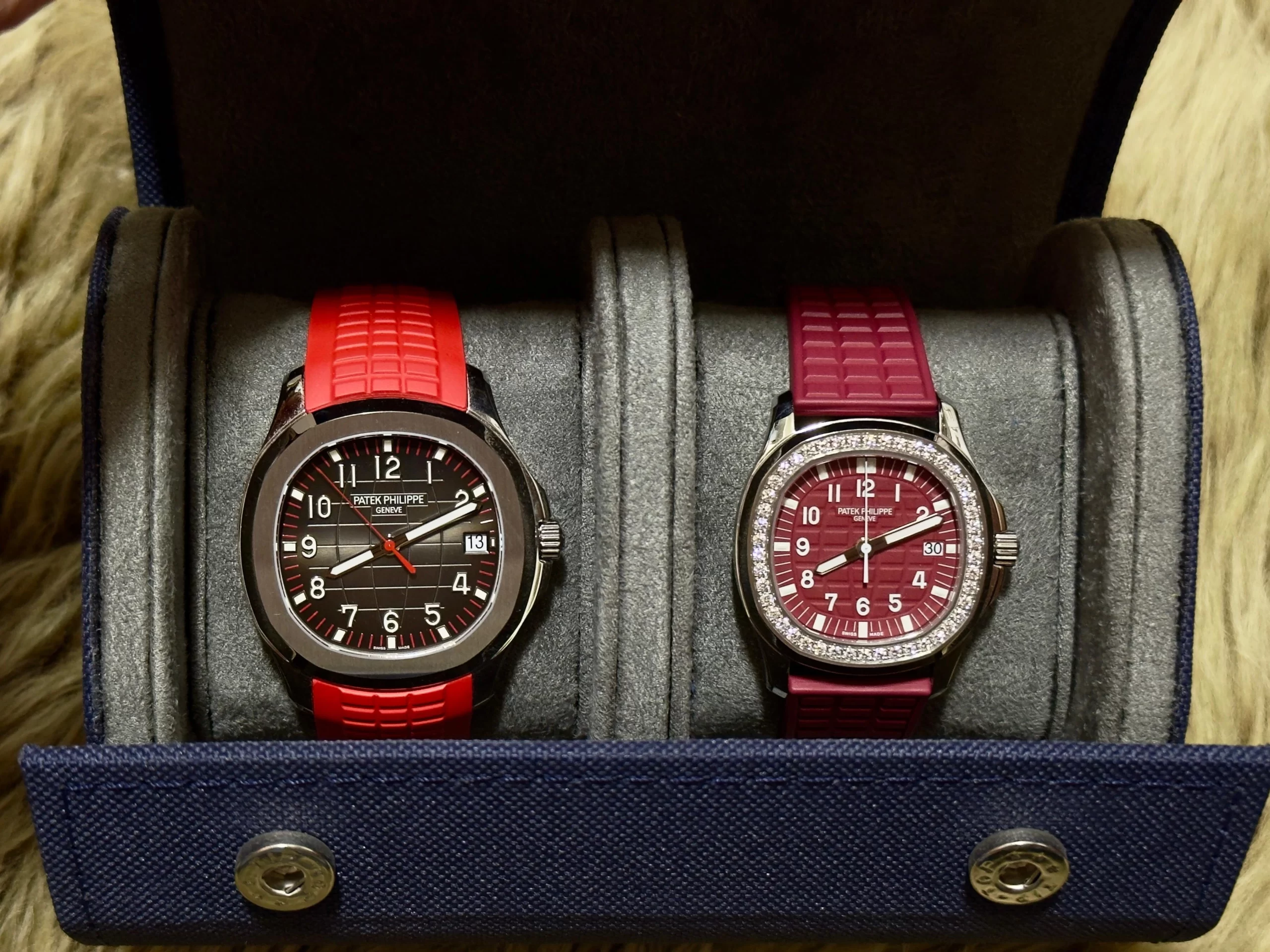
Photo Credits: Deborah Wong & Stephanie Soh
Timepieces: From the private collections of Deborah Wong & Stephanie Soh

Federico Ziviani on Reinventing Gerald Charles | EyesOnTime

In this exclusive EyesOnTime conversation, Federico Ziviani reflects on innovation, heritage, and how Gerald Charles is shaping the future of modern independent watchmaking.

Introduction: Federico Ziviani – Ceo Gerald Charles

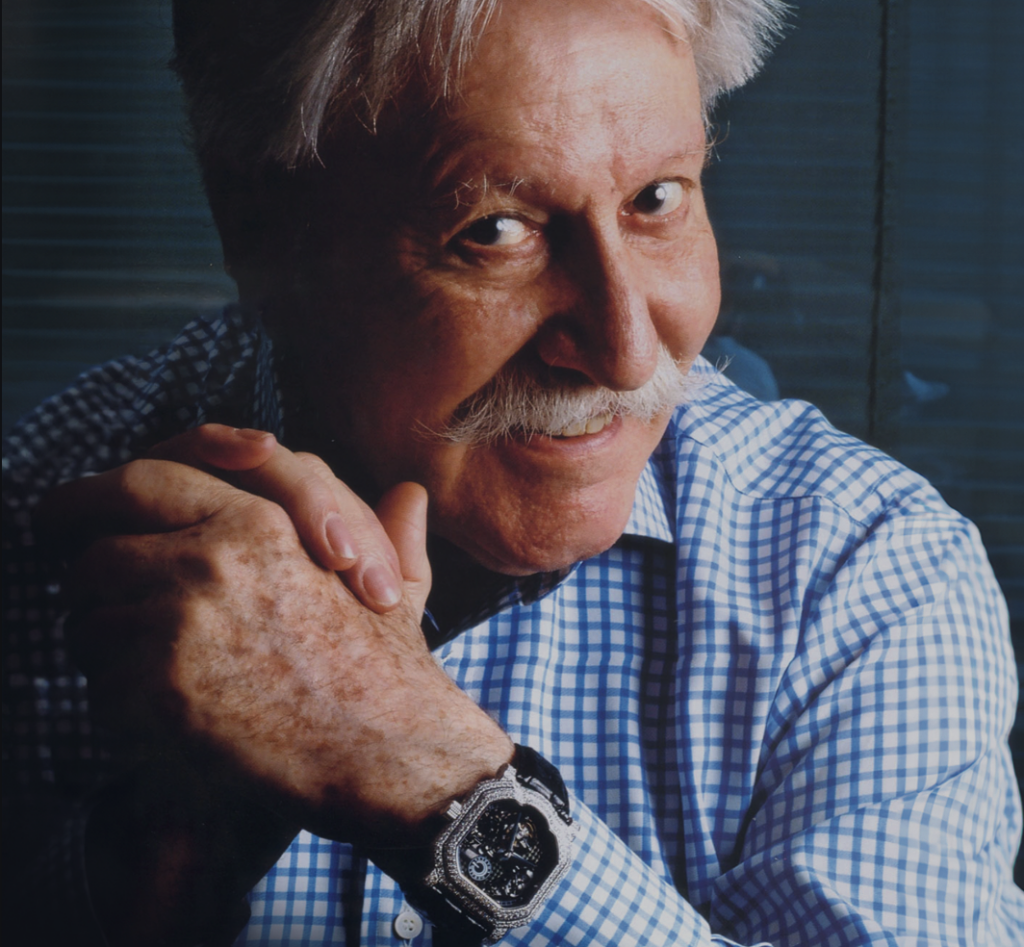
Born and raised in Milan, Federico Ziviani has grown up surrounded by fine watchmaking. His father, Franco Ziviani, was a long-standing distributor for Audemars Piguet, introducing Federico early to the discipline, culture, and craftsmanship of haute horlogerie.

After earning a degree in Business Administration and Management from Bayes Business School, Federico completed a Master of Science in Computer Science at University College London, specialising in machine learning, artificial intelligence, and blockchain networks. This rare combination of heritage, business insight, and advanced technology now defines his leadership approach.

In 2019, he became General Manager of Gerald Charles, a Maison founded in 2000 by Gérald Charles Genta in close collaboration with the Ziviani family. In 2023, he was appointed CEO.

EyesOnTime met Federico Ziviani at Dubai Watch Week to discuss innovation, heritage, and the future of Gerald Charles.

Breaking Rules the Right Way: Reinventing Watchmaking Finishing

EyesOnTime: Gerald Genta was known for breaking rules. What rule in watchmaking you feel most tempted to break next as Gerald Charles?

Federico Ziviani:
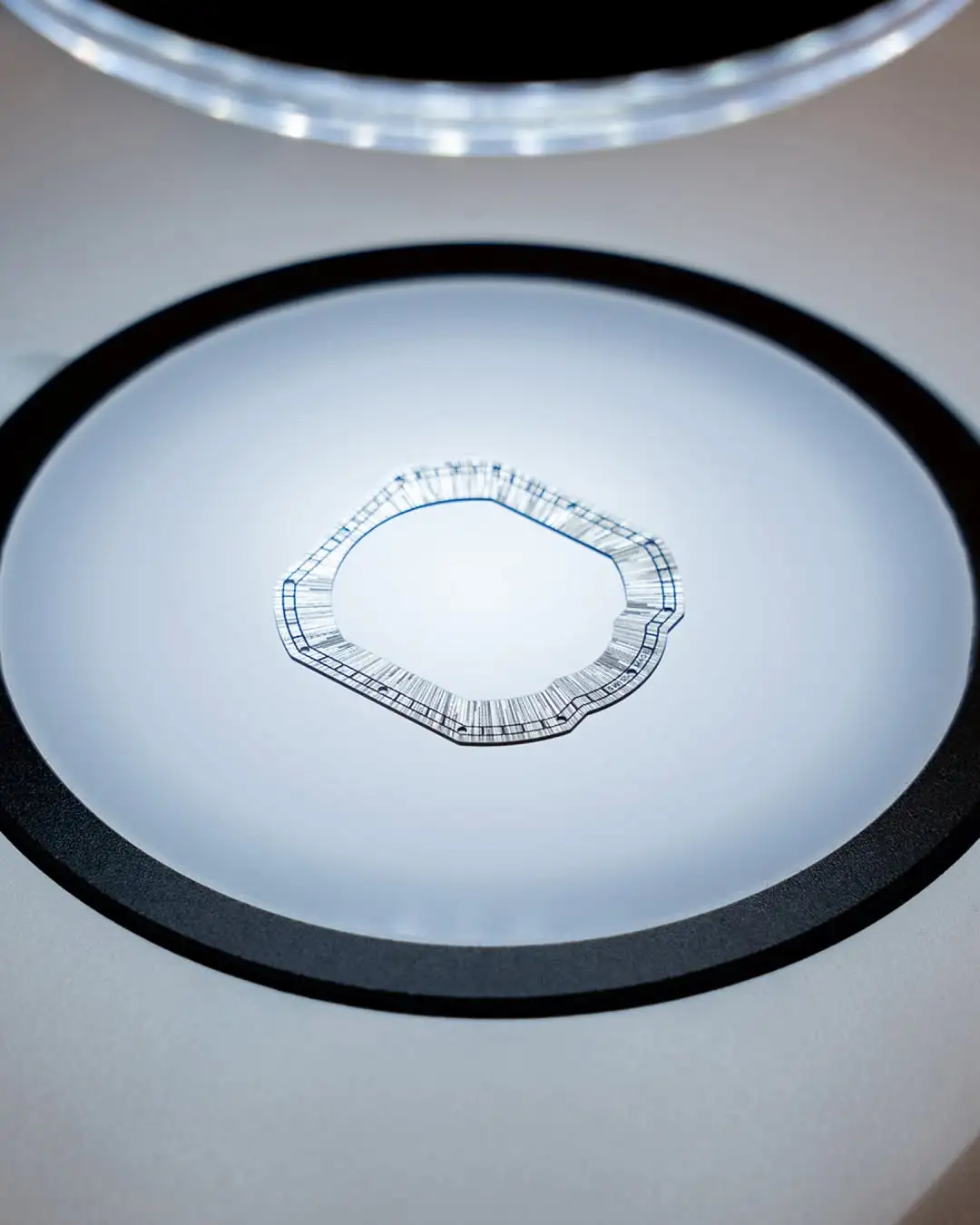
We are very focused on reinventing modern watchmaking finishing. A strong example of this is Meta-Guilloché, a new type of dial finishing that evolves from traditional guilloché.

Classical guilloché is executed using historic machines. Meta-Guilloché, instead, is created through a contemporary process we developed together with engineers coming from biotechnology. Using this method, we engrave more than 200,000 micro-lines on a single dial, creating a light reflection that is up to ten times brighter than traditional guilloché.

We introduced this finishing on our anniversary Jumping Hour watch. It represents our broader philosophy: respecting legacy while bringing it forward through modern engineering. And there will be many more innovations like this in the future.

Which Watch Would Surprise Gérald Charles Genta Today?

EyesOnTime: If you could bring Genta into the atelier today and show him one recent Gerald Charles watch, which one do you think he would be most surprised by and why?

Federico Ziviani:
I believe he would be very happy to see the Masterlink.

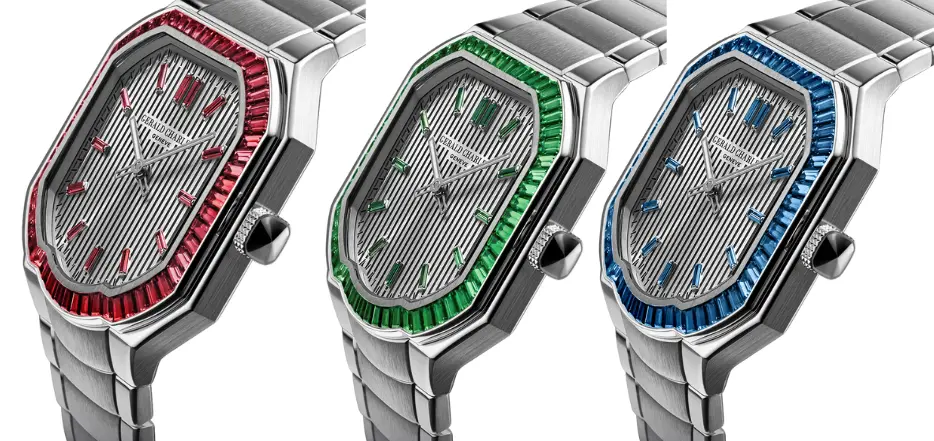
This was the last integrated bracelet he designed, originally created as a unique piece in 2007 — fully gem-set and made with around 40 carats of gold. What we have done is reinterpret that vision into a steel version that is simpler to wear and perfectly suited to everyday life.

It remains true to his original idea while expressing it in a contemporary way.

Beyond Design: Correcting a Common Misconception

EyesOnTime: Gerald Charles operates in an interesting space, niche yet globally recognized. What is a misconception people still have about the brand that you wish you could correct once and for all?

Federico Ziviani:
Many people are immediately attracted by our design, which is very distinctive. What I would love them to appreciate even more is the depth of engineering and watchmaking behind our creations.

For us, engineering comes first. Design follows the technical architecture. A good example is the Masterlink: achieving a slim 2.7mm profile, a micro-rotor movement, 100 metres of water resistance, and excellent wearability requires advanced watchmaking expertise.

This savoir-faire is at the heart of Gerald Charles.

Form and Freedom: The Art of Wearing Time

EyesOnTime: As the brand scales up, how do you avoid creating too much demand culture where scarcity becomes the story instead of the watch?

Federico Ziviani:
As Gerald Charles grows, its approach remains deliberately grounded. The Maison has never pursued scarcity as a narrative device, nor demand as an end in itself. The focus is singular: creating the best watch possible.

And today, the definition of the best watch has evolved. Luxury is no longer weight or fragility — it is comfort, freedom, and confidence in motion. A Gerald Charles is designed to remain on the wrist whether one is swimming, travelling, playing sport, or attending a formal evening. It is a watch that adapts instinctively to life, rather than asking life to adapt to it.

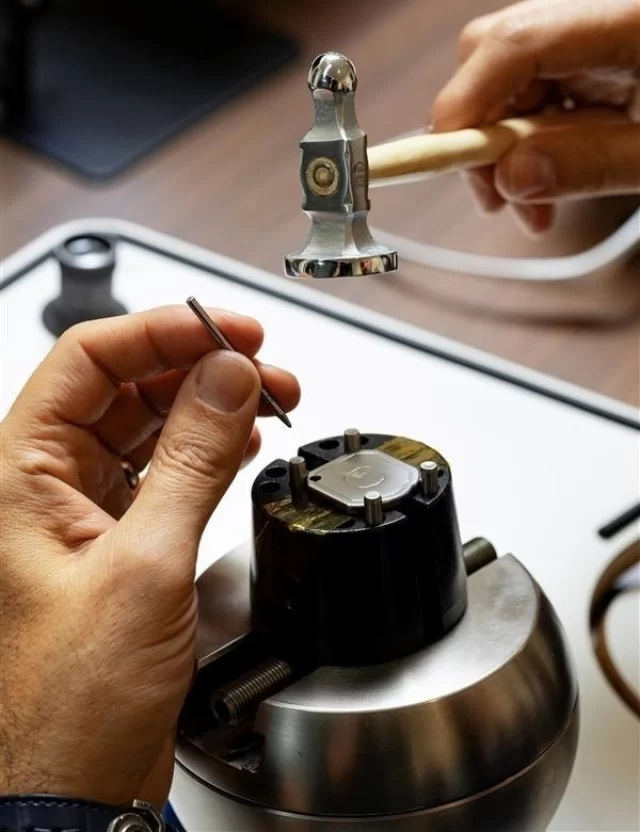
Scarcity, therefore, is not engineered — it is inherent. The asymmetric architecture of the case and bracelet, the complexity of the finishing, and the hundreds of components within each movement require a level of hand craftsmanship that cannot be industrialised without compromise. Production is naturally limited by the standards the Maison refuses to dilute.

Growth at Gerald Charles is not about producing more watches. It is about preserving the soul of watchmaking where engineering, ergonomics, and design coexist — uncompromised.


Inside the Genta Archive: Building for the Next Century

EyesOnTime: You have access to a deep archive of Genta sketches. What’s the most unexpected idea that you’ve discovered in that archive, that the world hasn’t seen yet?

Federico Ziviani:
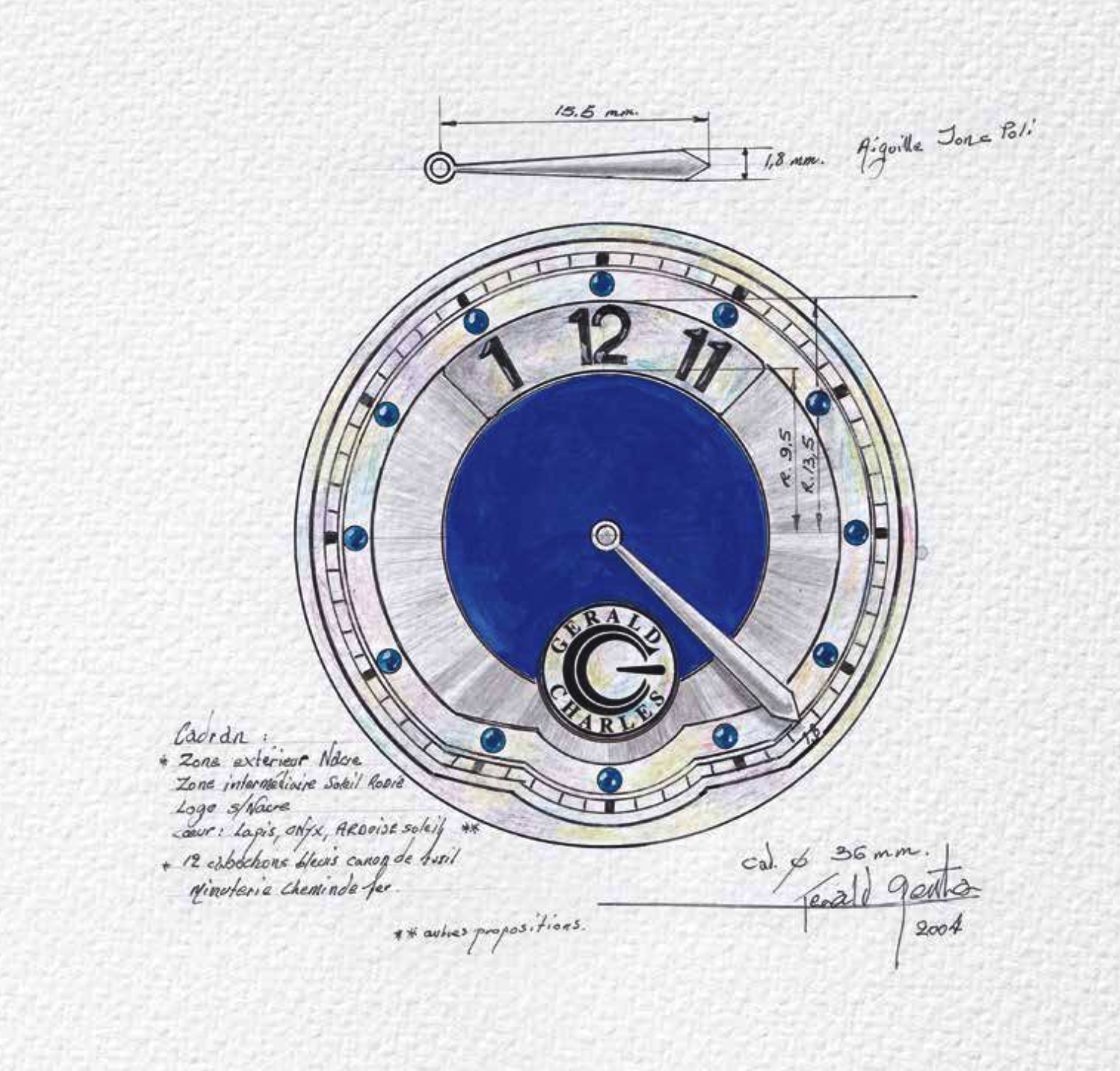
The archive is incredibly rich, with many ideas that have not yet been seen by the world. Visitors can already get a glimpse of this universe at our museum in Dubai, where they can discover different shapes beyond the Maestro that Gérald created.

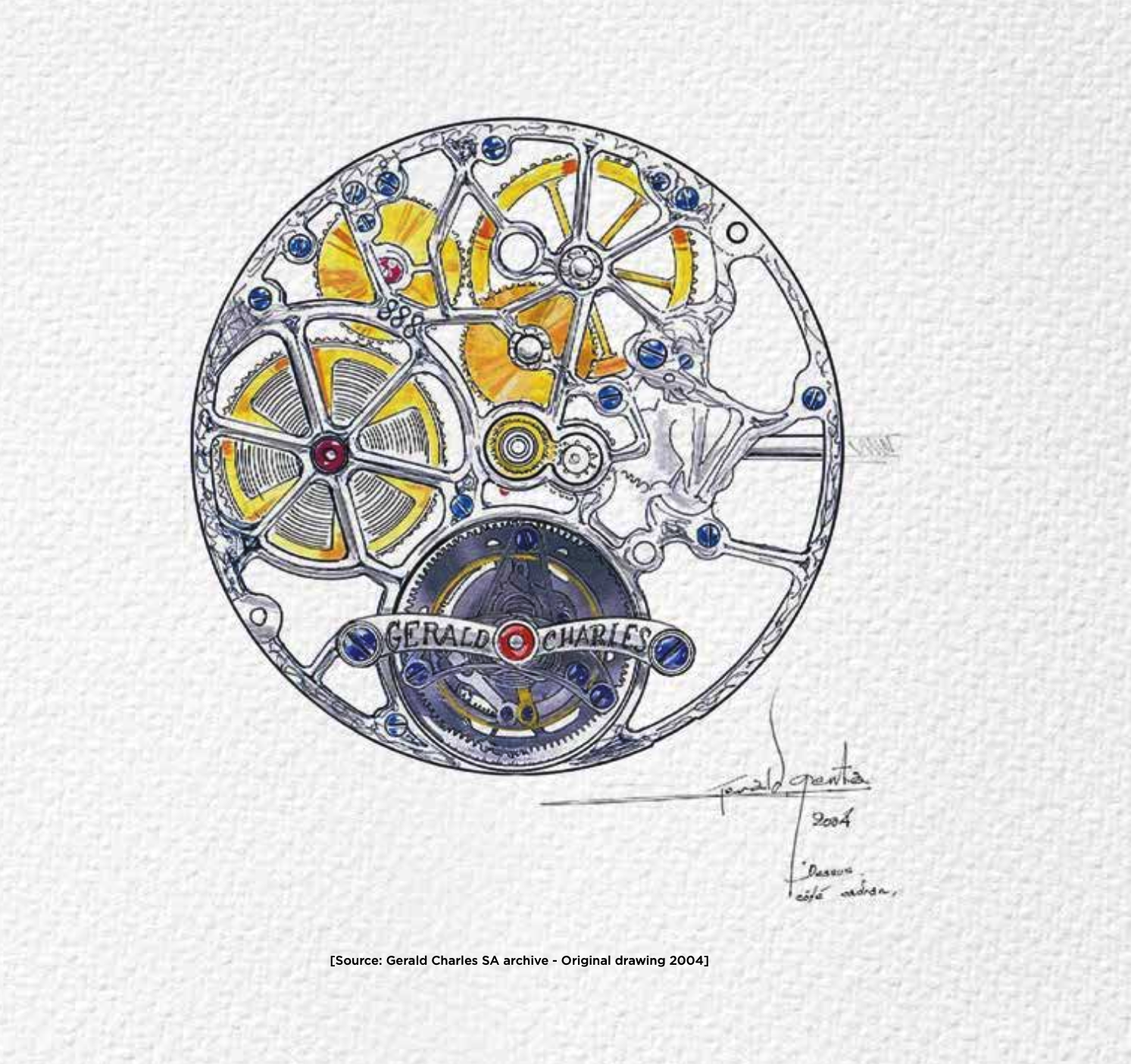
In the sketches, there are fascinating complications, beautifully skeletonised bridges, and designs that remain highly relevant today. This patrimony gives us the foundation to build Gerald Charles for the next 100 years.

Evolving an Icon: The Maestro Case and Modern Complications

EyesOnTime: The Maestro case is already an icon. What design challenge keeps you up at night when trying to evolve something that collectors consider untouchable?

Federico Ziviani:
The product is always at the centre of our thinking. We constantly want to make our watches more interesting and more expressive from a watchmaking perspective.

We have a clear plan to introduce one new complication every year, and each of these will be a modern reinterpretation rather than a traditional execution. Our goal is that the next best Gerald Charles watch is always the one still to come.

The Geneva Atelier: More Than a Manufacture

EyesOnTime: You recently opened the Geneva Atelier with a museum-style space. Beyond watches, what emotion or idea do you want visitors to walk away with?

Federico Ziviani:
I want visitors to leave with a strong sense of family. The Atelier is designed like our home.

Our family created Gerald Charles together with Gérald Charles Genta in 2000, and my father had been close friends with him since the 1980s. Gerald created this brand out of pure passion, and passion is what we want people to feel when they visit us.

We put our soul into every watch — the soul of our watchmakers, of my father, of myself, and of our entire team. When visitors come to Geneva, they experience Swiss-Italian hospitality, great food, great conversations, and direct interaction with our watchmakers, who take the time to explain their craft in an open and authentic way.

Looking Ahead: What Must Never Change

EyesOnTime: When you imagine Gerald Charles 20 years from now, what is the one element you hope remains exactly the same and the one element you hope is radically different?

Federico Ziviani:
What will remain the same — not just for 20 years, but for the next 100 years — is our ambition to create the best possible watches and to keep innovating.

Innovation is how we continue to create value and meaning. We are very happy with what we are building today. Being at Dubai Watch Week with a standalone independent booth, a museum, a workshop, and spaces to educate collectors reflects what we believe in.

What we have at Gerald Charles is a treasure of immense historical and creative value, and our responsibility is to cultivate it for generations to come.

Closing Perspective

Through engineering-led innovation, deep respect for heritage, and a clear long-term vision, Gerald Charles continues to evolve as a modern independent Maison. Under Federico Ziviani’s leadership, the spirit of Gérald Charles Genta remains expressive, contemporary, and firmly focused on the future.


Jaquet Droz: Where Disruption Meets Emotion – An Exclusive Conversation with CEO Alain Delamuraz

In the world of haute horlogerie, few names carry the mystique of Jaquet Droz. Known for its automata, métiers d’art, and poetic approach to time, the brand has spent nearly three centuries challenging conventions while keeping emotion at the heart of every creation.

During his recent visit to India, Alain Delamuraz, CEO of Jaquet Droz, shared his thoughts on legacy, innovation, and the brand’s deepening connection with Indian collectors.

Art Beyond Time

When asked whether Jaquet Droz feels closer to a poem, a painting, or a piece of music, Alain Delamuraz resists a single definition: “I think that all the arts are connected. Watchmaking art, métiers d’art, paillons, enamel, engraving, micro-painting — all these things are together. If you copy an art, you die. All the arts need to be challenged every time.”

For him, watchmaking at Jaquet Droz is less about the object itself and more about the dialogue it inspires: “We do not make a piece and then try to sell it. We create it together with the people who will wear it. It’s a connection, a human connection.”

Disruptive Legacy

With centuries of history behind the brand, the temptation might be to look backward. Alain Delamuraz instead looks forward: “The question is not what did Pierre Jaquet-Droz do, the question is what he would do today if he were still alive… He was a disruptive person — inventive, creative, full of craziness. We have to keep this disruptive attitude. Disruptive is positive — it is not destroying, but it is faster and more creative than normal evolution.”
For him, disruption is not an occasional strategy but the brand’s DNA: “Innovation is our tradition. Disruption is our legacy.”

The Soul of Emotion

Precision is essential, but it is emotion that defines true luxury. As Alain Delamuraz explains: “You can have passion, authenticity, technical excellence — but without emotion, it is nothing. We are in direct connection between an artist and another artist who is the collector. If there is no emotion, people don’t buy. There is never, ever something we do without emotion.”

That emotional connection is rooted in people — the watchmakers, artisans, and collectors who bring each piece to life: “The soul is that you can see the people making your piece of art. You talk with the engraver, the painter, the enameller. You create together. That, I believe, is the soul of Jaquet Droz: putting people together, humanizing luxury, and giving emotion — not only price.”

India: A Dialogue of Cultures

India, with its rich artistic heritage, resonates naturally with Jaquet Droz’s philosophy. “We take inspiration from every culture — Japan, China, India. We also did some Indian themes. Always by hand, always unique, one-of-one. That is why I am here in India — to feel the culture, to meet people, to understand more, and to be more ready to create bespoke pieces of art in the spirit of this culture.”

Indian collectors, he observes, are especially eager to co-create: “It would begin with colors, crafts, and themes unique to India — because this is what connects naturally to our métiers d’art. We work with the client to refine it: more blue, less green, more red, different materials. The idea is always to co-create.”

What excites him most about the market is its youthful boldness: “The younger generation cannot be fooled. They want authenticity, emotion, and individuality. They are curious and bold. That’s why we create both the timeless and the unexpected.”

Collaborations & Living Art

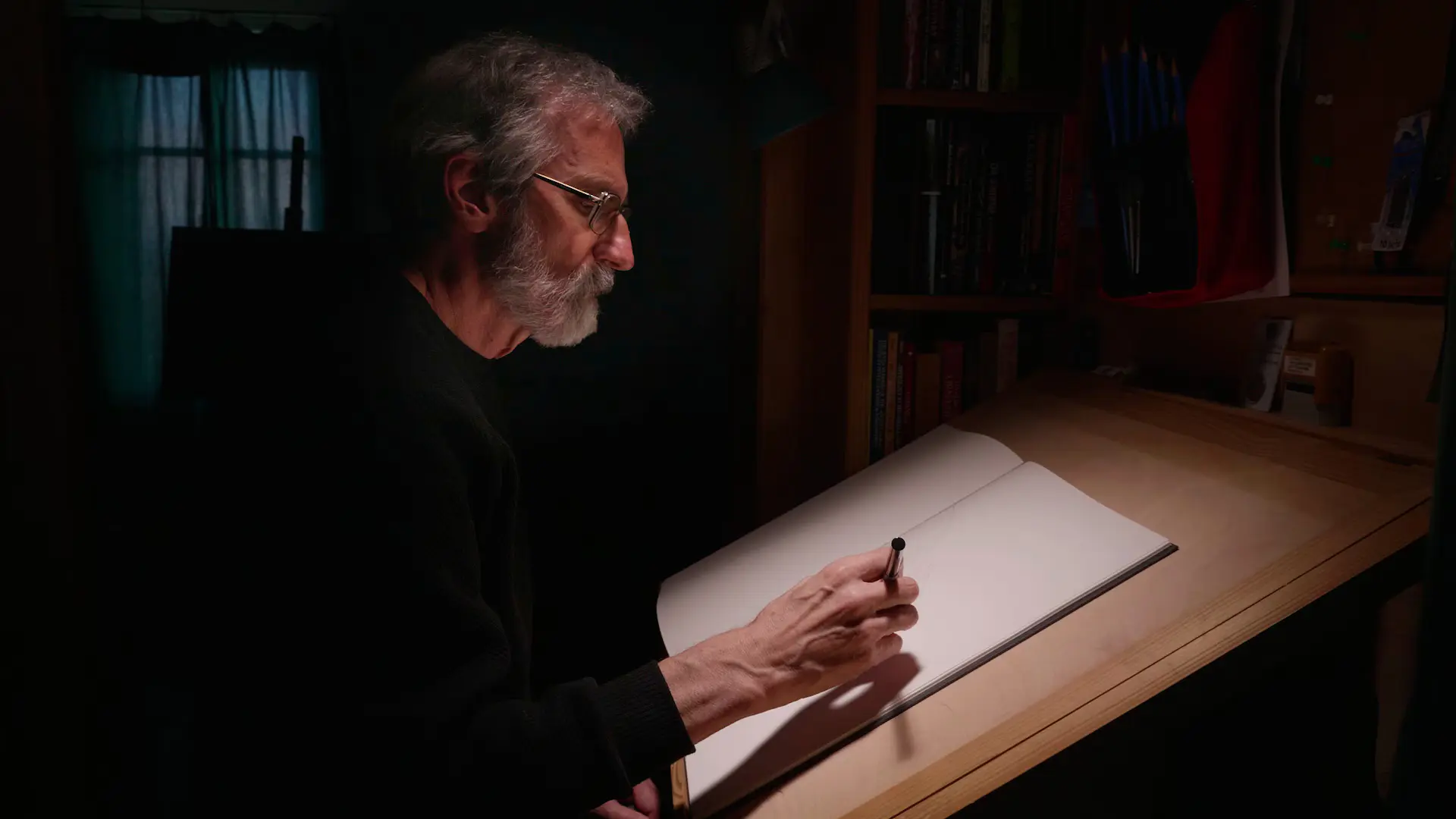
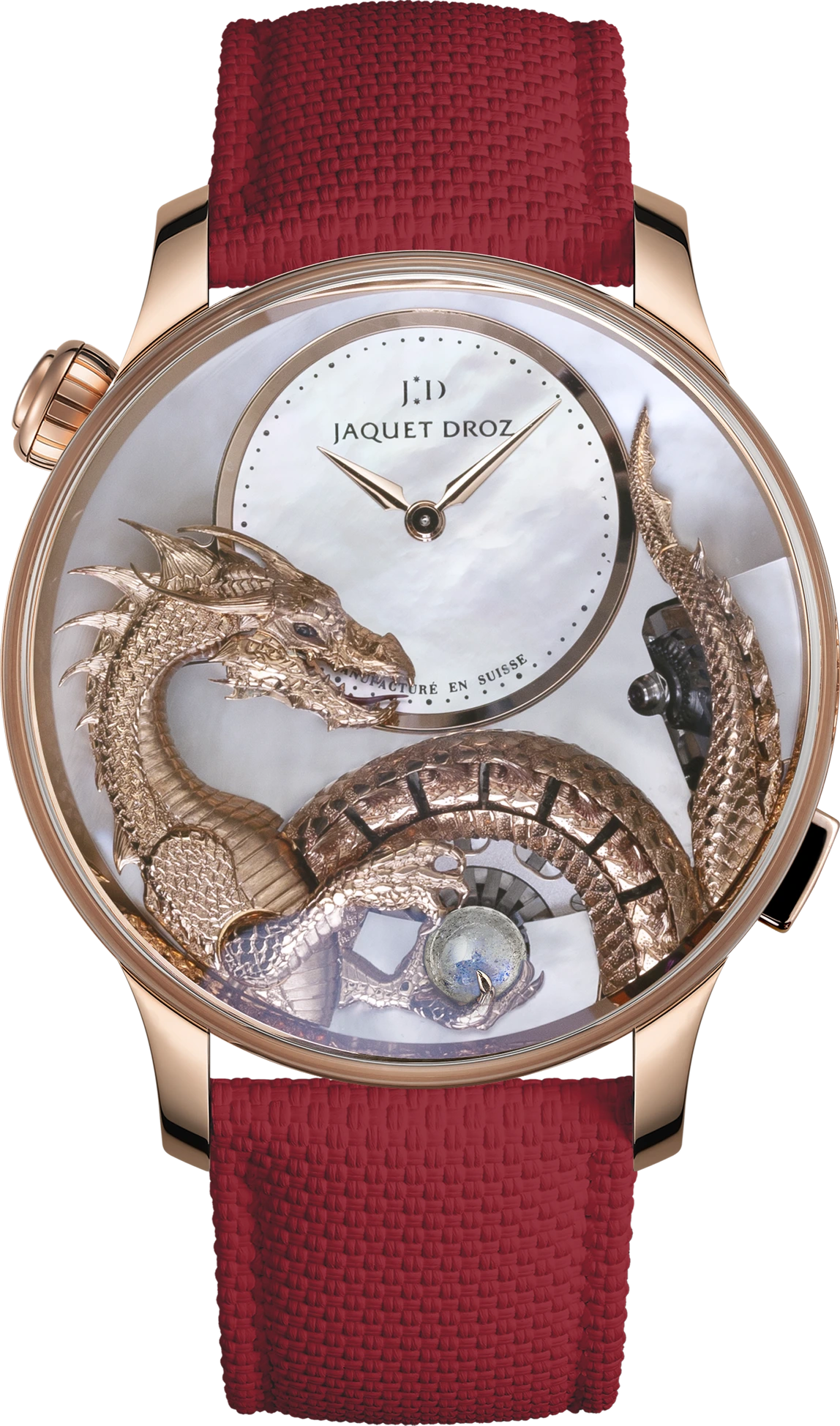
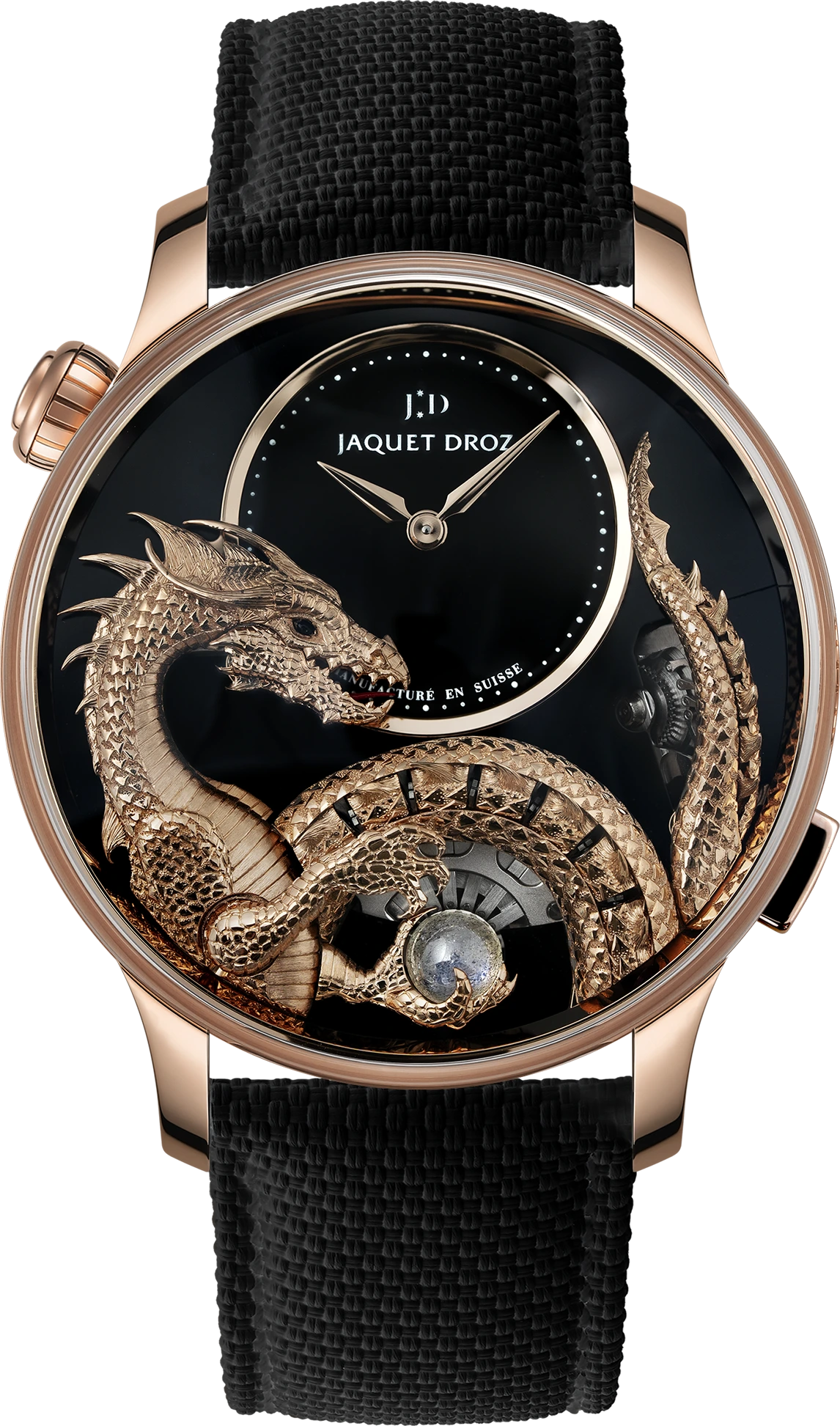
Beyond watches, Jaquet Droz has often blurred the lines between horology and fine art. A striking example is the brand’s collaboration with John Howe, the legendary illustrator behind The Lord of the Rings: “He created a dragon for us — his signature is engraved on the back, and the automaton moves with 16 separate pieces. This is live art. With a lot of pleasure, we are always ready to collaborate with artists. Our concept is to redefine painting, engraving, or sculpture so collectors can travel with their piece of art.”


It’s a philosophy that aligns perfectly with India’s own artistic traditions — a fertile ground for future collaborations.

An Industry of Emotion, Not Marketing

In a world where marketing often overshadows craft, Alain Delamuraz insists on a more human-centered approach: “In our case, we don’t do advertising anymore. Our marketing concept is to know the people and to interact with them. Automata are about surprise and emotion — you don’t know what will happen, then suddenly something moves and you say ‘wow.’ That surprise is the emotion. We are not only a brand, not only a watchmaker. We are an emotion.”

Conclusion

Alain Delamuraz’s vision for Jaquet Droz is clear: a brand rooted in disruption, guided by emotion, and deeply connected to its collectors. Whether through métiers d’art, automata, or bespoke creations inspired by India, Jaquet Droz continues to prove that true luxury lies not only in what is made, but in the human connection it creates.

Engineering Elegance: Erol Baliyan on the Art & Ascent of Franck Muller

With an impressive career spanning over 20 years, Erol Baliyan stands as a prominent figure in the world of luxury watchmaking. As the CEO of Franck Muller for the Middle East, Africa, and India, Erol has played a pivotal role in driving the brand’s regional growth and influence. He joined Franck Muller in 2003, bringing with him extensive expertise across a wide array of disciplines—including retail, distribution, logistics, finance, sales, and design—which together have shaped his holistic leadership style.

Erol opens up about his journey from his early days in the industry to his instrumental role in establishing the Dubai-based distribution hub, which today manages operations in more than 15 countries. Under his guidance, the brand has not only expanded its footprint but also deepened its presence in strategically vital markets.

Known for his pioneering mindset, Erol Baliyan has been a catalyst for innovation within Franck Muller. He holds a patent for integrating advanced technologies into traditional watchmaking, marking a significant breakthrough that aligns perfectly with the brand’s reputation for mechanical ingenuity and bold design. His efforts have redefined how Franck Muller approaches craftsmanship and technological fusion in haute horlogerie.

Beyond his professional achievements, Erol’s academic foundation adds further depth to his strategic approach. He holds a Bachelor’s degree in Econometrics from Marmara University and a Master of Science in International Management from the University of Exeter, credentials that reflect his analytical and global business acumen.

Driven by passion, precision, and a relentless pursuit of excellence, Erol Baliyan continues to lead Franck Muller’s operations with a clear vision—delivering exceptional customer experiences, championing innovation, and nurturing the brand’s legacy in the ever-evolving landscape of luxury watches.

In an exclusive interview with EyesOnTime, Erol discusses the brand’s focused expansion in India, exclusive collections, and the evolving preferences of Indian watch collectors.

Q: How is Franck Muller evolving in the Indian luxury market?
A: India has become one of our strongest growth stories. After a strategic restructuring five years ago, we’ve built a solid foundation. We now operate 12 points of sale and are planning to add 3–4 more in the near term. In terms of performance, we’re second only to Rolex in this market—proof that India is not just evolving, it’s responding powerfully to what we offer.

Q: What makes the Indian market so unique for Franck Muller?
A: India is emotional, responsive, and highly attuned to craft. The more we invest in this market—through design, service, or engagement—the more it gives back. It’s not transactional; it’s a relationship. That fits perfectly with how we operate.

Q: Is there a collection made specifically for India?
A: Yes, and we’re very proud of it. We’re about to unveil a limited-edition collection of 108 pieces, hand-engraved, designed with Indian collectors in mind. It’s been four months in the making—just the dial alone. The collection hasn’t even been officially announced, and it’s already sold out. That says everything about India’s appetite for meaningful artistry.

Q: What sets Franck Muller apart from other Swiss luxury watchmakers?
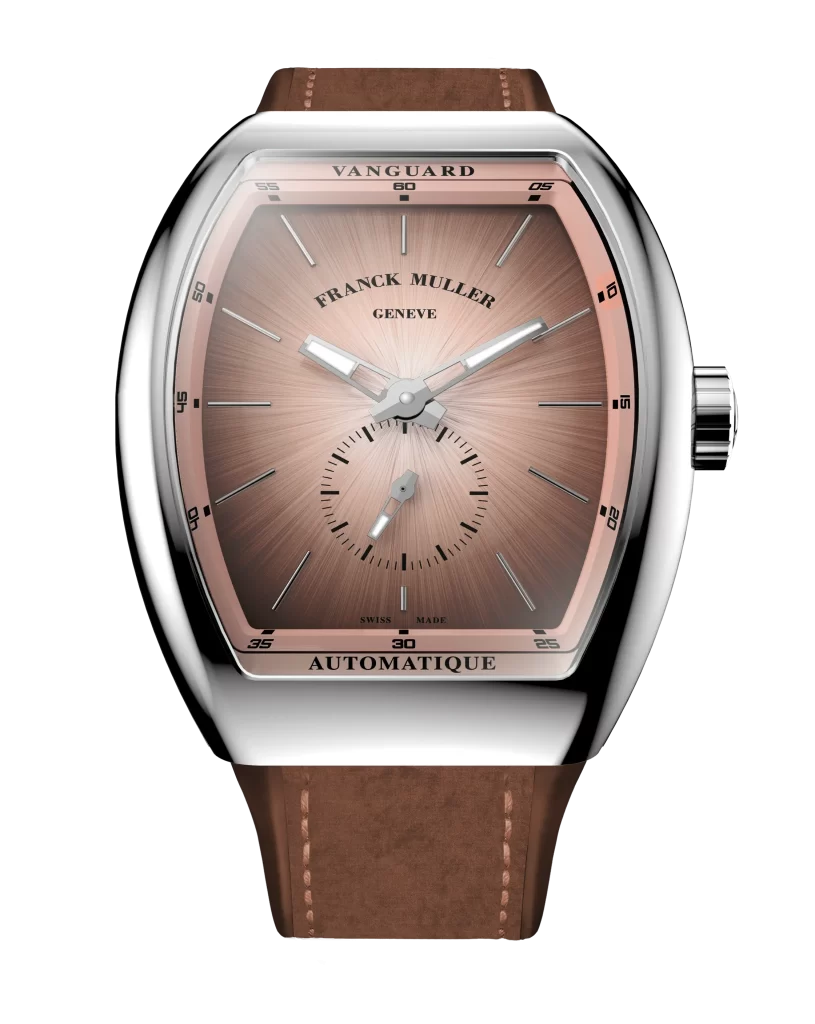
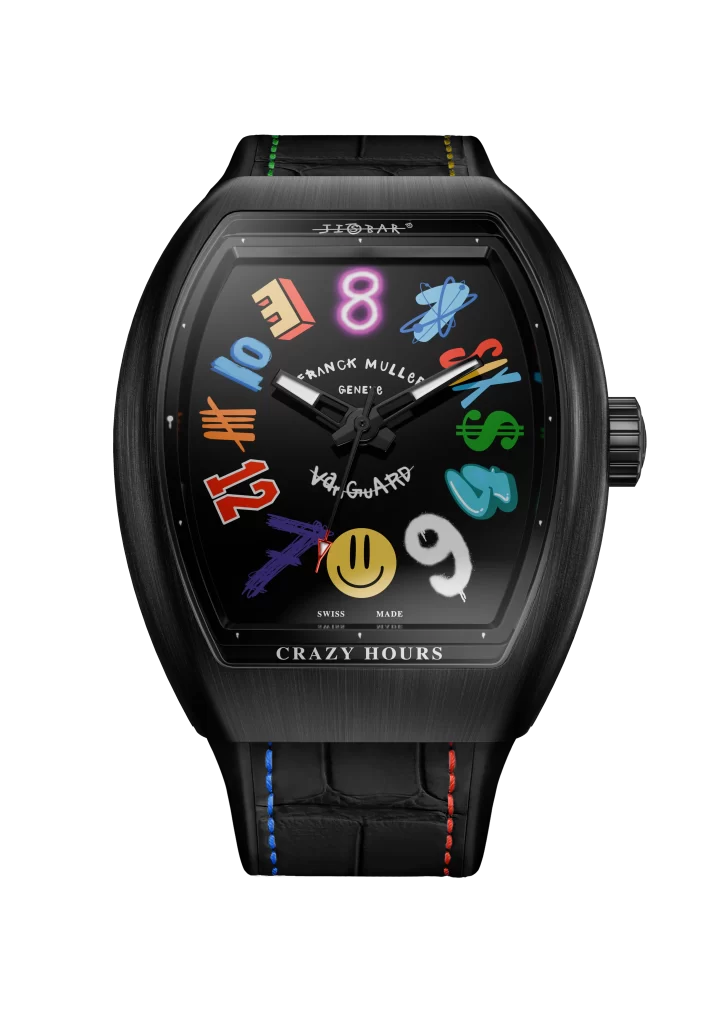
A: Our identity is instantly recognizable. We trademarked the Cintrée Curvex case over 30 years ago—an iconic shape that became our design DNA. Our numerals, dial layouts, and complications are all distinct. When someone sees a Franck Muller, they know it’s a Franck Muller. That level of visual signature is rare in watchmaking.

Q: How strong is your after-sales and service presence in India?
A: Very strong—and improving each year. We have a central service hub for India with dedicated sales support and technical teams. Every purchase comes with a 3-year warranty (5 years for complications), and we aim to respond quickly to any service needs. After-sales is critical in building trust, and we take it seriously.

Q: How do you maintain long-term relationships with collectors here?
A: By staying close. We host clients regularly at our boutiques—not to sell, but to connect. We invite them to view novelties, talk trends, and just engage with the brand. It’s about creating an emotional bond. Collectors aren’t just looking for rare pieces; they want dialogue, discovery, and respect.

Q: What trends are you noticing in Indian collectors’ preferences?
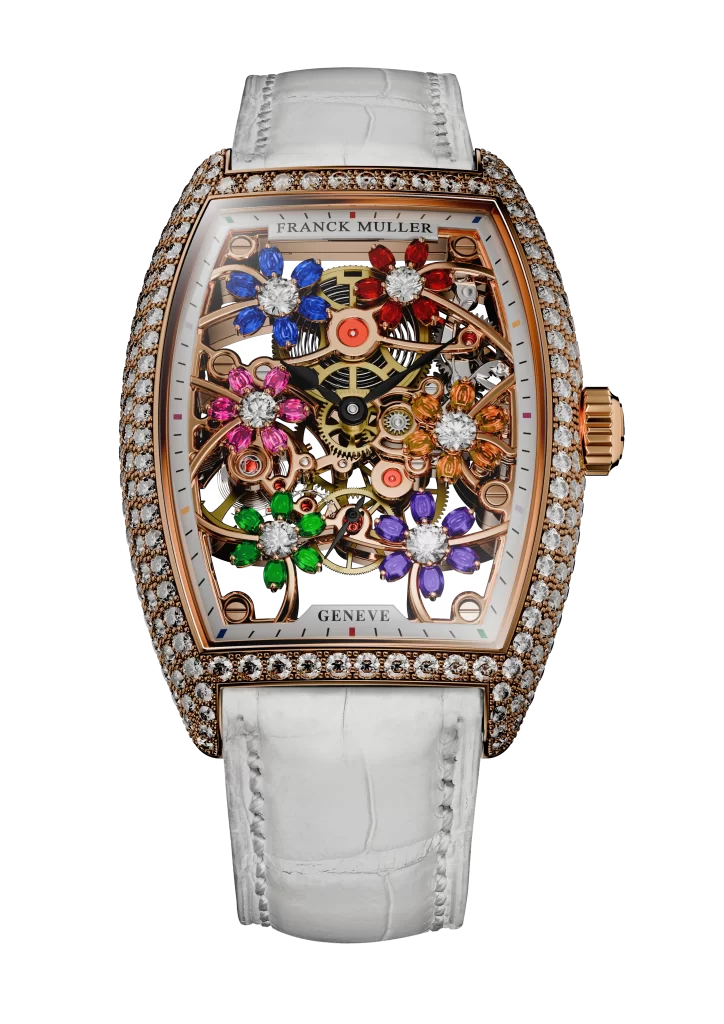
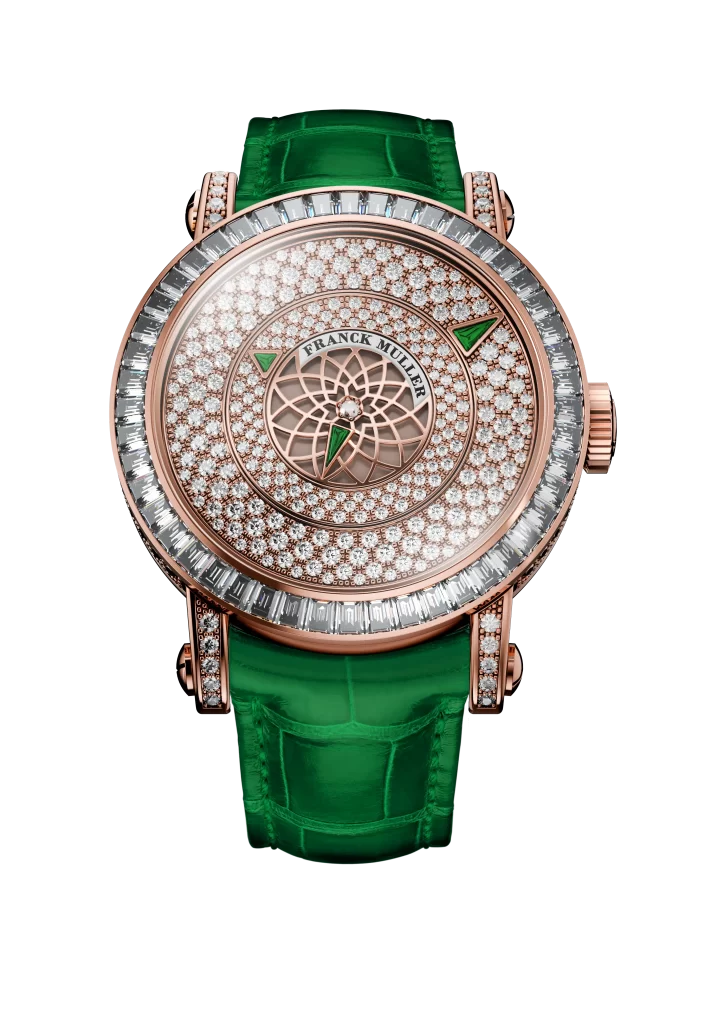
A: A definite shift toward more refined, complicated watches—tourbillons are gaining traction. There’s also growing demand for smaller, elegant timepieces, especially in our ladies’ collections. Collectors are craving uniqueness—different dials, rare materials, new forms. The industry has been recycling the same formulas for years. That fatigue is pushing people to look beyond the usual suspects—and they’re finding us.

Q: Any notable pieces recently acquired by Indian collectors?
A: The Giga Tourbillon stands out. It’s a technical marvel with a 9-day power reserve and double barrel. We sold one in India recently. There are more unique pieces, but I’d have to check our records to name specifics. Still, it shows the market’s appetite for true haute horlogerie.

Q: How is Franck Muller approaching online retail in India?
A: Carefully. E-commerce in luxury requires nuance. We’re already selling our Crypto Collection online, as it caters to a digital-first audience. We’re considering expanding online offerings— especially select ladies’ models—but only through official channels. Every online sale is backed by our full warranty and service network in India. But the experience must be curated, not diluted.

Q: How important is storytelling to Franck Muller’s identity?
A: It’s everything. Every collection has a narrative. Take the Sfumato dial—it captures the texture and feeling like a twilight over Amalfi rooftops. Or our new CX Mineral collection, made from Jasper, Malachite, and Lapis—stones shaped by elemental pressure over time, like the stories we tell through our watches.

Q: Can you talk more about Franck Muller’s dial expertise?
A: We are arguably one of the strongest in the industry when it comes to dials. We own our dial manufacturing and specialize in techniques like guilloché, enamel, and hand engraving. It’s a huge point of pride—and a big reason our watches look and feel different.

Q: Are there any upcoming celebrity or influencer partnerships in India?
A: Yes, we’re actively exploring new collaborations. We’ve had success in the past and understand how influential celebrity culture is in India. You’ll see more of that very soon.

Q: What’s your view on Indian luxury watch media?
A: It’s progressing well. But more can be done on both sides. Brands need to engage more proactively, and media should continue building deep, knowledgeable coverage. Consistent communication and shared vision will elevate the whole space.

Final Word:
Franck Muller’s story in India is just beginning—but the foundation is solid: distinctive design, strong relationships, and a respect for artistry that mirrors the spirit of Indian collectors. As the brand doubles down on presence, product, and personalization, it’s clear that India isn’t just a market—it’s a mission.

An Exclusive Interview with Smriti “Simi” Mehra: India’s Trailblazing Golfer

Simi Mehra, India’s first female golfer to play on the LPGA Tour, has paved the way for women in the sport with her resilience and passion. In this exclusive conversation, conducted at Time Avenue, Mumbai, for Omega Watches, she reflects on her journey, the evolution of women’s golf, and her association with Omega.

About Time Avenue: Established as one of India’s leading luxury watch retailers, Time Avenue in Mumbai is known for its exclusive collection of high-end timepieces. Catering to horology enthusiasts and collectors, it provides a premium experience for those who appreciate precision, craftsmanship, and timeless elegance.

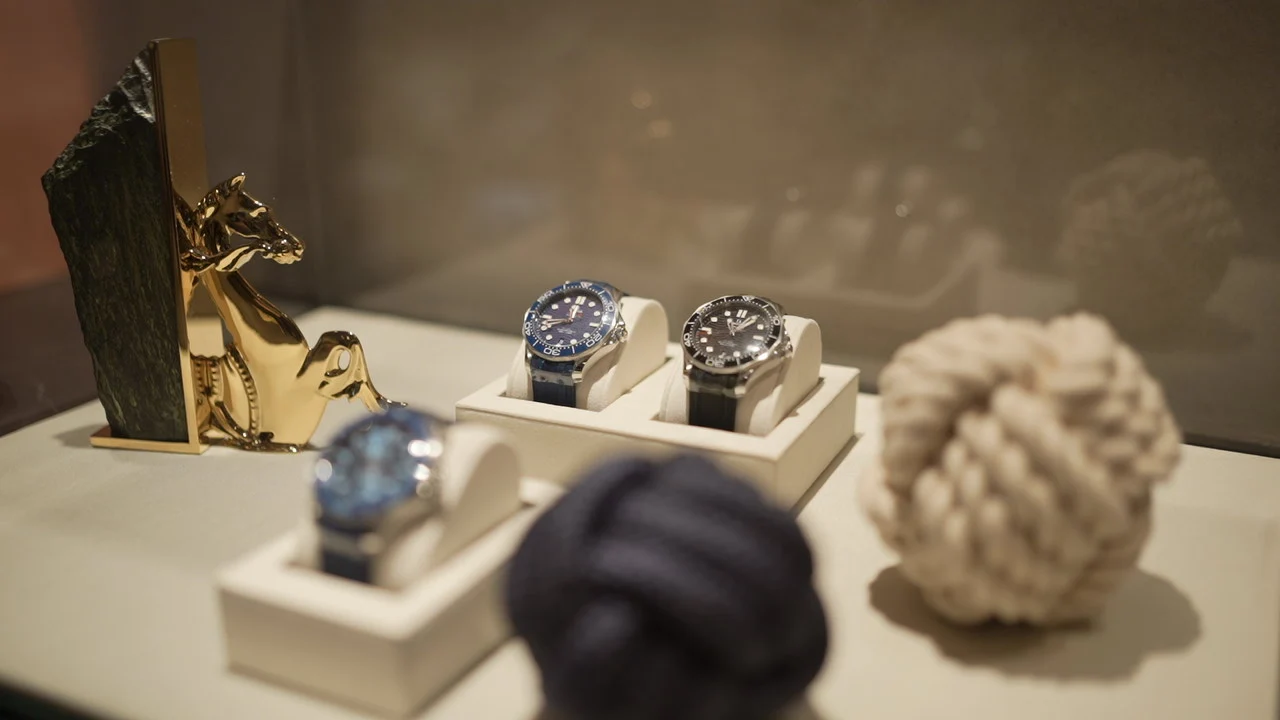
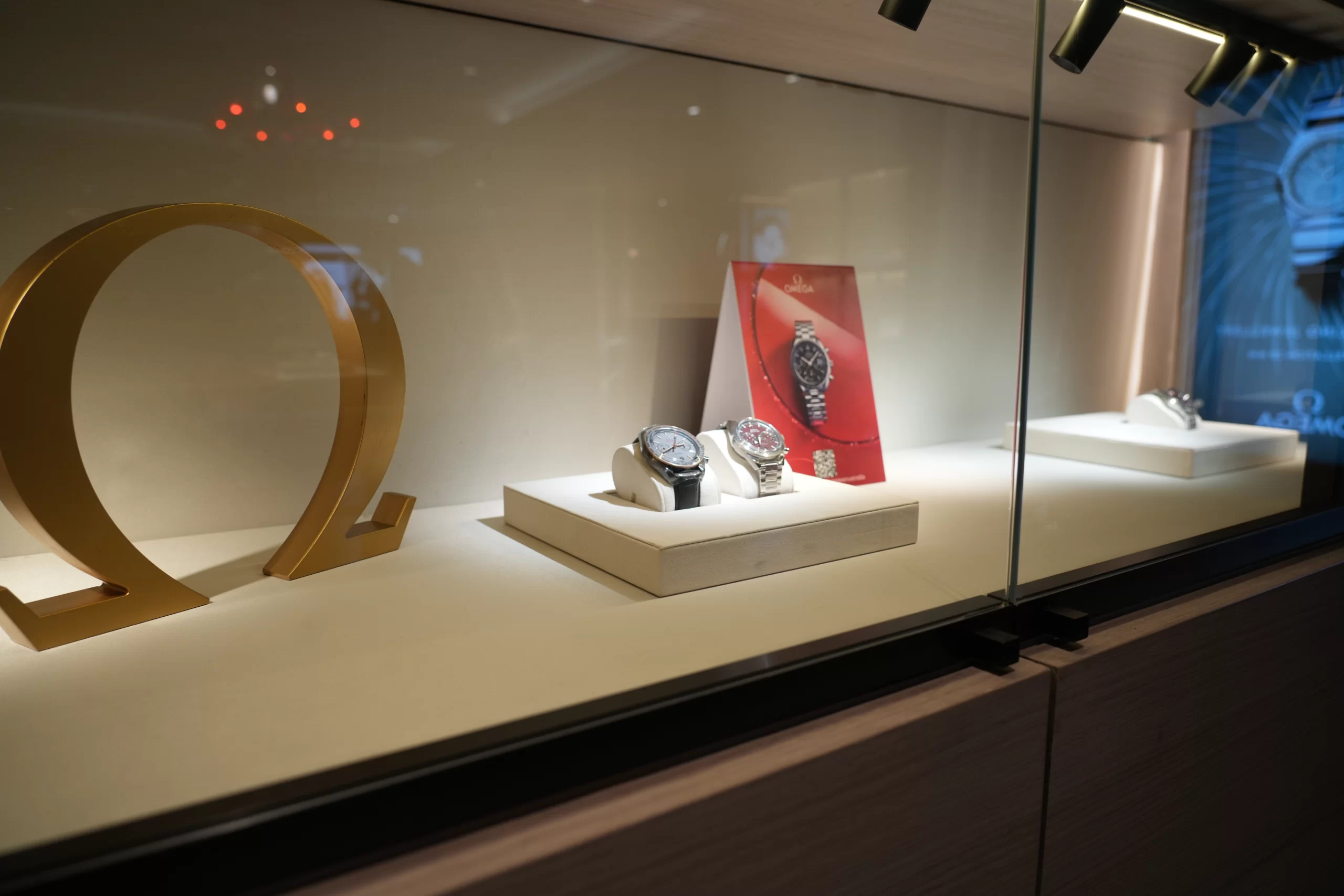
About Omega Watches: A true icon in the world of horology, Omega has set the standard for precision, performance, and innovation since its founding in 1848. The Swiss luxury watch brand has a long-standing legacy in sports timekeeping, serving as the official timekeeper of the Olympic Games since 1932. Omega has also been the trusted companion of astronauts, including the Apollo 11 mission, making it the first watch worn on the moon. Known for its pioneering spirit, Omega continues to lead in watchmaking technology with its Co-Axial escapement and Master Chronometer certification, ensuring the highest level of accuracy and durability. Beyond its technical excellence, Omega is synonymous with elegance, adorning the wrists of world-renowned athletes, celebrities, and visionaries. Its commitment to sports is evident in its partnerships with golf, swimming, athletics, and even sailing—making it a fitting choice for professional golfer Smriti Mehra.

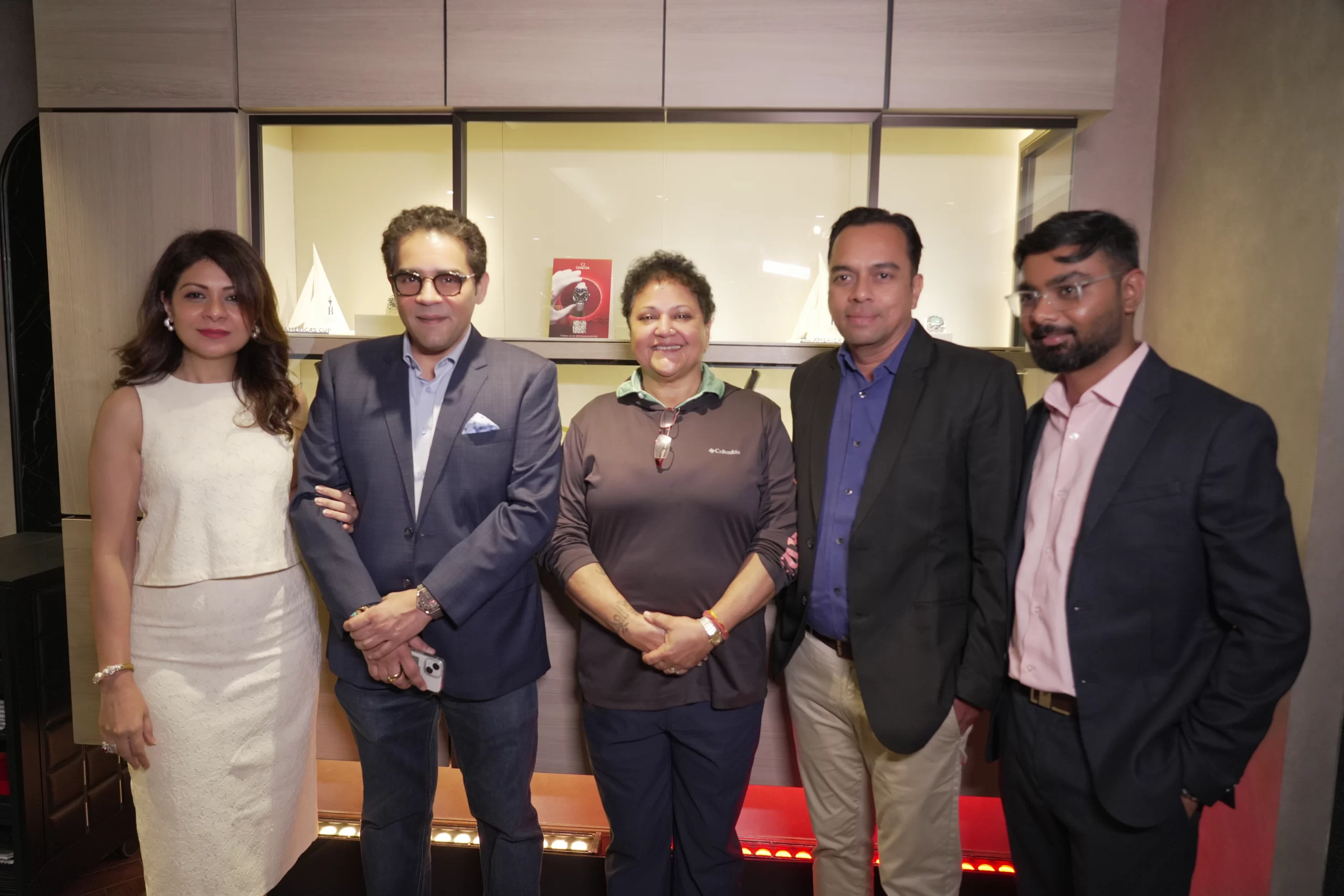
L-R: Nikki Rajan, Time Avenue; Viraal Rajan, Director, Time Avenue; Golf Icon, Smriti Mehra; Ramkrishna Iyer, South and West Sales Head, Omega India and Shivam Sahu, Marketing Manager, Omega India

Breaking Barriers: The Journey to the LPGA Tour

Q: You were the first Indian woman to play on the LPGA Tour. What were the biggest challenges and breakthroughs in your journey?
Smriti Mehra: The biggest challenges, aside from financial constraints, were adapting to a new country and lifestyle. I landed in Los Angeles and had to drive on the right side of the road immediately-no practice, just straight into it! My brother’s advice? “Just follow the car in front of you.” But honestly, the transition wasn’t as daunting because I made incredible friends who became my family. Americans are extremely hospitable and generous, I stayed in people’s homes because I couldn’t afford hotels, and those bonds have lasted decades. They welcomed me like I was one of their own, cooked meals for me, and truly made me feel at home. That kind of kindness and generosity helped me survive and thrive on tour.

Golf itself was another challenge. Competing at the highest level requires immense mental toughness. There were days when I doubted myself, especially as the only Indian woman on the LPGA Tour at the time. But I stayed focused, disciplined, and determined to prove that Indian women belong on the global stage of golf.
The Evolution of Women’s Golf

Q: What has changed the most in women’s golf over the years?
Smriti Mehra: Media coverage has significantly improved. When I started, women’s sports were barely covered. Now, we see more visibility and recognition. Additionally, co-founding the Women’s Golf Association of India was a major step forward in growing the sport for future generations. Back then, there were barely any structured programs for women in golf. Now, we have young girls who see golf as a viable career, and that shift in mindset is incredible.

Q: What advice would you give to young female golfers aspiring to play at an international level?
Smriti Mehra: Discipline is key. Motivation can be temporary, but discipline is permanent. If you learn to be disciplined, you will succeed—not just in golf, but in life. Golf is not just about talent; it’s about consistency, resilience, and having the ability to push yourself even when no one is watching. Learn to manage time, practice diligently, and stay mentally tough. Success will follow.

The Omega Connection: Time, Precision, and Golf

Q: How did your association with Omega begin?
Smriti Mehra: Omega India team invited me to a golf event with Omega at DLF, in Delhi. That’s where the relationship began, and it’s been great ever since. Omega has such a rich history in sports and precision timing, so the connection with golf felt natural.

Q: How important is time management in golf?
Smriti Mehra: It’s everything. If you’re not on time, you don’t play. If you don’t play, you don’t earn. Time is as important as putting food on the table in this sport. Every second counts— whether it’s sticking to a practice schedule, ensuring you’re on the tee box at the right moment, or making split-second decisions during play. Omega understands that level of precision, which is why I appreciate their dedication to perfect timing.

Q: Do you see a connection between golf and luxury watches in terms of precision and craftsmanship?
Smriti Mehra: Absolutely. Golf is all about skill, precision, and mental toughness. Similarly, watchmaking is an art that requires the same attention to detail. Omega embodies that perfection. Every stroke in golf, like every movement in an Omega watch, must be perfectly calibrated for the best outcome. Just like a great golfer, a great timepiece is the result of years of refinement and dedication.

Q: If you could design a golf-specific Omega watch, what features would it have?
Smriti Mehra: Wind direction! That would be a game-changer for golfers and even sailors.

Imagine having a watch that could analyze wind speed and direction in real time. It would take so much guesswork out of shot planning, especially on challenging courses.
A Lifelong Passion for Golf

Q: Where did your love for golf begin?
Smriti Mehra: I grew up in Kolkata, home to the Royal Calcutta Golf Club, the oldest golf course outside the British Isles. My mother, Billie, was a golfer, and growing up, everyone called me “Billie ki beti” (Billie’s daughter). That pushed me to make my own name, and today, people know my mom as Simi’s mother.

Q: Your mother supported your journey as a golfer. How did that shape you?
Smriti Mehra: My mother was independent and gave me the freedom to chase my dreams. She put me on a plane to America with some money and said, “If you don’t succeed, you’ll have to come back and get married.” That was motivation enough! I was determined to make it, and I feel incredibly blessed to do what I love for a living.

Q: Is there anything else you’d like to say?
Smriti Mehra: Golf has been my greatest passion, and I consider myself lucky to have turned that passion into a profession.

Smriti Mehra’s journey is one of grit, passion, and breaking barriers. From being a pioneer in Indian women’s golf to her association with Omega, she continues to inspire generations of golfers. Time, after all, is as crucial in golf as it is in life.

Breitling’s Timeless Legacy & Strategic Growth in India: An Exclusive Interview

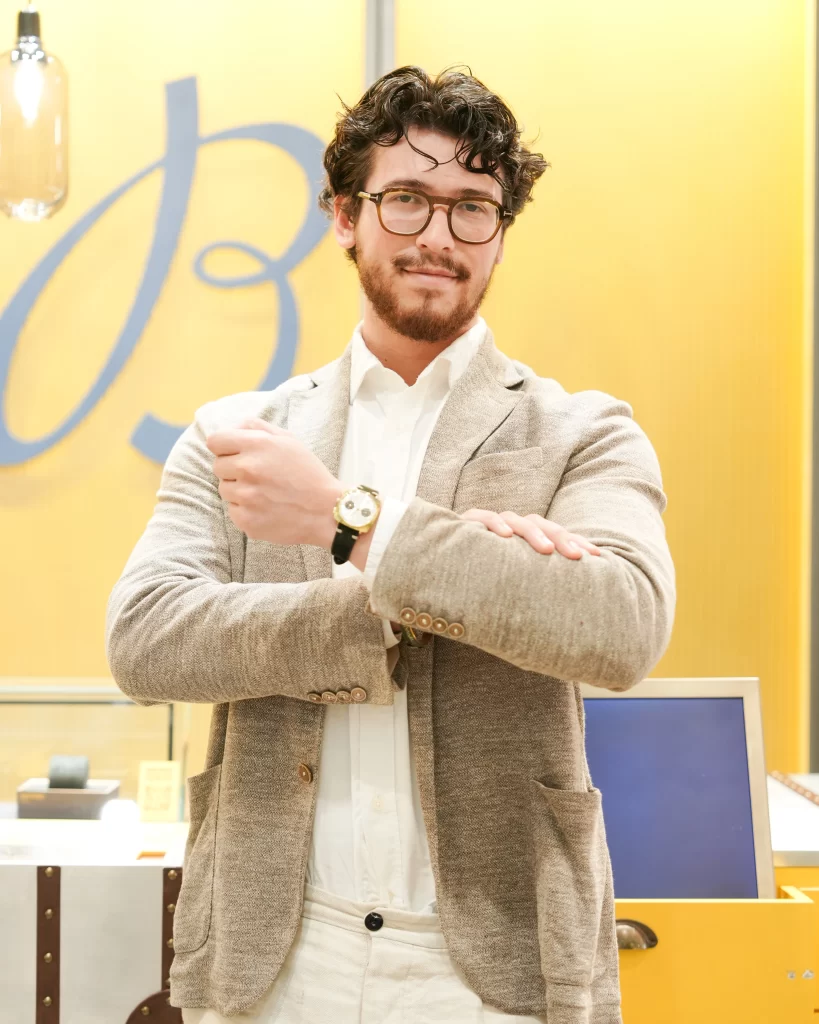
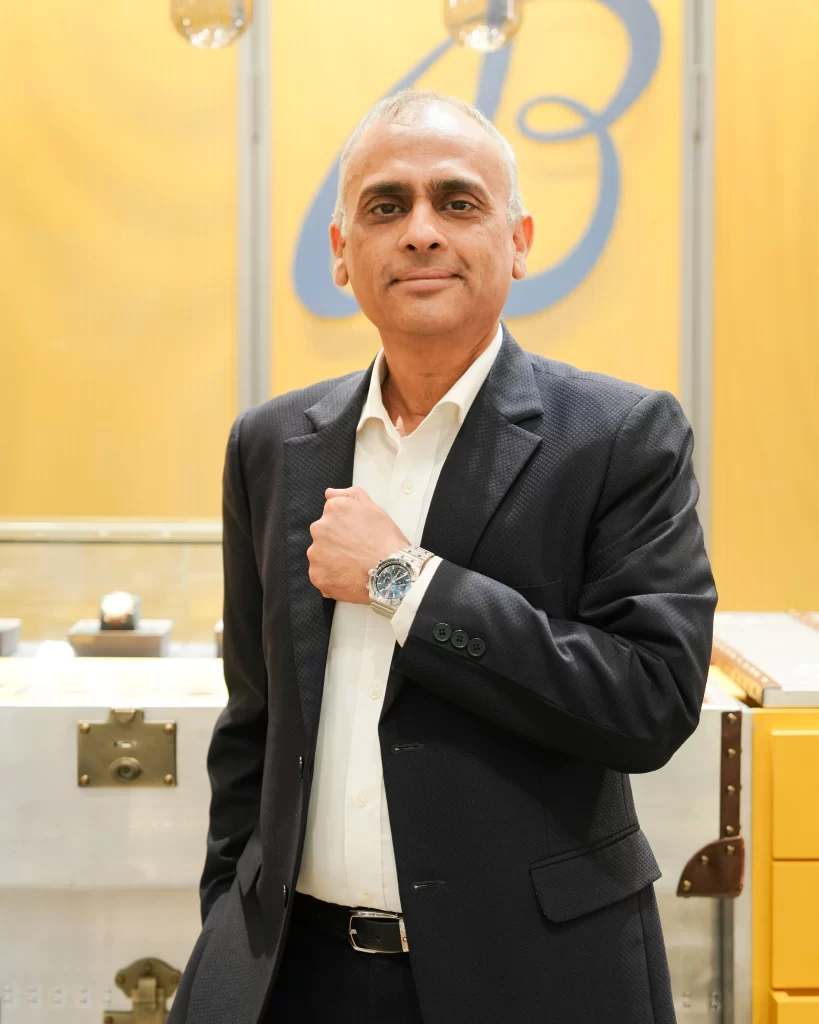
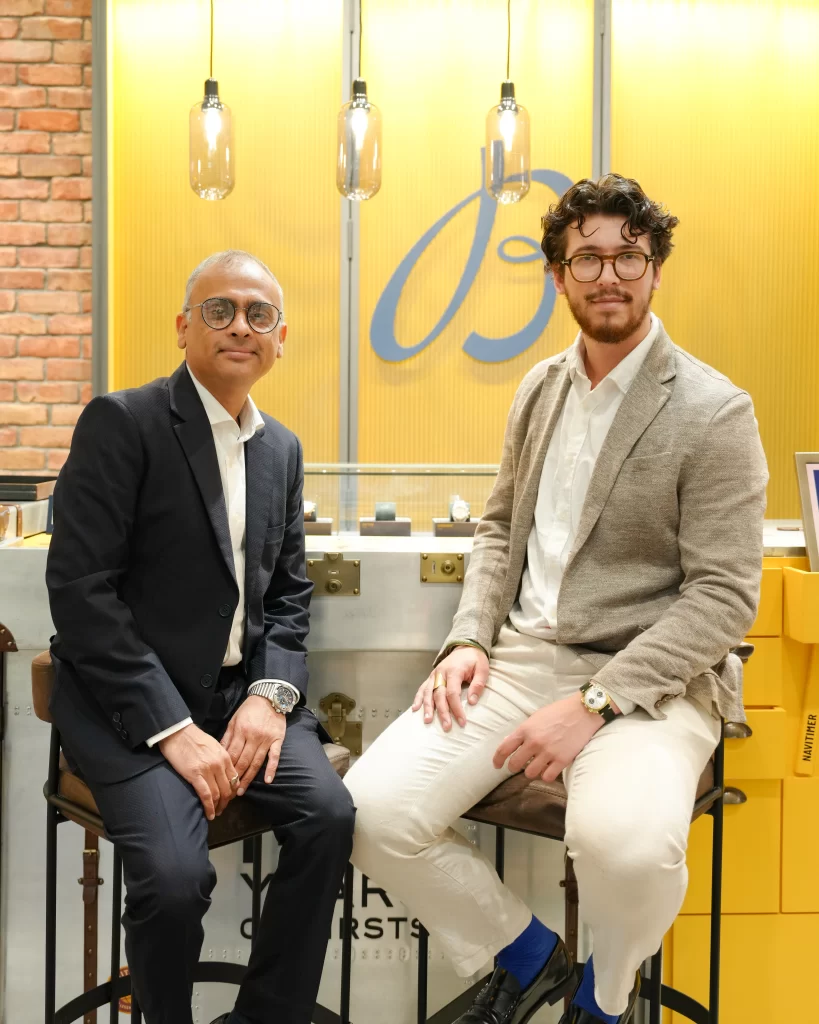
As Breitling strengthens its position in the luxury watch industry, the brand’s commitment to heritage and innovation remains unwavering. With the Time Capsule Exhibition making its final stop in India, we had the opportunity to sit down with Paul Mulocher, Specialist, Breitling Heritage Team, and Pradeep Bhanot, Managing Director, Breitling India, for an in-depth conversation about Breitling’s legacy, innovations, and its expansion strategy in India.
A Journey Through Time with Paul Mulocher

We began our conversation with Paul, who greeted us warmly, his passion for Breitling evident from the start.

“Breitling has a rich 140-year history, but we have never had to reinvent ourselves,” he said, then he delved into the brand’s philosophy. “We stay true to our aviation, chronograph, and military roots while refining and innovating. Reinvention would imply breaking away from the past, but our strength is in maintaining continuity while evolving.”

As we explored Breitling’s groundbreaking innovations, Paul’s enthusiasm was infectious. “One of the biggest game-changers was in 1915 when we introduced the first independent chronograph pusher. Before that, all chronographs were controlled by the crown. We changed that forever. Then, in 1923, we developed the first double pusher, setting the standard for the modern chronograph layout. It was these kinds of advances that solidified our reputation for precision and functionality.”

He continued with excitement. “And then came the Navitimer in 1952. It became the ultimate pilot’s tool. Back then, pilots relied on mechanical flight computers, and the Navitimer allowed them to perform complex in-flight calculations. In a way, you could say it was the first smartwatch for aviators—long before smartwatches existed.”

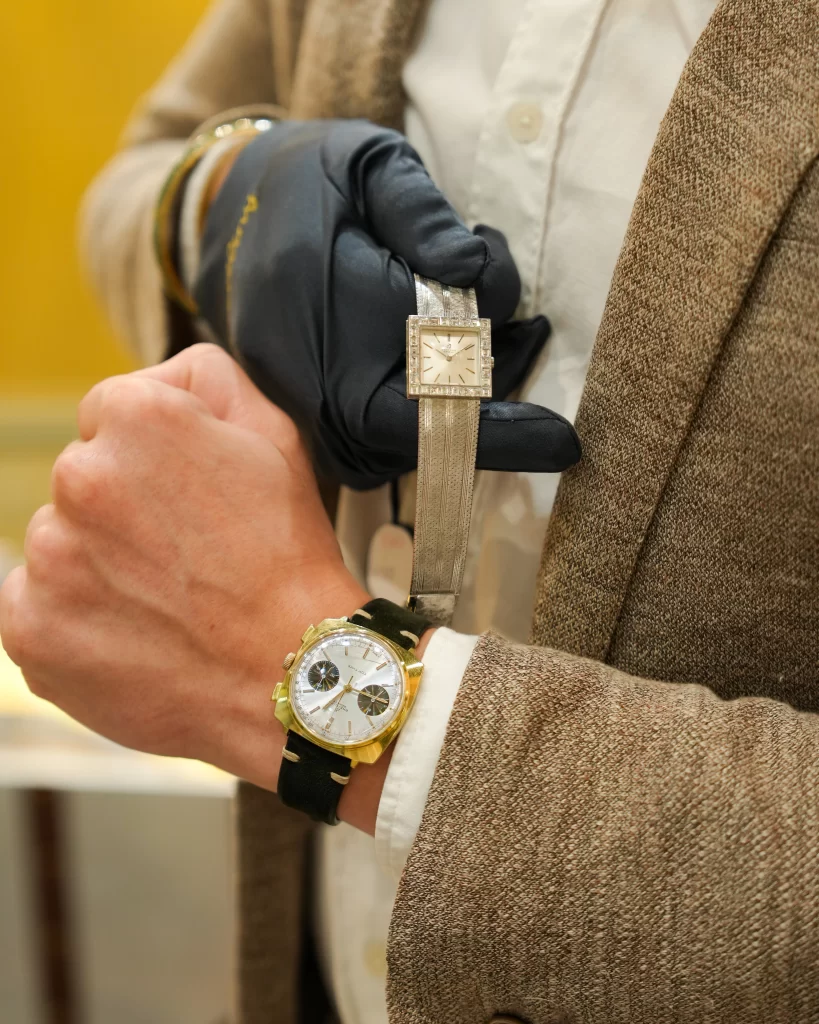
Our discussion turned toward vintage Breitling pieces that collectors should keep an eye on. Paul, clearly an aficionado, spoke animatedly. “If you’re investing in Breitling, you have two approaches,” he explained. “Stick with the classics like the Navitimer and Superocean, which have steadily appreciated in value. Or look for hidden gems—watches with sub-dials at 6 and 12, for example. They’re extremely rare and not yet widely recognized.”

He smiled, recalling a few standout pieces. “The Reverse Panda Navitimer from the 1960s—worn by racing legends Jim Clark and Graham Hill—is one to watch. The Top Time from 1965, famously worn by James Bond in Thunderball, is another. And the first-generation Superocean from 1957? One of the most underrated dive watches of all time.”

Paul also highlighted Breitling’s commitment to engaging collectors. “We recently launched an annual vintage watch sale, a fantastic opportunity for collectors to own rare Breitling timepieces. Plus, our Then & Now pop-up museum in Zurich highlights how our past models inspire current collections. It’s a fascinating journey through time.”

Key take away: Follow Breitling’s heritage blog for expert insights. 

Key Investment Pieces:
Vintage Navitimers – Prices are steadily rising, making them a low-risk investment.
Rare Breitling Models – Super Ocean (1957), Cosmonaute, celebrity-owned watches are increasing in value.
Unique Dial Layouts – Watches with rare chronograph placements are hidden gems in the investment world.

A few key milestones:

1915: First independent chronograph pusher – “Before Breitling, chronograph functions were controlled by the crown. Breitling changed that forever.”

1923: First double pusher – “This model defined the modern chronograph’s layout.”

1940s-50s: Cocktail watches – “An untold part of Breitling’s history, inspired by the founder’s love for fine jewelry.”

1952: Navitimer – “The first smartwatch. A pilot’s tool, enabling in-flight calculations.”

1960s: First diving chronograph with oxygen-consumption tracking – “A diver doesn’t need to track seconds but must know how much oxygen remains.”

1962 Cosmonaute—The first Swiss watch worn in space, even before the Omega Speedmaster landed on the Moon. It was developed for astronaut Scott Carpenter, featuring a 24-hour dial so he could distinguish between day and night while orbiting Earth.

The Growth of Breitling in India with Pradeep Bhanot

Switching gears, we spoke with Pradeep Bhanot, whose insight into Breitling’s expansion in India was equally compelling.

“India is one of the fastest-growing luxury watch markets,” Pradeep began, his voice full of conviction. “The median age here is just 28.1 years, and Millennials and Gen Z make up 40% of the population. These young consumers are fueling the demand for luxury watches. Collectors here are no longer just buying to own; they see watches as investment assets.”

When asked about Breitling’s retail strategy in India, Pradeep outlined the company’s ambitious plans. “Right now, we have four boutiques, but that’s just the start. We plan to expand to at least ten in the next two to three years. Our goal is to make Breitling the first choice for India’s rising class of collectors. While we are strengthening our presence in metros like Mumbai, Delhi, and Bangalore, we’re also focusing on tier-2 cities, which have significant growth potential. We see a strong appetite for luxury watches beyond the major urban centers.”

The conversation turned to digital expansion. Would Breitling introduce online sales in India? Pradeep considered the question carefully before responding.

“Globally, we are e-commerce ready,” he nodded. “But in India, luxury watches are still very much a touch-and-feel purchase. The boutique experience is important. Unlike fashion, where customers are comfortable buying online, luxury watches require an emotional connection. That being said, the brand may explore local e-commerce partnerships in the future or may eventually launch our own e-commerce platform. It’s a balancing act between tradition and modern consumer habits.”

One of Breitling’s unique marketing strategies for India is its lack of celebrity endorsements. When asked why, Pradeep’s response was immediate.

“Breitling has a different philosophy. Every Breitling customer is our brand ambassador. Instead of relying on celebrity endorsements, we focus on engaging with real collectors and enthusiasts—people who genuinely appreciate craftsmanship. Their passion speaks louder than paid endorsements. Our brand is built on authenticity and legacy, and we want our customers to feel like they are a part of that journey.”

Key take away: For now, the focus remains on physical retail expansion and enhancing the in-store experience for our customers.

Looking Ahead: Breitling’s Future in India

With its deep-rooted heritage, investment-worthy timepieces, and ambitious expansion plans, Breitling is poised for long-term success in India.

“The luxury watch landscape in India is evolving, and Breitling is evolving with it,” Pradeep said, his confidence unwavering.

As our conversation drew to a close, Paul left us with a parting thought. “Breitling has so much to offer—both what you expect and what you don’t. If you love watches, come explore our legacy. It’s a fascinating world, and we are thrilled to share it with the growing community in India.”

With the Time Capsule Exhibition making its final stop in India, this is the perfect moment for collectors and watch enthusiasts to experience Breitling’s craftsmanship firsthand. The future looks bright for Breitling in India, and for watch lovers.

As Breitling continues its journey in India, one thing is clear: it is here to stay, innovate, and connect with collectors on a deeper level.

What’s Next?

📍 Visit a Breitling boutique to explore their latest collection.
📍 Follow Breitling’s heritage blog to learn more about their history.
📍 Keep an eye out for India-specific limited editions coming soon!