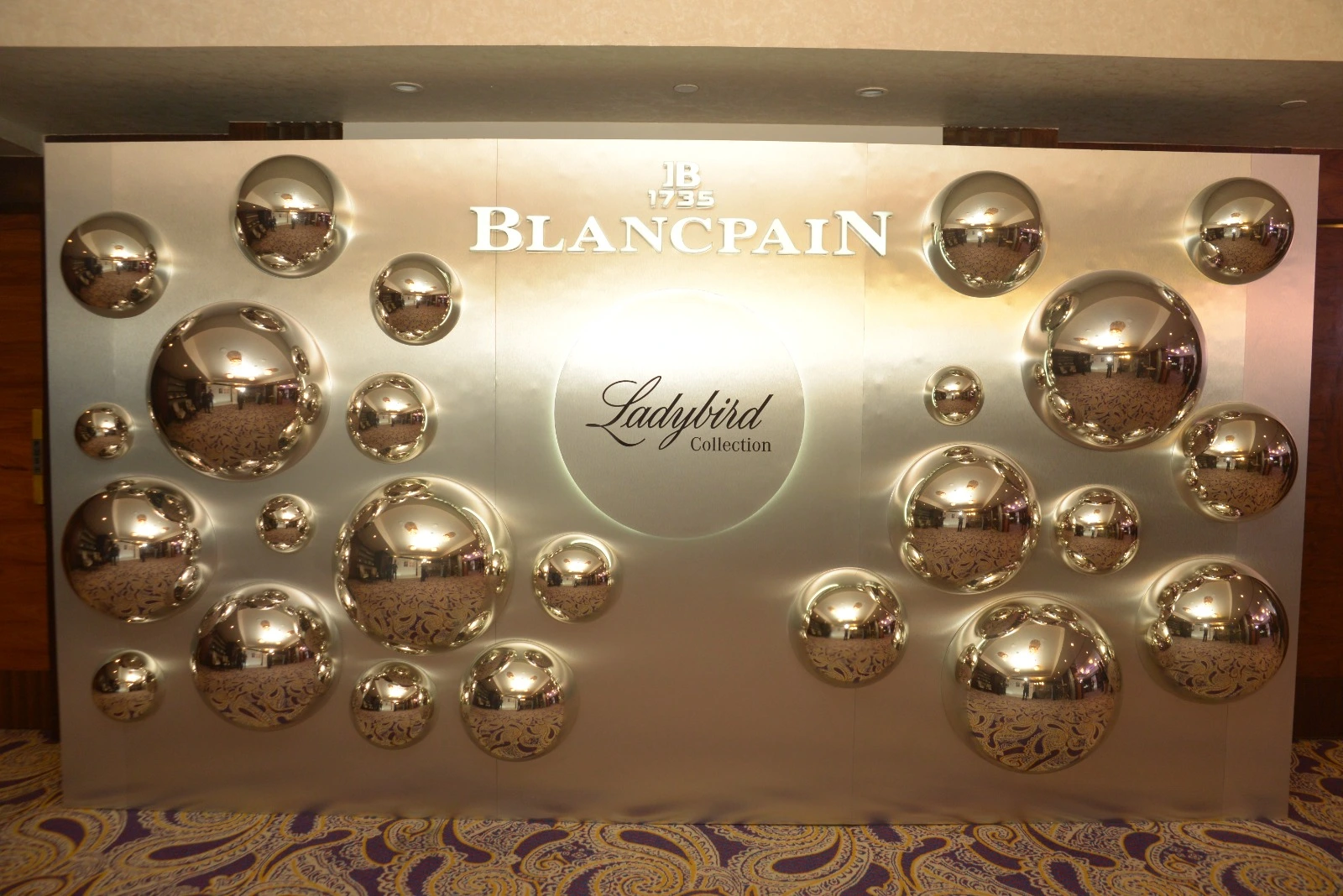
Mumbai, October 2026. As the world’s oldest watch brand, Blancpain has spent nearly three centuries crafting luxury watches. This season, the Swiss Manufacture de Haute Horlogerie unveils two new watches; Blancpain Lady B, a spherical mechanical jewel created for the 70th anniversary of the Ladybird collection, and the new Villeret novelties, led by the Ultraplate in a new 38 mm size and the Phases de Lune in 29.2 mm. Both are fully mechanical, as every Blancpain has been since 1735.
Founded in the Swiss village of Villeret, Blancpain has never made a quartz watch. This historic feminine timepiece was created by Blancpain, under the helm of CEO Betty Fiechter, the first woman to lead a Swiss watchmaking house. She joined the workshop as a sixteen-year-old apprentice and went on to become the first woman to own and lead a Swiss watch manufacture. With her nephew Jean-Jacques Fiechter, they both created two icons that still define Blancpain: The Fifty Fathoms in 1953 and the Ladybird in 1956.
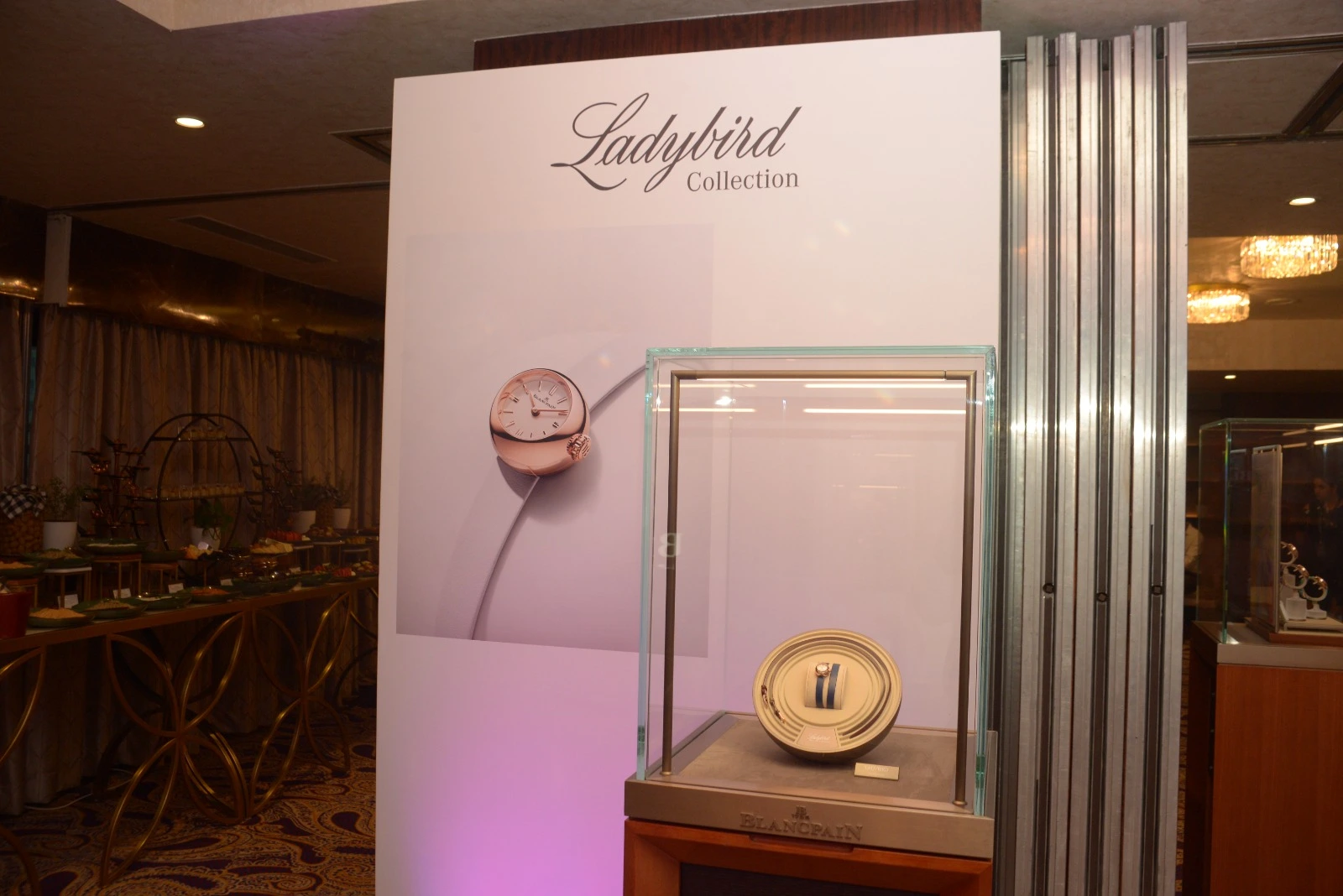
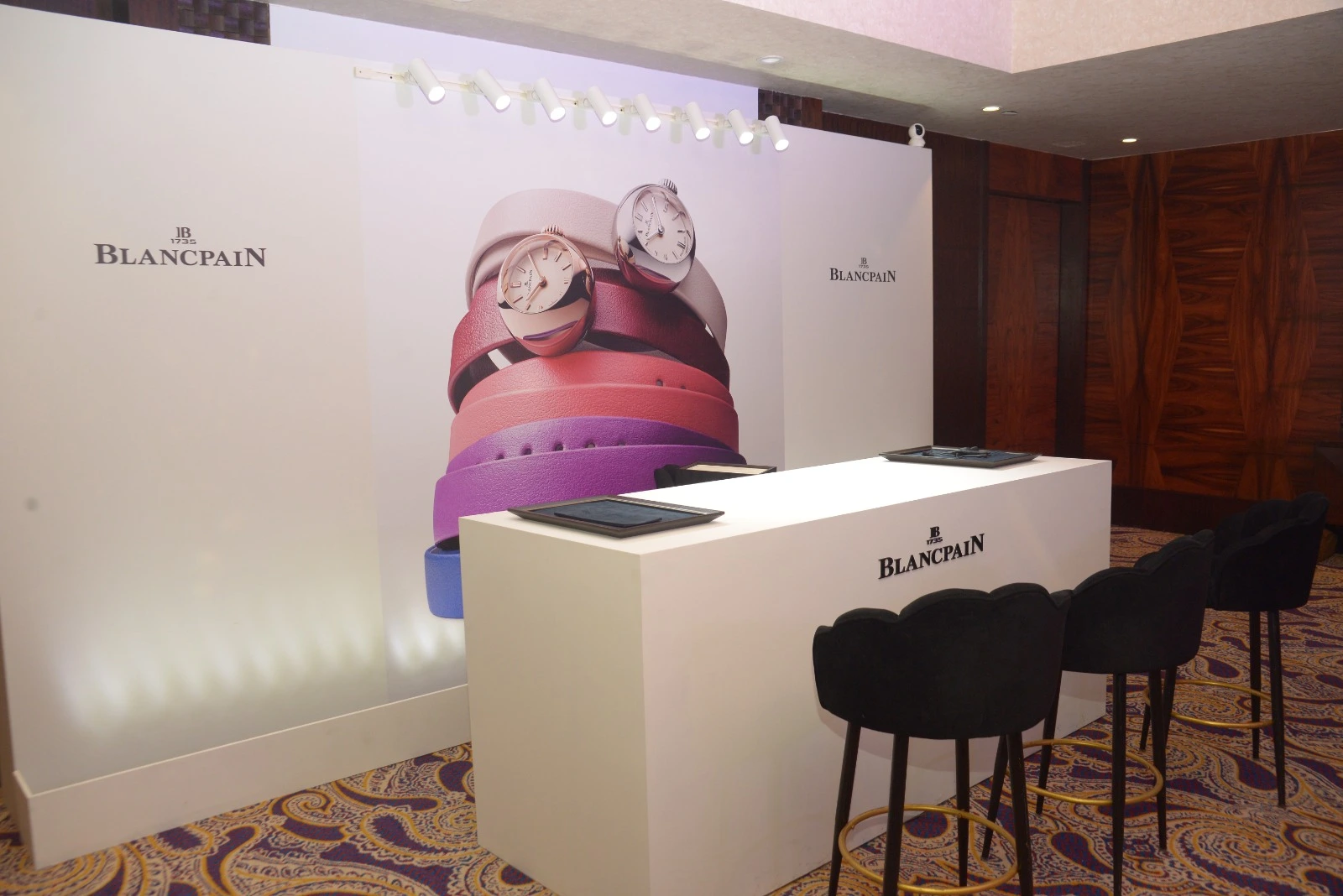
Seventy years after the Ladybird introduced what remains the world’s smallest round mechanical movement ever mass-produced, Blancpain answers with Lady B. Inspired by the rounded, optimistic design of the 1950s, it is a polished sphere just 19 mm across, small enough to rest in your palm like a pebble. There are no lugs and no visible attachments: a double-tour leather strap passes straight through the case and wraps the wrist. In stainless steel or 18K red gold, it is a watch, a jewel and a design object at once.
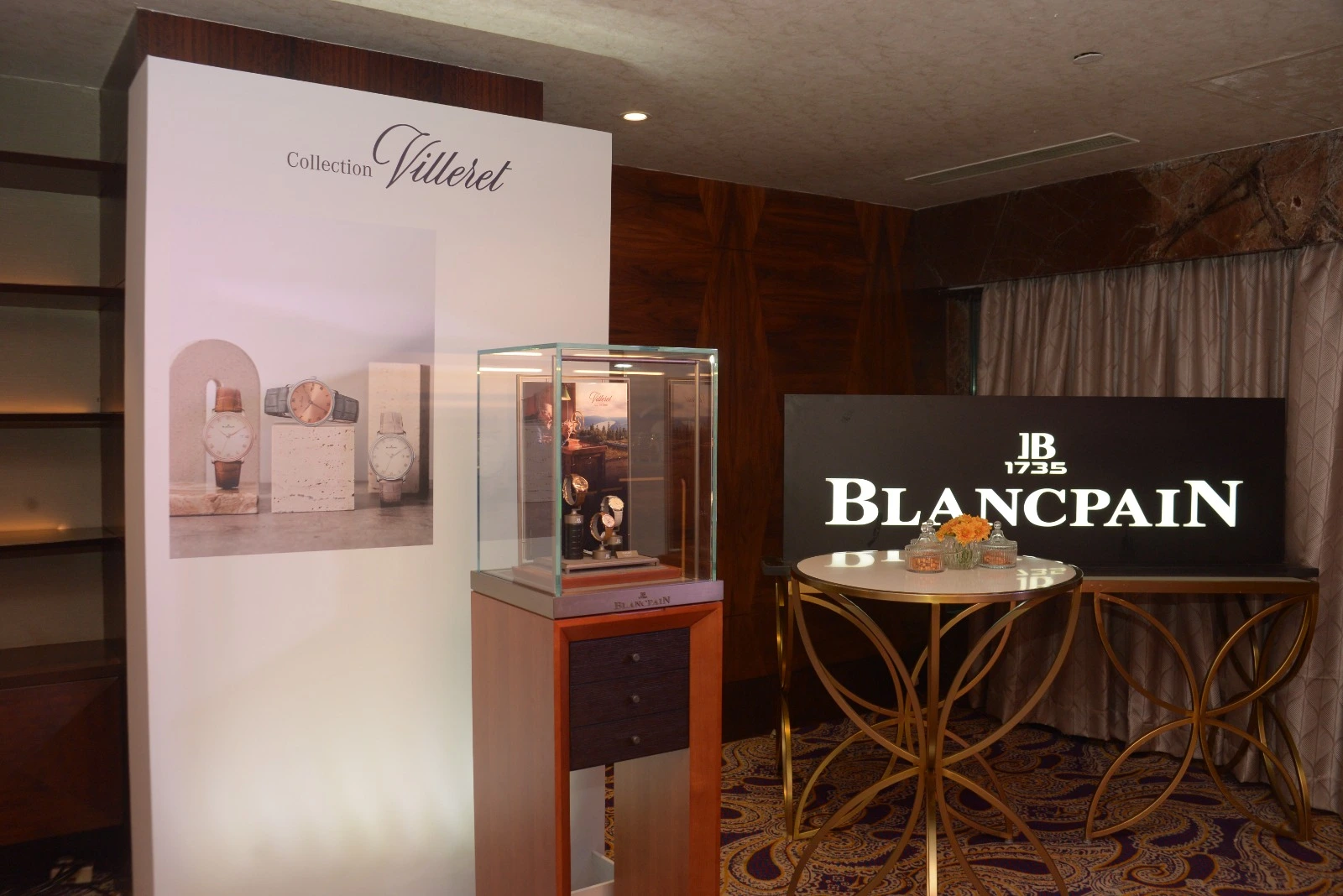
The Villeret collection speaks in a quieter voice. The collection traces its roots to 1983, when Blancpain introduced the smallest complete calendar moon phase watch of its time, in just 34 mm, as the rest of the industry turned to quartz. Today the Ultraplate arrives in a new 38 mm beside the classic 40 mm, in stainless steel or 18 ct red gold. It is so slim and balanced that you forget it is there. Alongside it, the Villeret Phases de Lune in 29.2 mm brings Blancpain’s signature moon, glowing in gold against a blue ceramic sky and framed by a diamond-set bezel.
“The Villeret has always expressed its character through restraint rather than display.”Marc A. Hayek, President & CEO, Blancpain.
Presence of Mr. Arun Bhutani, Blancpain Brand Manager – India, at this launch event underscores commitment to Indian market and collectors who have grown in knowledge and appreciation for real craft.
The launch marks another chapter in Blancpain’s story in India, where the house has built its presence with selective distribution in India and a growing community of collectors who value mechanical watchmaking. With Lady B and the new Villeret watches, Blancpain offers Indian audiences two ways into its world: a jewel-like watch with a story rooted in women’s watchmaking, and a refined everyday dress watch in the most versatile size yet. Both are available at Blancpain boutiques and authorised retailers across the country.
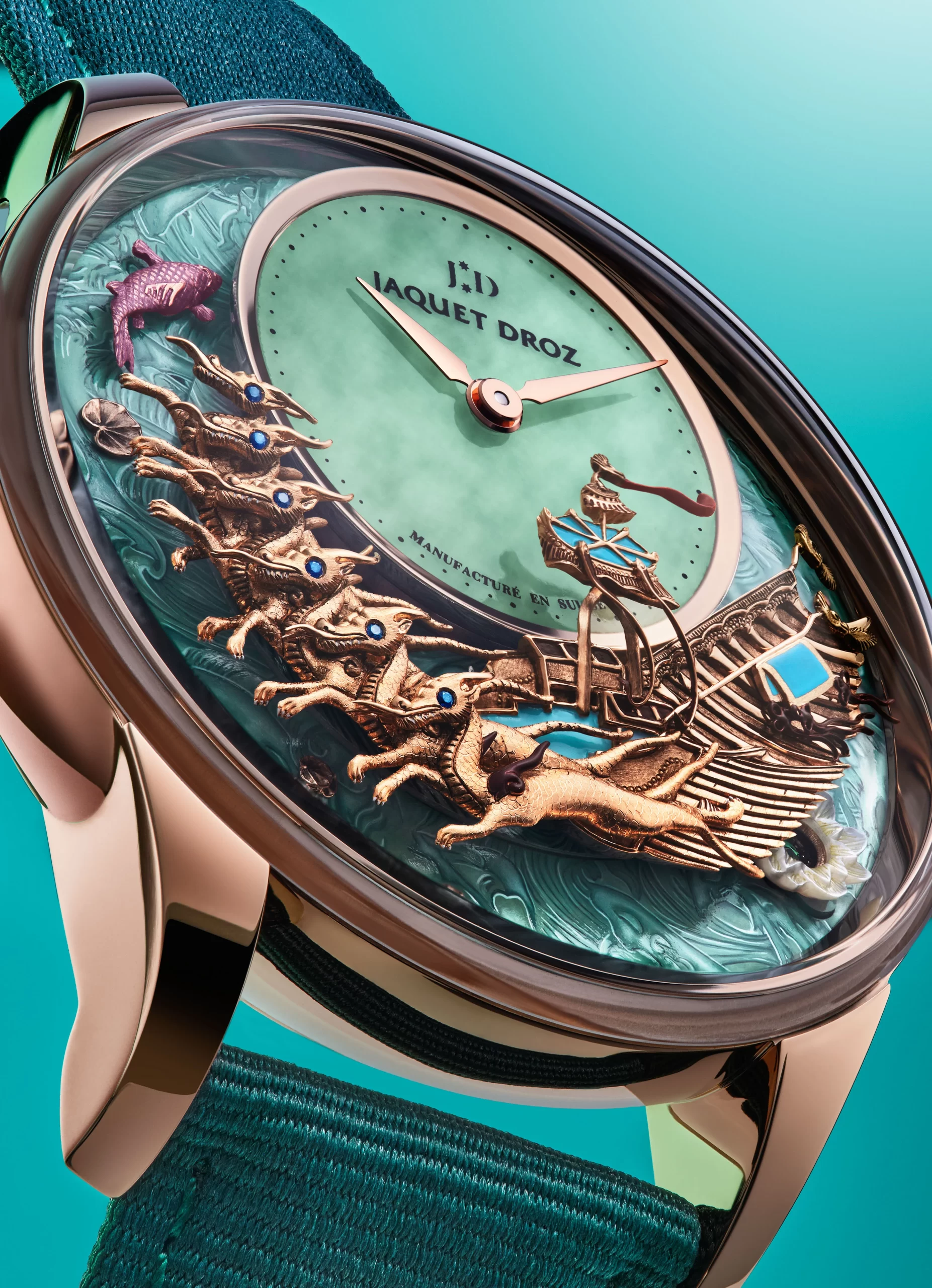
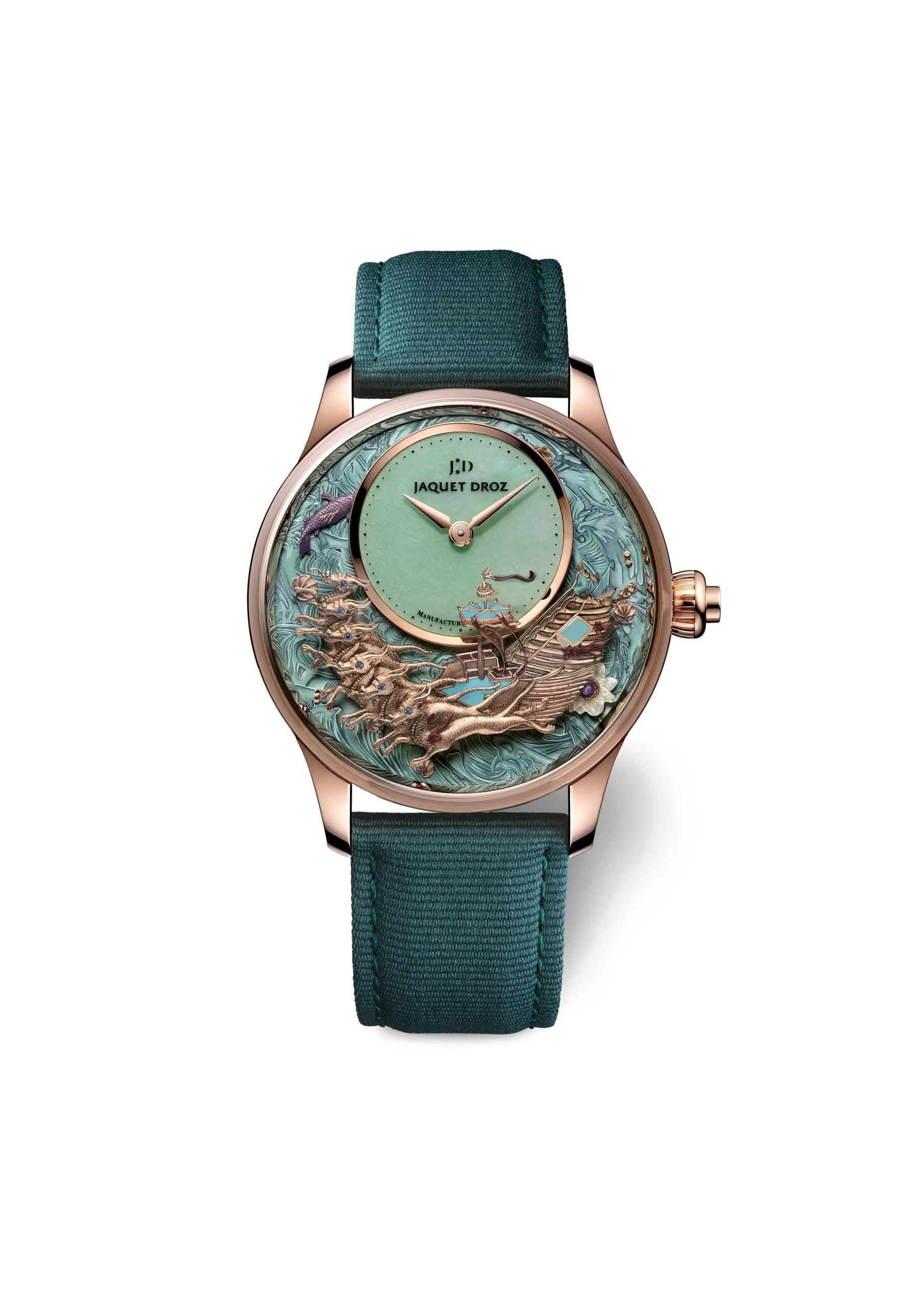
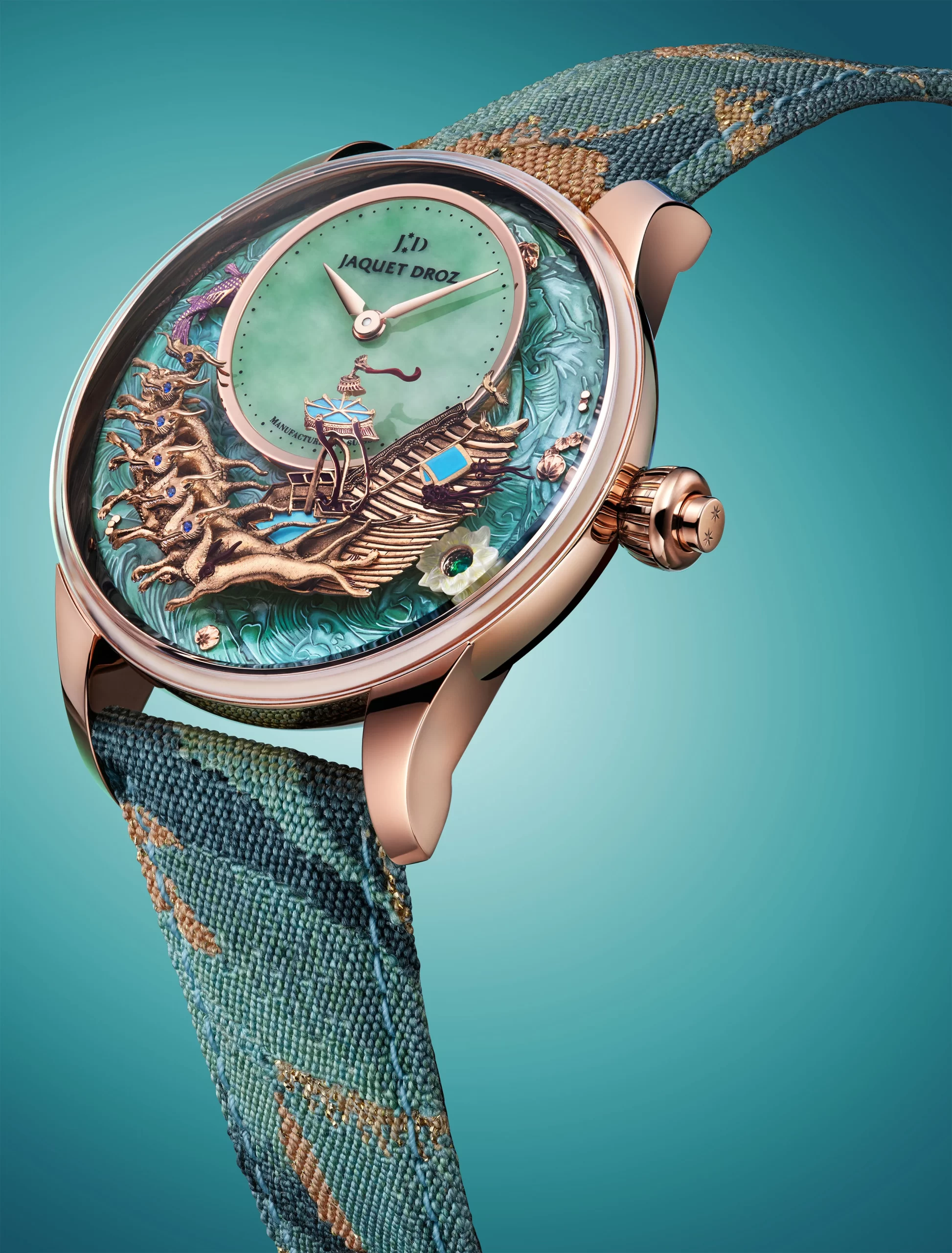
This is one of the most ambitious projects ever undertaken by Jaquet Droz. It was born of a genuine artistic encounter between the workshop in La Chaux-de-Fonds and Wang Limin, a living Chinese national treasure and one of the last masters of traditional Quejinxiu embroidery, using gold thread and peacock feathers. The unique piece created with Jaquet Droz draws inspiration from a painted scroll that features a poem composed in 222 AD, an unprecedented work that occupies a central place in the history of Chinese art. The Luo River Automaton embodies the Philosophy of the Unique taken to its pinnacle.
This is a unique project, crafted in the utmost secrecy and down to the finest detail over more than two years. It embodies much more than a client’s creative vision: It carries with it an entire chapter of Chinese history and civilization.
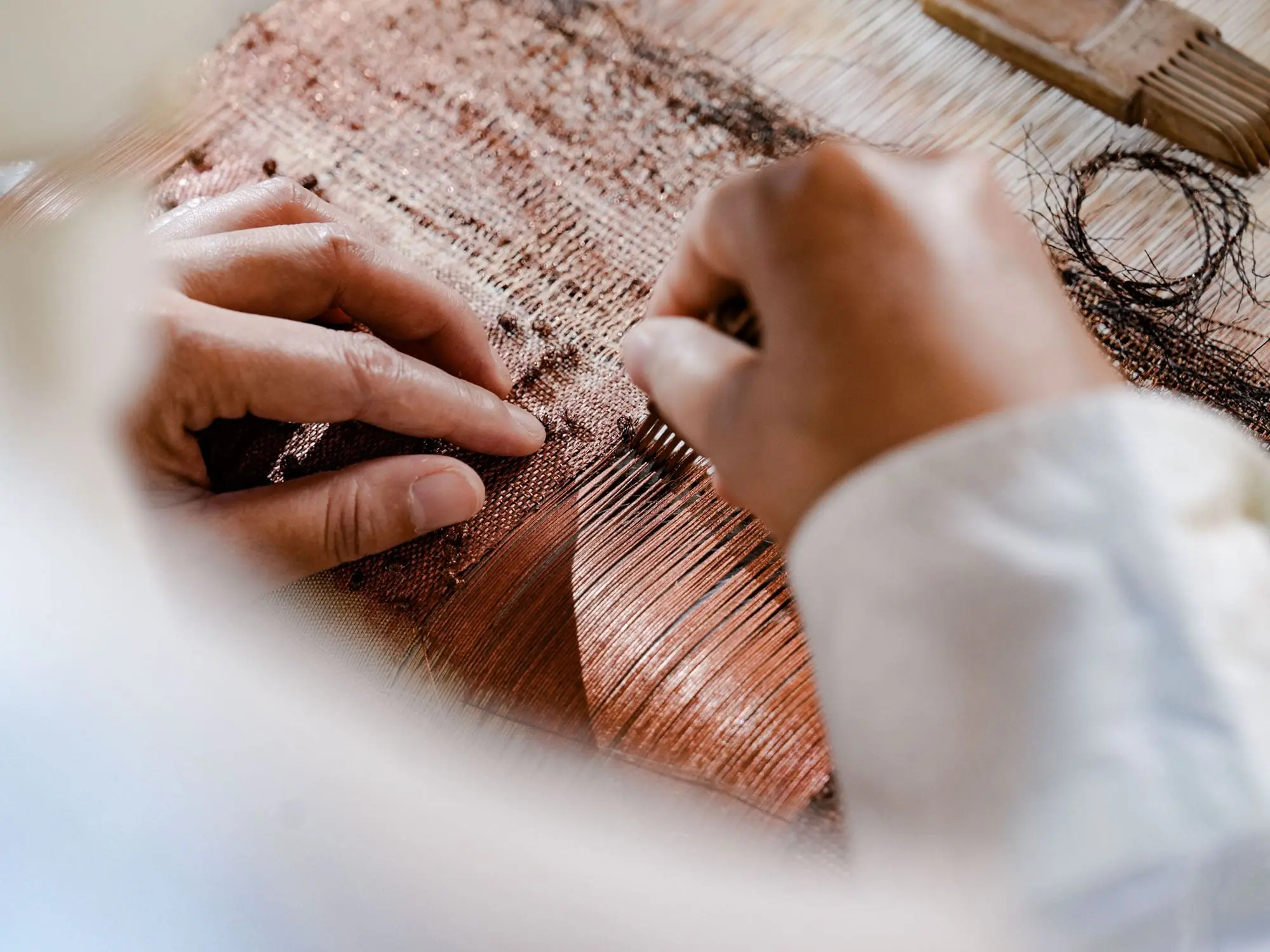
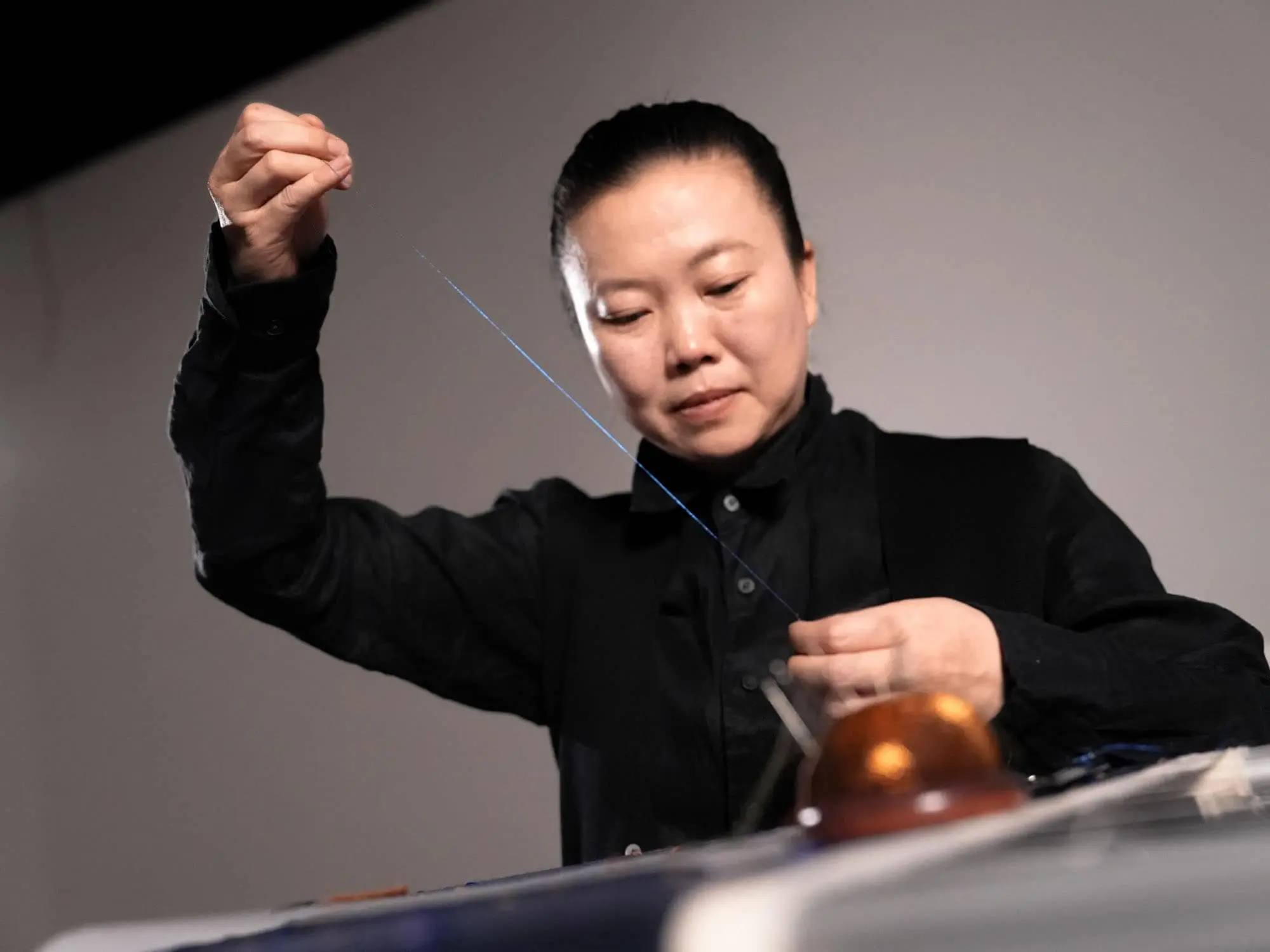
Where emotion and passion intersect, the traditional Quejinxiu embroidery is created by Wang Limin, a leading figure in the Chinese arts and crafts tradition. A highly respected national figure, she preserves this ancestral craft, which she has succeeded in fully restoring by hand, entirely on her own. Her devotion keeps alive this art form once reserved for the imperial court and Buddhist temples. For this unprecedented collaboration, the La Chaux-de-Fonds workshop brought together a collector, this leading artist, and Jaquet Droz’s artisans, who breathed life into their shared vision.
Wang Limin is a custodian of the art of Quejinxiu, a traditional textile art created using gold thread, peacock feathers and silk thread. Her expertise also encompasses Kesi, the traditional Chinese art of silk tapestry, characterized by its slit-weaving technique. She is also skilled in dyeing, inlay, embroidery, and painting.
Born into a family devoted to Quejinxiu, Wang Limin has revived this ancient art. She founded an institute dedicated to research, preservation, and transmission, where she now trains a very select number of apprentices to ensure the survival of this precious craft.
More than any other, this project symbolizes the union of hand and spirit. Driven throughout by the personal involvement of Alain Delamuraz, CEO of Jaquet Droz, and Wang Limin, it was shaped through a dialogue marked by deep mutual respect. Wang Limin, an artist of national renown whose work has been exhibited in China’s leading museums, including the National Museum, had so far declined all offers of collaboration. However, she felt that, for a work of such significance, only Jaquet Droz could bring the project to life.
Based on an ancient scroll containing a poem written in 222 AD, the Luo River Automaton celebrates the fluidity of time flowing like a river, the quest for eternal love, and humankind’s aspiration to immortality. Wang Limin chose a specific section at the heart of this more than 10-meter-long scroll to embody these themes that permeate Chinese culture.
The artist was meticulous about every element of her timepiece, each of which had to convey symbolism resonating with her art. Nothing was left to chance. Wang Limin’s requirements were exacting. The materials, colors, shapes, animation rhythms, and the positioning of motifs all had to reflect her artistic essence. For all these reasons, the discussions between Wang Limin and Jaquet Droz to define the project alone spanned the two years from 2024 to 2025. Multiple avenues were explored. From China, Wang Limin reviewed and approved them via Studio 8, an immersive workshop equipped with 4K cameras that allows every Jaquet Droz client to observe the creation of their unique piece step by step. The teams also traveled to China to experience Wang Limin’s art in her studio, which is normally closed to visitors.
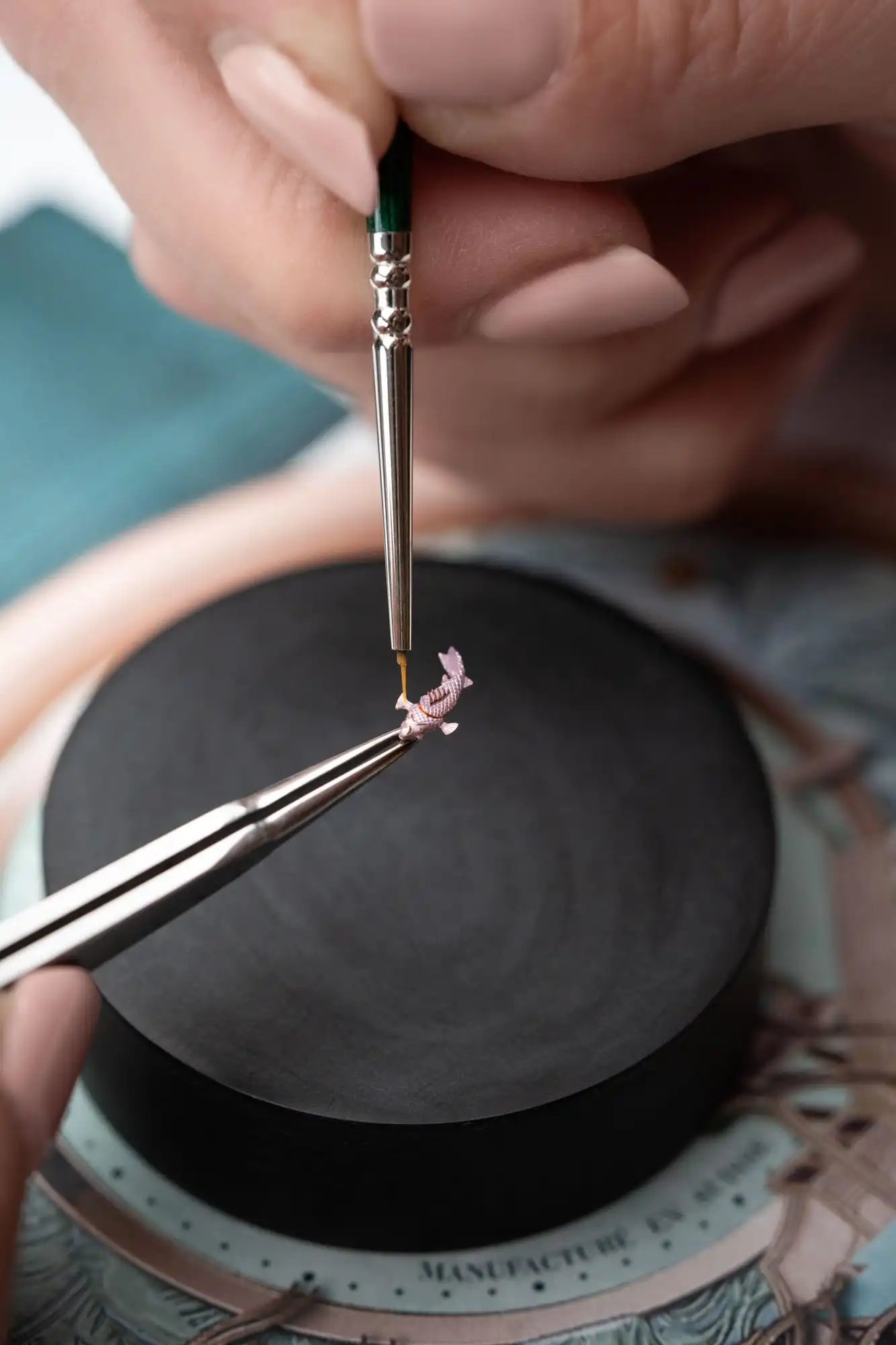
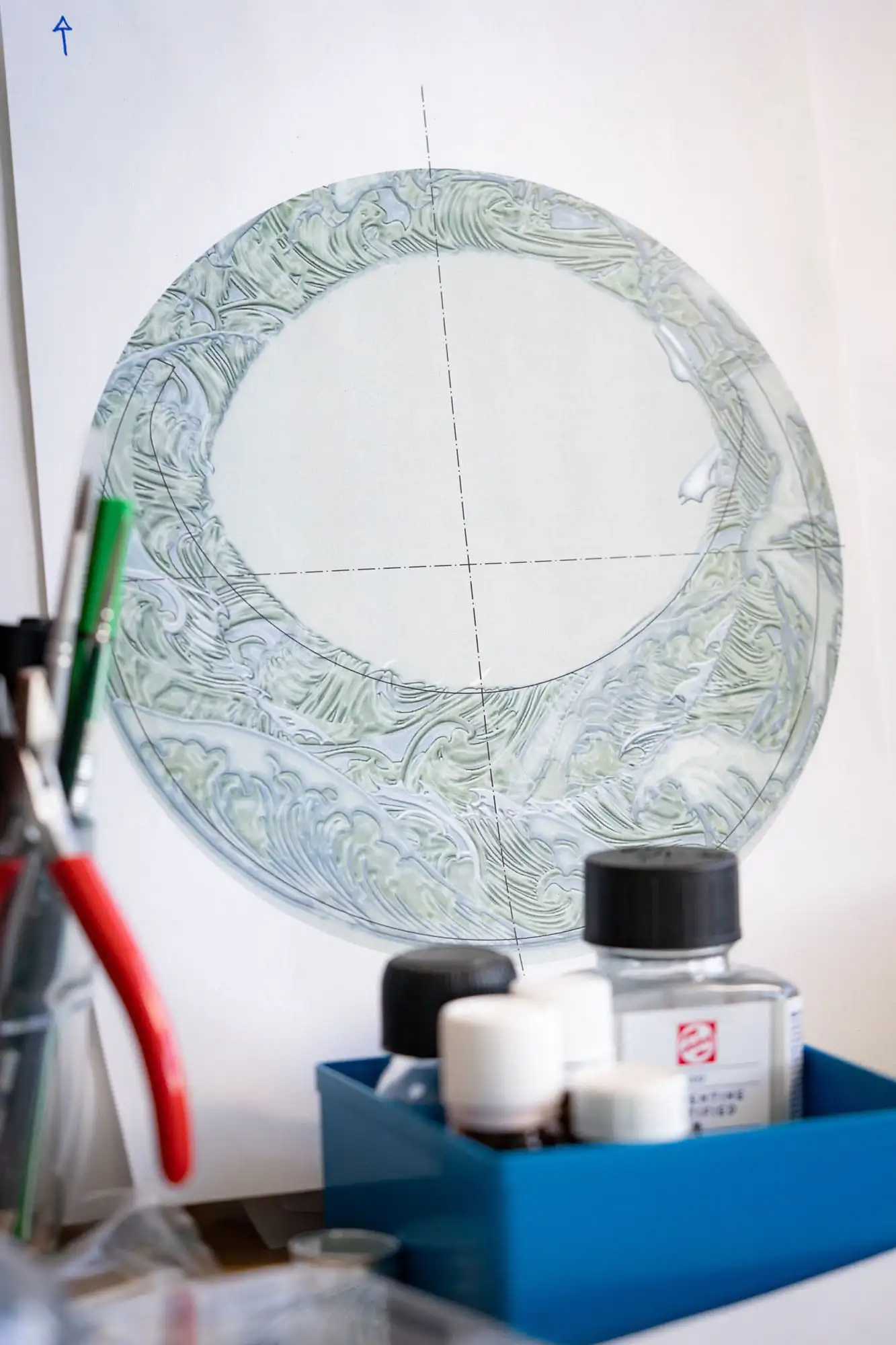
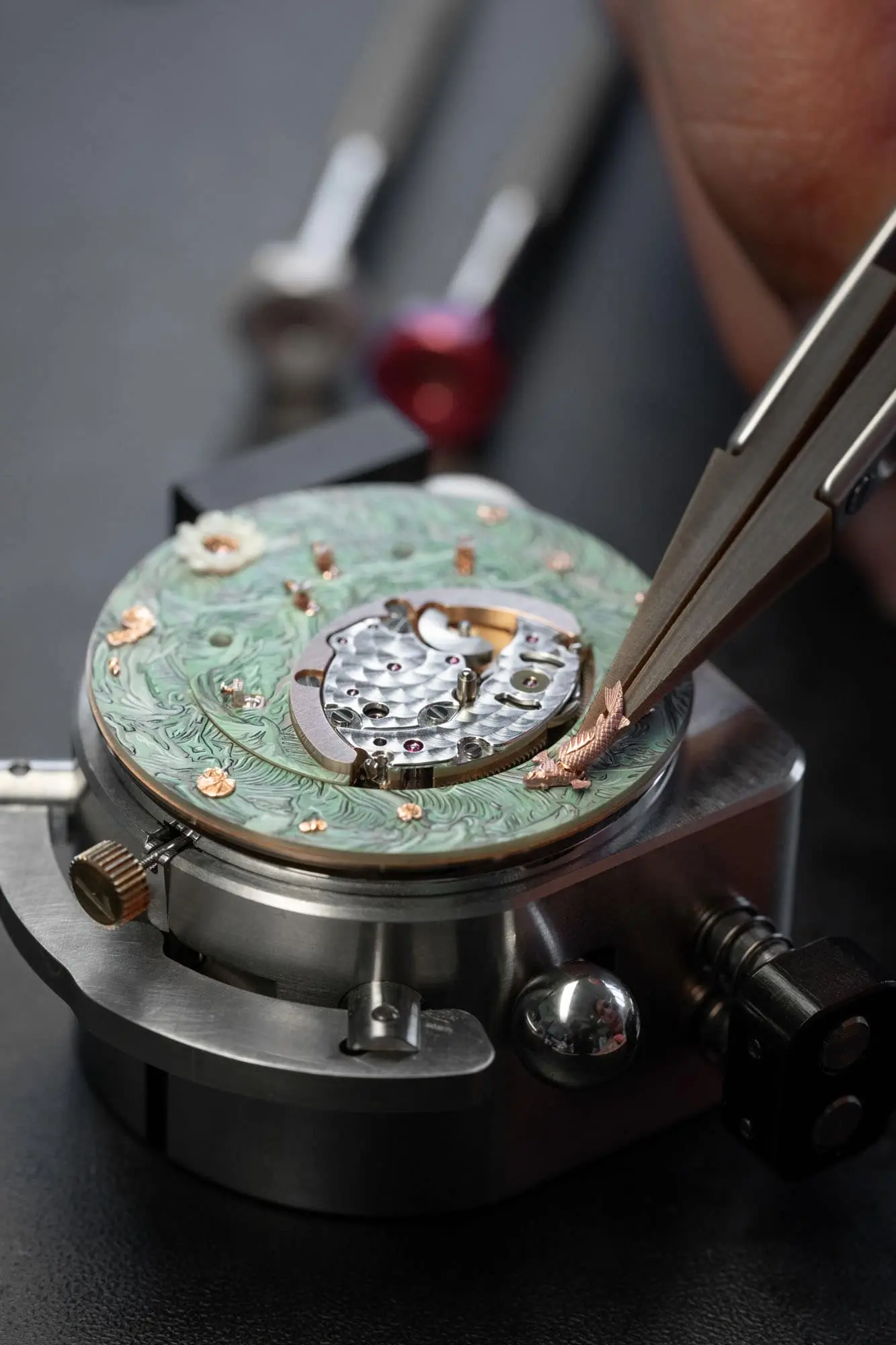
Almost all of Jaquet Droz’s artisans were involved in the creation of the Luo River Automaton: engraving, sculpture, painting, stone-cutting, gem-setting, and many other crafts, naturally including watchmaking. The piece is an automaton in the purest Jaquet Droz tradition. The central, fixed timekeeping section features two red gold hands on an imperial jade dial, in an especially light tone specifically chosen by the artist. Aside from a static half-moon-shaped plate beneath this dial, the entire outer ring is in motion, completing one rotation every 30 seconds. This scene, both static and animated, is crafted in mother of pearl and decorated with a botanical miniature painting that gives it the striking illusion of being engraved.
This rotating ring symbolizes the flow of water, and therefore the passage of time. It features numerous hand-chiseled gold water lilies. One of them has a gemstone set in its center. As the disc rotates, it transforms: Purple sapphire, blue sapphire, emerald. The effect enhances the magic of these mysterious transformations, with a barely perceptible change every 10 seconds.
Opposite this water lily, the Kun, a giant mythical fish from Chinese mythology imbued with symbolism, moves in time with the animation: it swims through the mother-of-pearl river, moving its body and tail to propel itself forward over the course of its 30-second rotation. Thanks to the two barrels that drive the animation, it can run for up to four minutes, and the owner can interrupt it as desired by simply pressing the pusher at 3 o’clock.
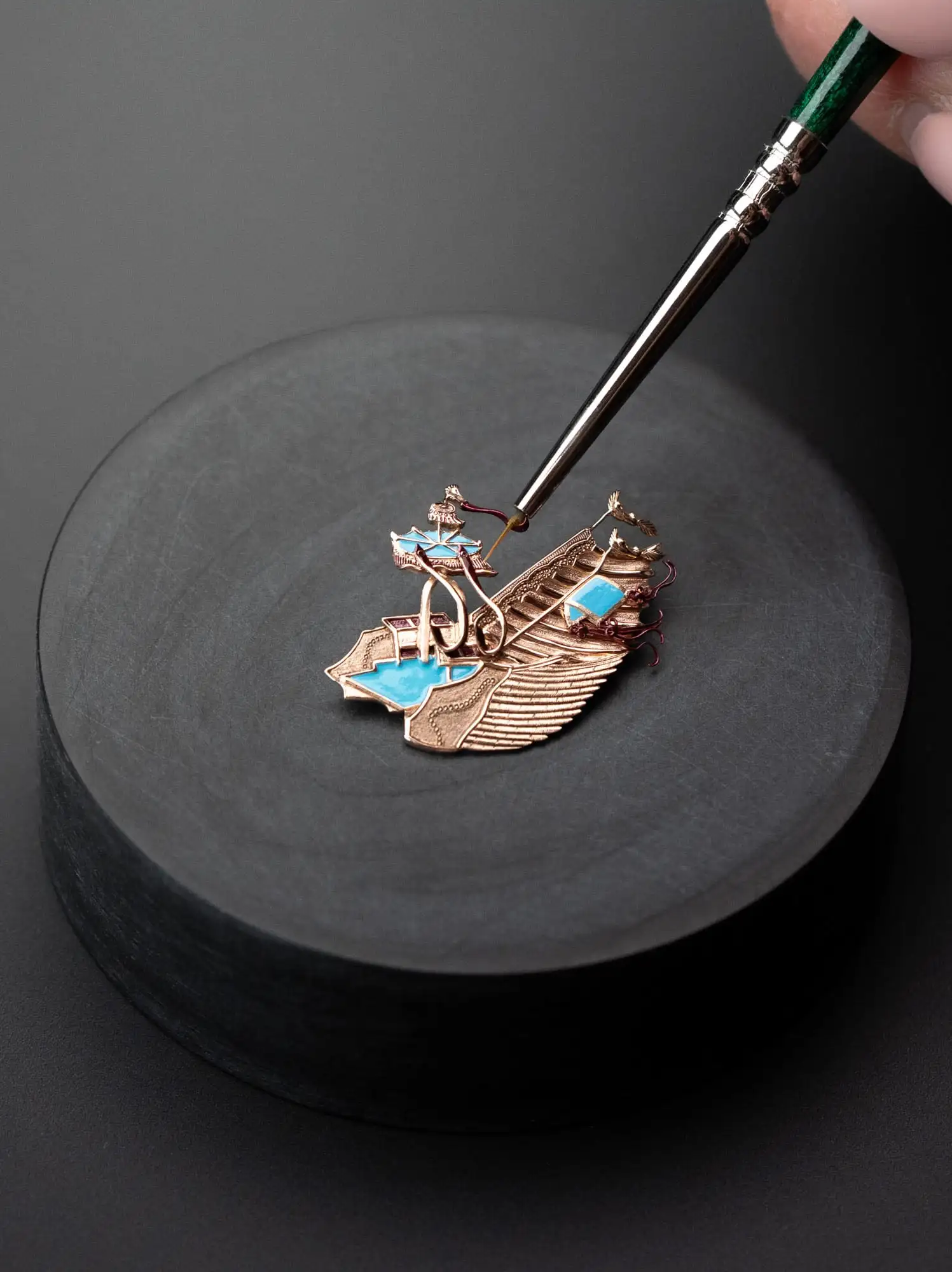
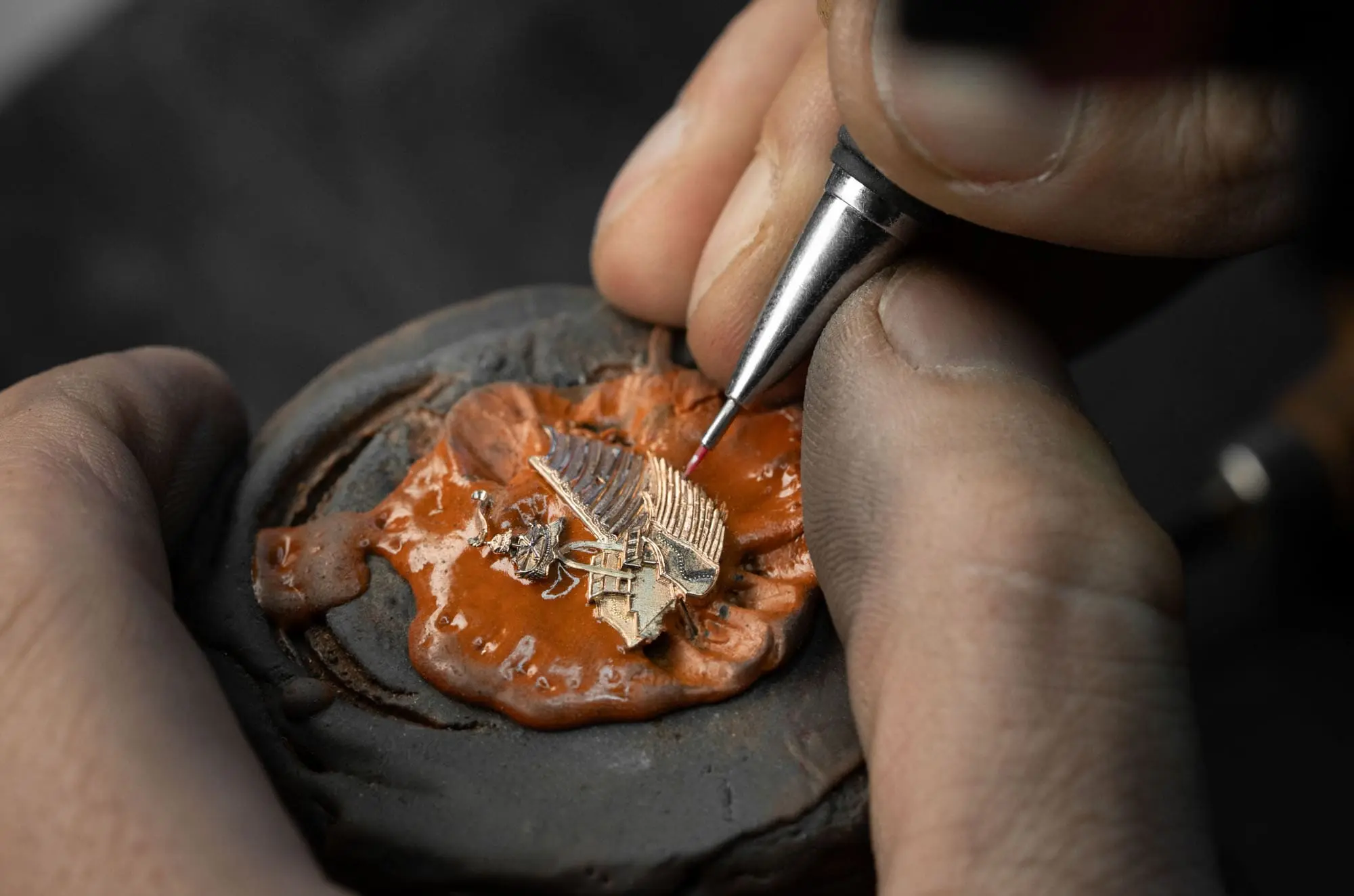
A large red gold applique crowns the entire scene. It depicts a team of water dragons drawing a winged chariot, evoking both dragon mythology and the dragon boat from Luo Shen Fu, a symbol of the journey of the soul and eternal love. The two elements of the applique — the team of dragons and the chariot — are secured at three points to ensure stability and elevation above the dial, while the reins and ribbons, individually applied, are crafted to within a tenth of a millimeter and hand-painted.
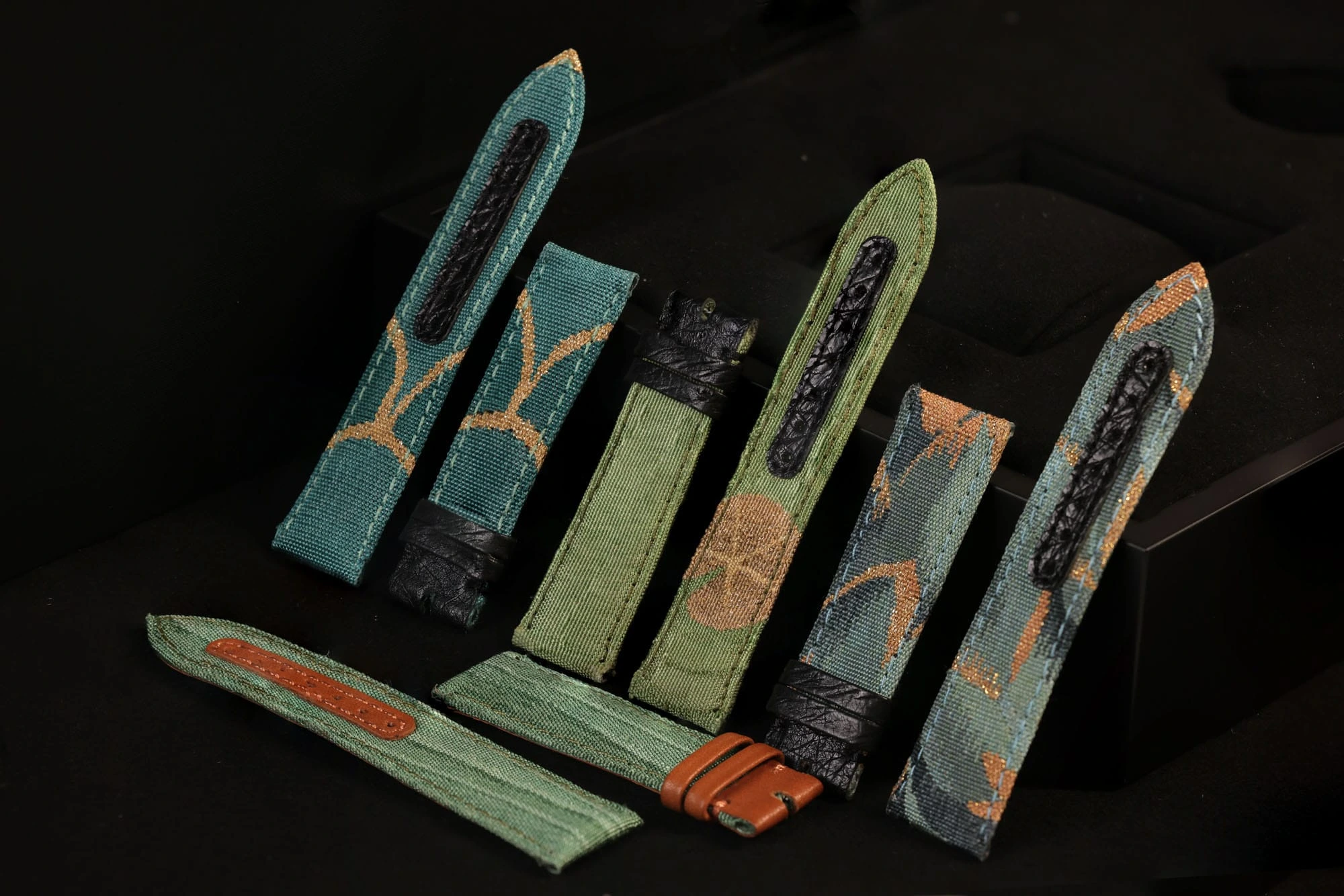
Finally, and for the first time on a unique Jaquet Droz piece, Wang Limin personally insisted on creating the presentation case and strap of the Luo River Automaton herself, entirely by hand. The artist explored several creative directions and produced four unique iterations, derived from motifs designed specifically for this project. An absolute masterpiece, from the buckle to the dial.
“Create your own. As unique as you are”
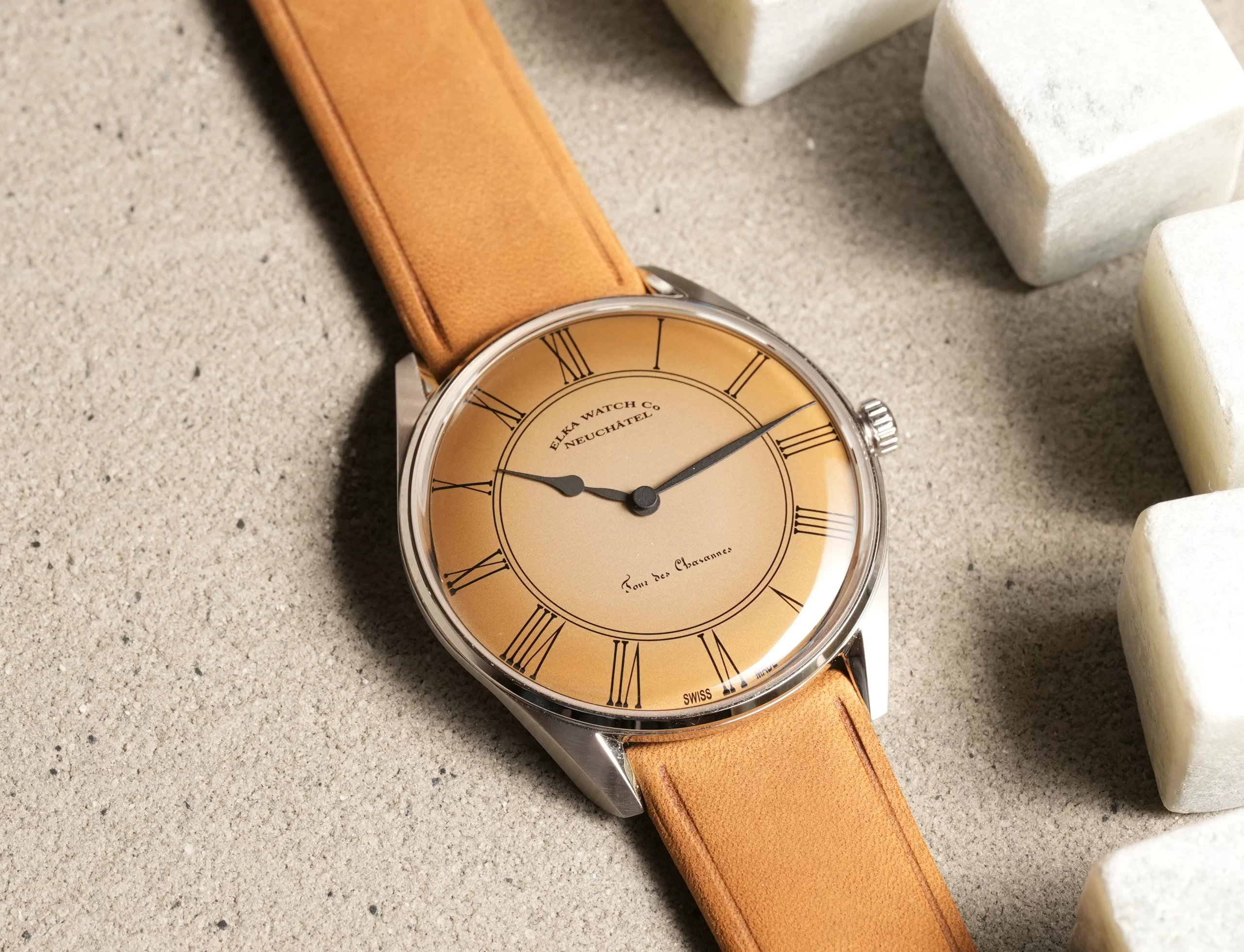
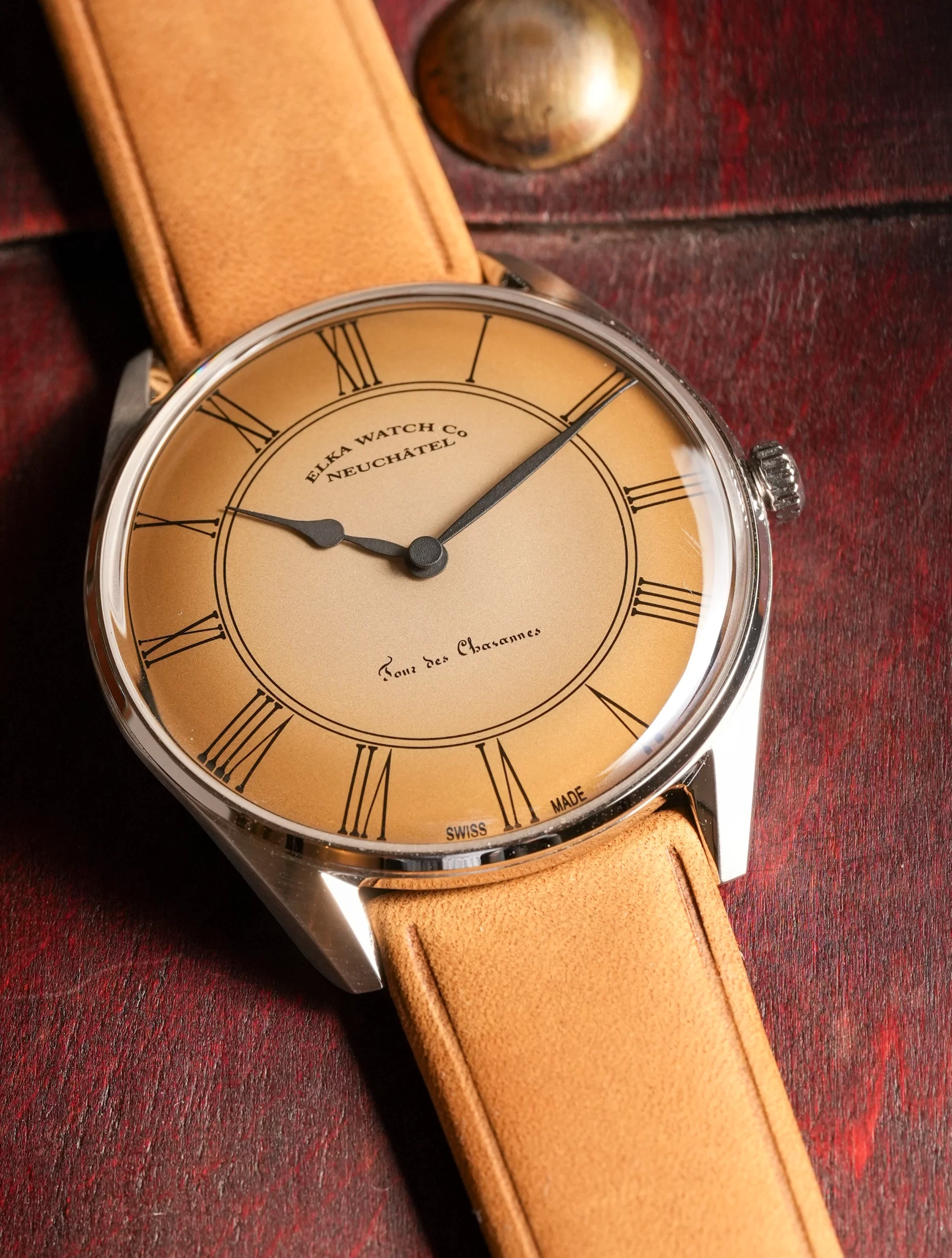
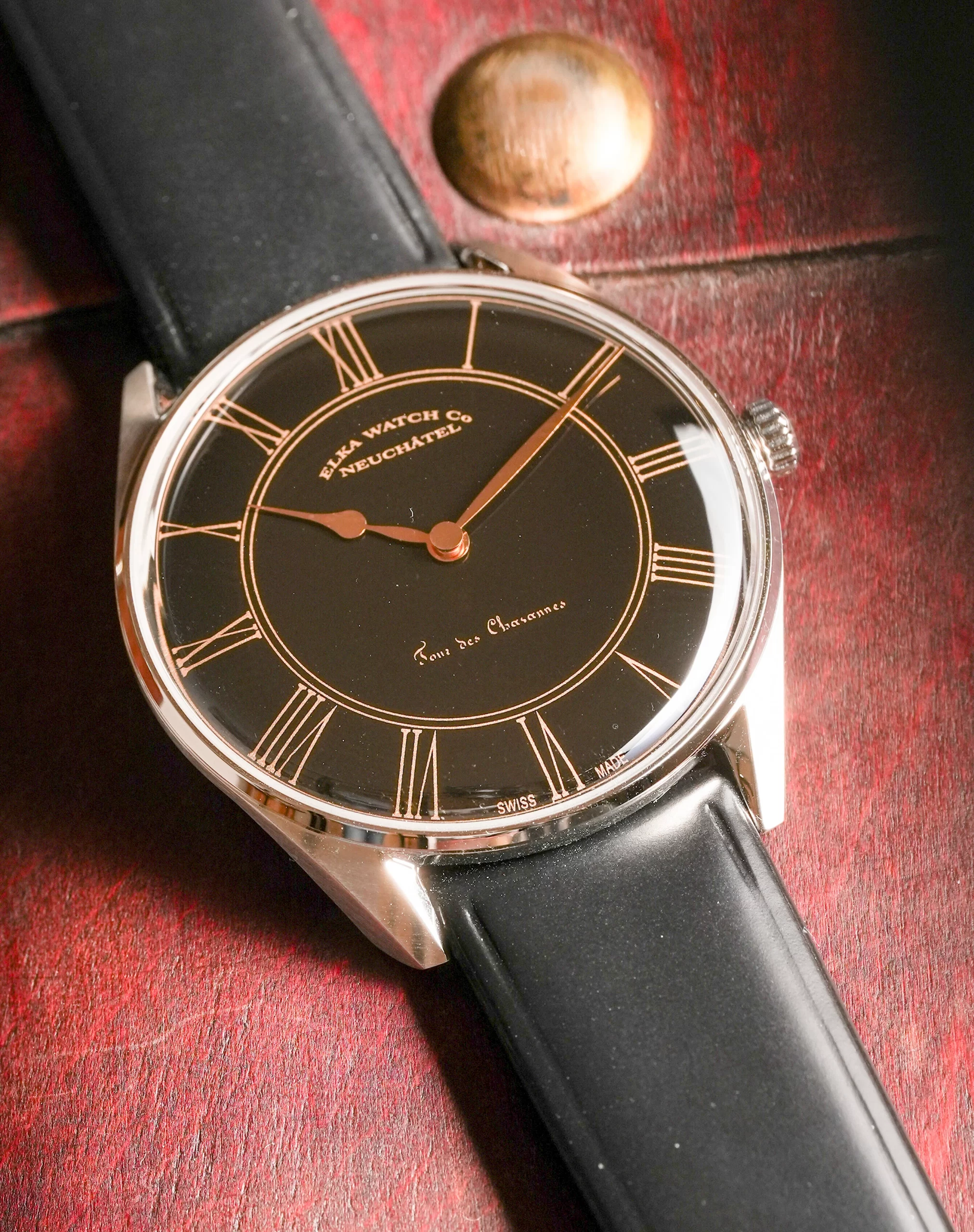
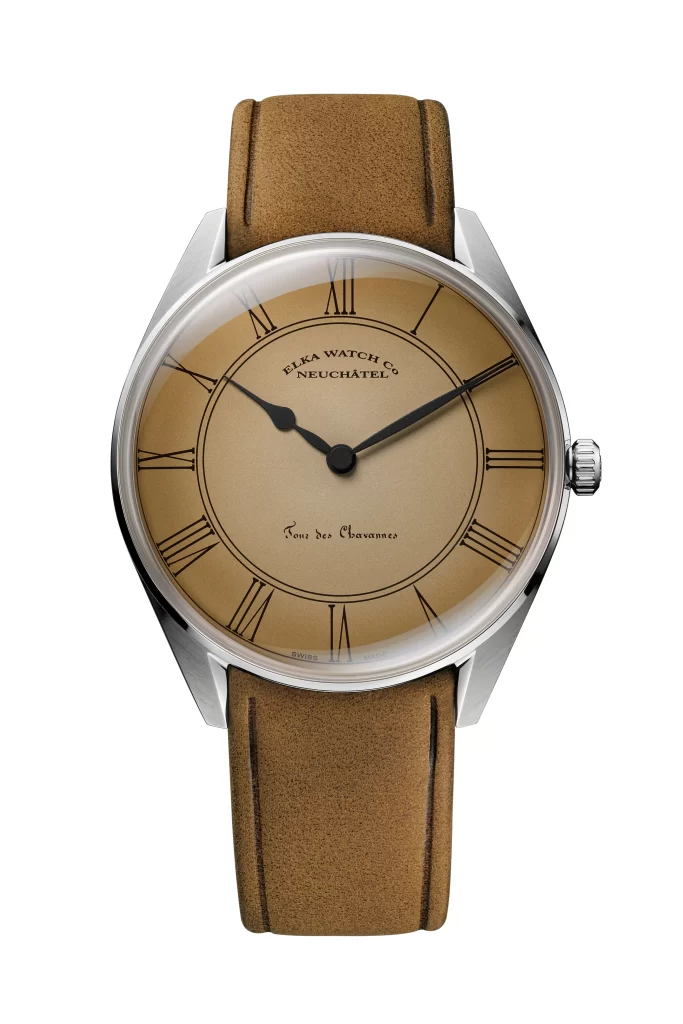
Some watches tell the story of a place. With its new Tour des Chavannes editions, Elka Watch Co. brings the history of Neuchâtel, Switzerland, to contemporary watchmaking through two timepieces inspired by a medieval tower and its role in the city’s public life.
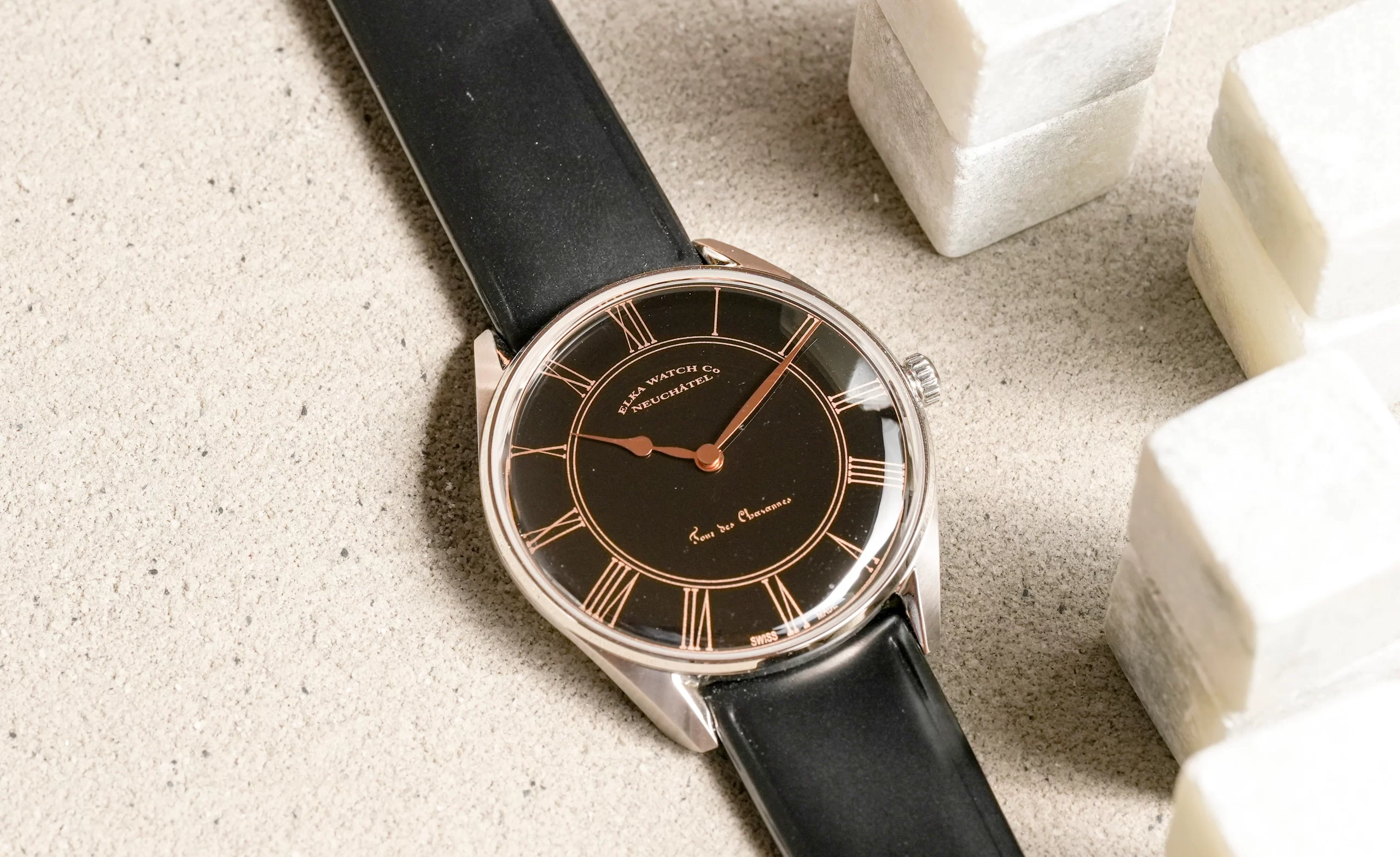
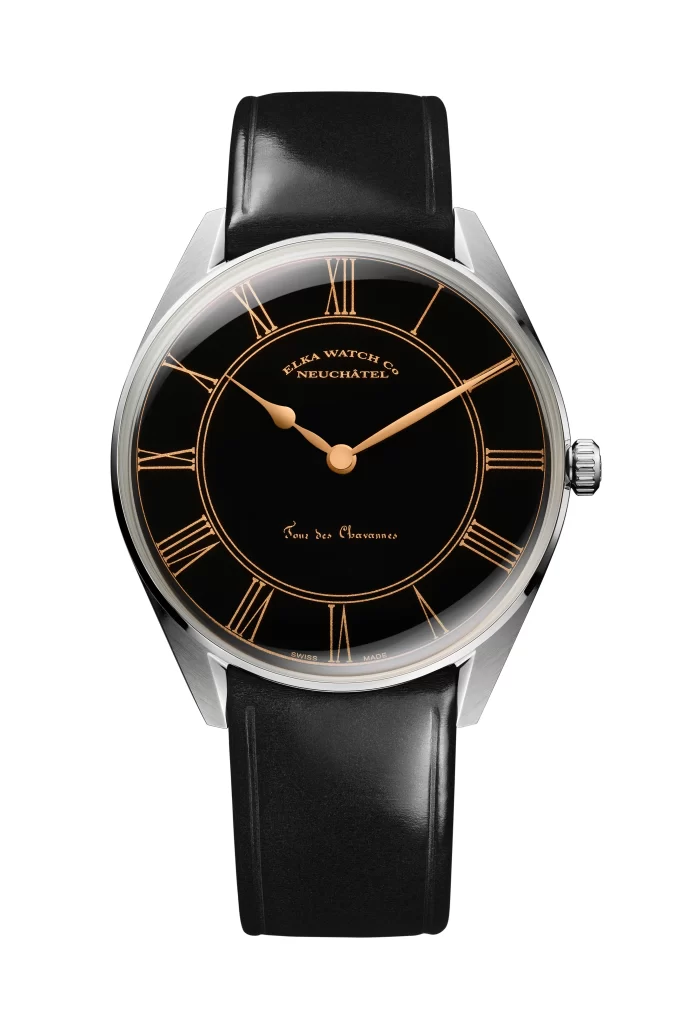
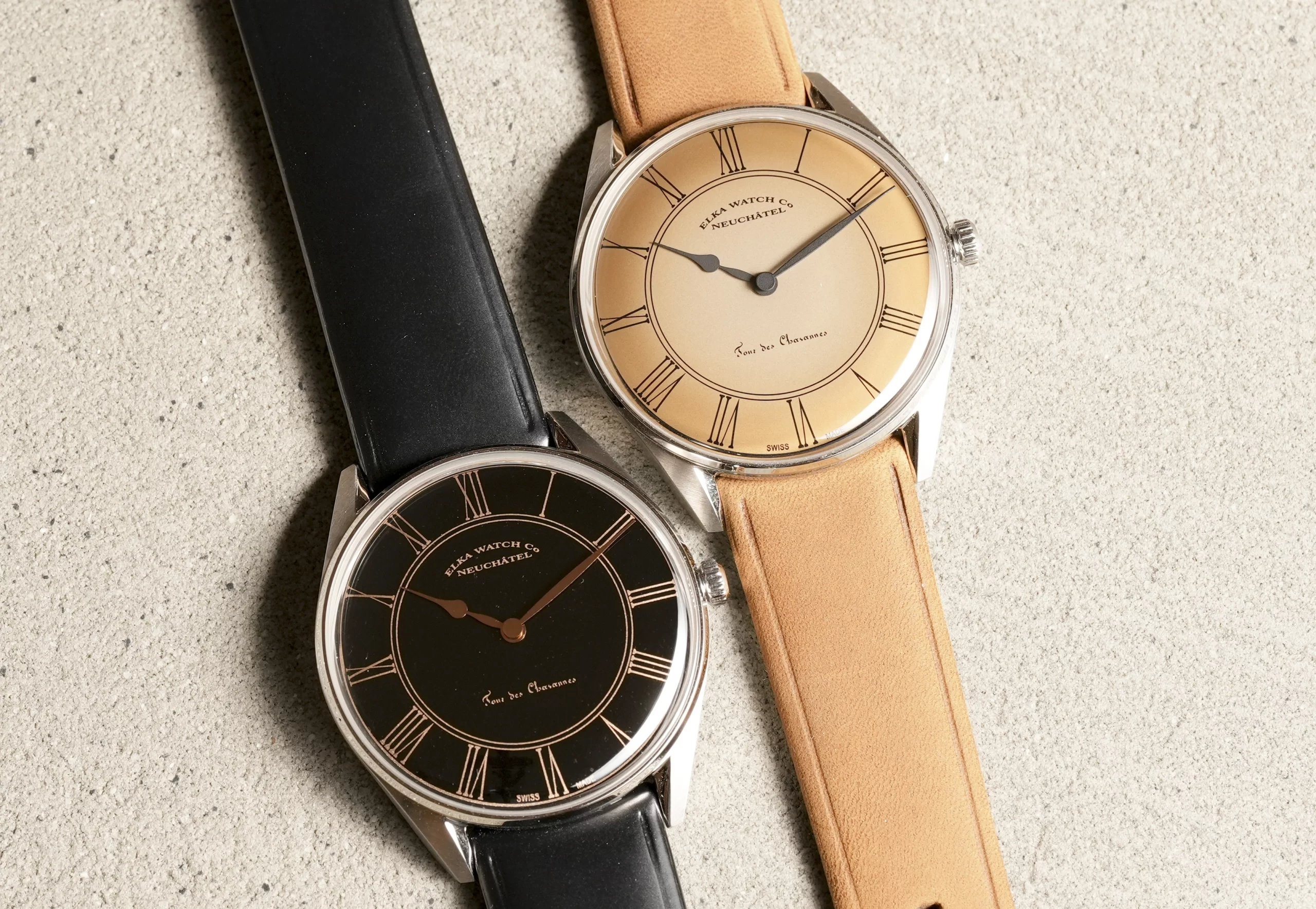
Introduced in October 2026, the collection comprises two models in the Elka R series: the “1736” Edition (R01wo) and the “Pierre d’Hauterive” Edition (R02wo). Each draws on a different element of the city’s heritage, from the black-and-gold dial of a historic public clock to the warm tones of local architectural stone.
The Story Behind the Tour des Chavannes
The Tour des Chavannes was built in 1285 to close the upper end of Rue des Chavannes and protect the northwestern flank of Neuchâtel’s medieval fortifications. Over the centuries, the tower became more than a defensive structure. It housed a civil disciplinary prison known as the javiole from 1531 and eventually played an important role in communicating the time to the city’s inhabitants.
A clock mechanism was installed in 1679. In 1736, a new dial introduced a distinctive combination of gold numerals against a black background, painted by heraldist and sign painter Samuel Müller.
The tower’s role in public timekeeping took another significant turn in 1805, when Neuchâtel decided to distribute mean time through its public clocks rather than rely solely on local solar time. This approach helped synchronise everyday civil and social activities.
The tower was demolished in 1867, but its place in Neuchâtel’s history remains central to Elka Watch Co.’s latest collection.
Two Editions, Two Interpretations of Local Heritage
Rather than reproducing a historical clock outright, Elka Watch Co. translates two distinct aspects of the past into contemporary watch design.
1. The “1736” Edition: Memory of Time
The Elka R01wo takes its visual inspiration from the monumental clock dial painted by Samuel Müller in 1736.
Its black dial and gold details recall the original clock’s striking colour scheme, creating a direct visual connection to the period when the Tour des Chavannes helped organise daily life in Neuchâtel.
The design is a tribute to the city’s public timekeeping heritage and to the importance of monumental clocks before personal timepieces became commonplace.
2. The “Pierre d’Hauterive” Edition: Tribute to Light
The Elka R02wo follows a different path, drawing inspiration from Neuchâtel’s architecture and the region’s stonework.
Its sand-coloured dial evokes the yellow limestone associated with the Hauterive quarry. According to Elka Watch Co.’s brochure, this stone was used in Roman-era Aventicum and later in the construction of the building adjacent to the former tower in 1899.
Black inscriptions provide contrast and recall the Chinese ink strokes used by 19th-century engineers.
Together, the two editions offer contrasting interpretations of the same location: one rooted in the visual language of historic timekeeping, the other in the materials and architectural character of the city.
A Shared Signature With Historical Roots
Both watches feature the inscription “TOUR DES CHAVANNES” at the six o’clock position on the dial.
Its lettering reproduces the hand-drawn typography found on engineer Henri Ladame’s original plans dated July 29, 1867, the year the tower was demolished.
This detail connects the contemporary watches to a surviving historical document, giving the collection a specific reference point rather than relying on a general vintage aesthetic.
Contemporary Specifications and Swiss Watchmaking
The Tour des Chavannes editions combine their historical inspiration with the technical features of Elka Watch Co.’s R series.
Key specifications include:
Case diameter: 40.8 mm
Case thickness: 10.80 mm
Lug-to-lug distance: 46.50 mm
Movement: G101 by La Joux-Perret
Power reserve: 68 hours
Jewels: 24
Operating frequency: 28,800 vibrations per hour (4 Hz)
Crystal: Chevé-Box sapphire crystal
Dial and hands: Curved design
Manufactured by La Joux-Perret in La Chaux-de-Fonds, Switzerland, the G101 movement provides the mechanical foundation for both models.
The Chevé-Box sapphire crystal is designed to evoke the profile of vintage Hésalite crystals while retaining the durability associated with synthetic sapphire. The curved dial and hands further contribute to the collection’s distinctive design language.
Elka Watch Co. and the Return to Rue des Chavannes
The collection also reflects Elka Watch Co.’s decision to establish a permanent physical presence in Neuchâtel.
The brand opened its boutique at 16 Rue des Chavannes on December 15, 2025. The address was chosen for its historical associations and its connection to the city’s tradition of craftsmanship.
The company’s October 2026 brochure describes the boutique as more than a retail space. It is intended as a meeting place for watch enthusiasts, people interested in local history, and visitors drawn to design and artisanal work. The space also hosts artists, photographers, painters, and craftspeople whose work shares the brand’s emphasis on workmanship.
The location creates a tangible link between the former tower, the historic street, and the watches now bearing the Tour des Chavannes name.
A Heritage Reinterpreted Through Watch Design
The Elka Watch Co. Tour des Chavannes collection brings together two stories from Neuchâtel’s past. The “1736” Edition recalls the historic public clock and its black-and-gold dial, while the “Pierre d’Hauterive” Edition draws on the region’s architectural materials and visual identity.
Both models share the same mechanical platform and the historical inscription that links them to Henri Ladame’s 1867 plans.
For Elka Watch Co., the collection is also a way to connect contemporary Swiss watchmaking with the history of the address where the brand has established its boutique.
The Tour des Chavannes may no longer stand, but its legacy survives in the history of the city, its approach to public timekeeping, and two modern watches designed to reinterpret that past.
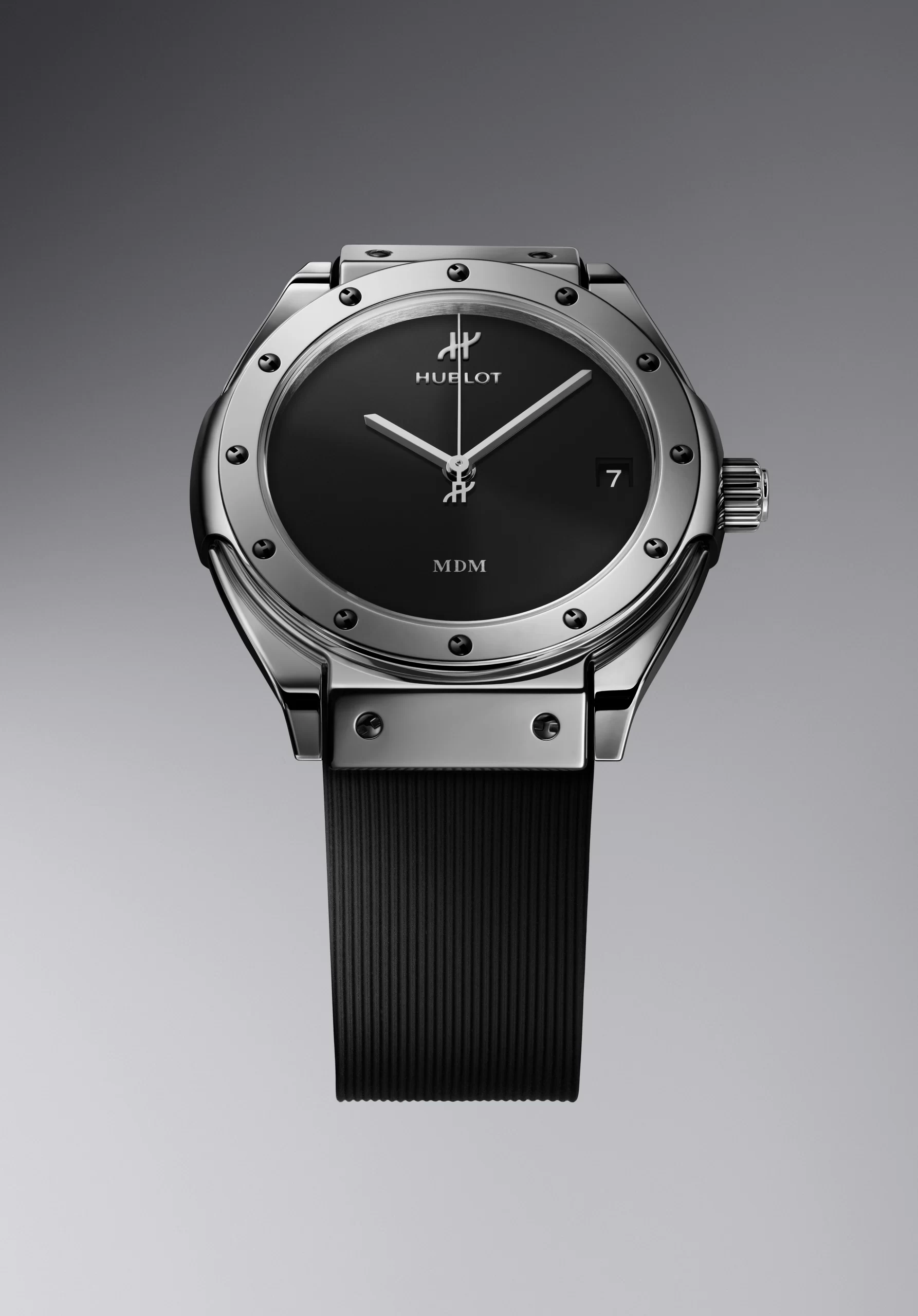
Hublot revisits the watch that established its distinctive design language with the Classic Fusion Tributo, a new release in yellow and white gold that honours Carlo Crocco’s original 1980 creation. Combining the defining contrast of precious metal and black rubber with contemporary Manufacture watchmaking, the new model reconnects the brand with its founding vision while introducing updated proportions and mechanical architecture.
Carlo Crocco’s Original Vision: Gold and Rubber
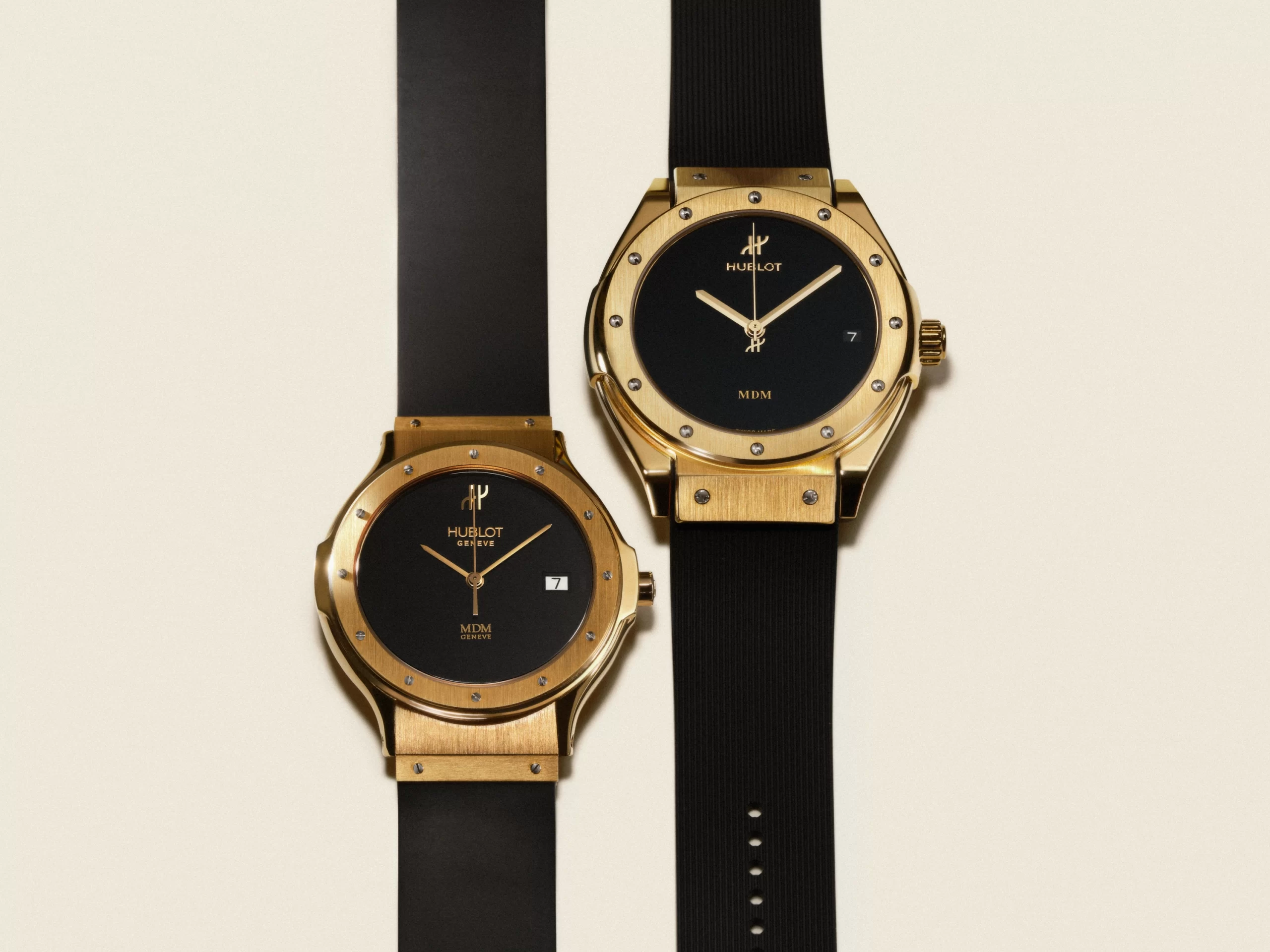
In 1980, Carlo Crocco introduced a watch under the MDM Genève name that challenged conventional ideas of luxury watch design. Its defining feature was the pairing of a gold case with a rubber strap, a combination that departed from the traditional materials associated with prestigious Swiss watchmaking.
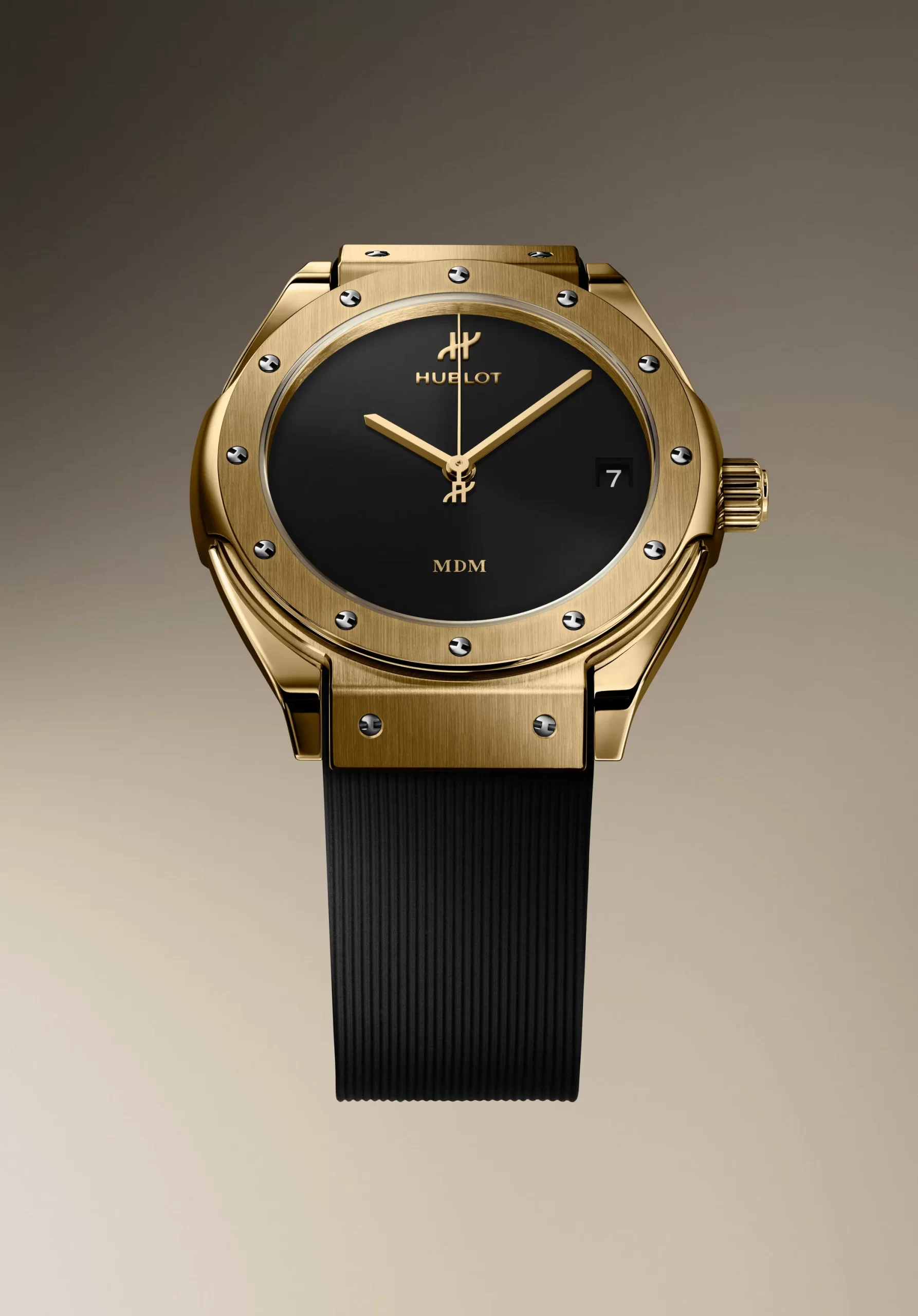
The original Hublot established several visual signatures that remain central to the brand: a porthole-inspired bezel secured by 12 exposed screws, a restrained dial and a strong contrast between gold and black. Rather than relying on elaborate decoration, the design placed emphasis on proportion, material contrast and recognisable geometry. This philosophy became the foundation of Hublot’s Art of Fusion.
Classic Fusion Tributo: Original Design, Updated Proportions
The new Hublot Classic Fusion Tributo retains the essential aesthetic of the original while refining its dimensions for contemporary wearability.
The case measures 38mm in diameter and 9.5mm in thickness, compared with the 36mm dimensions of the original design. The 12 slightly domed bezel screws, exposed lugs and black rubber strap preserve the watch’s distinctive architectural character. A date display at 3 o’clock maintains continuity with the original design language.
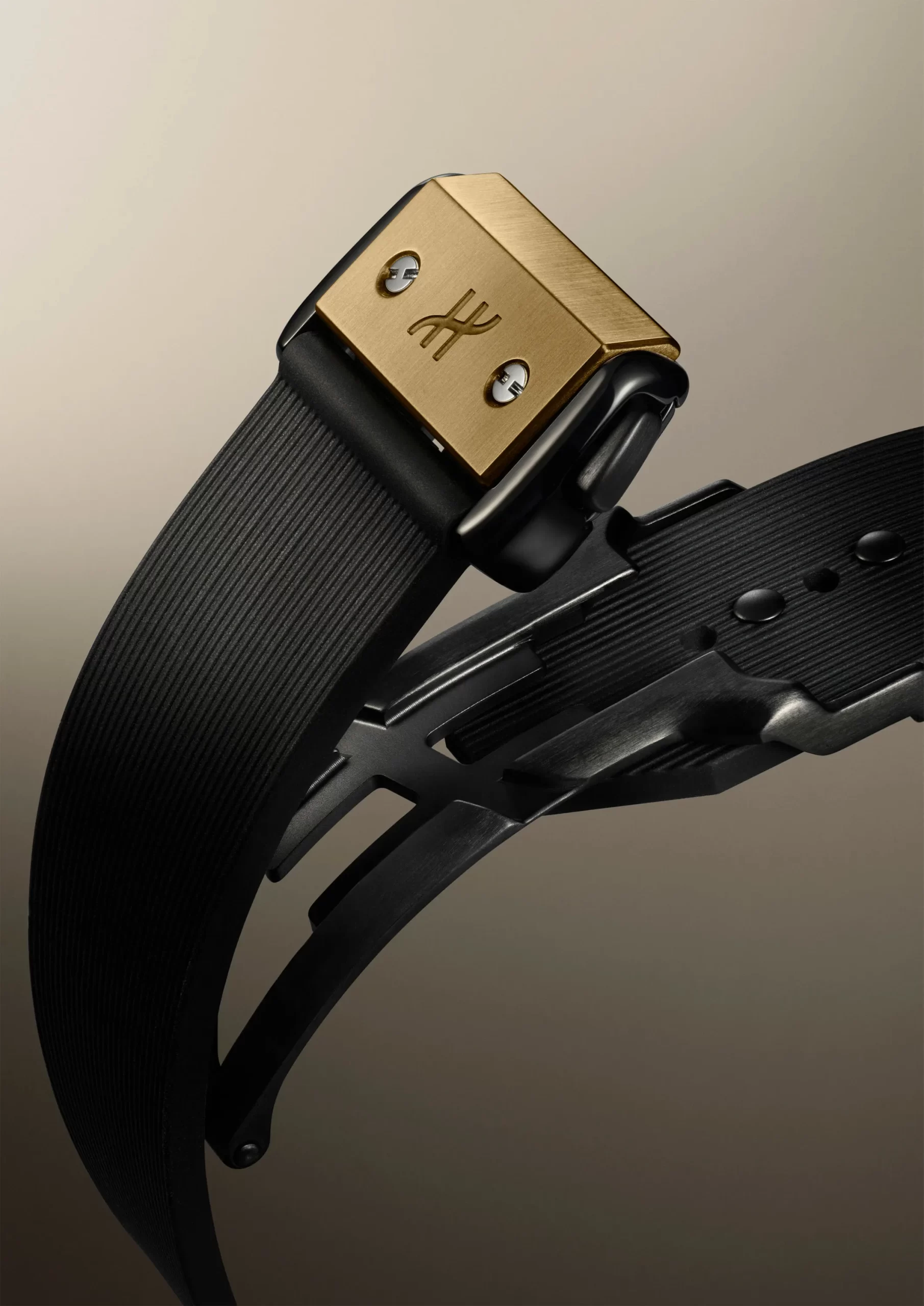
A screwed crown contributes to the updated construction, with water resistance rated to 100 metres (10 ATM). The black-lined rubber strap and deliberate omission of Hublot’s One Click strap-changing system further reflect the brand’s intention to preserve the original design’s character.
From Quartz to Manufacture Automatic
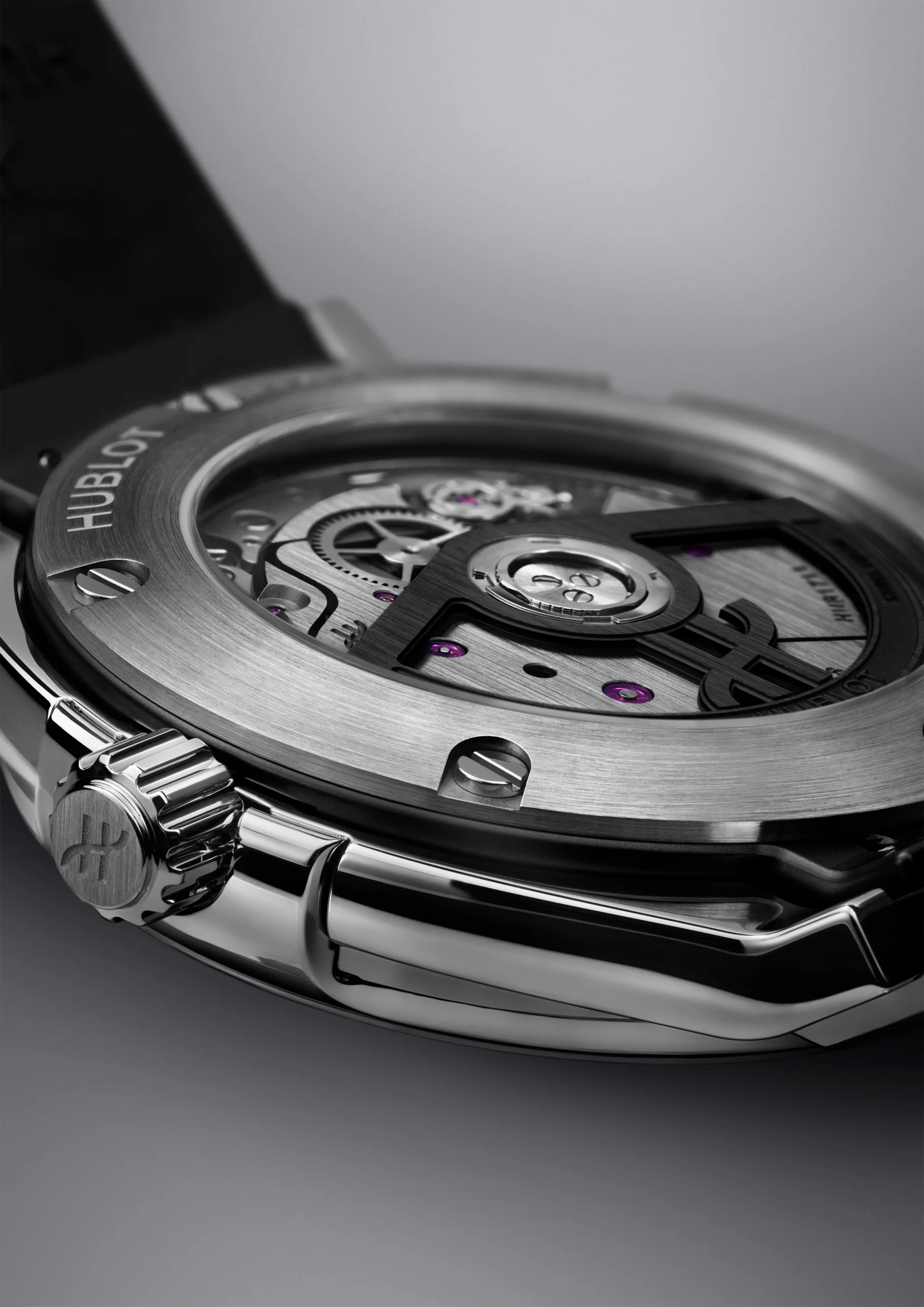
One of the most significant changes lies beneath the dial. While the original 1980 watch used a quartz movement, the Classic Fusion Tributo is powered by the HUB1711 Manufacture self-winding calibre.
The automatic movement features a power reserve of approximately 50 hours and an open-worked oscillating weight shaped like Hublot’s signature “H”. Visible through the sapphire crystal caseback, the weight provides a direct visual connection between the movement and the brand’s design identity.
The transition from quartz to a Manufacture automatic calibre represents a substantial mechanical evolution, bringing contemporary watchmaking architecture to a design rooted in 1980.
Two Precious Metal Interpretations
Classic Fusion Tributo Yellow Gold
The yellow-gold version stays closest to the original watch’s visual identity. Its black lacquered dial features a subtle charcoal effect, while a yellow-gold oscillating weight continues the material theme inside the movement. Gold MDM lettering at 6 o’clock references the signature found on the original MDM Genève watch.
Classic Fusion Tributo White Gold
The white-gold version adopts a more formal aesthetic, pairing its precious-metal case with a polished black onyx dial and black-plated titanium bezel screws. A black tungsten oscillating weight gives the movement a contrasting visual identity, distinguishing this interpretation from its yellow-gold counterpart.
Both versions share the same case dimensions, movement architecture and core design elements. Their differences are expressed through dial and case materials, finishing details and the colour of the oscillating weight.
A Tribute That Extends Beyond Watchmaking
The Classic Fusion Tributo also preserves a link to Carlo Crocco’s philanthropic work. The MDM signature refers not only to the original MDM Genève identity but also to the Main Dans la Main Foundation, established by Crocco in 1998.
As part of the launch, Hublot announced a donation of CHF 100,000 to the Main Dans la Main Foundation, which supports humanitarian and educational projects aimed at improving the lives of vulnerable children and communities in need.
Hublot Classic Fusion Tributo: Specifications at a Glance
Case material: 18K yellow gold or 18K white gold Case diameter: 38mm
Case thickness: 9.5mm Movement: HUB1711 Manufacture self-winding calibre Power reserve: Approximately 50 hours Water resistance: 100 metres / 10 ATM Dial: Black lacquer with charcoal effect (yellow gold); black onyx (white gold) Strap: Black-lined rubber
The Original Idea, Revisited
The Hublot Classic Fusion Tributo is a return to the design principles that defined the brand in 1980. Its gold case, black rubber strap, exposed bezel screws and minimalist dial retain the visual identity of Carlo Crocco’s original creation, while the updated case dimensions, 100-metre water resistance and Manufacture automatic movement bring the watch into the present.
Rather than simply reproducing a historic design, Hublot has reworked its founding concept through contemporary materials, construction and movement technology. The result is a tribute to the origins of the Art of Fusion that connects the brand’s early design philosophy with its current horological capabilities.
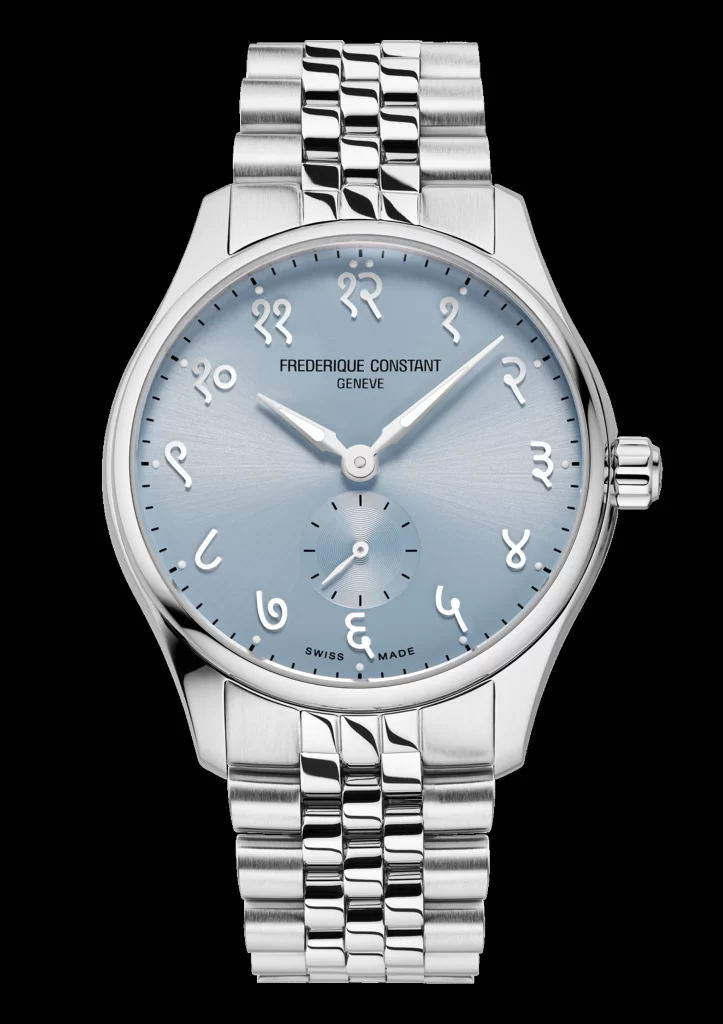
Festive Season, Frederique Constant introduces the Classics Index Small Seconds Automatic, a refined timepiece that blends classic watchmaking design with distinctive Indian-inspired details. Featuring a polished stainless-steel case, a light blue sunray-finished dial, applied Indian indexes and a small seconds display at 6 o’clock, the timepiece presents a balanced and elegant interpretation of the Classics collection.
At the heart of the watch is the FC-530 automatic calibre, offering a 38-hour power reserve, operating at 28,800 alt/h and equipped with 31 jewels. The movement displays hours, minutes and small seconds, with the small seconds sub-dial positioned at 6 o’clock, creating a balanced and symmetrical dial layout.
The 39 mm polished stainless-steel two-part case, with a height of 11.65 mm, is complemented by an anti-reflective convex sapphire crystal. The watch is water-resistant up to 5 ATM / 50 metres / 165 feet, while an engraved solid threaded case back completes the case construction.
The light blue dial with sunray finishing creates a subtle play of light across its surface. Adding to the character of the dial are the applied Indian indexes, complemented by nickelled hour and minute hands filled with white Super-LumiNova® for enhanced visibility.
Completing the design is a five-link brushed and polished stainless-steel bracelet with an interchangeable system and folding clasp. The combination of brushed and polished surfaces complements the refined character of the timepiece while offering versatility.
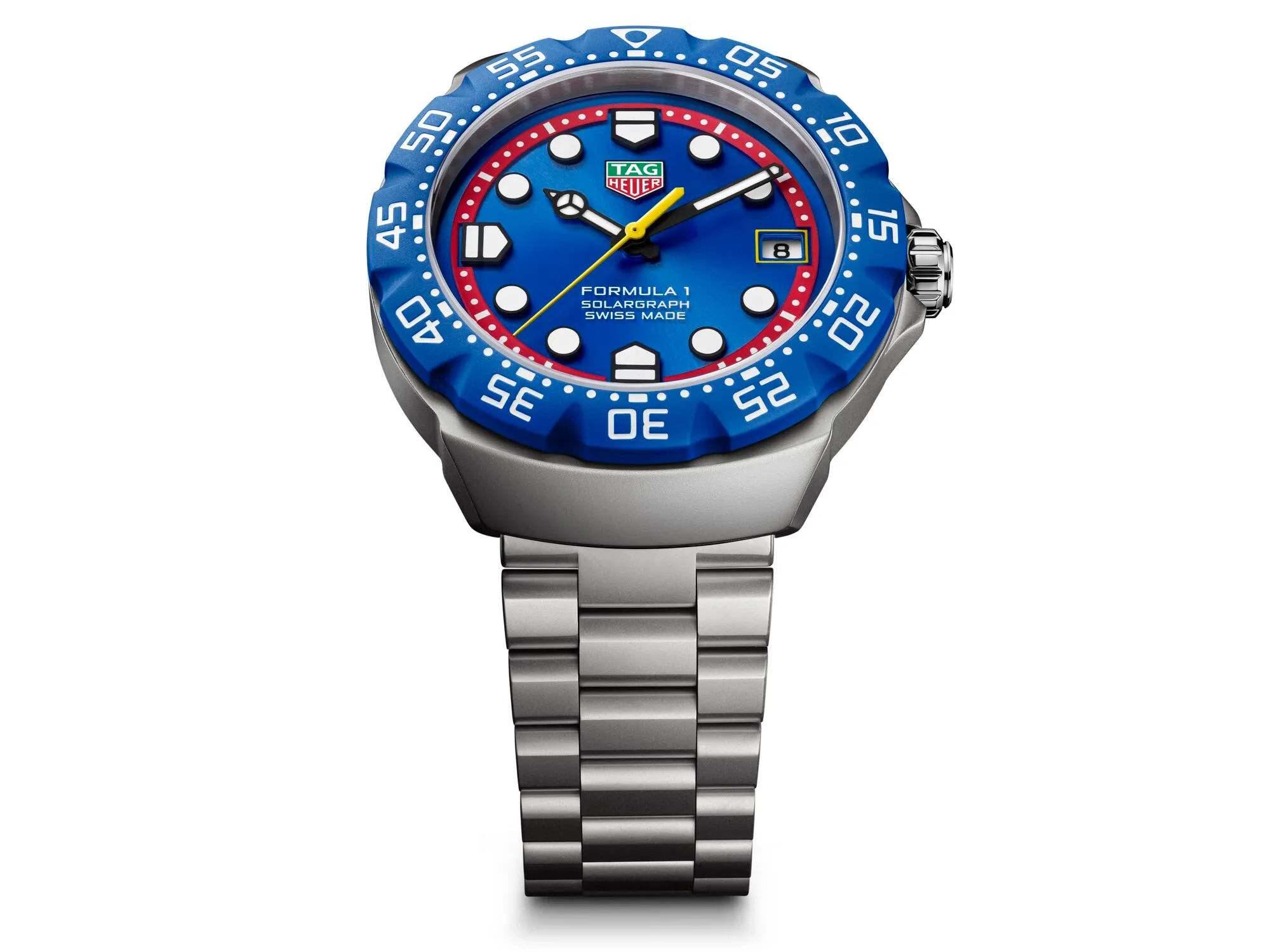
Some collaborations are defined by a shared logo. Others develop an identity of their own. In 2026, TAG Heuer and Oracle Red Bull Racing mark ten years together with a new Formula 1 Solargraph special edition that brings the team’s signature colours to the wrist.
The partnership began in 2016, connecting TAG Heuer’s Swiss watchmaking heritage with the competitive world of Formula 1. This anniversary model continues that relationship through a design that combines familiar racing cues with solar-powered timekeeping.
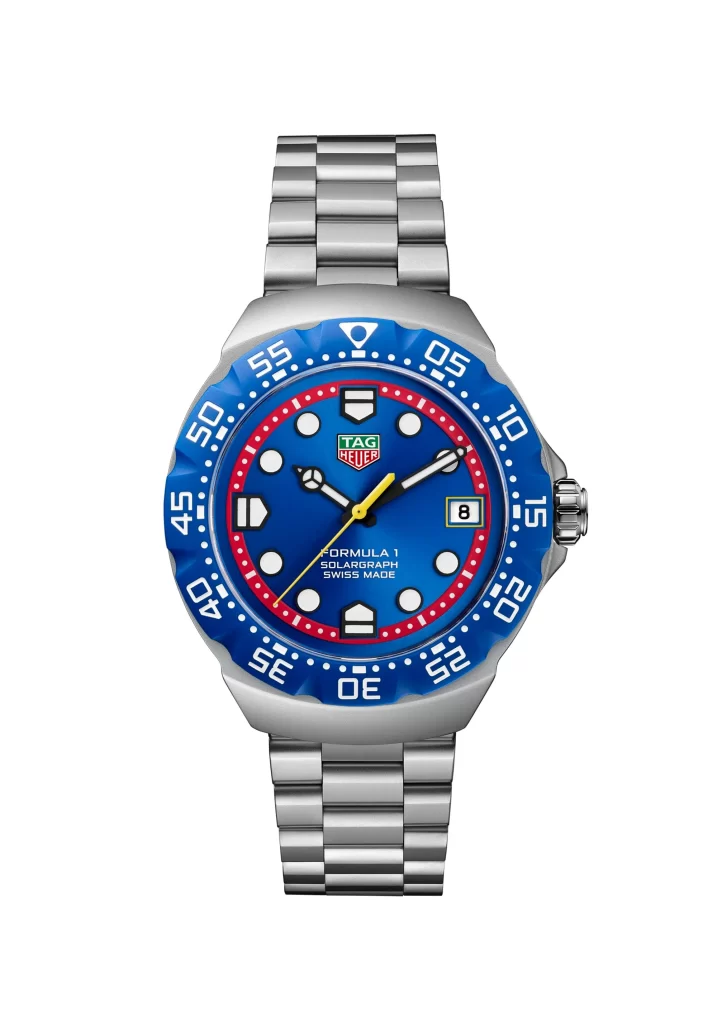
Its 38 mm case gives the watch a compact profile, while the vivid blue-and-red colour scheme makes its motorsport connection unmistakable.
Blue, Red and a Distinctive Dial
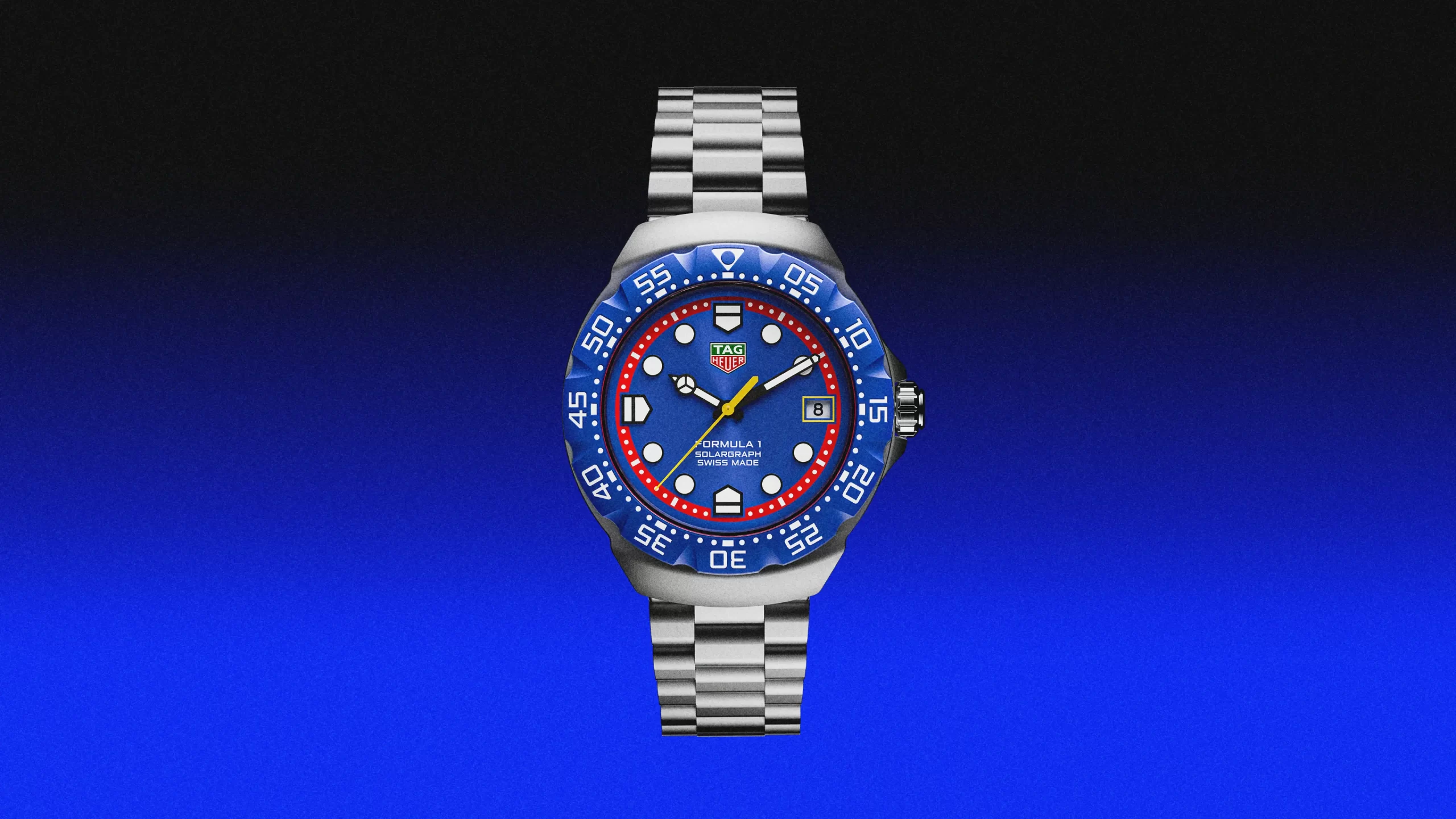
The dial is the defining feature of the TAG Heuer Formula 1 Solargraph x Oracle Red Bull Racing. Deep blue sets the backdrop, a red minuterie frames the display, and white applied indexes provide contrast. A yellow seconds hand adds another striking accent.
White Super-LumiNova® fills the indexes to support legibility in low-light conditions. The date window sits at three o’clock, while the signature shield-shaped markers at six, nine and twelve reinforce the Formula 1 collection’s distinctive design.
Rather than relying solely on branding, the watch uses colour and contrast to establish its racing identity.
Steel Construction with a Modern Edge
The 38 mm case is made from sandblasted steel, whose matte finish gives the watch a technical appearance. A bidirectional TH-Polylight bezel introduces a contrasting material and adds definition to the case.
The three-row steel bracelet completes the design with an articulated construction intended to sit comfortably on the wrist. Together, these elements draw on the original TAG Heuer Formula 1 aesthetic while presenting it in a contemporary format.
Turn the watch over, and the anniversary theme becomes more explicit. The case back features Oracle Red Bull Racing branding, TAG Heuer’s logo and a chequered-flag pattern, accompanied by special-edition engravings. Dedicated packaging carries the team’s visual identity through to the presentation.
Solargraph: Timekeeping Powered by Light
The watch’s Solargraph movement provides its principal technical distinction. By harnessing natural and artificial light, it converts exposure into energy for operation.
According to the supplied product specifications, one minute of direct sunlight provides enough energy for approximately one day of operation. A full charge, achieved in under 40 hours of light exposure, delivers up to ten months of autonomy in complete darkness.
If the watch stops, ten seconds of light exposure is specified to restart it. The accumulator is designed for a lifespan of up to fifteen years.
These figures highlight the practical appeal of solar-powered watchmaking, reducing reliance on conventional battery replacement while offering substantial autonomy between exposures to light.
The TAG Heuer Formula 1 Legacy
First introduced in the 1980s, the TAG Heuer Formula 1 collection helped establish a more colourful, contemporary expression of Swiss watchmaking with a direct connection to motorsport.
The Solargraph x Oracle Red Bull Racing carries that identity forward without abandoning the collection’s recognisable design language. Its bold bezel, contrasting dial and functional layout make the racing influence central to the watch rather than a detail reserved for the case back.
For the partnership’s tenth anniversary, the result is a focused interpretation of the Formula 1 concept: a compact steel watch with team-inspired styling and light-powered technology.
Final Take
The TAG Heuer Formula 1 Solargraph x Oracle Red Bull Racing brings together a decade of collaboration in a design built around three clear elements: a blue-and-red dial, a steel case with a TH-Polylight bezel, and a Solargraph movement.
Its appeal lies in the balance between recognisable motorsport styling and everyday functionality. The anniversary branding establishes its connection to the team, while the solar-powered movement gives the watch a technical feature that extends beyond its appearance.
Specifications at a glance
Collection: TAG Heuer Formula 1 Solargraph
Edition: Oracle Red Bull Racing special edition
Occasion: Ten-year partnership anniversary, 2026
Case diameter: 38 mm
Case material: Sandblasted steel
Bezel: Bidirectional TH-Polylight
Dial: Blue with red minuterie and yellow seconds hand
Luminescent material: White Super-LumiNova® on applied indexes
ZENITH x USM: When Watchmaking Meets Reflective Design for TimeForArt 2026
A mirror-polished dial, the unmistakable geometry of the DEFY Chronograph, and a unique piece of modular furniture come together in a collaboration that connects Swiss watchmaking with contemporary design.
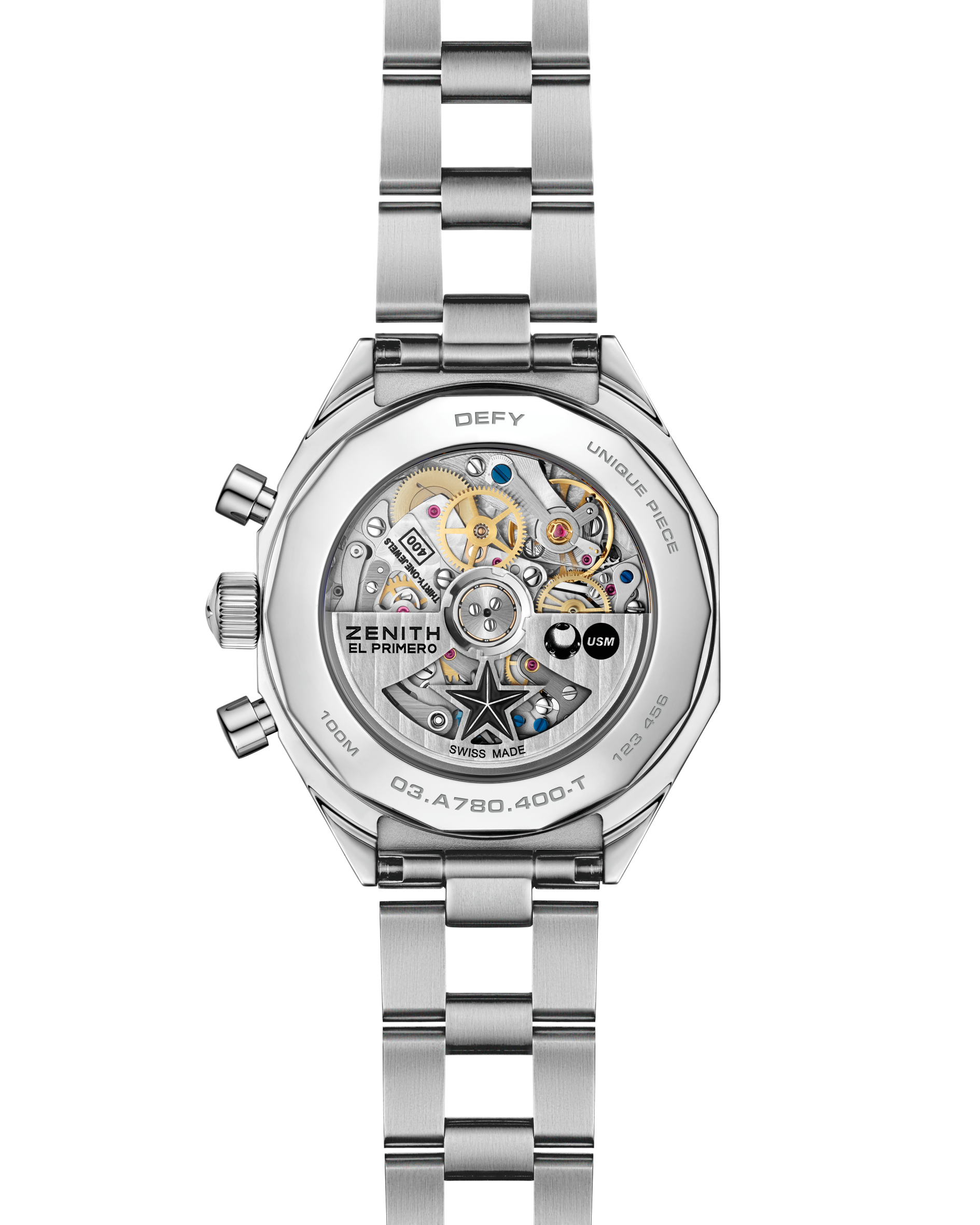
Some collaborations bring together two names. Others reveal a shared philosophy. For ZENITH and USM Modular Furniture, the connection lies in a long-standing appreciation for precision, engineering, and purposeful design. Their latest creation, the DEFY Chronograph USM – TimeForArt Unique Piece, takes this relationship in a new direction, with a distinctive mirror-polished dial created exclusively for TimeForArt.
Following their first collaboration in September 2025, the two Swiss brands return with a singular interpretation of the DEFY Chronograph USM. Created for the benefit auction supporting Swiss Institute, the unique timepiece will be accompanied by a specially designed USM Haller furniture piece, extending the collaboration beyond the wrist.
A Shared Heritage of Design and Engineering
The story behind the collaboration reaches back to two important moments in Swiss design and watchmaking history.
USM’s modular furniture system was patented in 1965, establishing the engineering principle behind its adaptable furniture designs. Four years later, in 1969, ZENITH introduced the original DEFY alongside the El Primero, its groundbreaking automatic high-frequency chronograph.
Although their disciplines differ, both brands share an interest in combining technical ingenuity with distinctive design. That common ground inspired their first collaboration in 2025, which brought together the angular architecture of the 1969 DEFY and the El Primero chronograph movement, incorporating subtle visual references to the USM Haller system.
For TimeForArt 2026, the partnership builds on that foundation with a striking change to the watch’s dial.
A Mirror-Polished Dial That Reflects Its Surroundings
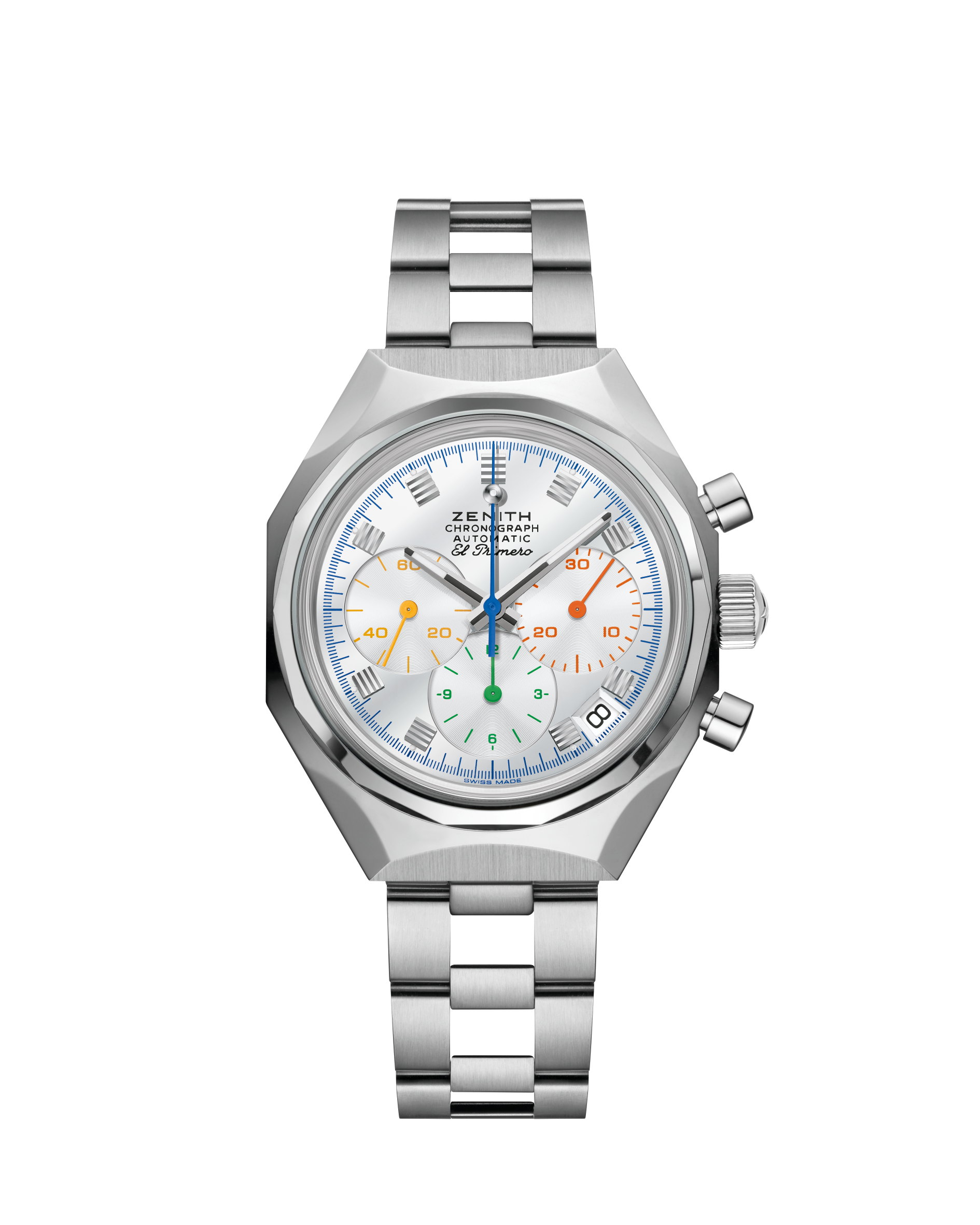
The defining feature of the DEFY Chronograph USM – TimeForArt Unique Piece is its fully mirror-polished dial. Replacing the colourful dials of the original collaboration, the reflective surface interacts with its surroundings, responding visually to light, architecture, and movement.
The effect gives the watch a changing appearance depending on the environment in which it is viewed.
Adding colour to this reflective canvas are three overlapping azuré chronograph counters, complemented by four coloured prints and hands inspired by USM’s signature palette: USM Golden Yellow, USM Pure Orange, USM Green, and USM Gentian Blue. Together, these four colours appear on a single dial for the first time in the collaboration.
The result brings together a highly reflective surface and precise, colourful detailing without losing the defining character of the DEFY Chronograph USM.
The DEFY Chronograph: Familiar Geometry, Precise Mechanics
Beyond its distinctive dial, the watch retains the essential design codes of the original DEFY Chronograph USM.
Its 37 mm stainless-steel case features the collection’s angular geometry and fourteen-sided bezel, paired with a stainless-steel ladder bracelet. At the tip of the central chronograph seconds hand, a miniature USM Haller ball joint provides a discreet reference to the modular furniture system that inspired the partnership.
Inside the case is the El Primero 400, ZENITH’s automatic high-frequency column-wheel chronograph calibre. Operating at 36,000 vibrations per hour, or 5 Hz, the movement offers a 55-hour power reserve.
The watch displays hours and minutes centrally, with small seconds at nine o’clock. Its chronograph functions include a central chronograph hand, a 30-minute counter at three o’clock, and a 12-hour counter at six o’clock. A date indication is positioned at 4:30.
Additional details include rhodium-plated hour markers and faceted rhodium-plated hour and minute hands coated with Super-LumiNova SLN C1. The central chronograph seconds hand is finished in USM Gentian Blue and tipped with the miniature USM Haller ball joint.
The movement also features a silicon escape wheel and lever, a screwed-in crown, and an oscillating weight decorated with a Côtes de Genève motif and bearing the ZENITH and USM logos. The watch has a water resistance rating of 10 ATM.
Beyond the Watch: A Unique USM Haller Creation
The collaboration extends into the world of collecting with a one-of-a-kind mirrored USM Haller sideboard designed specifically for this project.
The furniture piece incorporates a storage compartment capable of holding up to 24 watches. A glass top displays the first layer of the collection, while a lockable compartment beneath opens to reveal a drawer containing a second layer of storage.
Combining display and practical storage, the sideboard translates USM’s modular design language into a setting dedicated to watch collecting. Its mirrored finish also establishes a visual connection with the watch’s reflective dial.
Together, the timepiece and furniture piece form a unified design project that brings horology and modular furniture into the same conversation.
TimeForArt 2026: Supporting Contemporary Art
The DEFY Chronograph USM – TimeForArt Unique Piece has been created for the third edition of TimeForArt, the benefit watch auction organized by Swiss Institute in partnership with Phillips.
In 2026, the initiative brings together 25 participating watch brands, each invited to create a unique timepiece in support of contemporary art.
The ZENITH and USM creation will be auctioned at Phillips New York on December 5, 2026, at 3:00 PM EST. One hundred per cent of the proceeds, including Phillips’ Buyer’s Premium, will benefit Swiss Institute and support its exhibitions, public programs, education initiatives, and community engagement.
This charitable purpose gives the collaboration a significance beyond its singular design. The watch and its accompanying furniture piece have been conceived not only as expressions of shared creative values, but also as contributions to an initiative supporting contemporary art.
A Unique Expression of Swiss Creativity
With the DEFY Chronograph USM – TimeForArt Unique Piece, ZENITH and USM revisit their shared design heritage through a new material expression. The mirror-polished dial changes with its surroundings, the four-colour details reference USM’s distinctive palette, and the miniature ball joint connects the watch to the furniture system at the heart of the collaboration.
Complemented by a bespoke mirrored USM Haller sideboard, the project brings together watchmaking, furniture design, and collecting in a single, unique creation.
Designed for TimeForArt 2026, it stands as a continuation of the partnership between two Swiss brands whose histories intersect through engineering, precision, and design, while contributing to the support of contemporary art.
Timepiece: ZENITH DEFY Chronograph USM – TimeForArt Unique Piece Reference: 03.A780.400-T/01.M3642 Case: 37 mm stainless steel Movement: El Primero 400 automatic chronograph Frequency: 36,000 vibrations per hour (5 Hz) Power reserve: 55 hours Water resistance: 10 ATM Auction: Phillips New York, December 5, 2026, at 3:00 PM EST Beneficiary: Swiss Institute
Patek Philippe has introduced six new watches in its Gondolo Ladies First collection, presenting a contemporary interpretation of the brand’s Art Deco-inspired design language through precious metals, diamonds, coloured gemstones and quartz technology.
The new collection revisits the spirit of the 2009 Ladies First Chronograph Ref. 7071 while taking a distinctly jewellery-focused approach. According to Patek Philippe, the watches were conceived around President Thierry Stern’s desire to offer women an easy-to-wear jewellery watch that combines refined gem-setting with the practicality of a quartz movement.
A modern interpretation of the Gondolo
The Gondolo has a long association with Patek Philippe’s design history. Originating during the Art Deco era and created for the Brazilian market during the Manufacture’s golden age of design, the collection has appeared in cushion, square, rectangular and tonneau forms.
The new Gondolo Ladies First watches use a fully polished, cushion-shaped gold case with rounded contours and articulated lugs. The design combines square and circular forms while maintaining the slender profile made possible by the thin quartz movement. The articulated lugs are designed to allow the case to sit flush against the wrist.
The six new references are divided into two groups: three models with diamond-set dials and three Joaillerie models featuring extensive diamond-setting across the dial, case and lugs. They join two existing Haute Joaillerie versions featuring pearls and diamonds.
Three diamond-set dial models
The first three watches combine opaline dials with a diamond-set flange containing 108 diamonds. The stones follow the contours of the sloping flange, with graduated sizes and near-invisible grain settings.
The references are:
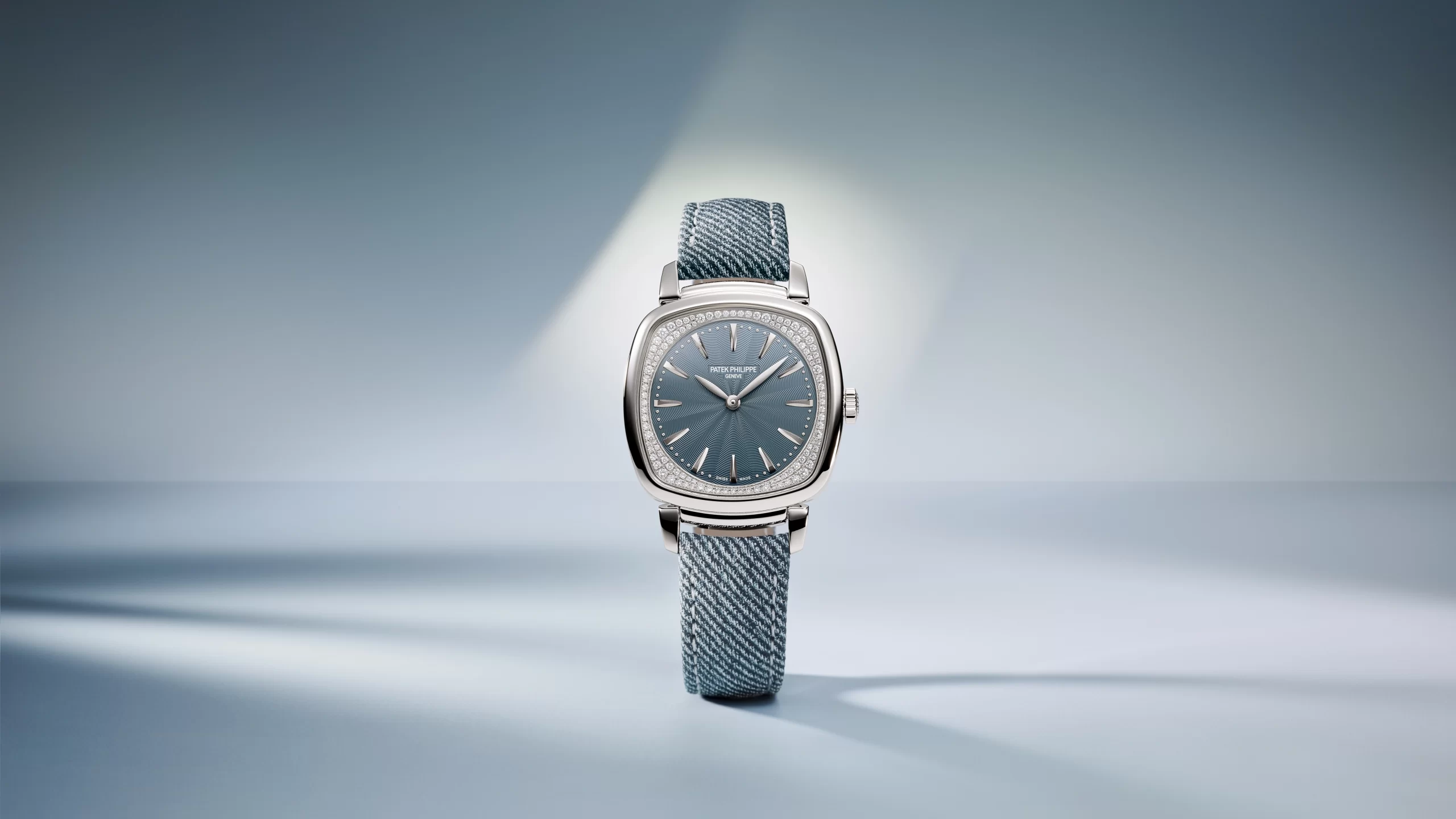
Ref. 7043G-001: white gold case, blue-gray opaline dial and matching blue-gray calfskin strap with a denim pattern and contrasting white stitching.
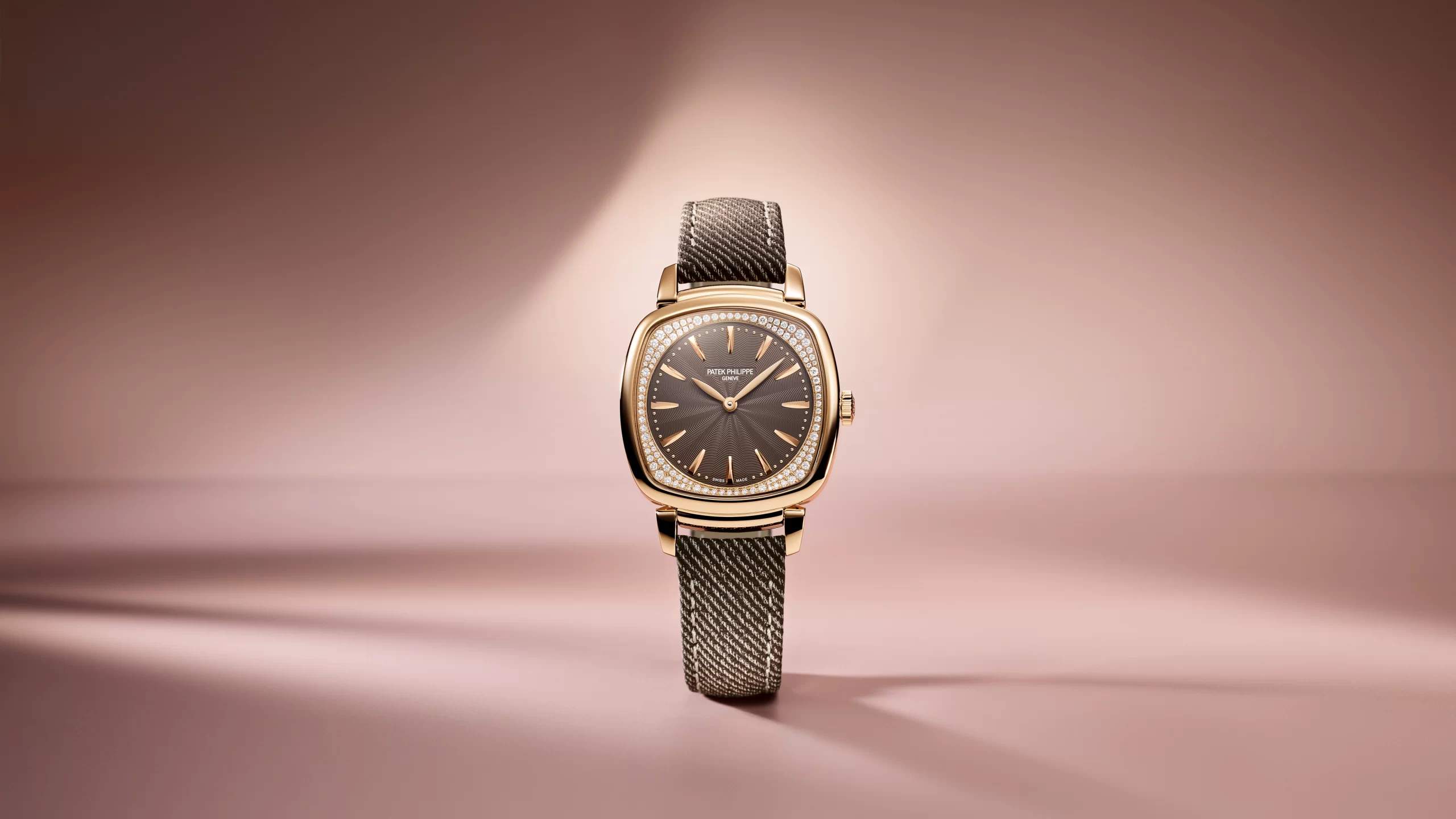
Ref. 7043R-001: rose gold case, chestnut opaline dial and matching chestnut calfskin strap with a denim pattern and contrasting cream stitching.
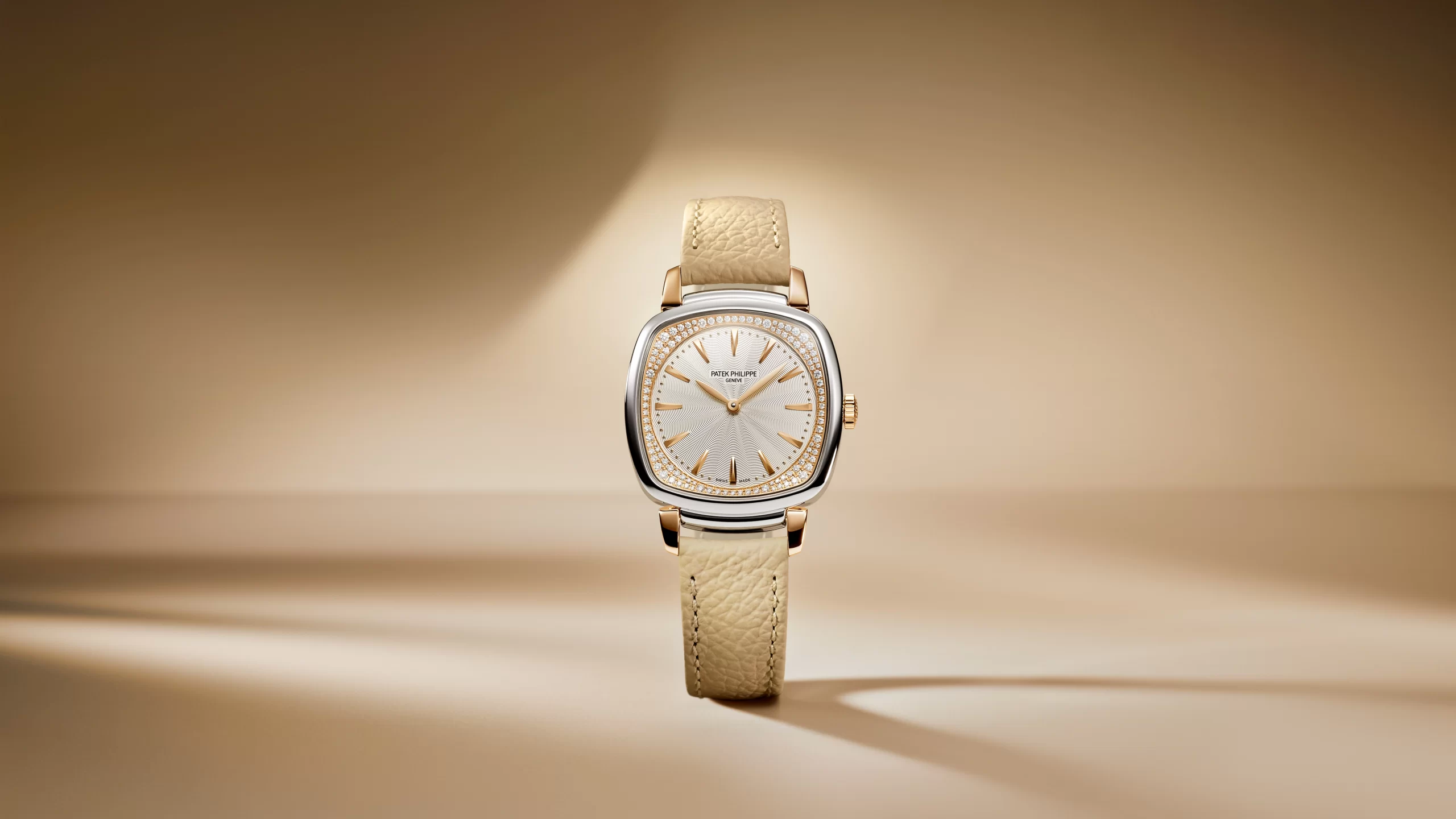
Ref. 7043GR-001: white gold case with rose gold lugs and crown, silvery opaline dial and grained beige calfskin strap.
Each dial features a concentric wave pattern, creating a textured surface beneath the faceted trapeze-shaped hour markers. Leaf-shaped hands complete the design.
The technical specifications are shared across the three references: a Caliber E15 quartz movement, measuring 15 x 13 mm and 1.8 mm thick, with 57 components and six jewels. The movement operates at a frequency of 32,768 Hz and uses a 1.55 V silver oxide battery with an approximately three-year battery life.
The watches measure 31 x 34.8 mm, have a thickness of 8.03 mm, feature solid case backs and are water-resistant to 30 metres.
Joaillerie versions bring colour and diamonds
The three Joaillerie references take the collection considerably further into jewellery-watch territory. Their cases, dials and lugs are set with diamonds, while coloured gemstones form the hour markers.
Patek Philippe specifies 687 brilliant-cut diamonds across each Joaillerie watch. The diamond-setting includes 253 diamonds on the case and lugs, 108 diamonds illuminating the dial flange and 303 diamonds arranged around the centre of the dial.
The three versions are:
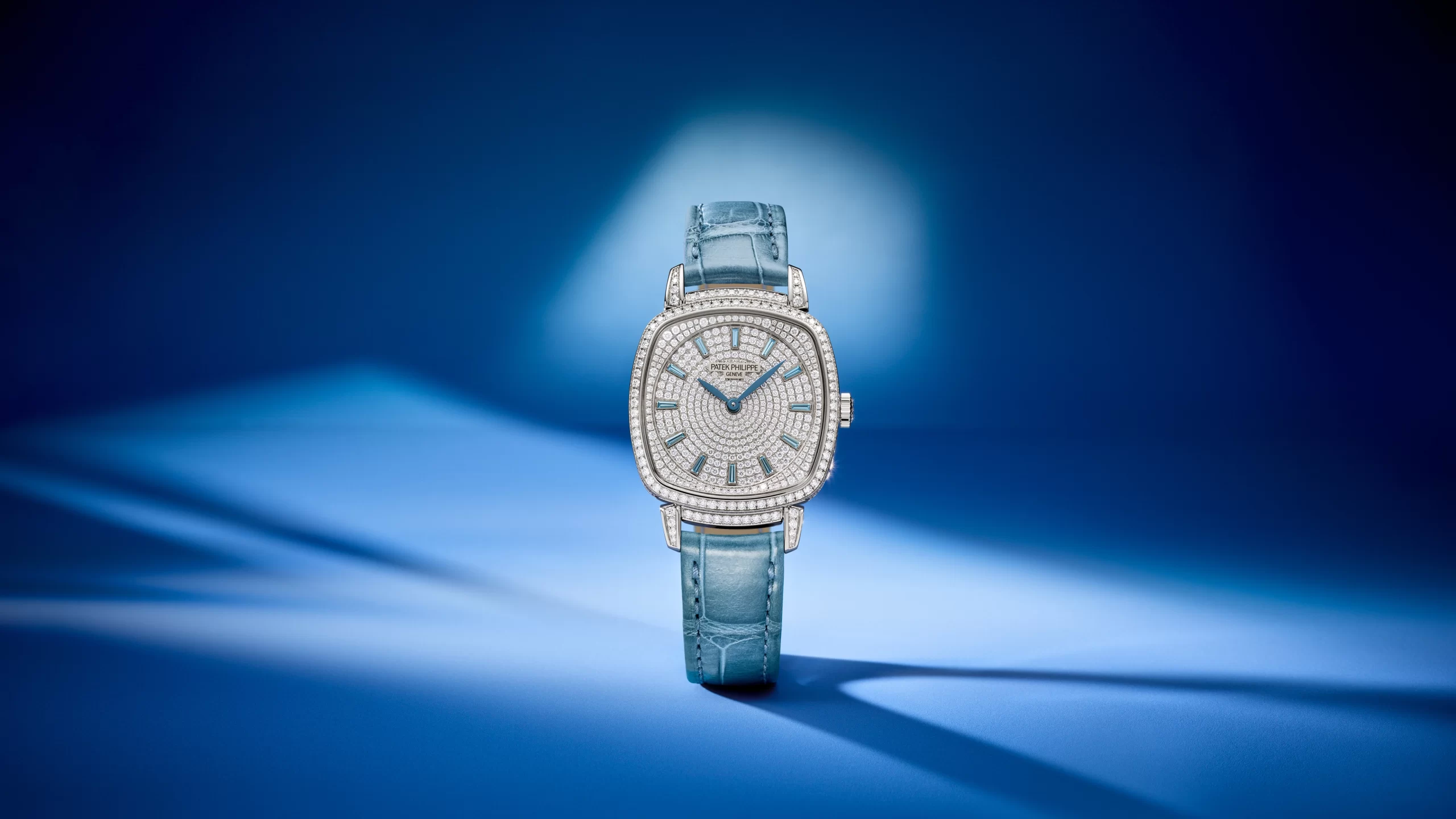
Ref. 7043/250G-001: white gold with blue topaz hour markers and a shiny peacock-blue alligator strap.
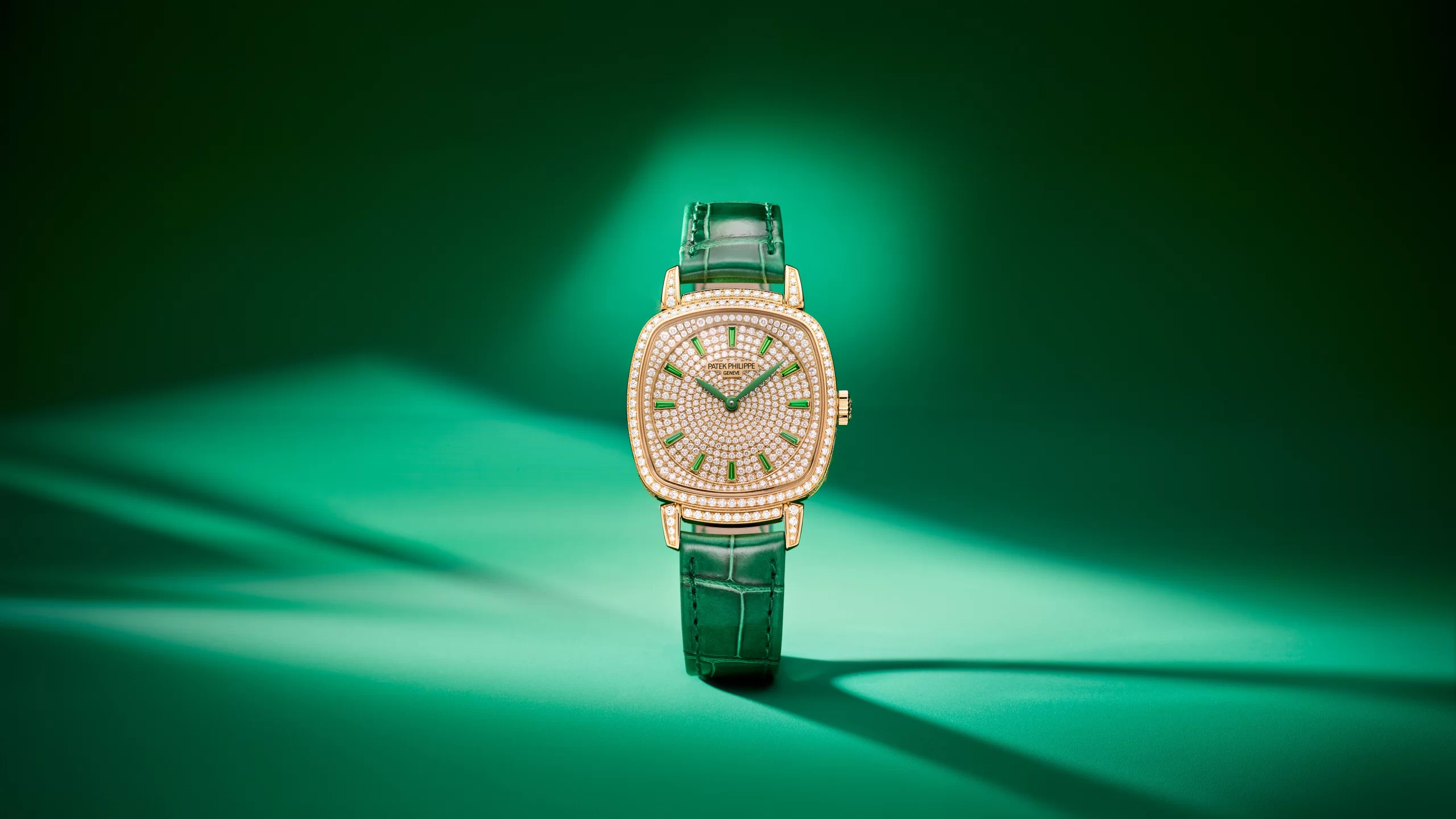
Ref. 7043/250R-001: rose gold with green tsavorite hour markers and a shiny green alligator strap.
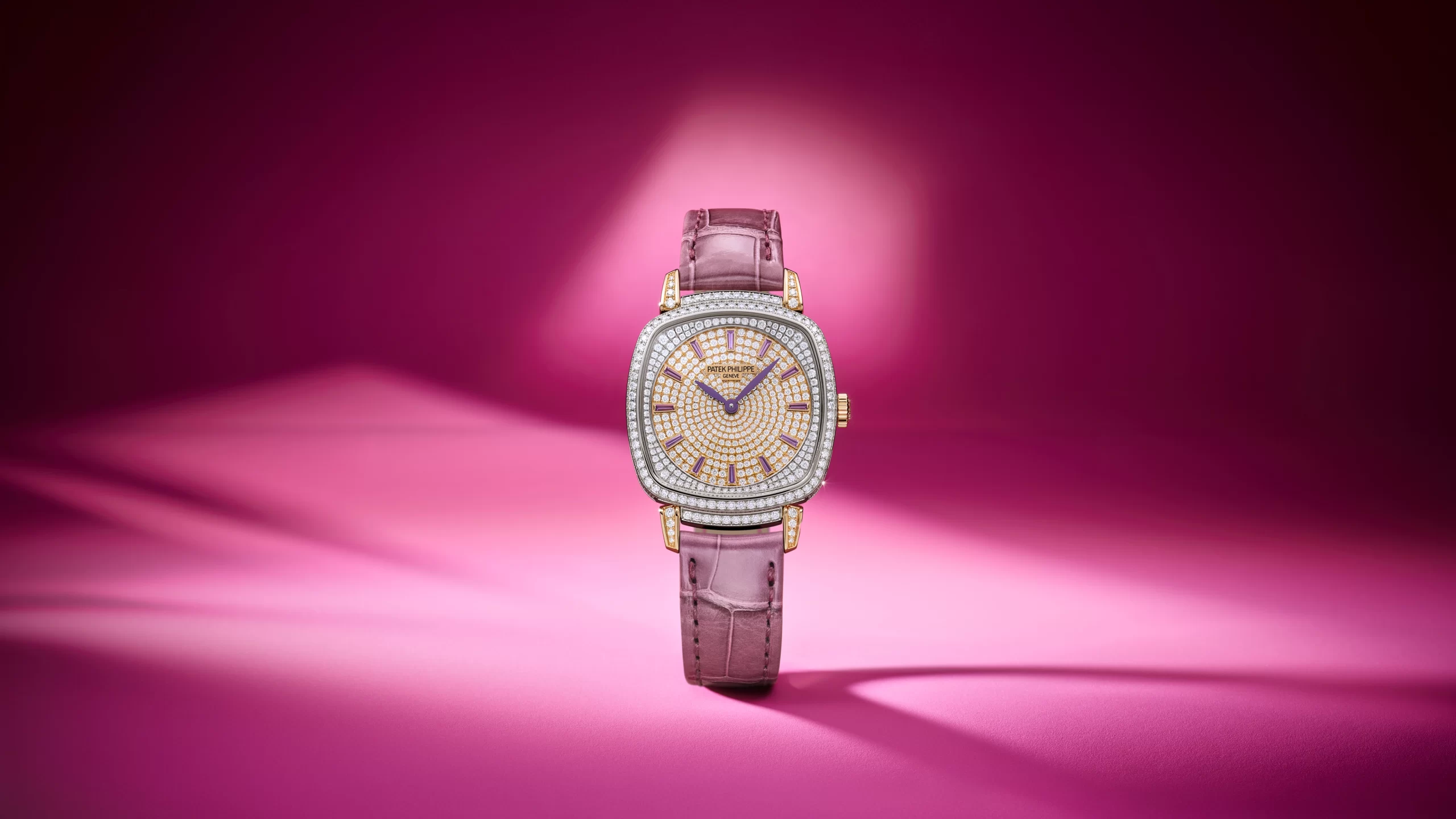
Ref. 7043/250GR-001: white and rose gold with purple amethyst hour markers and a shiny purple alligator strap.
The gemstones are set as trapeze-shaped hour markers in gold settings. Patek Philippe says the construction allows light to pass through the gemstones, enhancing their colour. The hands receive an ALD, or Atomic Layer Deposition, treatment and are matched visually with the coloured straps.
687 diamonds, plus coloured gemstones
The technical specifications provide a detailed breakdown of the Joaillerie setting.
For the Ref. 7043/250R-001, the watch contains:
411 diamonds on the dial and dial flange, totalling 1.37 carats
12 trapeze-cut tsavorites, totalling 0.22 carat
253 diamonds on the case, totalling 1.56 carats
23 diamonds on the buckle, totalling 0.18 carat
687 diamonds in total, totalling 3.11 carats
12 trapeze-cut tsavorites totalling 0.22 carat
The Ref. 7043/250G-001 uses 12 trapeze-cut topazes totalling 0.2 carat, while retaining the same 687-diamond, 3.11-carat total. The Ref. 7043/250GR-001 uses 12 trapeze-cut amethysts totalling 0.17 carat, again with 687 diamonds weighing a total of 3.11 carats.
The straps continue the colour theme: shiny green alligator for the tsavorite model, shiny peacock blue for the topaz version and hand-stitched shiny purple alligator for the amethyst model. Each buckle is set with diamonds.
Quartz at the heart of the collection
While the Gondolo name carries substantial mechanical-watch heritage, the new Ladies First models use Patek Philippe’s E15 quartz movement.
Patek Philippe describes the E15 as combining precision and ease of use. According to the Manufacture, 20% of the movement’s components are electronic, while the remaining 80% are manufactured using methods also employed for its mechanical calibres.
The movement provides hours and minutes, with the crown pulled out to set the time. Its approximately three-year battery life is specified for a new battery.
Gem-setting as a central part of the design
Patek Philippe states that the diamonds and coloured gemstones are selected according to its criteria and in line with GIA standards, with attention given to clarity, colour, proportions and finish.
The diamond-setting is carried out in the Manufacture’s own gem-setting ateliers. The press material says the setters use specialised gem-setting microscopes to achieve the required precision.
That emphasis is particularly visible in the Joaillerie watches, where the diamond arrangement extends from the case to the dial and buckle rather than being confined to a single decorative element.
A new campaign for Patek Philippe’s ladies’ collection
The Gondolo Ladies First collection also marks the inaugural appearance alongside Patek Philippe’s new “IAM. I WEAR.” campaign.
Created by London-based Leagas Delaney, the campaign is directed toward the modern woman and accompanies the introduction of the new watches. Patek Philippe also states that a short film supports the launch and was directed by Mona Fastvold and Brady Corbet.
A Gondolo collection shaped around colour, jewellery and wearability
With the six new references, Patek Philippe combines the Gondolo’s historic cushion-shaped silhouette with contemporary colour and jewellery design. The three diamond-set models take a relatively restrained approach, pairing 108-diamond flanges with textured opaline dials, while the three Joaillerie references transform the same basic architecture with hundreds of diamonds and coloured gemstone hour markers.
The result is a collection that connects the Gondolo’s Art Deco heritage with a modern jewellery-watch format, while retaining the practical specifications of the E15 quartz movement.