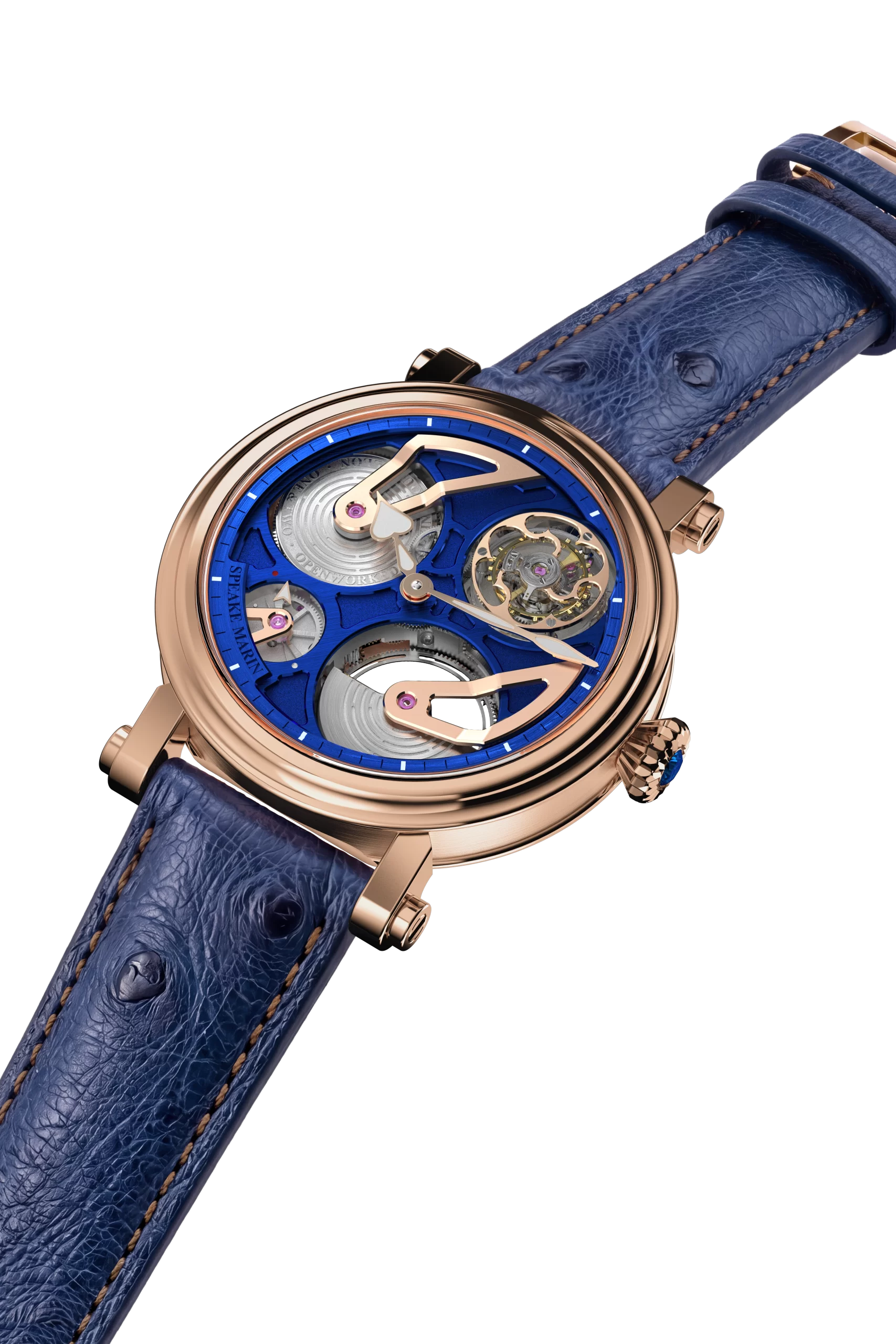
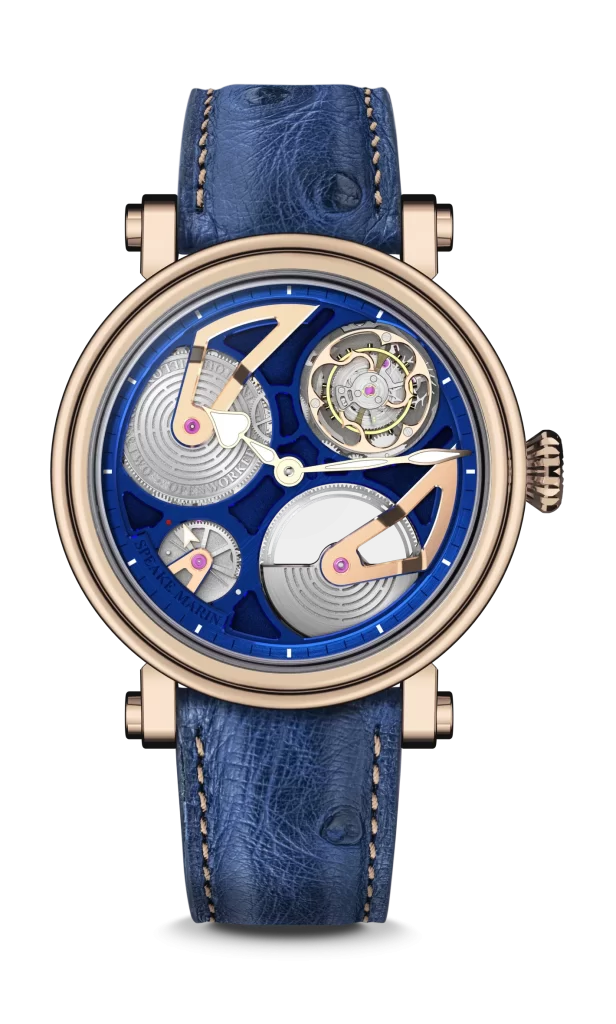
Speake Marin presents the Tourbillon Royal Blue, a new interpretation of its emblematic Openworked collection, combining the Maison’s Piccadilly case with an intensely coloured Royal Blue mechanical architecture.
The timepiece brings together a 42 mm 5N red-gold case, an openworked construction and the automatic manufacture SMA05 calibre. Limited to just five pieces, the Tourbillon Royal Blue offers a highly exclusive expression of Speake Marin’s approach to Anglo-Swiss watchmaking.
Mechanics Takes Centre Stage
The Openworked collection places the movement at the heart of the watch’s aesthetic. Bridges, openings and indications unfold across several levels, creating a fully exposed mechanical construction.
The Tourbillon Royal Blue continues this approach through the iconic Piccadilly case. Redesigned in 2017 by Eric Giroud, the case reinterprets Speake Marin’s historic design codes through more fluid and sculptural lines.
Royal Blue as the Defining Thread
Royal Blue runs throughout the Tourbillon Royal Blue, covering the openworked dial, flange and selected movement components.
The intense shade, inspired by Pantone 287 C, contrasts with the warmth of the 5N red gold and the anthracite-grey rhodium plating. Subtle 4N details add another layer of contrast, while a red accent on the power-reserve display provides a graphic highlight.
The Piccadilly Case in 5N Red Gold
The Tourbillon Royal Blue is housed in Speake Marin’s 42 mm Piccadilly case, crafted in 5N red gold.
Its sculptural lines frame the openworked movement, revealing the flying tourbillon, power-reserve indication and finishing of the SMA05 calibre.
A domed sapphire crystal with anti-reflective treatment protects the dial, while a sapphire crystal caseback reveals the movement from the reverse.
The flared and fluted crown is crafted in 5N red gold and set with a blue sapphire. The caseback carries the Speake Marin and One & Two signatures together with the inscription “Limited Edition of 5.”
The watch is fitted with a Royal Blue ostrich leather strap, hand-stitched with gold-coloured thread, with a light-brown calfskin lining and 5N red-gold pin buckle.
A Dial Conceived as Architecture in Motion
The fully openworked dial exposes the mechanics beneath and is structured around two principal focal points: the flying tourbillon at 1:30 and the power-reserve indication at 7:30.
The upper plate receives a Royal Blue PVD treatment and is intentionally left unlacquered to preserve the depth and intensity of the colour. Straight-grained lines extend from the tourbillon towards the power-reserve display.
Microblasted recesses contrast with satin-brushed surfaces, while diamond-cut edges and opaline-finished bevels catch the light. Glossy light-grey details in Pantone 420 C contribute to legibility, while a ruby within the power-reserve display introduces a subtle red accent.
The surrounding circular-grained brass flange is also finished in Royal Blue PVD. Twelve Pantone 420 C light-grey Super-LumiNova hour markers emit blue luminescence, while the 4N PVD-treated hour and minute hands feature light-grey lacquer and blue luminescence.
The SMA05 Calibre
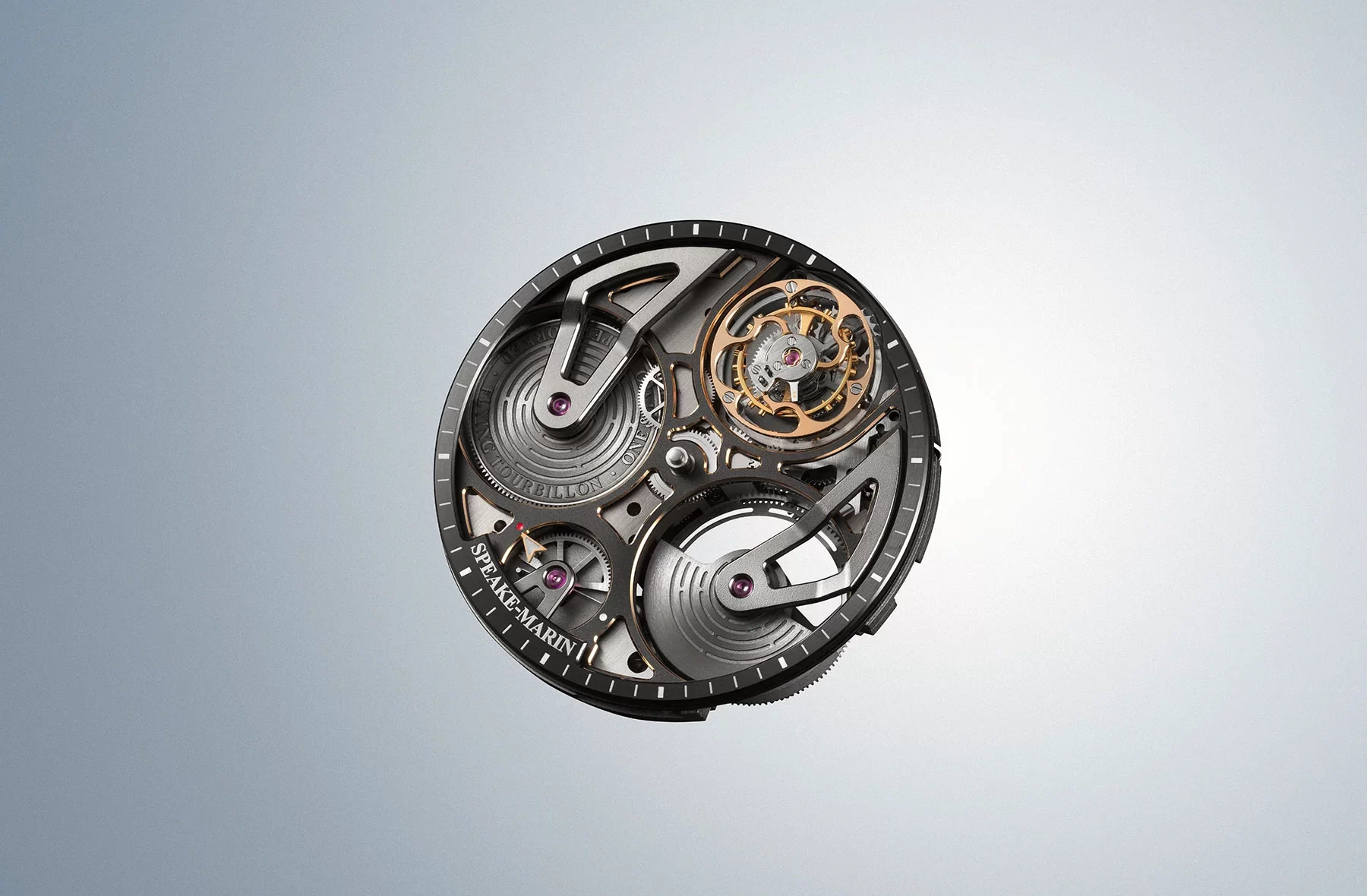
At the heart of the Tourbillon Royal Blue is the automatic manufacture SMA05 calibre, equipped with a fully integrated micro-rotor and a flying tourbillon completing one rotation every 60 seconds.
The movement provides a 72-hour power reserve and operates at 3 Hz, or 21,600 vibrations per hour. It comprises 290 components, including 63 components for the tourbillon cage.
The bridges are decorated with Côtes de Genève and finished in anthracite-grey rhodium plating, while the central bridge features a circular-grained 4N gold-tone PVD coating.
The tungsten oscillating weight and barrel drum are rhodium-plated. The tourbillon is topped by Speake Marin’s signature Topping Tool bridge, polished and finished in 4N.
The barrel carries laser-engraved One & Two, Openworked and Flying Tourbillon inscriptions, accompanied by striped decoration that continues onto the oscillating weight.
Speake Marin Tourbillon Royal Blue: Technical Specifications
Reference: 424211010
Movement
Automatic manufacture SMA05 calibre
Fully integrated tungsten micro-rotor
60-second flying tourbillon at 1:30
Power-reserve indication at 7:30
290 components, including 63 for the tourbillon cage
Frequency: 3 Hz / 21,600 vibrations per hour
Power reserve: minimum 72 hours
33 jewels
Diameter: 34 mm
Thickness: 7.15 mm, excluding hands
Microblasted mainplate with Royal Blue PVD treatment
Central bridge with 4N PVD treatment
Signature Topping Tool tourbillon bridge
Laser-engraved barrel
Striped decoration continued onto the oscillating weight
Functions
Hours
Minutes
Seconds displayed on the tourbillon cage
Power-reserve indication
Case
Iconic Piccadilly case
5N red gold
Diameter: 42 mm
Thickness: 12.35 mm
Flared and fluted 5N red-gold crown set with a blue sapphire
Domed sapphire crystal with anti-reflective treatment
Sapphire crystal caseback
“Limited Edition of 5” engraving
Water resistance: 3 ATM
Dial
Three-dimensional openworked dial finished in Royal Blue PVD
Straight-grained surfaces
Microblasted recesses
Diamond-cut edges
Circular-grained Royal Blue PVD flange
Twelve Pantone 420 C light-grey Super-LumiNova hour markers
4N PVD-treated hands
Pantone 420 C light-grey lacquer
Blue luminescence
Glossy red Pantone 199 C detail on the power-reserve indication
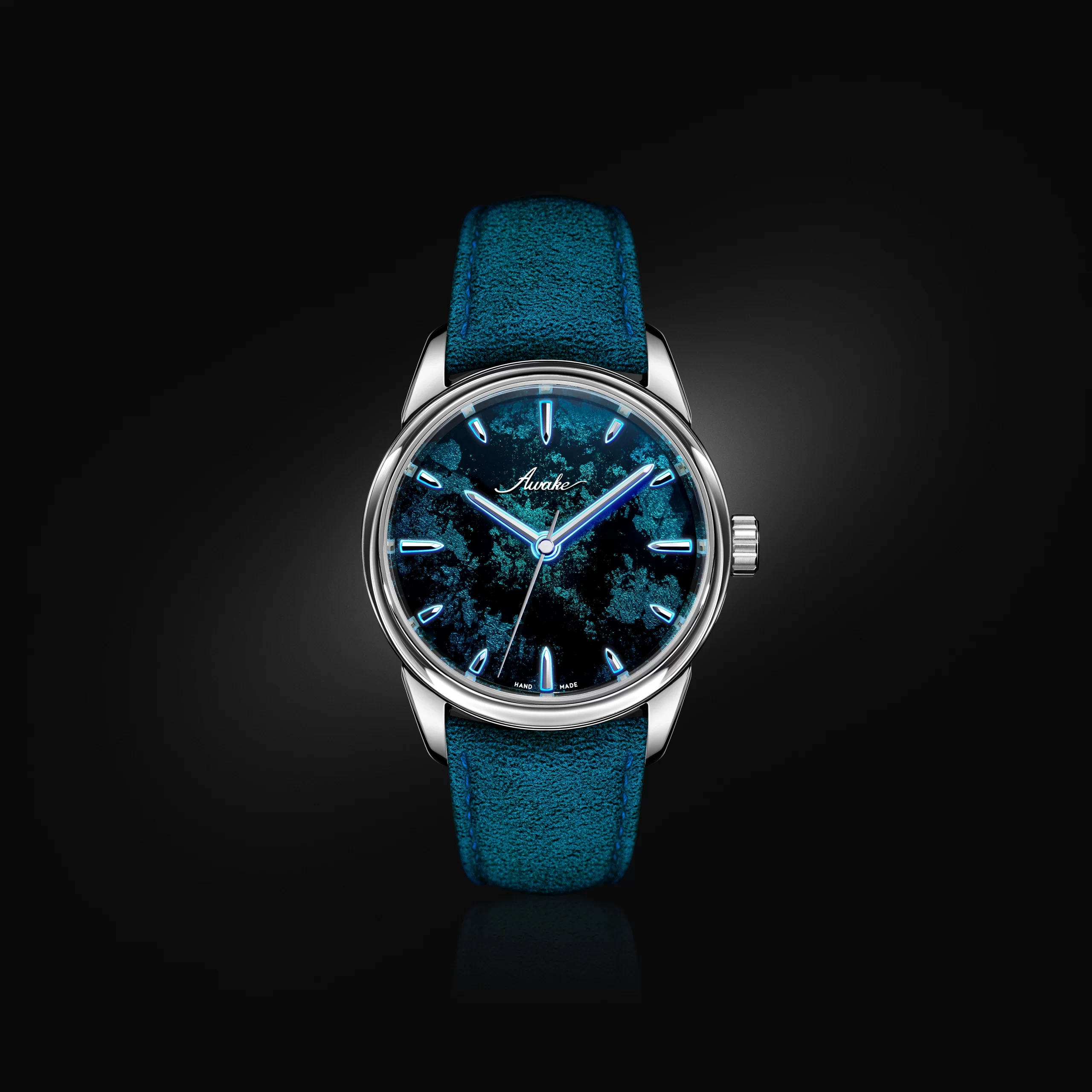
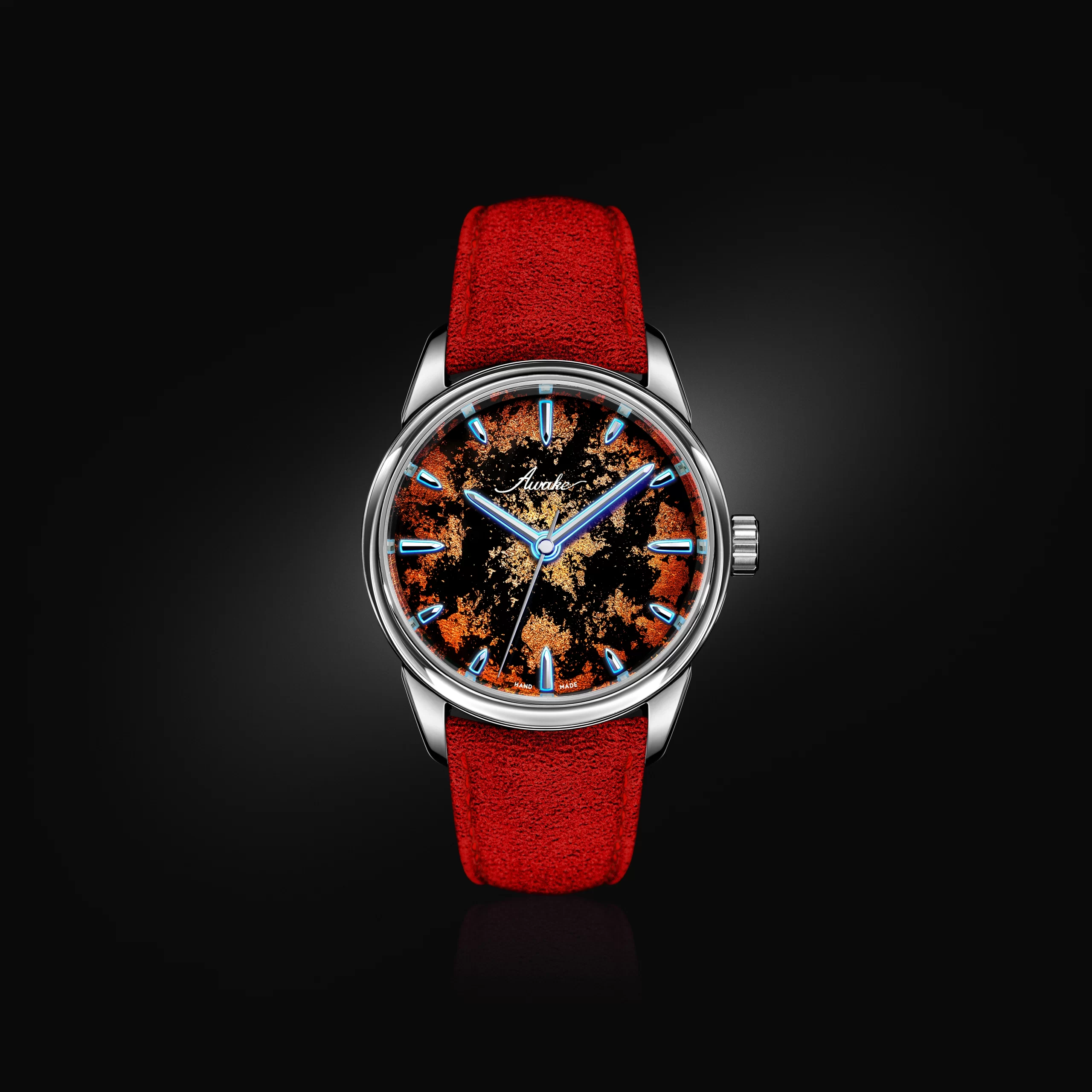
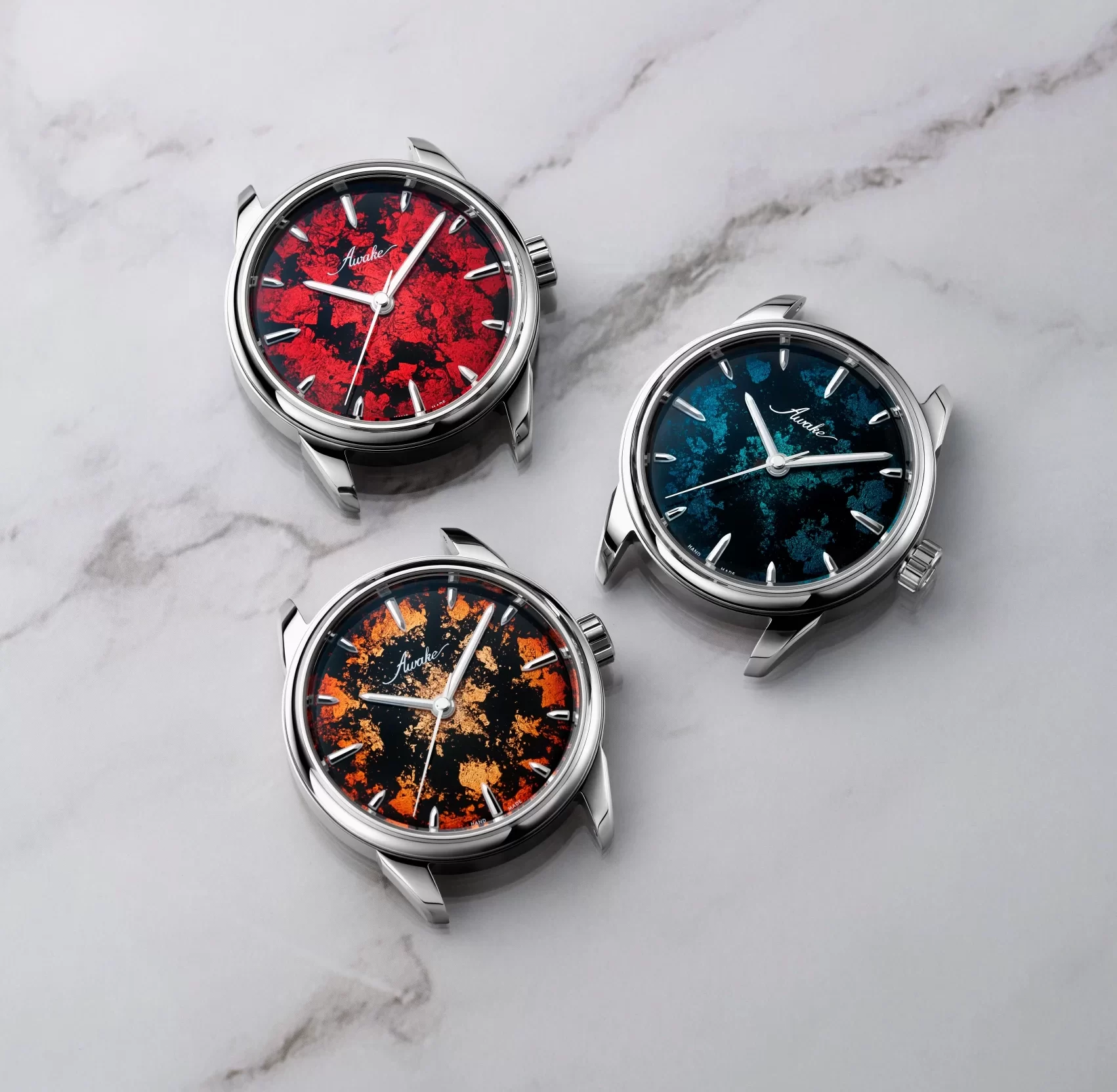
AWAKE’s Frosted Leaf collection returns in 2026 with three new watches inspired by exceptional moments in nature. Blood Moon, Storm and Lagoon transform rare natural phenomena into handmade lacquer dials using traditional Vietnamese Sơn Mài craftsmanship, silver leaves and natural pigments.
Through the life of a brand, some pieces make a lasting impression. Back in 2025, when AWAKE presented the Frosted Leaf technique for the very first time, watch collectors and enthusiasts all around the world were unanimously… enthusiastic.
One year—and two Awards—later, Frosted Leaf is back, featuring three new creations inspired by rare and intense natural phenomena. These three versions convey the feeling of Mankind, awestruck by the grandiosity of Nature.
Blood Moon, Storm, Lagoon—they tell us about Life, catching these exceptional moments granted by Nature. They push even further the limits of a unique craftsmanship, fixing fleeting instants in lacquer for all eternity. Unforeseeable but unforgettable instants.
PRESERVING, MODERNIZING, TRANSMITTING
AWAKE’s relationship with the Métiers d’Art is not just a matter of watchmaking. It is a matter of highlighting craftsmanship, transcending borders and boundaries, and giving prominence to diverse identities and cultures—within the frame of a dial. Promoting aesthetics, handicraft, meticulousness, and timelessness is also key. Each project of the brand aims at showcasing and preserving traditional savoir-faire by making them part of our daily lives.
CATCHING A FLEETING MOMENT
Since AWAKE was created in 2019, Nature and Arts have been the core inspirations of the brand. The common thread of all AWAKE’s watchmaking projects, allowing the brand to create unique and enthralling pieces. This mindset is shared by AWAKE’s Master Lacquerers, who wish to push further the limits of their antique techniques. Thanks to their commitment, the dials of the Frosted Leaf collection convey the beauty of the world. In 2025, AWAKE drew its inspiration from the breathtaking sight of Earth from Space.
In 2026, AWAKE intends to catch Nature in some of its most exceptional moments. Mixing poetry and craftsmanship to fix them in lacquer, thus turning ephemeral into eternal. Blood Moon, Storm, and Lagoon are inspired by three rare and intense natural phenomena. When witnessing them, people are suddenly aware of their own smallness, facing something way bigger than themselves. Such a striking, universal feeling. During these natural epiphanies, while the beauty of Nature is fully on display, Time seems to stop.
“The Blood Moon only appears for a few hours per year. A clap of thunder only lasts a split second. A perfect lagoon can only be found in some places around the World. Put together, these three phenomena illustrate the dichotomies at the core of AWAKE’s creative universe: ephemeral VS eternal, light VS dark, common VS uncanny, perceptible VS hidden.”
Lilian THIBAULT—AWAKE’s founder
TURNING EPHEMERAL MOMENTS INTO ETERNAL ITEMS
Blood Moon, Storm, Lagoon: three new iterations with powerful dials that poetically capture life in motion and preserve nature at its most rare and fleeting. They push even further the boundaries of this singular ancestral Vietnamese technique (known as glacis) which makes it possible to seal within lacquer, for eternity, that which by nature does not last. Each dial is conceived as a complete visual and sensory experience, inviting inward reflection and reminding people to cherish those unplanned moments that arrive without warning, and stay with them forever.
Blood Moon
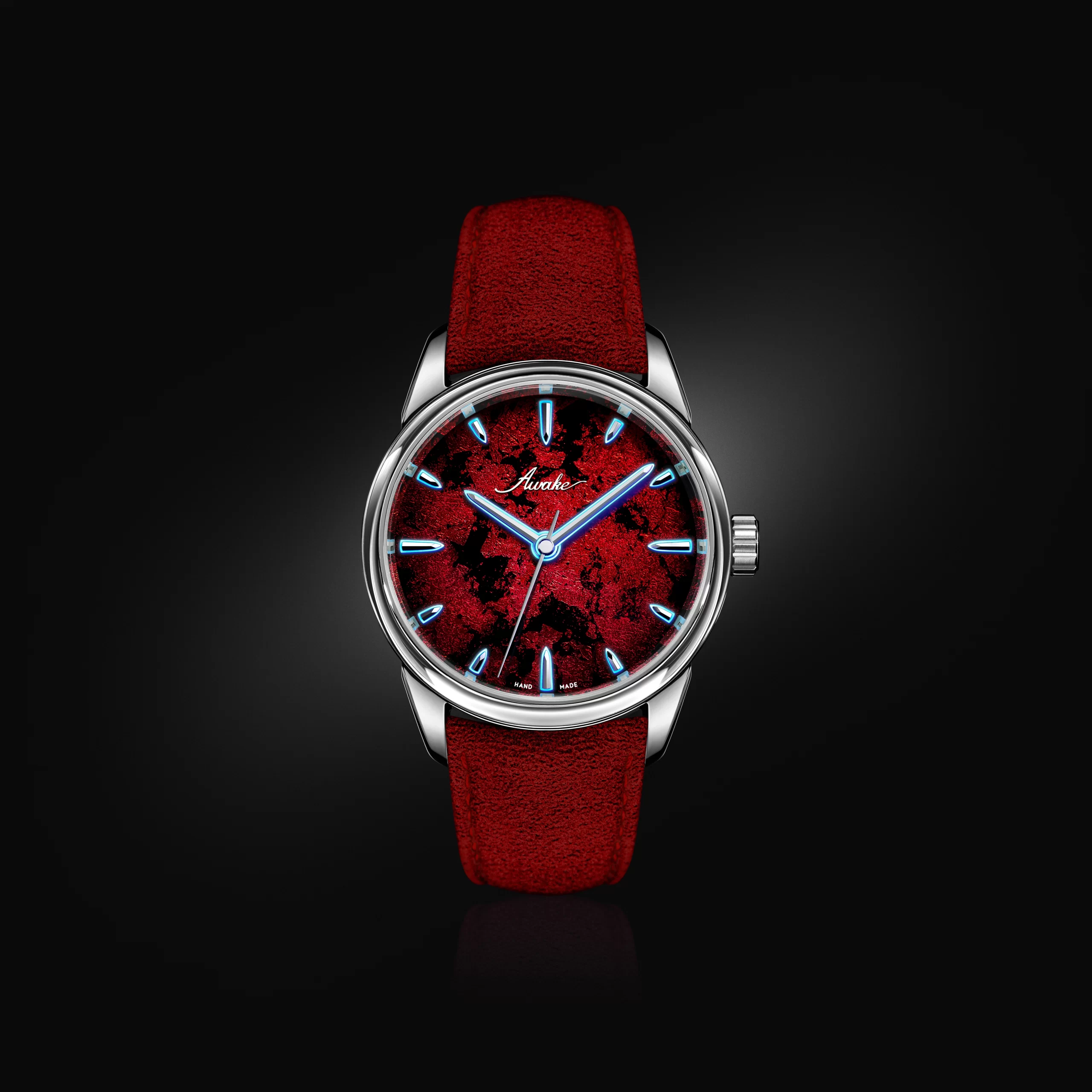
The dials of the “Blood Moon” version are inspired by one of the most fascinating celestial phenomena: the so-called “Blood Moon” which happens during a total lunar eclipse. The Moon moves through Earth’s shadow, assuming a deep shade of red and looking almost unreal. Such a rare event, which only happens a few days every ten years, tends to overwhelm anyone who witnesses it. Paradoxically, the Moon shines in darkness. But it shines differently, adding some mystery. As if our faithful companion was revealing its dark side. No wonder so many civilizations saw it as a sign of profound changes to come.
The dials wear black and red: the colors of passion, desire and mystery. They defy each other, enhance each other, creating an exceptional visual depth, between light and darkness. Such a transient moment, captured for eternity thanks to AWAKE’s exclusive Frosted Leaf technique.
Lagoon
The “Lagoon” dials pay tribute to the mesmerizing beauty of lagoons and their relation to light. Between sea and land, depth and surface, they display incomparable and magical optical effects. AWAKE decided to capture them in its dials. Translucent greenish blue, intense turquoise, deep cobalt blue or silvery pale blue, lagoons are like breathing, living creatures, always changing. Transparent at first glance, the “Lagoon” dials actually include a whole universe. Diving into them is like diving into yourself, finding some hidden truths. Such an artistic achievement was allowed by AWAKE’s Frosted Leaf technique and the command of its Master Lacquerers. Light goes through several layers of lacquer, natural pigments, and silver leaves, producing visual effects similar to lagoon waters.
“Lagoon” watches foster people to see beyond what is visible. They are made for those who know that the most precious things are way under the surface. A silent reminder that some treasures, and savoir-faire, are timeless. You reach wiseness when you realize how much is left to discover.
Storm
The “Storm” dials are an artistic rendering of one of the few natural phenomena which generates awe and fear alike: storms. Mankind has been both fascinated by and fearful of storms, since the dawn of time. They still have a strong, universal meaning, even today. Black and orange hues convey the beauty and danger of a flash of lightning ripping the darkness. It merely lasts a split second—all it needs to illuminate everything around, with unequaled intensity. A bold dial with electric vibes, illustrating the huge amount of energy suddenly unleashed by Nature. It also displays the duality of destruction and creation, silence and crash, fear and amazement.
“Storm” is for those who are looking for a lively and unpredictable watch, neither conventional nor discreet. People who live life to its full and who know that unforgettable moments happen suddenly, without notice, with an unpredictable strength.
15 HOURS TO CATCH THE UNCATCHABLE
The remarkable technique used to produce the Blood Moon, Storm and Lagoon dials requires the highest level of focus and dexterity. It is a long and complex handicraft—each movement is of paramount importance. And perfection is the only objective. Each dial is like a hypnotizing “millefeuille”, playing with light.
A rare and delicate raw material: it starts with the sap of the Rhus verniciflua tree, which grows in North Vietnam. After a decade, each tree only gives 200 ml of the precious liquid per year. The harvest happens only at daybreak, in June and July. Purified and dehydrated, the sap becomes a transparent lacquer, well-known for making shine and protecting surfaces.
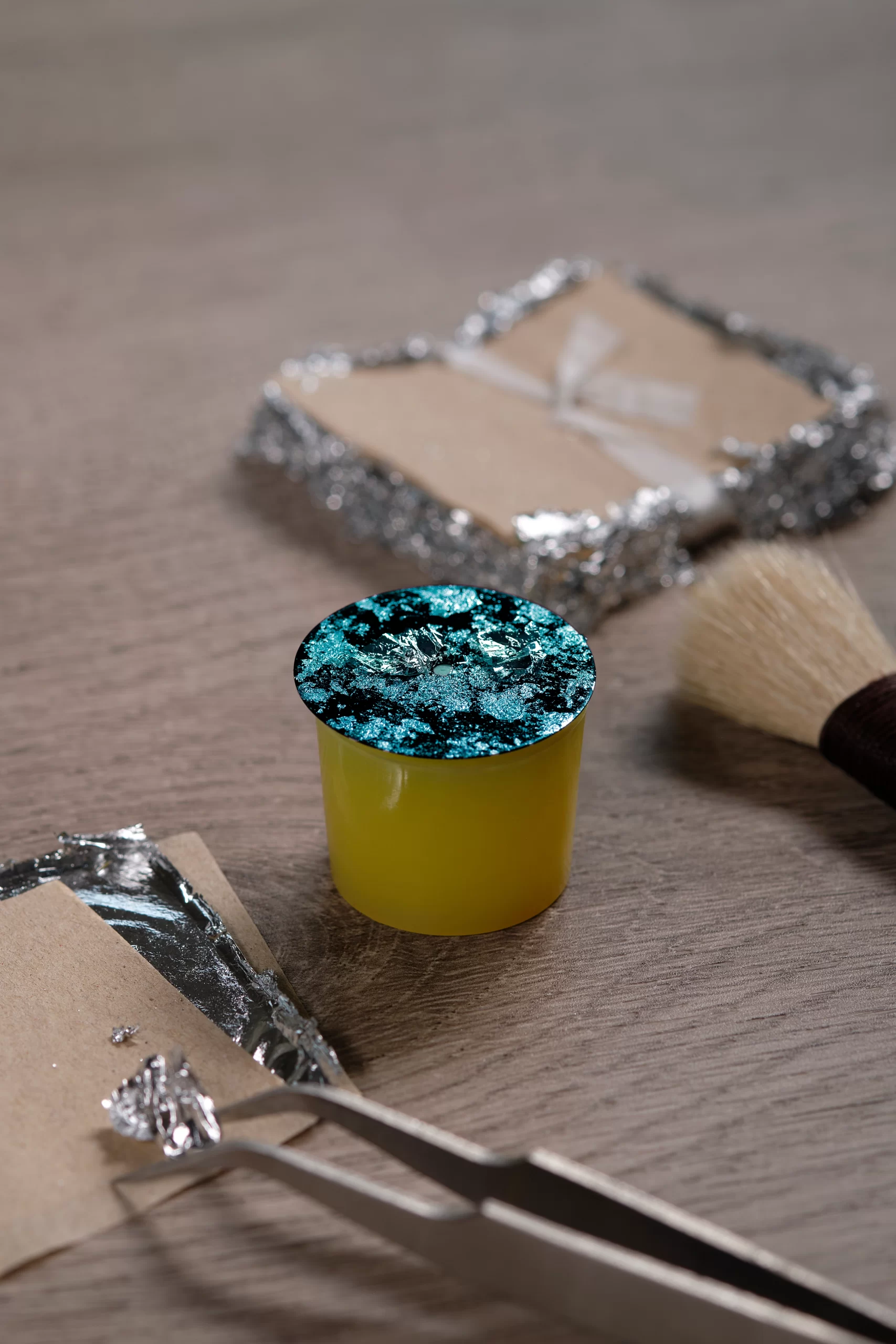
An antique and unique Vietnamese art: Sơn Mài is an age-old technique, requiring several years of practice. It consists in applying and polishing several layers of natural lacquer to obtain a mirror-like surface with unrivalled depth. Contrary to the Chinese and Japanese traditions, Vietnamese craftsmen include precious materials between layers of lacquer—like silver leaves, in this case—to create a one-of-a-kind texture, with relief and plays of light.
A shining and sparkling silver leaf: At the bottom of the dial, the craftsmen apply a first layer of lacquer and very dark black pigments. Then they varnish it. They apply the first layer of pure silver leaves with a brush and delicately sand it to remove the excess of material. It all gives an organic quality to the dials, with metallic and warm flashes of light.
An exceptional depth: That is where the “Frosted” technique comes in. Instead of starting the lacquer layering as usual with “classic” dials, AWAKE’s Master Lacquerers repeat the previous process, adding silver leaves to lacquer. Said lacquer is enriched with blue, orange or red pigments, thus creating a striking contrast. The material laying between each layer is lively. This technique requires patience and consistency. And time… It dramatically enhances the complexity of the dials.
A gifted craftsman: This light and substance “millefeuille” is then entrusted to the most experienced craftsman of the workshop. He must sand it with the greatest care, directly with his fingers, to slowly unveil the reliefs and patterns that render every dial unique. Several layers of lacquer, each sanded and polished, are needed to offer a perfect and eternal brilliance. The process is methodical, demanding, and lengthy (about 15 hours). Any mistake could spoil the dial.
A unique piece of art: The full process requires patience, dexterity and focus. It turns each dial into a one-off piece, where Light and Time stop and converse. They also bear the marks of the expert hands that made them. They are the results of an antique handiwork, bringing a century-long tradition to the present days.
NEW 38 MM CASE
These three models are equipped with AWAKE’s new 38 mm case—with thinner proportions. Perfectly balanced, its elegance is definitely accentuated by the concave lines of the polished bezel, along with the slightly convex sapphire crystal, and the delicately rounded lugs. The result is a mix between 1960s aesthetics and contemporary design. The contrast between polished surfaces and satin-finished sides is an adhesion to modernity. The slightly resized and now screw-down winding crown—allowing a 100 m water resistance—is adorned with a new “coat of arms”, symbolizing AWAKE’s commitment to Artisanship. Finally, the rehaut has been reshaped, expounding AWAKE’s vision with clarity and authenticity.
REIMAGINED BRAND IDENTITY
The dials show AWAKE’s new visual identity with a handwritten logo, as a tribute to the craftsmen’s handiwork. It is not only about aesthetics, it is about highlighting Tradition, Savoir-faire and Métiers d’Art in a contemporary frame. Punched with AWAKE’s new coat of arms illustrating transmission and cultural dialogue, the watches embody the brand’s sensibility and commitment. Each detail glorifies the richness of Artisanat and AWAKE’s will to keep it alive.
HIGHLIGHTED SAVOIR-FAIRE—QUITE LITERALLY…
Blood Moon, Storm and Lagoon display AWAKE’s exclusive “Chiaroscuro” luminous signature, which enhances the depth and contrasts of the dials, whether by day or by night. Hands and indexes combine Super-LumiNova® BGW9 and polished, brushed, and faceted steel. This innovation, called “coiffe”, allows for a subtle diffusion of light and a better readability without spoiling the dial. During the day, discretion is de rigueur. In the dark, luminescence works its magic. A gentle luminous halo appears and accentuates the brilliance of the lacquer, the sparkling of the silver leaves and the contrast of the pigments, bringing poetry and technical exploit together. A feast for the eyes!
LA JOUX-PERRET G101 MOVEMENT
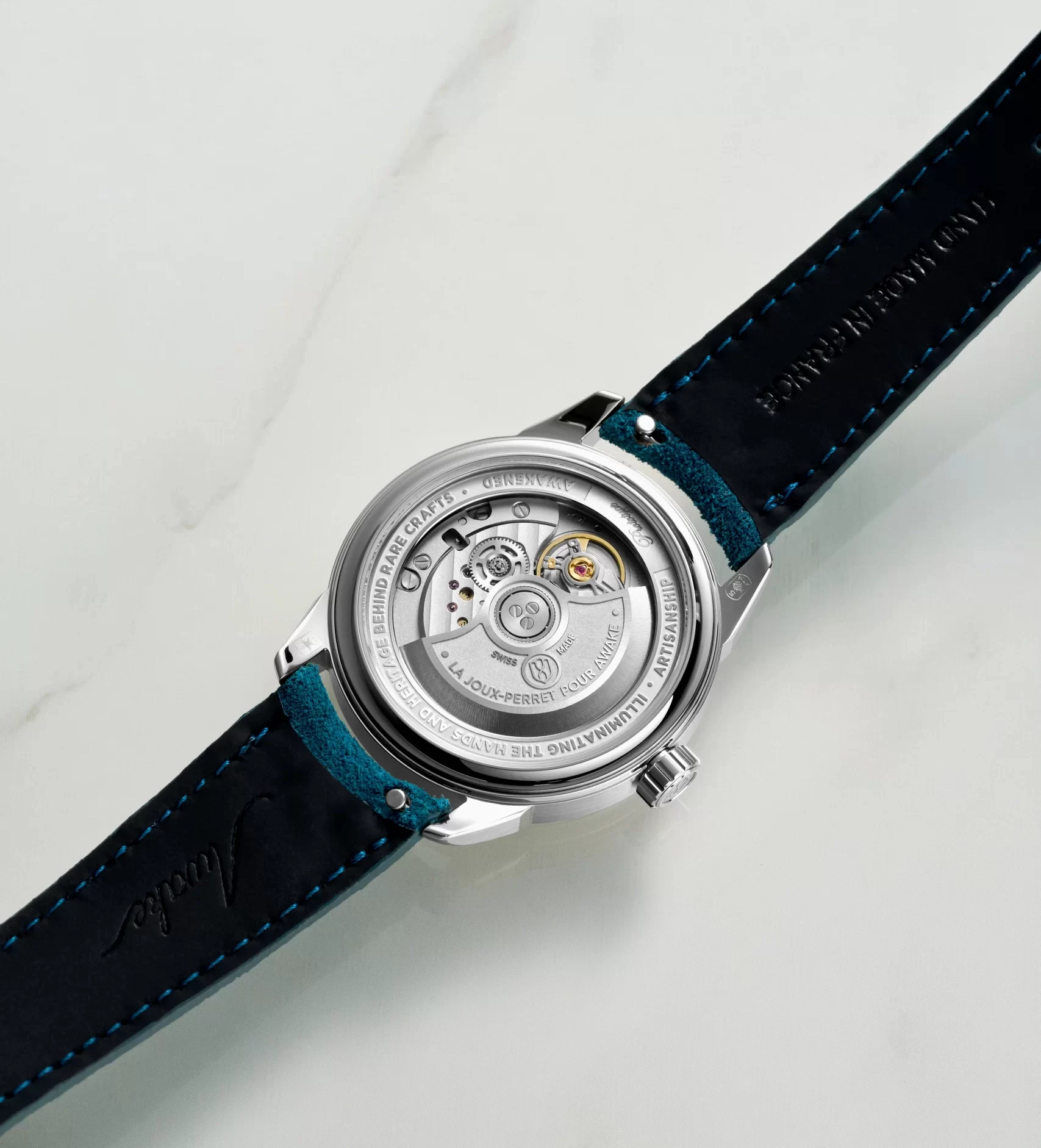
The automatic G101 movement—made by Swiss manufacture La Joux-Perret—is the beating heart of the Blood Moon, Storm, and Lagoon models. Performing and reliable, up-to-date and precise, this finely-finished caliber offers a 68-hour power reserve. Besides, it is equipped with AWAKE’s new custom-made rotor. Made of tungsten, the rotor associates technical prowess and elegance, thanks to its reliefs and counter-reliefs, embellished by polished, brushed and bead-blasted finishes. The rehaut is engraved with AWAKE’s motto—Illuminating the hands and heritage behind rare crafts—and its slogan—Artisanship, Awakened.
HOMEMADE AND HANDMADE STRAPS
To make the new pieces even more sublime, AWAKE chose nubuck calfskin straps in orange, red and blue. They are made by hand in France. More precisely, AWAKE calls on the master leather workers of Maison Bouveret, in Franche-Comté (French Jura). No less than 60 steps are necessary to produce comfortable and sustainable straps, according to strict specifications. Each one shows tone-on-tone topstitching and black rubberized calfskin lining, which offer a highest level of flexibility, water, and wear resistance. Finally, these straps are equipped with AWAKE’s new Fitwell M1 micro-adjustment ardillon buckle, with only 3 mm between each hole. Hence a perfect fitting to feel comfortable all day long. The outcome is both technical and refined, so that connoisseurs can enjoy their watch on a daily basis. Dimensions: 115×75 – 20/16.
A PROPOSITION LIKE NO OTHER
The new creations have many assets: unique handmade dials, using two antique Métiers d’Art techniques; an exclusive luminous signature; a reputable Swiss caliber; straps made by hand in France. They are worth €2,820, taxes and shipping costs included, all around the world. True to its vision, AWAKE does its best to offer watches associating aesthetics, fine watchmaking, traditional savoir-faire and pure emotions, while remaining within the same price range.
TECHNICAL SPECIFICATIONS
References:
Sơn Mài – Frosted Leaf « Storm » – standard collection – around 100 pieces a year
Sơn Mài – Frosted Leaf « Blood Moon » – standard collection – around 100 pieces a year
Sơn Mài – Frosted Leaf « Lagoon » – standard collection – around 100 pieces a year
Case: 316L Stainless Steel
Diameter: 38 mm
Lug to lug: 44,75 mm
Lug width: 20 mm
Thickness: 11.5 mm, glass included/10 mm without glass
Métier d’Art dials: each dial requires 15 hours of work. They are handmade, using two traditional savoir-faire: Sơn Mài Vietnamese lacquerwork and pure silver leaves
Indexes and hands: Super-LumiNova® BGW9, AWAKE exclusive luminous “coiffe” signature
Water resistance: 10 ATM (100 m)
Crystal: anti-reflective sapphire crystal
Case back: screw-down, sapphire crystal
Movement: Automatic La Joux-Perret G101 – 68-hour power reserve
Decorations: New custom-made rotor made of tungsten, with reliefs and counter-reliefs, polished, brushed and bead-blasted finishes. Bead-blasted and engraved rehaut
Strap: Maison Bouveret – nubuck calfskin – rubberized calfskin lining, tone-on-tone topstitching – curved quick-release spring bars – new adjustment ardillon buckle
Born from the golden age of recreational diving, the Bathyscaphe embodies the typical skin diver codes through its balance of elegance and everyday wearability. Created in 1956 as the civilian counterpart to the Fifty Fathoms, the model bore a name that had already been registered in 1953 by Blancpain’s then-CEO and passionate diver, Jean-Jacques Fiechter, reflecting his early vision of creating a diving watch designed not only for professional use but also for enthusiasts. Seventy years after its creation, Blancpain celebrates this legacy with a reproduction of a landmark model from 1968. A timepiece that bridges the aesthetic design of the past with watchmaking excellence, this 300-piece limited edition pays tribute to a defining chapter in the evolution of the diver’s watch.
The Skin Diver Style: A New Relationship with the Underwater World
During the 1950s and 1960s,a new generation of watches emerged alongside the growing popularity of recreational diving: the skin diver. More than purely technical instruments, these watches reflected a new relationship with the underwater world, one shaped by leisure, enjoyment, and a growing fascination with this emerging lifestyle. They captured the spirit of a time when diving became not only a professional activity, but also a source of personal adventure. Characterized by more compact proportions, clean lines, and a refined aesthetic, skin diver watches combined essential diving features with a more understated and daily- wear design.
Emerging from that philosophy, the Bathyscaphe was created in 1956 – despite the name having already been registered in 1953 – by Jean-Jacques Fiechter, then CEO of Blancpain and creator of the Fifty Fathoms, bringing Blancpain’s pioneering diving expertise into
a civilian expression designed for everyday wear.
The Bathyscaphe: The Diver Legacy
The name “Bathyscaphe” refers to the pioneering deep-sea exploration vessel conceived by Swiss scientist Auguste Piccard in the 1940s. Designed to reach the greatest depths of the ocean, the Bathyscaphe represented a major milestone in humanity’s exploration of the underwater world, an achievement that resonated with Jean-Jacques Fiechter’s own passion for diving and exploration.
While the Fifty Fathoms, introduced in 1953, was developed as a professional diving instrument for military forces, professional divers, and underwater specialists, the Bathyscaphe offered an everyday interpretation of the same heritage yet preserving the essential features of the diver’s watch. The distinction between the two models was particularly evident through their proportions. Measuring slightly over 41 mm in diameter, the original Fifty Fathoms was created to be a robust professional instrument. With a more compact 35 mm case, the first Bathyscaphe adopted a slimmer profile, reflecting a more civilian style while maintaining the reliability expected from a true diver’s watch. Over seven decades, the Bathyscaphe has evolved through various interpretations but has always remained faithful to its original identity.
The Spirit of 1968, Reborn
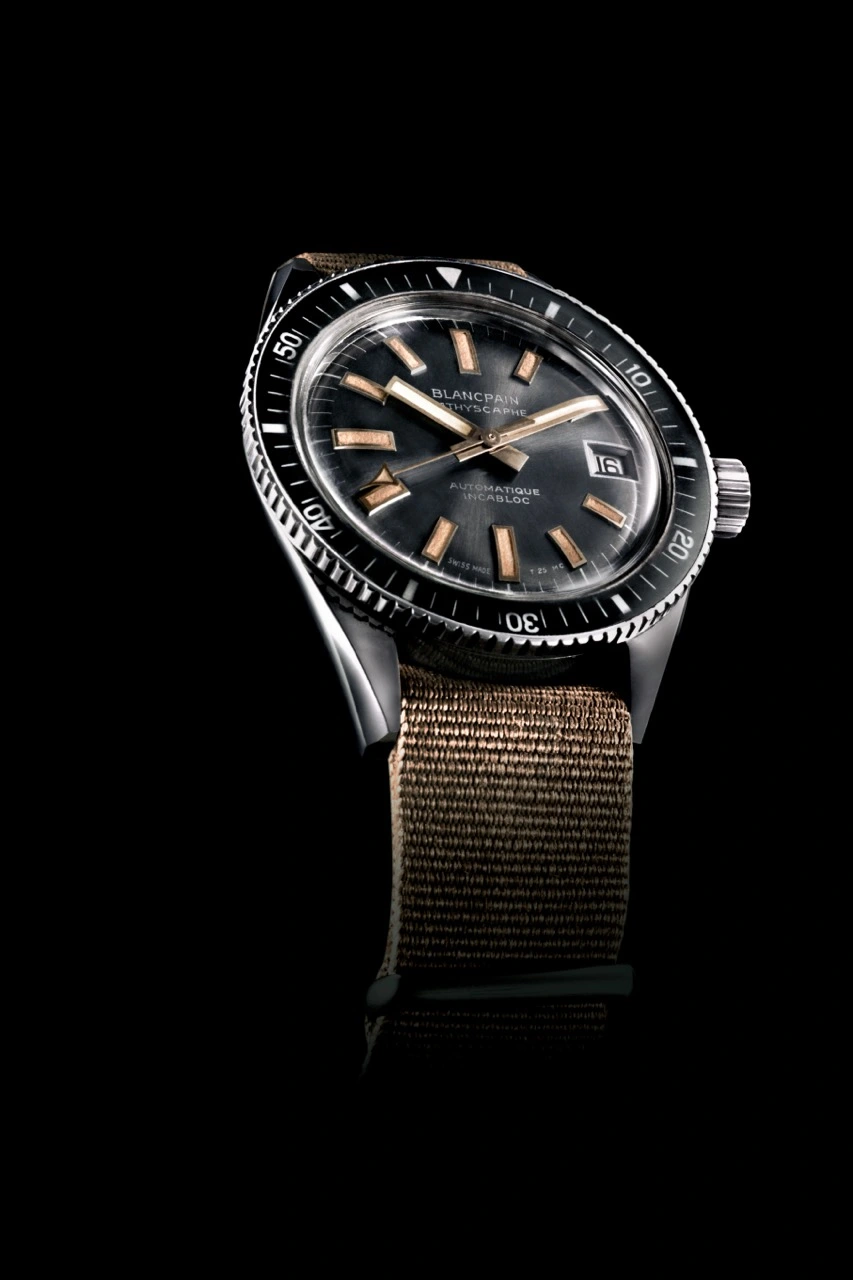
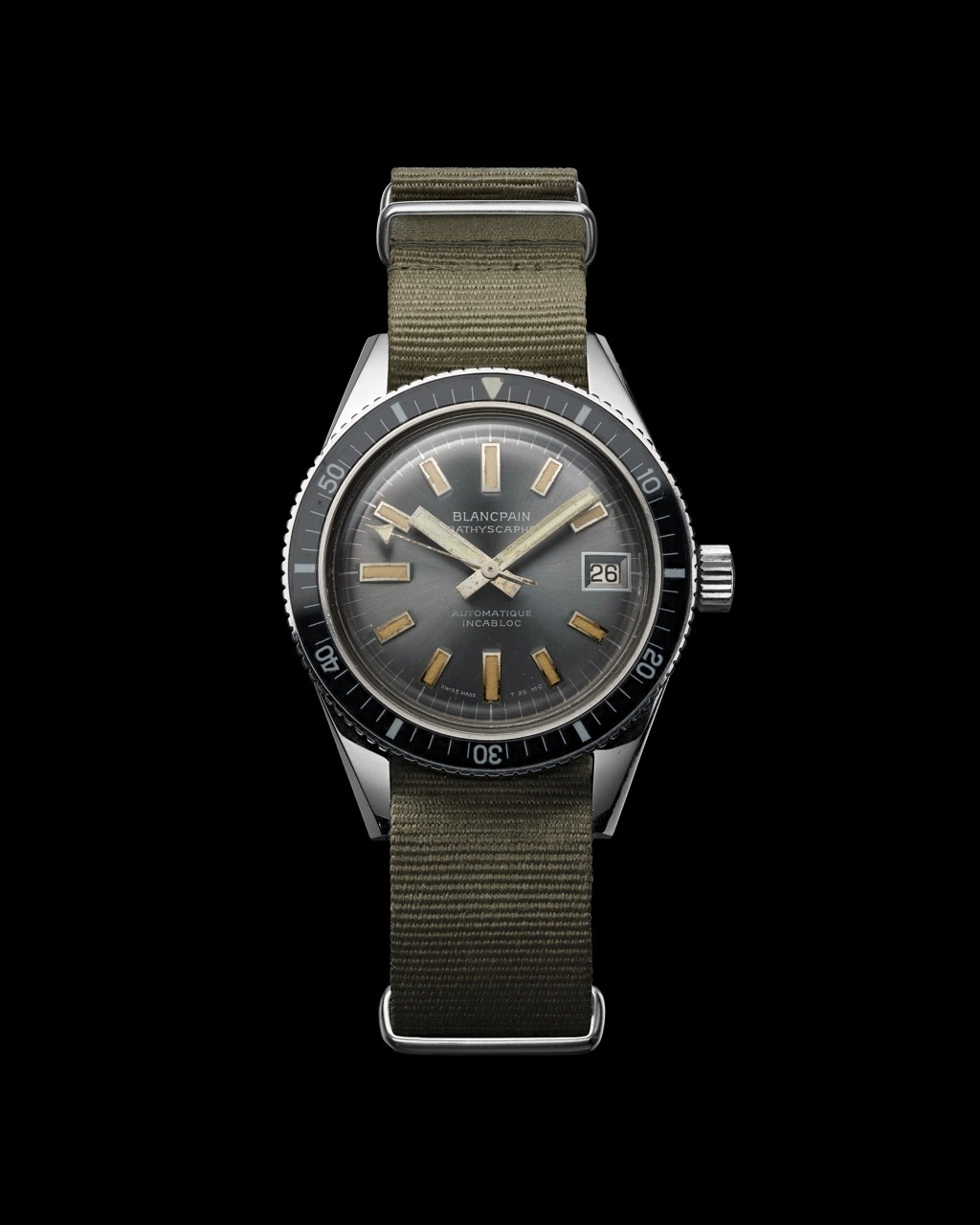
For the model’s 70th anniversary, Blancpain turns to one of the most emblematic expressions of the Bathyscaphe’s history with a watch from 1968. This timepiece was selected for the way it embodied the collection’s defining qualities: balanced proportions, functionality, and understated elegance. Fifty Fathoms Bathyscaphe, 1968
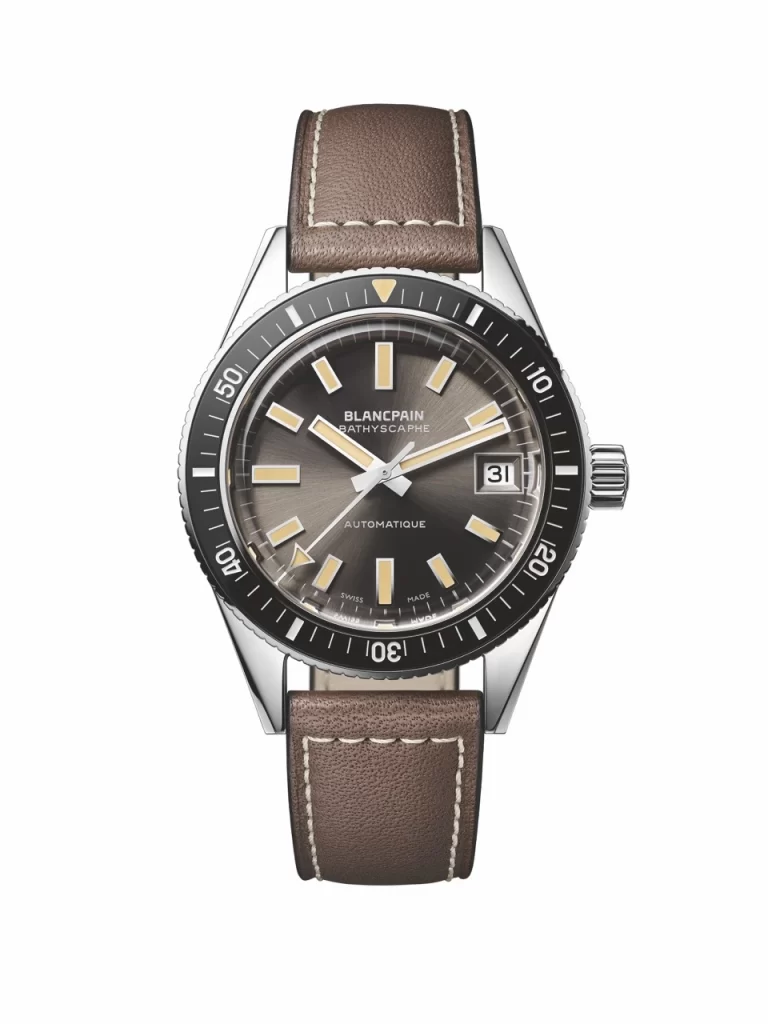
Staying as close as possible to this iteration, Blancpain translated the anniversary piece through contem- porary watchmaking standards. The new edition retains the original 37.40 mm diameter and stainless- steel construction, but its case was specifically developed around the movement to achieve the desired proportions and ergonomics. The remarkable diameter-to-thickness ratio, defined by a slender case middle, contributes to the watch’s harmonious profile on the wrist. The polished finishing, curved surfaces, and carefully shaped lugs enhance its refined aesthetics.
The bezel continues this dialogue between heritage and innovation. Made of steel with a ceramic insert and lacquered numerals – replacing the original black hesalite material – it reinforce durability and legibility.
Every element has been considered to reinforce the aesthetic codes of the original design, from the mid-20th century Blancpain logo to the baton hands and indexes enhanced by vintage-coloured Super-LumiNova®, which recalls the warm tones of the luminous materials used in the past. The hand- stitched chocolate calf leather strap further drives this heritage-inspired spirit, developing a natural patina over time.
The result is a faithful contemporary Bathyscaphe reproduction carrying the unmistakable character of its 1968 inspiration.
Vintage Soul, Contemporary Performance
Beneath its vintage-inspired exterior, this anniversary edition reveals the expertise of Blancpain’s contemporary watchmaking. The Manufacture calibre 1150 was selected to equip this timepiece, offering a combination of reliability, precision, and exceptional autonomy with a 100-hour power reserve.
Its silicon hairspring provides antimagnetic properties, contributing to the movement’s stability and long- term performance.
Visible through the sapphire crystal case back, the movement showcases the meticulous Haute Horlogerie finishing. Inspired by the design of that of the original Fifty Fathoms, its open worked 18K gold oscillating weight highlights the beauty of the mechanical architecture. Unlike the 1968 inspiration piece, which featured a closed case back, this new interpretation allows the movement to become part of the experience of ownership, emphasizing the daily- wear DNA of the piece. This choice reflects Blancpain’s desire to offer not only a connection to the past, but also a direct appreciation of the watchmaking expertise behind the timepiece.
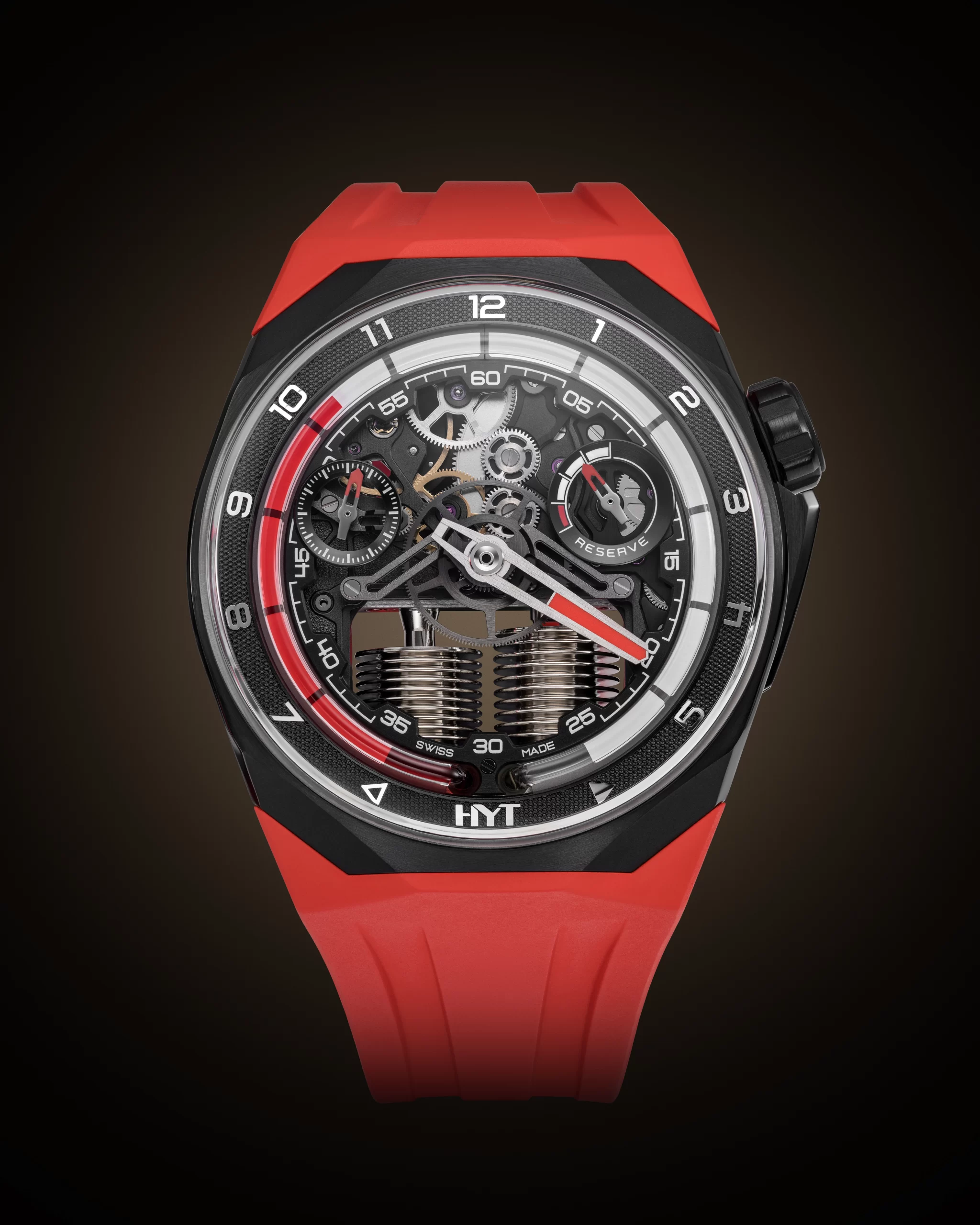
An exclusive EyesOnTime conversation with HYT’s co-founder on risk, fluidic innovation, the future of independent watchmaking and why mechanical timekeeping is becoming an art of expression.
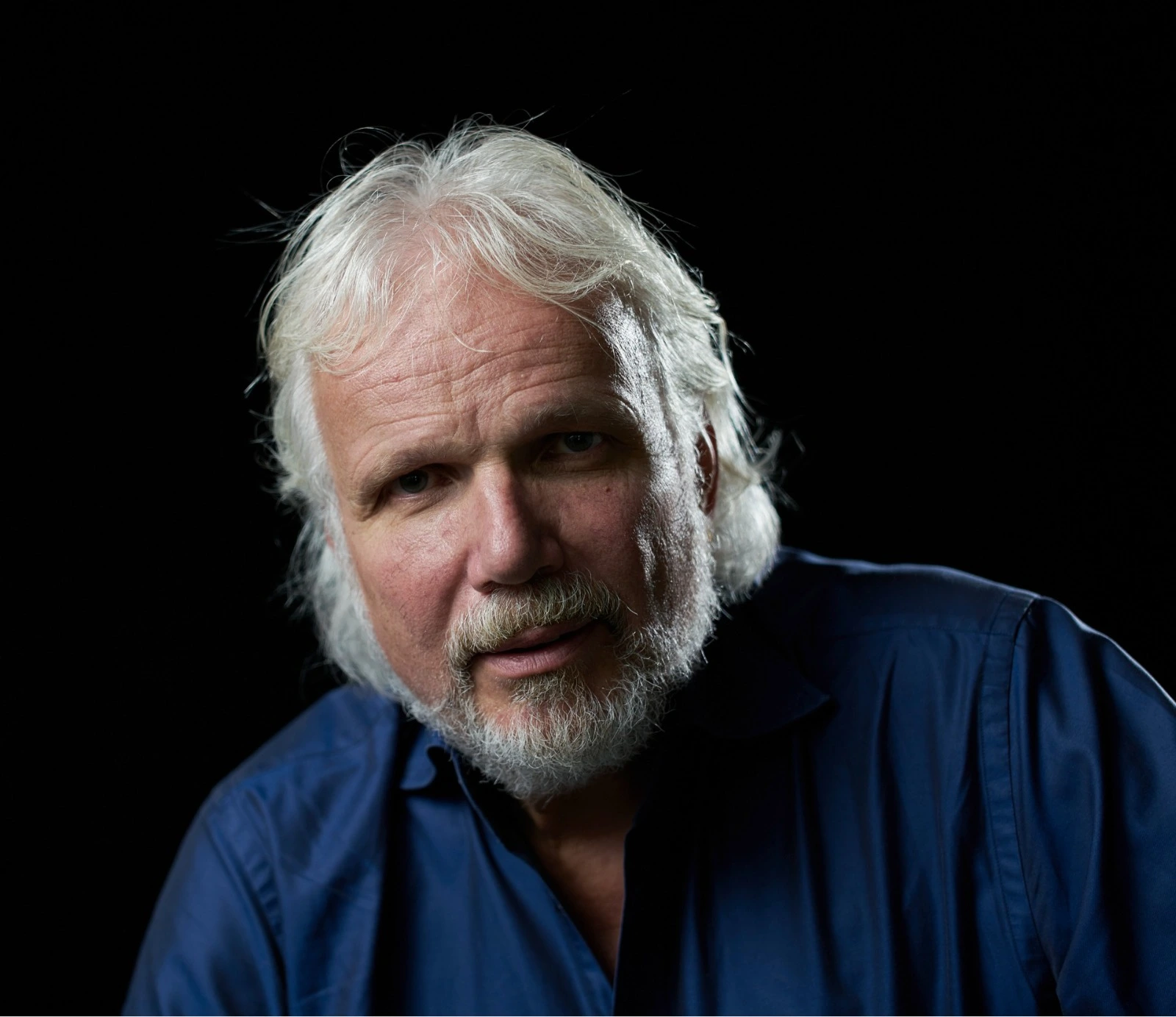
Lucien Vouillamoz is a Swiss engineer, inventor, entrepreneur, and philanthropist.
He is best known as the original creator of the mecano-fluidic technology behind HYT watches—a world-first innovation that united fine watchmaking with the poetry of fluids, redefining the boundaries of timekeeping.
He has also significantly invested in Kairos Technologies Switzerland (KTS), the company that revived the HYT brand. While not a member of its Board of Directors, this commitment reflects his strong belief in HYT as the proud standard-bearer of fluidic watchmaking—the modern heir to the ancient clepsydra, which measured time through water more than 3,500 years ago.
Beyond HYT, Vouillamoz has co-founded and supported several ventures at the crossroads of Swiss precision and innovation, yet his true passion remains the art of horology and the dialogue between mechanics, fluids, and time.
Living in Feusisberg, Switzerland, he is married, with four children and ten grandchildren. A passionate sailor, he spends several weeks each year exploring the seas of the world. Committed to giving back, he founded Ganydar.org, a philanthropic initiative supporting education for young people in Latin America.
At the intersection of invention, heritage, and vision, Lucien Vouillamoz embodies both the spirit of Swiss innovation and the timeless pursuit of horological excellence.
What happens when you put liquid inside a mechanical watch?
For HYT’s co-founder, the answer is wonderfully dramatic: “bringing the devil into the machine.”
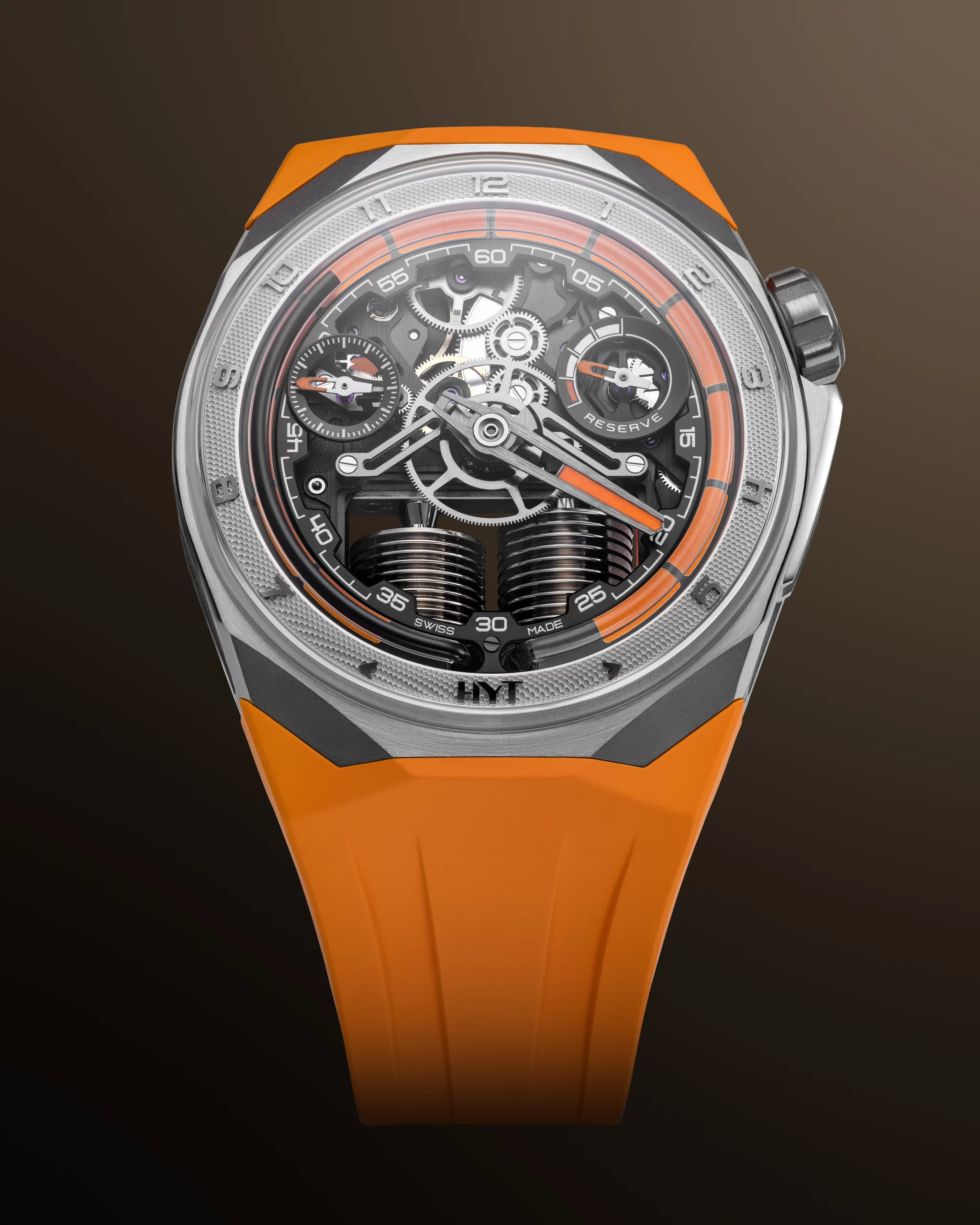
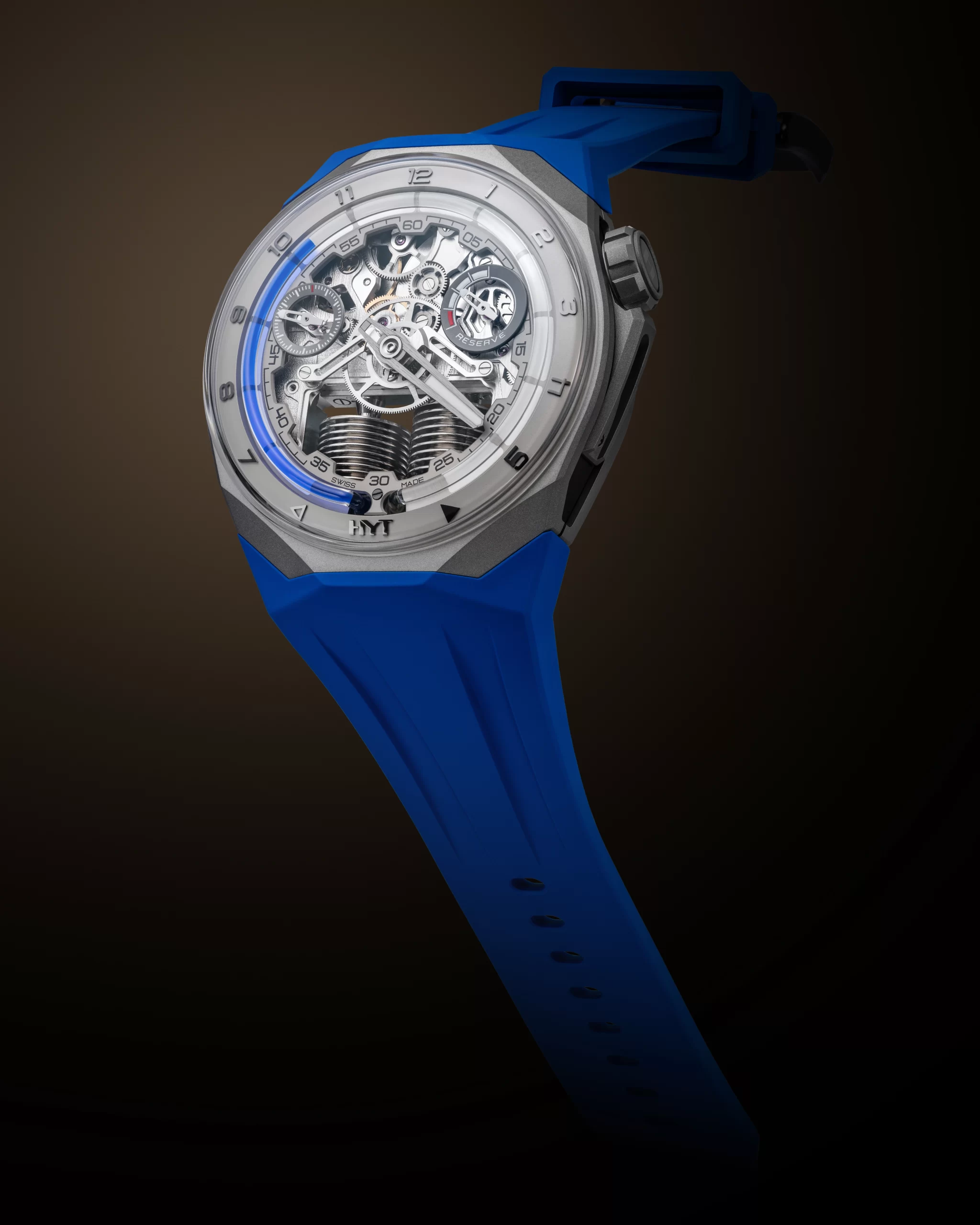
It is also an accurate description of the technological challenge that has defined HYT from the beginning. A mechanical wristwatch is expected to be watertight, precise and reliable. HYT chose to introduce liquid into that equation and, more radically, make the movement of that liquid the means of displaying time.
The idea sounds simple when reduced to a sentence.
Making it work was anything but.
The development required flexible, watertight bellows derived from aerospace technology, precision-formed borosilicate glass, specialised surface treatments to control the interaction between different liquids and glass, and an interface capable of transferring mechanical energy into fluidic motion using very little energy.
HYT was not merely designing a new watch display. It was creating technologies to make that display possible.
And even after the first watches reached the market, the story was far from finished. The company developed the fluidic mechanism as a replaceable module, allowing early owners to have it upgraded as the technology evolved. According to the interview, approximately eight years were required to resolve the fluidic, mechanical and synchronisation challenges.
Today, that history gives HYT an unusual perspective on innovation. The brand has already taken the risk of doing something that traditional watchmaking had never done before. The question now is what happens when that disruptive technology has been mastered.
In this exclusive conversation with EyesOnTime, HYT’s co-founder discusses the risks behind the brand, what a future without liquid might look like, the misconceptions surrounding hydromechanical watchmaking, the company’s turbulent leadership history, the balance between chaos and engineering discipline, and the surprising applications of HYT’s fluidic technology beyond watches.
Because HYT has already done the seemingly impossible once.
The more interesting question now is: what will it do with time next?
“Many independent brands innovate, but HYT disrupts”
EyesOnTime: Many independent brands innovate, but HYT disrupts. How do you decide which risks are worth taking in a category that already sees you as the outlier?
HYT: It was a very big risk.
To integrate or put liquid inside a wristwatch, which is supposed to be watertight, is, technologically speaking, bringing the devil into the machine.
When we launched HYT, practically none of the technologies we needed existed in the form required for a high-end wristwatch.
Take the bellows, for example. These reservoirs use technology from the space industry. They have to be watertight but extremely flexible because the watch does not have a lot of available energy.
And then there is aesthetics.
The military industry does not necessarily need these bellows to be beautiful. In a high-end wristwatch, they have to be aesthetically pleasing as well. You have to combine functionality, physical difficulties and aesthetics.
There were many other challenges.
HYT uses different liquids, and we had to compensate for their expansion and contraction with temperature. The capillary is made of borosilicate glass, and nobody before us had formed that glass with the precision required by Swiss watchmaking. We had to develop a machine specifically for it.
Even the interaction between the liquids and the glass created a problem. One liquid behaves more like oil and the other more like water, so we needed a special surface treatment inside the capillary to make both behave correctly.
Then there was energy.
Normally, you have enough energy in a mechanical movement to move a needle or a hand. Here, we had to move an entire system. We therefore had to develop an interface between the mechanical movement and the fluidic movement that could move a relatively important amount of liquid with very little energy.
That is what made HYT so risky.
The collectors who took the risk with HYT
There was another group taking a risk alongside the company: its earliest customers.
HYT knew that it was impossible to wait for perhaps ten years of development before putting the technology on the market. The real world had to become part of the development process.
The solution was to separate the mechanical movement from the fluidic system and make the fluidic module replaceable. Early owners could return their watches and have the module replaced as technological problems were resolved.
That meant HYT’s first collectors were not simply buying an unconventional watch.
They were trusting an unconventional technology.
According to the interview, around eight years were required to resolve the various challenges, including the fluidic system, mechanical components and synchronisation between the two. By 2017, the technological problems had been resolved to the point where the wearer could focus on the beauty, history and emotion of the watch rather than the technology itself.
For an independent watchmaker, that is an extraordinary way to build a collector relationship.
The customer did not merely witness the evolution.
The customer became part of it.
What happens if HYT removes the liquid?
EyesOnTime: The fluidic module is HYT’s signature. If you had to reinvent HYT without fluids, but with the same rebellious spirit, what would that vision look like?
HYT: That is exactly the body of the next ten years of HYT.
We are working on using some very unusual technologies to reinterpret the primordial ways humans have used to show time.
I cannot be too precise because we have to be a bit secret about that, but we have a plan for the next ten years with three major jumps.
The spirit will remain exactly the same: disruptive and technologically ambitious. One direction will continue with liquids, while another will explore something without liquids, but with exactly the same spirit.
There is another important lesson we have learned from being on the market.
We have to go smaller.
We are working on technologies that could fit into watches around 36 or 38 millimetres, ideally below 40 millimetres.
Smaller. Thinner.
We are also looking at lower entry prices, ideally from CHF 35,000.
That may be one of the most revealing answers in the interview.
HYT is not suggesting that its future lies in abandoning its identity and becoming conventional. Instead, the challenge is to translate its disruptive philosophy into smaller, thinner watches while exploring new technologies that may not require liquid at all.
The fluidic watch was the first chapter.
It may not be the last.
Is HYT misunderstood?
EyesOnTime: What’s a misconception the industry still has about hydromechanical watchmaking that you wish would disappear?
HYT: Perhaps part of the misconception comes from how we are taught to read watches.
When you are a child, you learn how to read a conventional watch. You learn what the position of the hands represents. It becomes an education.
Within the watch community, there is therefore a certain bias toward hands showing the time.
What has not really been done in high-end watches is the use of gauges.
Gauges are familiar from the automotive industry, but HYT brought that language into watchmaking. We did not only bring liquids. We brought a different way of showing time.
Perhaps that can create the impression that it is a gimmick.
But if you understand that HYT is reinterpreting a water clock on the wrist, the concept becomes different.
That historical connection is something HYT now wants to explore more deeply.
The brand discussed bringing together the history of monumental water clocks, educating people about them and creating events or smaller water clocks connected with HYT. The aim is to take people back to the real origins of water-based timekeeping: the clepsydra.
It is a clever distinction.
HYT is not simply asking people to understand a strange-looking watch.
It is asking them to reconsider something much older: how humanity has always tried to visualise the passage of time.
From complexity to poetry
That historical perspective also explains something fundamental about HYT.
The brand is not trying to compete with atomic clocks on precision.
The interview makes that point quite clearly. From sundials and water clocks to mechanical watches, quartz and atomic timekeeping, humanity has progressively developed more precise ways of measuring time. Today, nobody needs a mechanical watch simply to know the correct time.
Connected watches have taken the wrist in another direction altogether, turning it into a platform for information and personal utility.
So where does that leave the mechanical watch?
For HYT, it leaves room for art.
The interview describes the brand’s contribution as adding a new chapter of “poetry” to high-end horology.
Mechanical watchmaking itself is already a combination of different crafts and forms of artistic expression. HYT adds another axis by using fluidics to create a new visual representation of time.
The evolution of the brand can therefore be seen in two stages.
First, master the complexity.
Then, once the complexity is under control, return to the poetry.
That is where HYT says it finds itself now.
Can chaos and precision coexist?
EyesOnTime: How do you balance the instinct for wild creativity, colours, materials and architecture with the engineering team’s strict performance and reliability requirements?
HYT: The ground of creativity is chaos.
You cannot put an artist or creative person into an entirely structured environment. Creativity needs chaos.
But creativity is the opposite of productivity.
Chaos allows creativity. Structure allows productivity. The secret is therefore having the right people at the right moment in the process Some people create the disruption. Others structure it and make that disruption productive through quality, reliability and cost control.
The history of HYT illustrates exactly why that distinction matters.
When the company began, it could not find a single established industry capable of providing all the technologies it required. Microfluidics, glass forming and micromechanics existed as separate disciplines.
Some of the early technologies even had to come from outside Europe. The bellows were American, while an early coating technology was developed by a company in San Diego.
The coating alone illustrates the extent of the challenge.
One application reportedly cost a significant amount, during the early development phase. It was transparent and hidden inside the glass, but without it, the system could not function.
That is the less glamorous side of disruption.
The idea may be beautiful.
Making it reliable is expensive, difficult and sometimes painfully slow.
What will redefine independent watchmaking?
EyesOnTime: What’s something in HYT’s pipeline, whether technology, material or concept, that you believe will redefine what collectors expect from independent watchmaking in the next three years?
HYT: The company is working on three major technological jumps, including approaches that continue with liquids and others that explore ways of expressing time without them. At the same time, it is working toward smaller and thinner watches, with a target of ideally staying below 40 millimetres, alongside a lower potential entry point.
That restraint is telling.
In an industry where brands often tease future products with carefully calculated hints, HYT’s answer essentially says: the future is coming, but we are not going to tell you everything yet.
What it does reveal is the direction.
Smaller.
Thinner.
Technologically disruptive.
And potentially beyond liquid.
When a watchmaking invention leaves the watch
EyesOnTime: If you could collaborate with any non-watchmaking field, whether space technology, automotive, biotech or gaming, which sector feels most HYT, and why?
HYT: The immediate answer is liquid.
Liquid is life.
When HYT developed its technology, the original concept was about mastering the precise movement of liquid on living bodies. At microlitre precision, the same principles can have applications far beyond watches, including the controlled delivery of medical fluids.
That led naturally into medical technology.
The technology company associated with HYT’s intellectual property, Preciflex, has worked in parallel with the watch industry on medical applications. The interview also refers to PreciHealth and work involving diagnostics and blood analysis.
But the applications do not stop there.
The same thinking has found its way into the cigar industry, where precise control of liquids is important, and into deep geothermal energy, where fluidic systems are used in extracting heat from the Earth.
There is even a project addressing sea-level rise and plastic pollution through platforms on the high seas.
It is one of the most unexpected revelations of the conversation.
HYT’s fluidic technology may have begun as a watchmaking experiment, but the underlying expertise is not limited to watches.
The wristwatch was the proving ground.
The technology can travel much further.
Four CEOs, one idea
EyesOnTime: HYT has gone through a revival and leadership changes. What was the hardest cultural shift you had to introduce inside the company, and what was the most rewarding?
The answer takes the question in a slightly different direction.
Rather than describing one particular cultural shift, HYT’s co-founder reflects on the brand having gone through four different CEOs, each with a distinct personality and interpretation of the same fundamental idea.
Each CEO interpreted the same concept differently.
The underlying expression of time remained, while the creative interpretation changed.
That adaptability may be one of HYT’s greatest strengths.
The concept is strong enough to survive different personalities.
The people who believed before HYT was proven
The story also belongs to the collectors and retailers who were willing to take the risk.
The first customers purchased a completely new type of watch at considerable cost, knowing that the technology was still evolving. HYT remains deeply appreciative of those early owners.
Retailers were equally important.
The interview specifically mentions Laurent Picciotto as one of the early adopters who was willing to believe that HYT’s disruption was strong enough to persuade customers to embrace it.
It is an important reminder about independent watchmaking.
Disruption does not happen because an inventor has an idea.
It happens when enough people are willing to believe in that idea before the market has decided that it makes sense.
And HYT has always had a story that begins with the question of why a mechanical watch should look and behave the way it traditionally does.
When inspiration comes from outside watchmaking
That same philosophy can also be seen in HYT’s more unusual collaborations and limited editions.
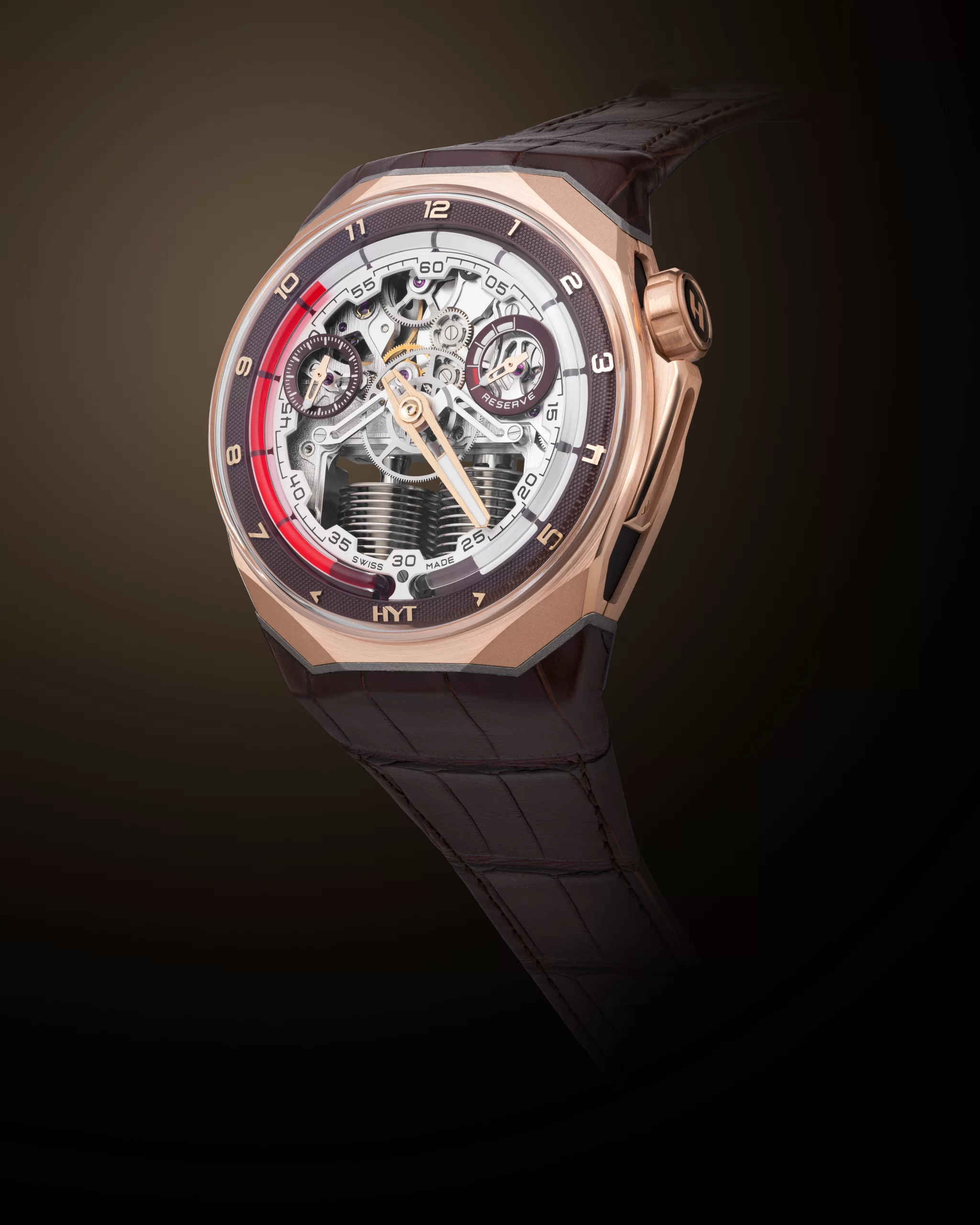
The interview discusses an S1 cigar-inspired watch whose design translates elements of cigar culture into horological details.
The brown alligator strap recalls cigar leaves. The rose-gold case references the rings associated with cigars, while the red fluid evokes the fire of a lit cigar. A Havana-chocolate dial and rose-gold indexes complete the visual connection.
The edition is limited to eight pieces worldwide.
Here again, the fluid is not merely functional.
It becomes part of the narrative.
That is perhaps the clearest demonstration of HYT’s evolution from complexity toward poetry.
What does the mechanical watch become in a digital world?
EyesOnTime: In a world shifting toward digital timekeeping, how do you ensure that HYT stays relevant while still being unapologetically analogue and mechanical?
The answer lies in rejecting the idea that a mechanical watch must compete with digital technology on digital technology’s terms.
Nobody needs a mechanical watch simply to know the time.
The modern world already has more precise and convenient solutions.
The value of the mechanical watch therefore moves elsewhere.
Into craftsmanship.
Into mechanics.
Into design.
Into the experience of watching something mechanical come alive on the wrist.
For HYT, that means adding another dimension to the artistic language of watchmaking.
The brand’s fluidic display takes one of humanity’s earliest methods of measuring time and places it inside an extraordinarily sophisticated mechanical object.
That is why the future of HYT will not be defined by liquid alone.
If the company’s philosophy is to reinterpret the primordial ways humans have represented time, then liquid is only one possible language.
The next could be something entirely different.
HYT’s story began with an audacious question:
What if time could flow?
Answering it required years of technological development, the creation of components and processes that did not previously exist for watchmaking, the patience of early collectors and the willingness of retailers to support an idea that was far from conventional.
The company has also endured leadership changes and bankruptcy, while continuing to refine the technology at the heart of its identity.
Now, however, the challenge is changing.
The technology has been mastered.
The next stage is about imagination.
HYT’s co-founder describes that transition particularly well: the early years were dominated by the complexity of making the system work. Now, having mastered that complexity, the brand can focus once again on poetry.
That may be the most important thing to understand about HYT.
The liquid is not the destination.
It is a language.
And if HYT’s next decade delivers what this conversation hints at, the brand may eventually prove that its greatest innovation was never simply putting liquid inside a watch.
It was convincing us that there is no single correct way to show time.
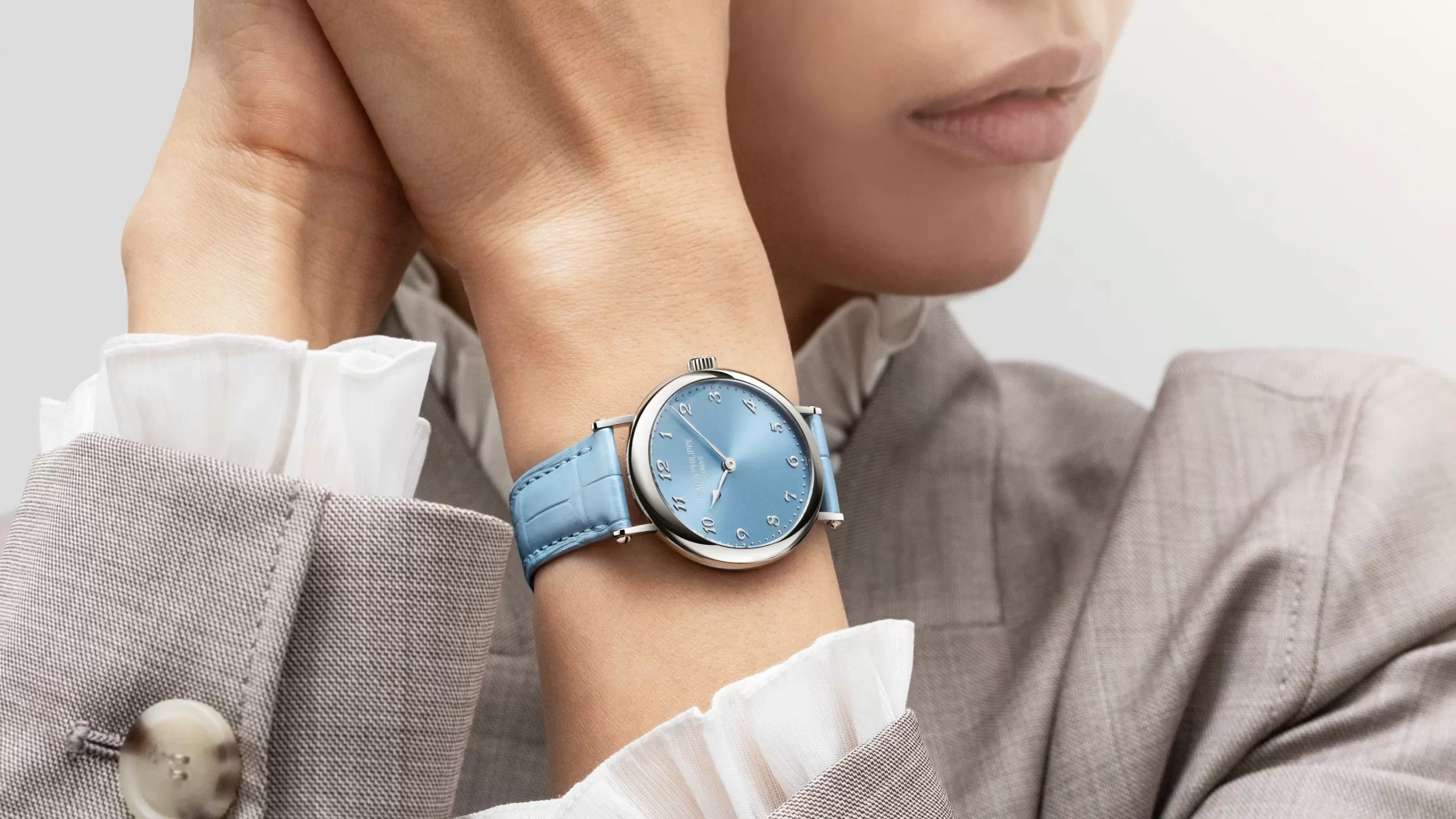
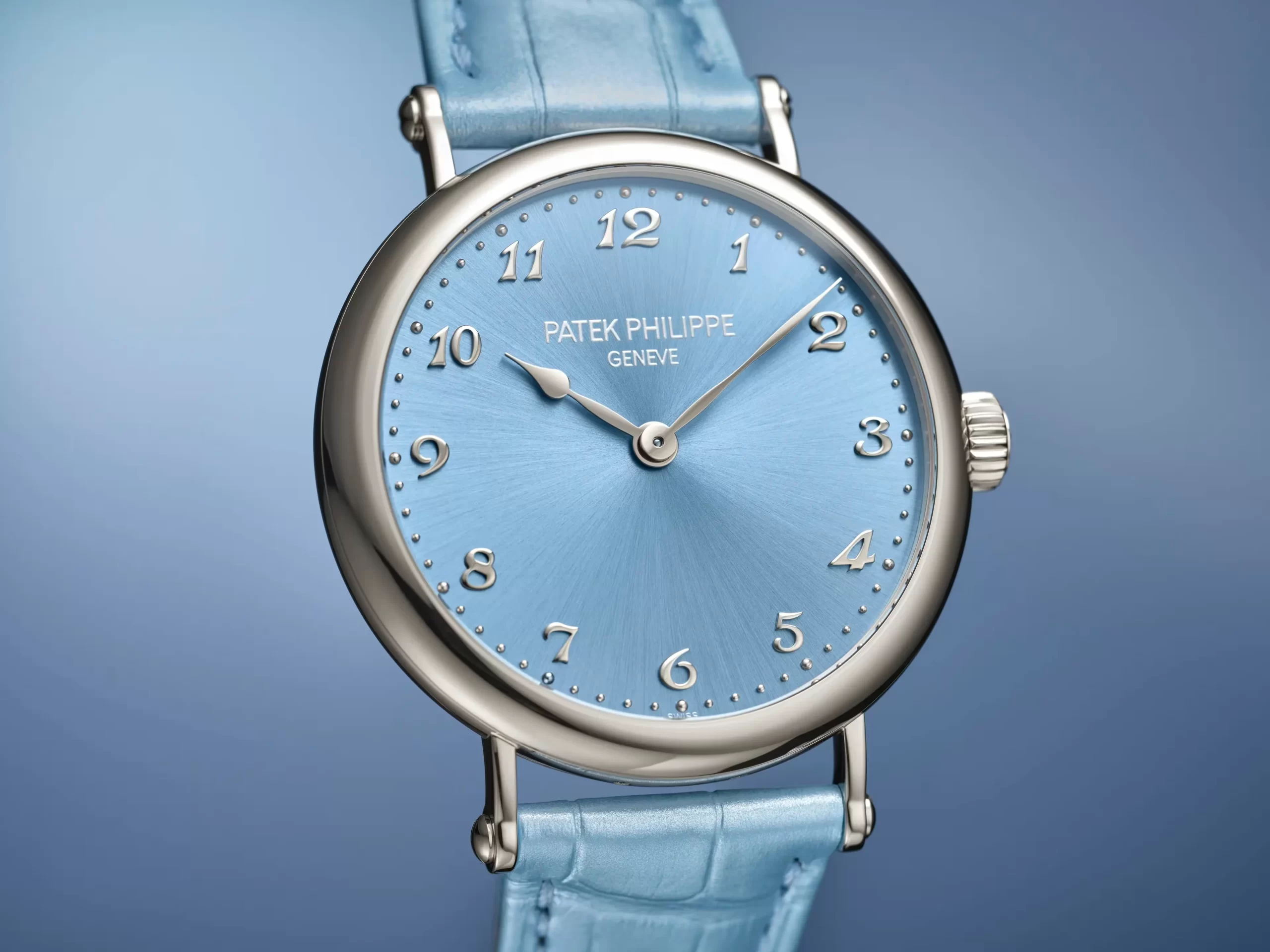
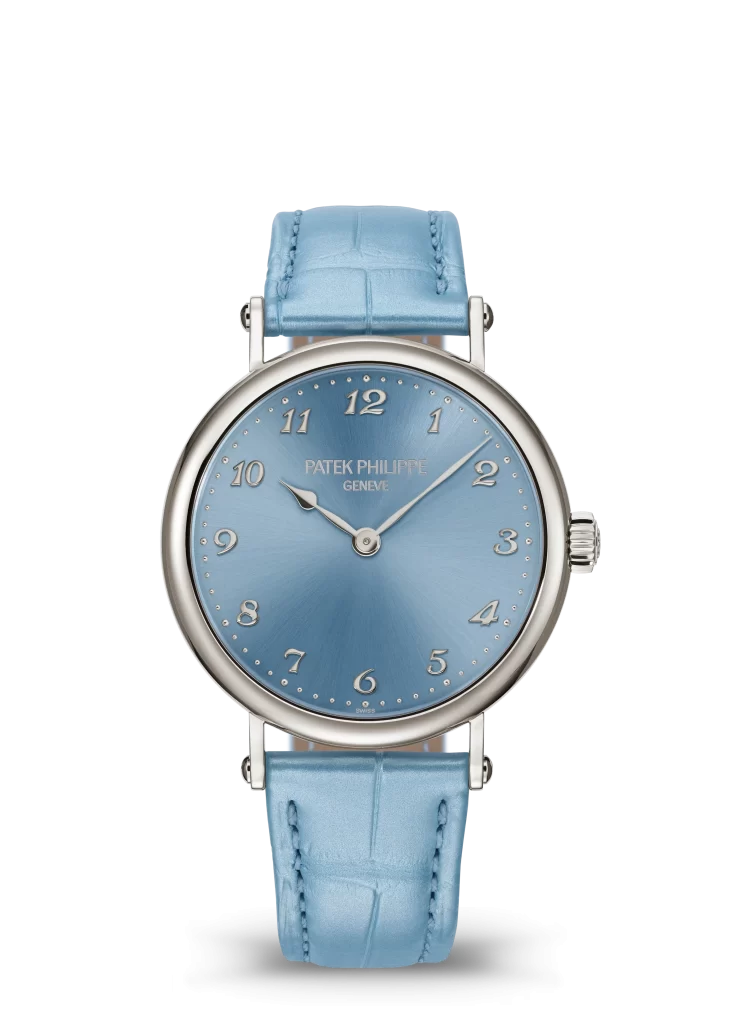
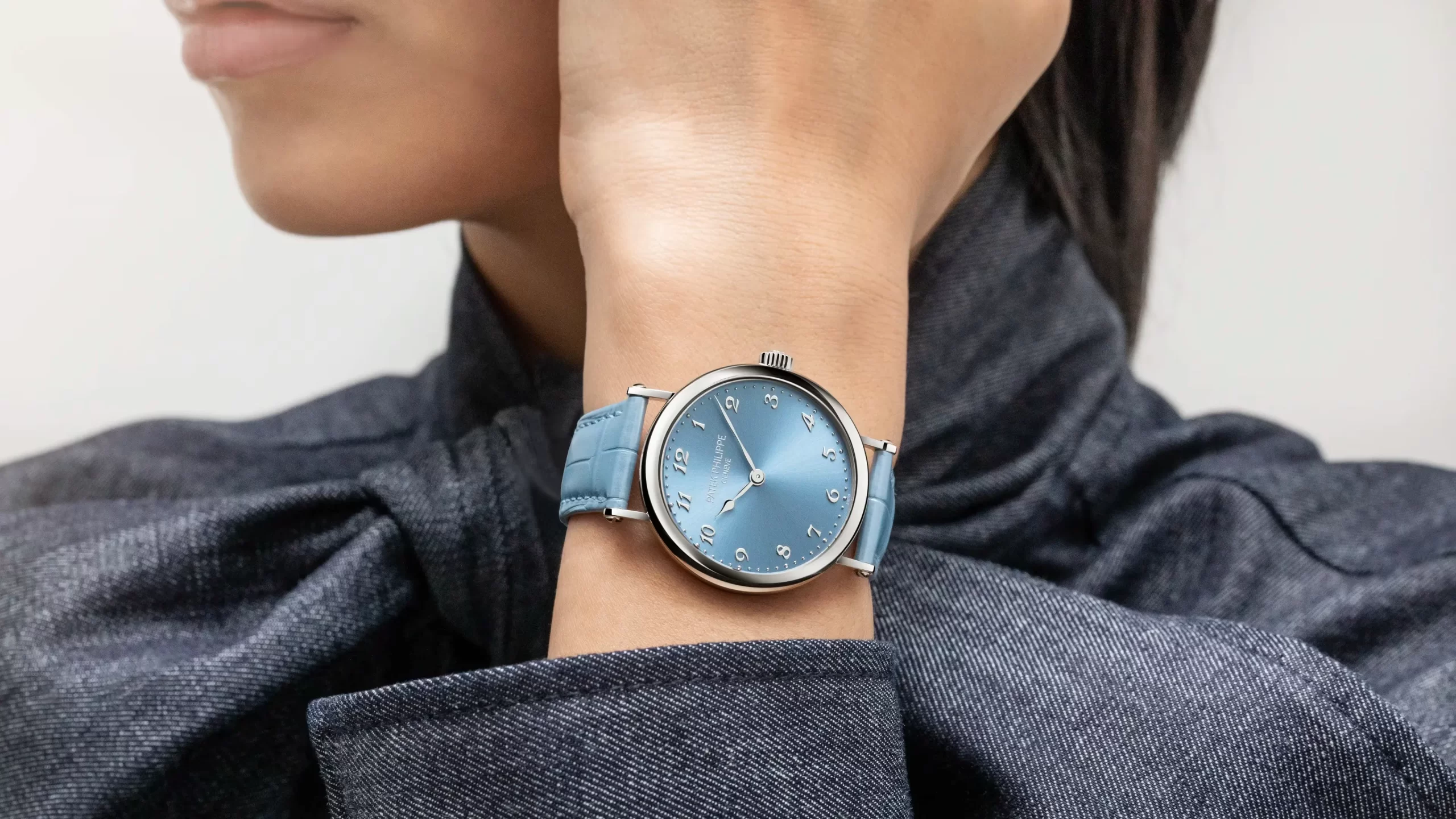
The Patek Philippe Calatrava 7200/50G-012 brings together the understated elegance of the Calatrava with a distinctive ice-blue palette. Its 34.6mm white-gold case is entirely polished and frames a sunburst ice-blue dial, while a pearly ice-blue alligator leather strap continues the same refreshing tone. Patek Philippe describes the watch as epitomising feminine elegance and highlights its Officer’s-style case as one of its defining characteristics.
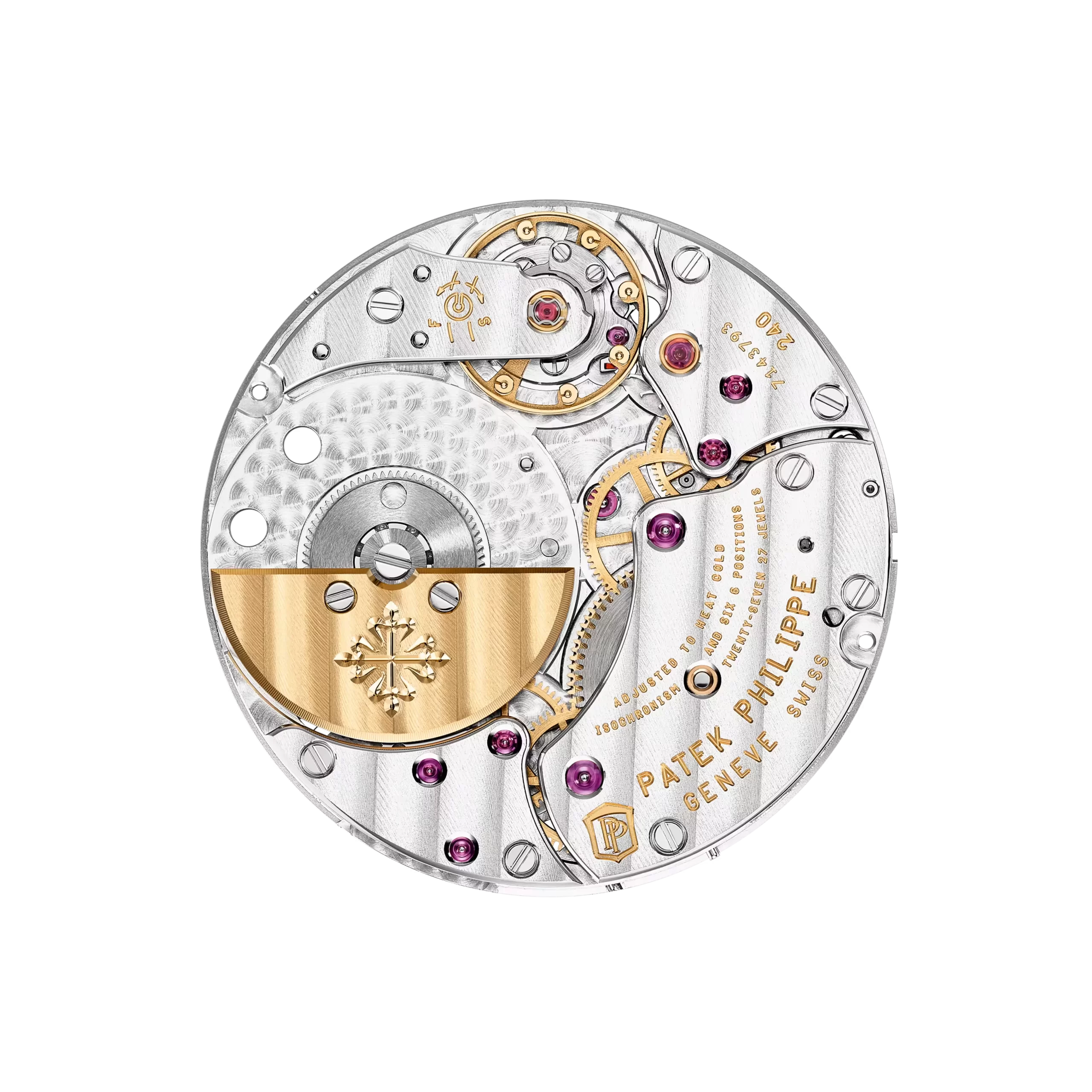
Behind this refined exterior is the ultra-thin self-winding Calibre 240. Measuring just 2.53mm thick, the movement features a 22K gold off-centre minirotor and offers a minimum power reserve of 48 hours. Together, the slim movement and 7.37mm-thick case give the Calatrava a remarkably slender profile.
The result is a watch where the appeal comes not from complexity on the dial, but from the careful relationship between colour, proportions, traditional details and mechanical refinement.
An Officer’s-Style Calatrava
The 7200/50G-012 is presented in a white-gold case measuring 34.6mm in diameter and 7.37mm in thickness. Patek Philippe specifies that the case is entirely polished.
The Officer’s-style construction gives the case its distinctive character, with straight lugs and screwed-in strap bars. These details are particularly noticeable against the otherwise clean silhouette of the Calatrava.
The case is water-resistant to 30 metres and features a sapphire-crystal case back, allowing the wearer to see the movement within.
It is a compact set of proportions, but one that allows the design to retain the restrained character associated with the Calatrava.
An Ice-Blue Dial Takes Centre Stage
The defining visual element of the Patek Philippe Calatrava 7200/50G-012 is its sunburst ice-blue dial.
Patek Philippe pairs the dial with applied white-gold Breguet numerals and white-gold pear-shaped hands. White-gold applied cabochons form the minute scale, adding detail while maintaining the clean appearance of the dial.
The sunburst finish gives the ice-blue surface a changing appearance as it catches the light, while the white-gold elements provide a crisp contrast.
There is a deliberate sense of restraint here. The dial focuses on the essential indications and allows the colour and finishing to become an important part of the watch’s identity.
Matching Ice Blue on the Wrist
Patek Philippe continues the colour of the dial onto the strap.
The watch is fitted with a pearly ice-blue alligator leather strap with square scales, secured by a white-gold prong buckle. The maison specifically describes the strap as echoing the refreshing tone of the dial.
This creates a continuous visual connection between the dial and the strap, with the polished white-gold case providing the neutral element between them.
The combination is distinctive without relying on an overly elaborate design.
The Ultra-Thin Calibre 240
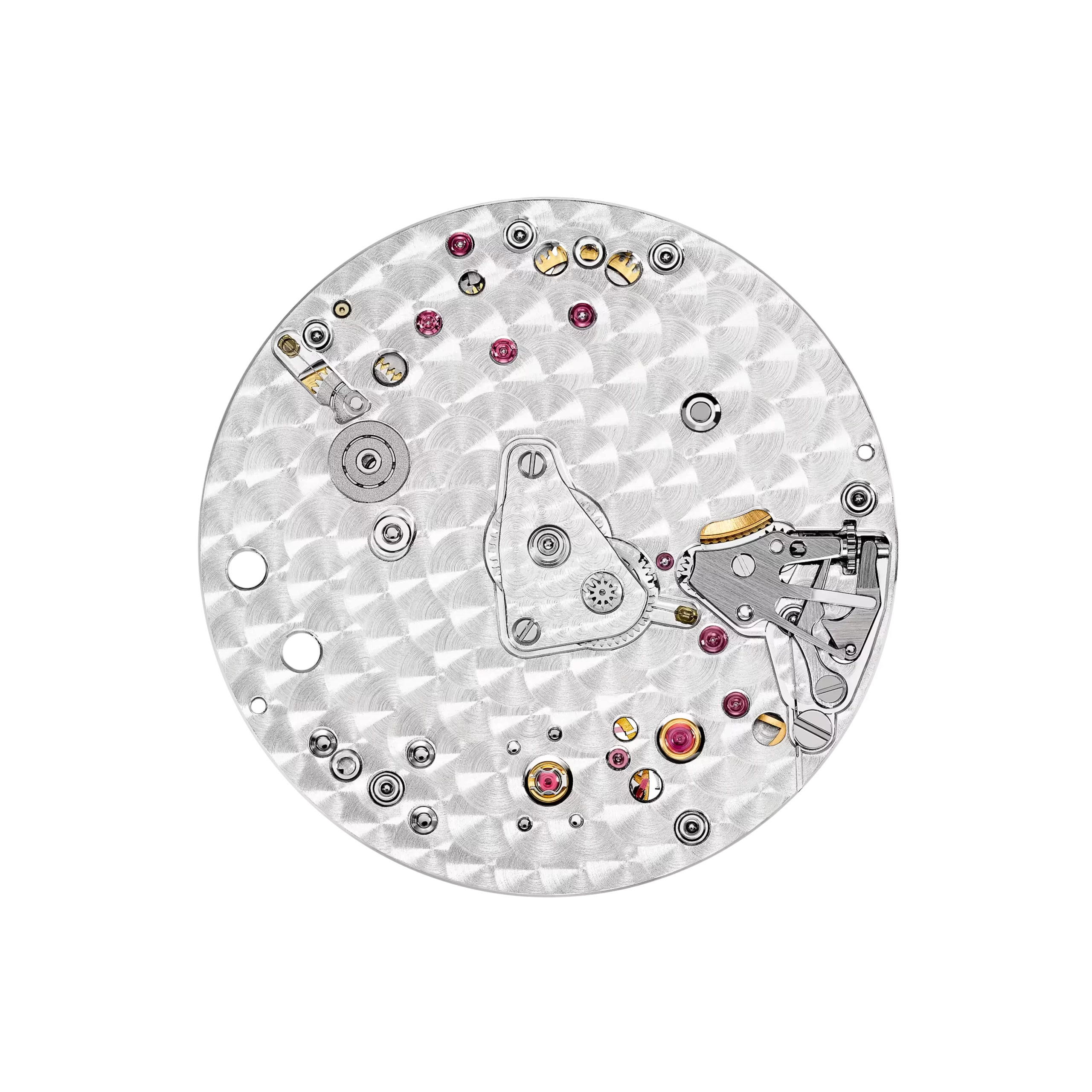
The mechanical heart of the Calatrava 7200/50G-012 is Patek Philippe’s Calibre 240, an ultra-thin self-winding movement.
The movement measures 27.5mm in diameter and 2.53mm in thickness. It consists of 152 parts and 27 jewels, with a minimum power reserve of 48 hours.
Its winding system uses a 22K gold off-centre minirotor. The movement also incorporates a Gyromax® balance and a Spiromax® balance spring. It operates at a frequency of 21,600 semi-oscillations per hour, or 3 Hz, and bears the Patek Philippe Seal.
The movement’s slim architecture is particularly relevant to the watch as a whole. At only 2.53mm thick, Calibre 240 allows Patek Philippe to combine automatic winding with the 7.37mm-thick case of the Calatrava.
Classical Details Meet a Contemporary Colour
The 7200/50G-012 is a good example of how a familiar watchmaking language can take on a different character through colour.
The Breguet numerals and pear-shaped hands bring traditional elements to the dial. The Officer’s-style case adds another classic detail, while the sunburst ice-blue dial and matching pearly strap give the watch its distinctive visual identity.
The design therefore does not depend on a complicated display to establish its personality. Instead, the details are distributed across the case, dial, strap and movement.
That balance is central to the appeal of this particular Calatrava.
A Feminine Expression of the Calatrava
Patek Philippe describes the 7200/50G-012 as “epitomizing feminine elegance.”
The watch’s 34.6mm diameter, white-gold case and ice-blue colour palette contribute to that positioning, while the mechanical construction ensures that the watch remains firmly rooted in traditional fine watchmaking.
Rather than overwhelming the design with decorative elements, Patek Philippe focuses on the relationship between the proportions, materials and finishing.
The result is a Calatrava that is elegant without being visually complicated.
The Details Collectors Will Notice
The first thing likely to catch the eye is the ice-blue dial, but the details become more interesting the closer one looks.
The Officer’s-style case features straight lugs and screwed-in strap bars. The dial combines applied Breguet numerals, pear-shaped white-gold hands and white-gold applied cabochons for the minute scale. The strap uses pearly ice-blue alligator leather with square scales and a white-gold prong buckle.
Then there is Calibre 240.
Its 2.53mm thickness, 22K gold off-centre minirotor, Gyromax® balance, Spiromax® balance spring and Patek Philippe Seal represent the technical side of the watch, all contained within a movement measuring 27.5mm in diameter.
The contrast is what makes the watch compelling: a relatively quiet exterior concealing an ultra-thin mechanical movement with a substantial list of technical specifications.
Key Specifications
Reference: 7200/50G-012 Collection: Calatrava Case material: White gold Case finish: Entirely polished Case style: Officer’s-style Case diameter: 34.6mm Case thickness: 7.37mm Lugs: Straight Strap bars: Screwed-in Water resistance: 30m Case back: Sapphire crystal Dial: Sunburst ice blue Hour markers: Applied white-gold Breguet numerals Hands: White-gold pear-shaped hands Minute scale: White-gold applied cabochons Strap: Pearly ice-blue alligator leather with square scales Buckle: White-gold prong buckle Movement: Calibre 240 Movement type: Self-winding, ultra-thin Movement diameter: 27.5mm Movement thickness: 2.53mm Number of parts: 152 Number of jewels: 27 Power reserve: Minimum 48 hours Winding rotor: 22K gold off-centre minirotor Balance: Gyromax® Frequency: 21,600 semi-oscillations/hour (3 Hz) Balance spring: Spiromax® Distinctive sign: Patek Philippe Seal
A Refined Take on the Calatrava
The Patek Philippe Calatrava 7200/50G-012 brings together a compact white-gold case, an ice-blue sunburst dial, traditional Breguet numerals and an ultra-thin self-winding movement.
Its identity comes from the details: the Officer’s-style case with straight lugs and screwed-in strap bars, the pear-shaped white-gold hands, the matching pearly ice-blue alligator strap and the Calibre 240 visible through the sapphire-crystal case back.
At 34.6mm in diameter and 7.37mm thick, the watch maintains a slim, compact profile, while the 2.53mm-thick Calibre 240 provides the mechanical foundation for that construction.
The 7200/50G-012 is therefore less about adding more and more to the watch, and more about getting every element to work together. It is a Calatrava expressed through colour, proportion and ultra-thin mechanical watchmaking, with the ice-blue palette giving the familiar design a distinctly fresh identity.