

HYT: When Time Learns to Flow
An exclusive EyesOnTime conversation with HYT’s co-founder on risk, fluidic innovation, the future of independent watchmaking and why mechanical timekeeping is becoming an art of expression.
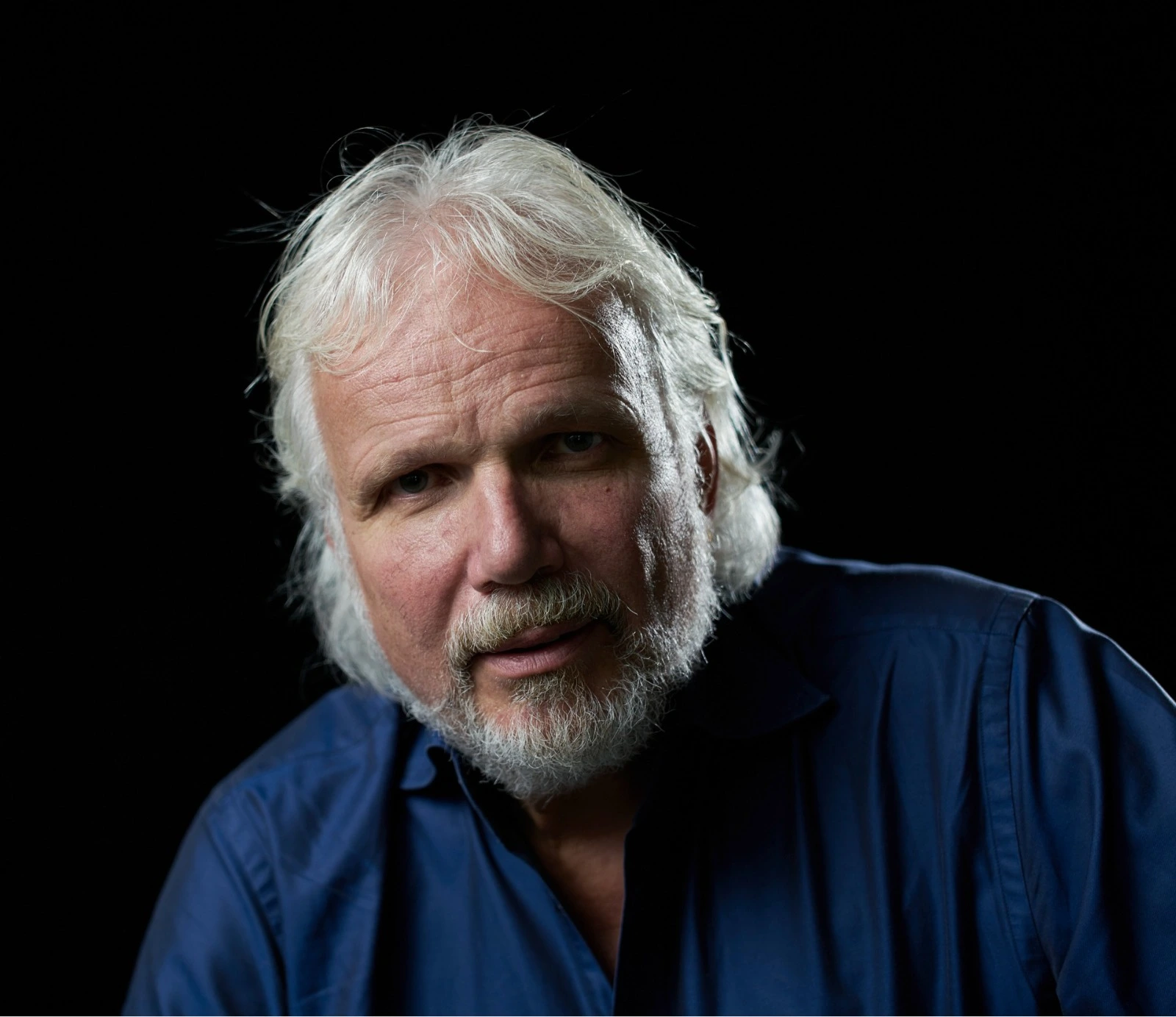
Lucien Vouillamoz — engineer, inventor, entrepreneur, philanthropist
Lucien Vouillamoz is a Swiss engineer, inventor, entrepreneur, and philanthropist.
He is best known as the original creator of the mecano-fluidic technology behind HYT watches—a world-first innovation that united fine watchmaking with the poetry of fluids, redefining the boundaries of timekeeping.
He has also significantly invested in Kairos Technologies Switzerland (KTS), the company that revived the HYT brand. While not a member of its Board of Directors, this commitment reflects his strong belief in HYT as the proud standard-bearer of fluidic watchmaking—the modern heir to the ancient clepsydra, which measured time through water more than 3,500 years ago.
Beyond HYT, Vouillamoz has co-founded and supported several ventures at the crossroads of Swiss precision and innovation, yet his true passion remains the art of horology and the dialogue between mechanics, fluids, and time.
Living in Feusisberg, Switzerland, he is married, with four children and ten grandchildren. A passionate sailor, he spends several weeks each year exploring the seas of the world. Committed to giving back, he founded Ganydar.org, a philanthropic initiative supporting education for young people in Latin America.
At the intersection of invention, heritage, and vision, Lucien Vouillamoz embodies both the spirit of Swiss innovation and the timeless pursuit of horological excellence.
What happens when you put liquid inside a mechanical watch?
For HYT’s co-founder, the answer is wonderfully dramatic: “bringing the devil into the machine.”
It is also an accurate description of the technological challenge that has defined HYT from the beginning. A mechanical wristwatch is expected to be watertight, precise and reliable. HYT chose to introduce liquid into that equation and, more radically, make the movement of that liquid the means of displaying time.
The idea sounds simple when reduced to a sentence.
Making it work was anything but.
The development required flexible, watertight bellows derived from aerospace technology, precision-formed borosilicate glass, specialised surface treatments to control the interaction between different liquids and glass, and an interface capable of transferring mechanical energy into fluidic motion using very little energy.
HYT was not merely designing a new watch display. It was creating technologies to make that display possible.
And even after the first watches reached the market, the story was far from finished. The company developed the fluidic mechanism as a replaceable module, allowing early owners to have it upgraded as the technology evolved. According to the interview, approximately eight years were required to resolve the fluidic, mechanical and synchronisation challenges.
Today, that history gives HYT an unusual perspective on innovation. The brand has already taken the risk of doing something that traditional watchmaking had never done before. The question now is what happens when that disruptive technology has been mastered.
In this exclusive conversation with EyesOnTime, HYT’s co-founder discusses the risks behind the brand, what a future without liquid might look like, the misconceptions surrounding hydromechanical watchmaking, the company’s turbulent leadership history, the balance between chaos and engineering discipline, and the surprising applications of HYT’s fluidic technology beyond watches.
Because HYT has already done the seemingly impossible once.
The more interesting question now is: what will it do with time next?

“Many independent brands innovate, but HYT disrupts”
EyesOnTime: Many independent brands innovate, but HYT disrupts. How do you decide which risks are worth taking in a category that already sees you as the outlier?
HYT: It was a very big risk.
To integrate or put liquid inside a wristwatch, which is supposed to be watertight, is, technologically speaking, bringing the devil into the machine.
When we launched HYT, practically none of the technologies we needed existed in the form required for a high-end wristwatch.
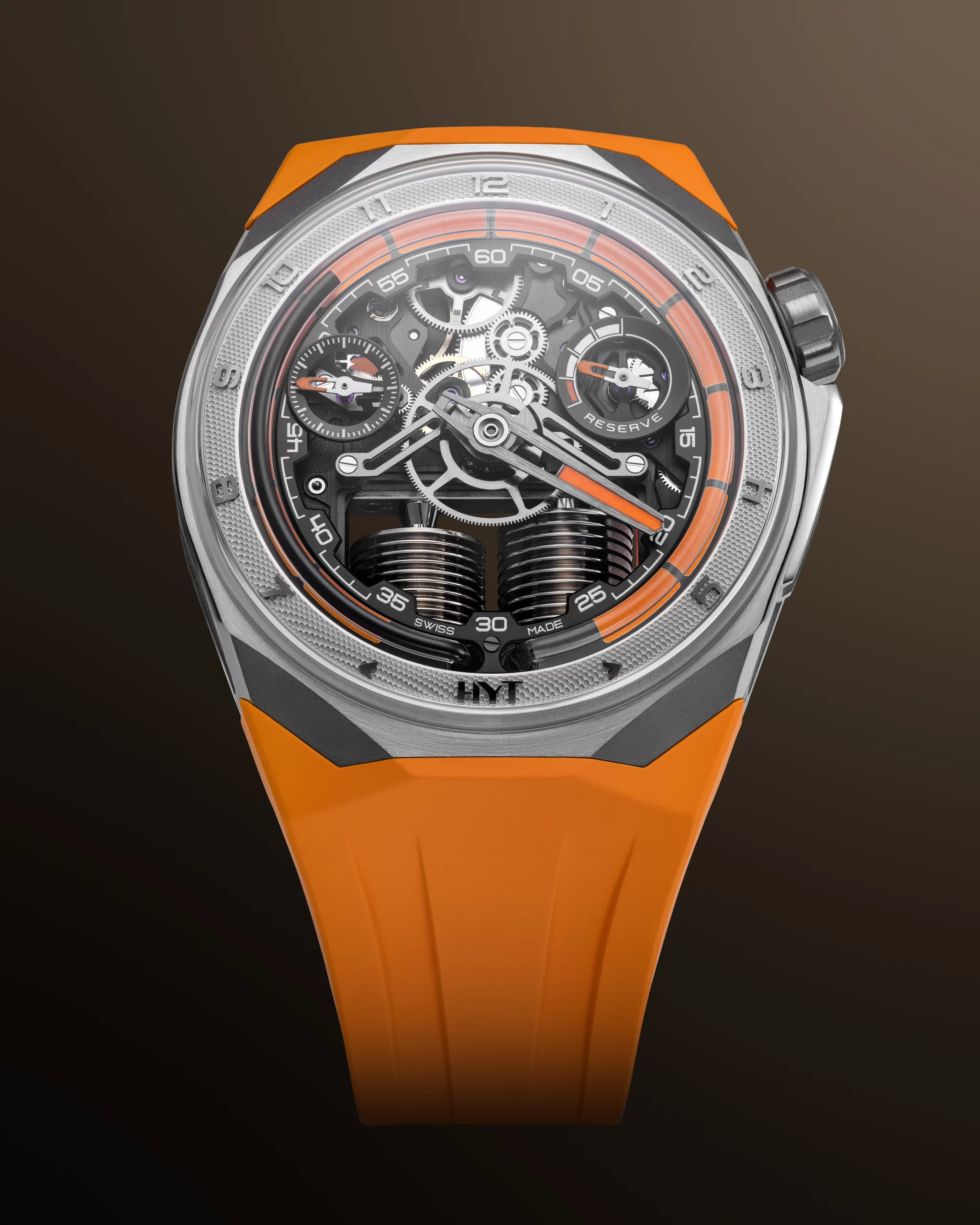
Take the bellows, for example. These reservoirs use technology from the space industry. They have to be watertight but extremely flexible because the watch does not have a lot of available energy.
And then there is aesthetics.
The military industry does not necessarily need these bellows to be beautiful. In a high-end wristwatch, they have to be aesthetically pleasing as well. You have to combine functionality, physical difficulties and aesthetics.
There were many other challenges.
HYT uses different liquids, and we had to compensate for their expansion and contraction with temperature. The capillary is made of borosilicate glass, and nobody before us had formed that glass with the precision required by Swiss watchmaking. We had to develop a machine specifically for it.
Even the interaction between the liquids and the glass created a problem. One liquid behaves more like oil and the other more like water, so we needed a special surface treatment inside the capillary to make both behave correctly.
Then there was energy.
Normally, you have enough energy in a mechanical movement to move a needle or a hand. Here, we had to move an entire system. We therefore had to develop an interface between the mechanical movement and the fluidic movement that could move a relatively important amount of liquid with very little energy.
That is what made HYT so risky.
The collectors who took the risk with HYT
There was another group taking a risk alongside the company: its earliest customers.
HYT knew that it was impossible to wait for perhaps ten years of development before putting the technology on the market. The real world had to become part of the development process.
The solution was to separate the mechanical movement from the fluidic system and make the fluidic module replaceable. Early owners could return their watches and have the module replaced as technological problems were resolved.
That meant HYT’s first collectors were not simply buying an unconventional watch.
They were trusting an unconventional technology.
According to the interview, around eight years were required to resolve the various challenges, including the fluidic system, mechanical components and synchronisation between the two. By 2017, the technological problems had been resolved to the point where the wearer could focus on the beauty, history and emotion of the watch rather than the technology itself.
For an independent watchmaker, that is an extraordinary way to build a collector relationship.
The customer did not merely witness the evolution.
The customer became part of it.
What happens if HYT removes the liquid?
EyesOnTime: The fluidic module is HYT’s signature. If you had to reinvent HYT without fluids, but with the same rebellious spirit, what would that vision look like?
HYT: That is exactly the body of the next ten years of HYT.
We are working on using some very unusual technologies to reinterpret the primordial ways humans have used to show time.
I cannot be too precise because we have to be a bit secret about that, but we have a plan for the next ten years with three major jumps.
The spirit will remain exactly the same: disruptive and technologically ambitious. One direction will continue with liquids, while another will explore something without liquids, but with exactly the same spirit.
There is another important lesson we have learned from being on the market.
We have to go smaller.
We are working on technologies that could fit into watches around 36 or 38 millimetres, ideally below 40 millimetres.
Smaller. Thinner.
We are also looking at lower entry prices, ideally from CHF 35,000.
That may be one of the most revealing answers in the interview.
HYT is not suggesting that its future lies in abandoning its identity and becoming conventional. Instead, the challenge is to translate its disruptive philosophy into smaller, thinner watches while exploring new technologies that may not require liquid at all.
The fluidic watch was the first chapter.
It may not be the last.

Is HYT misunderstood?
EyesOnTime: What’s a misconception the industry still has about hydromechanical watchmaking that you wish would disappear?
HYT: Perhaps part of the misconception comes from how we are taught to read watches.
When you are a child, you learn how to read a conventional watch. You learn what the position of the hands represents. It becomes an education.
Within the watch community, there is therefore a certain bias toward hands showing the time.
What has not really been done in high-end watches is the use of gauges.
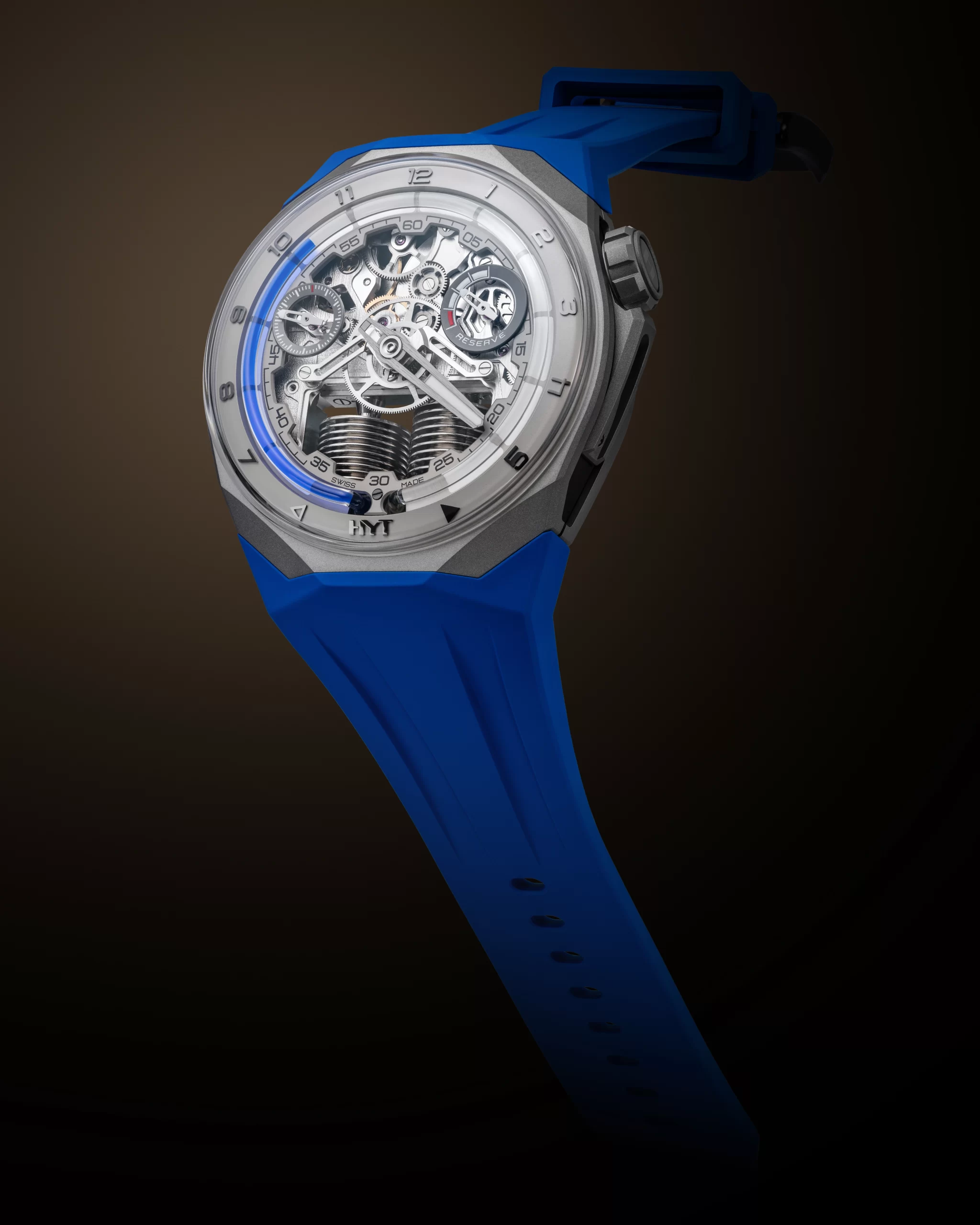
Gauges are familiar from the automotive industry, but HYT brought that language into watchmaking. We did not only bring liquids. We brought a different way of showing time.
Perhaps that can create the impression that it is a gimmick.
But if you understand that HYT is reinterpreting a water clock on the wrist, the concept becomes different.
That historical connection is something HYT now wants to explore more deeply.
The brand discussed bringing together the history of monumental water clocks, educating people about them and creating events or smaller water clocks connected with HYT. The aim is to take people back to the real origins of water-based timekeeping: the clepsydra.
It is a clever distinction.
HYT is not simply asking people to understand a strange-looking watch.
It is asking them to reconsider something much older: how humanity has always tried to visualise the passage of time.
From complexity to poetry
That historical perspective also explains something fundamental about HYT.
The brand is not trying to compete with atomic clocks on precision.
The interview makes that point quite clearly. From sundials and water clocks to mechanical watches, quartz and atomic timekeeping, humanity has progressively developed more precise ways of measuring time. Today, nobody needs a mechanical watch simply to know the correct time.
Connected watches have taken the wrist in another direction altogether, turning it into a platform for information and personal utility.
So where does that leave the mechanical watch?
For HYT, it leaves room for art.
The interview describes the brand’s contribution as adding a new chapter of “poetry” to high-end horology.
Mechanical watchmaking itself is already a combination of different crafts and forms of artistic expression. HYT adds another axis by using fluidics to create a new visual representation of time.
The evolution of the brand can therefore be seen in two stages.
First, master the complexity.
Then, once the complexity is under control, return to the poetry.
That is where HYT says it finds itself now.
Can chaos and precision coexist?
EyesOnTime: How do you balance the instinct for wild creativity, colours, materials and architecture with the engineering team’s strict performance and reliability requirements?
HYT: The ground of creativity is chaos.
You cannot put an artist or creative person into an entirely structured environment. Creativity needs chaos.
But creativity is the opposite of productivity.
Chaos allows creativity. Structure allows productivity. The secret is therefore having the right people at the right moment in the process Some people create the disruption. Others structure it and make that disruption productive through quality, reliability and cost control.
The history of HYT illustrates exactly why that distinction matters.
When the company began, it could not find a single established industry capable of providing all the technologies it required. Microfluidics, glass forming and micromechanics existed as separate disciplines.
Some of the early technologies even had to come from outside Europe. The bellows were American, while an early coating technology was developed by a company in San Diego.
The coating alone illustrates the extent of the challenge.
One application reportedly cost a significant amount, during the early development phase. It was transparent and hidden inside the glass, but without it, the system could not function.
That is the less glamorous side of disruption.
The idea may be beautiful.
Making it reliable is expensive, difficult and sometimes painfully slow.
What will redefine independent watchmaking?
EyesOnTime: What’s something in HYT’s pipeline, whether technology, material or concept, that you believe will redefine what collectors expect from independent watchmaking in the next three years?
HYT: The company is working on three major technological jumps, including approaches that continue with liquids and others that explore ways of expressing time without them. At the same time, it is working toward smaller and thinner watches, with a target of ideally staying below 40 millimetres, alongside a lower potential entry point.
That restraint is telling.
In an industry where brands often tease future products with carefully calculated hints, HYT’s answer essentially says: the future is coming, but we are not going to tell you everything yet.
What it does reveal is the direction.
Smaller.
Thinner.
Technologically disruptive.
And potentially beyond liquid.
When a watchmaking invention leaves the watch
EyesOnTime: If you could collaborate with any non-watchmaking field, whether space technology, automotive, biotech or gaming, which sector feels most HYT, and why?
HYT: The immediate answer is liquid.
Liquid is life.
When HYT developed its technology, the original concept was about mastering the precise movement of liquid on living bodies. At microlitre precision, the same principles can have applications far beyond watches, including the controlled delivery of medical fluids.
That led naturally into medical technology.
The technology company associated with HYT’s intellectual property, Preciflex, has worked in parallel with the watch industry on medical applications. The interview also refers to PreciHealth and work involving diagnostics and blood analysis.
But the applications do not stop there.
The same thinking has found its way into the cigar industry, where precise control of liquids is important, and into deep geothermal energy, where fluidic systems are used in extracting heat from the Earth.
There is even a project addressing sea-level rise and plastic pollution through platforms on the high seas.
It is one of the most unexpected revelations of the conversation.
HYT’s fluidic technology may have begun as a watchmaking experiment, but the underlying expertise is not limited to watches.
The wristwatch was the proving ground.
The technology can travel much further.
Four CEOs, one idea
EyesOnTime: HYT has gone through a revival and leadership changes. What was the hardest cultural shift you had to introduce inside the company, and what was the most rewarding?
The answer takes the question in a slightly different direction.
Rather than describing one particular cultural shift, HYT’s co-founder reflects on the brand having gone through four different CEOs, each with a distinct personality and interpretation of the same fundamental idea.
Each CEO interpreted the same concept differently.
The underlying expression of time remained, while the creative interpretation changed.
That adaptability may be one of HYT’s greatest strengths.
The concept is strong enough to survive different personalities.
The people who believed before HYT was proven
The story also belongs to the collectors and retailers who were willing to take the risk.
The first customers purchased a completely new type of watch at considerable cost, knowing that the technology was still evolving. HYT remains deeply appreciative of those early owners.
Retailers were equally important.
The interview specifically mentions Laurent Picciotto as one of the early adopters who was willing to believe that HYT’s disruption was strong enough to persuade customers to embrace it.
It is an important reminder about independent watchmaking.
Disruption does not happen because an inventor has an idea.
It happens when enough people are willing to believe in that idea before the market has decided that it makes sense.
And HYT has always had a story that begins with the question of why a mechanical watch should look and behave the way it traditionally does.
When inspiration comes from outside watchmaking
That same philosophy can also be seen in HYT’s more unusual collaborations and limited editions.
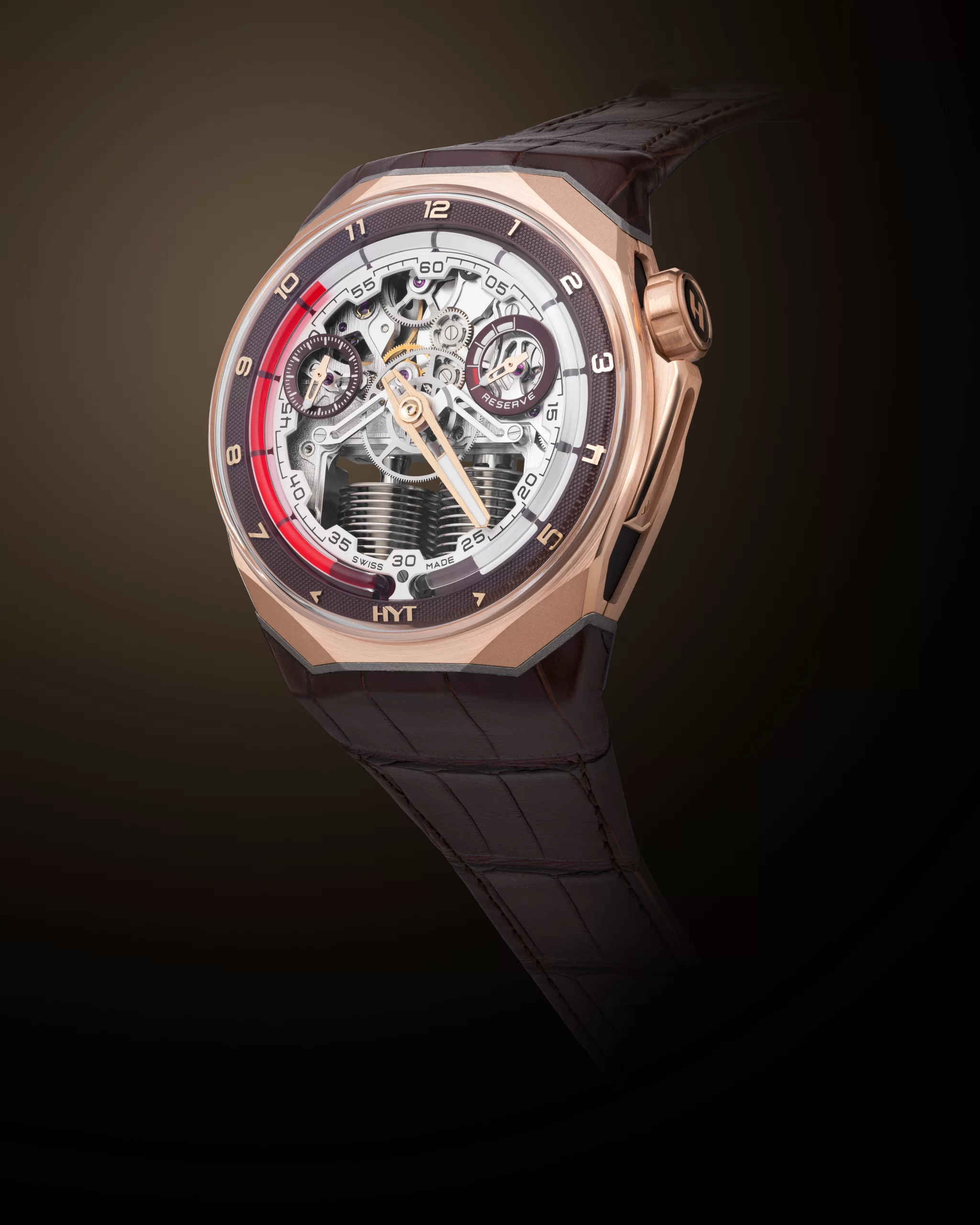
The interview discusses an S1 cigar-inspired watch whose design translates elements of cigar culture into horological details.
The brown alligator strap recalls cigar leaves. The rose-gold case references the rings associated with cigars, while the red fluid evokes the fire of a lit cigar. A Havana-chocolate dial and rose-gold indexes complete the visual connection.
The edition is limited to eight pieces worldwide.
Here again, the fluid is not merely functional.
It becomes part of the narrative.
That is perhaps the clearest demonstration of HYT’s evolution from complexity toward poetry.
What does the mechanical watch become in a digital world?
EyesOnTime: In a world shifting toward digital timekeeping, how do you ensure that HYT stays relevant while still being unapologetically analogue and mechanical?
The answer lies in rejecting the idea that a mechanical watch must compete with digital technology on digital technology’s terms.
Nobody needs a mechanical watch simply to know the time.
The modern world already has more precise and convenient solutions.
The value of the mechanical watch therefore moves elsewhere.
Into craftsmanship.
Into mechanics.
Into design.
Into the experience of watching something mechanical come alive on the wrist.
For HYT, that means adding another dimension to the artistic language of watchmaking.
The brand’s fluidic display takes one of humanity’s earliest methods of measuring time and places it inside an extraordinarily sophisticated mechanical object.
That is why the future of HYT will not be defined by liquid alone.
If the company’s philosophy is to reinterpret the primordial ways humans have represented time, then liquid is only one possible language.
The next could be something entirely different.
HYT’s story began with an audacious question:
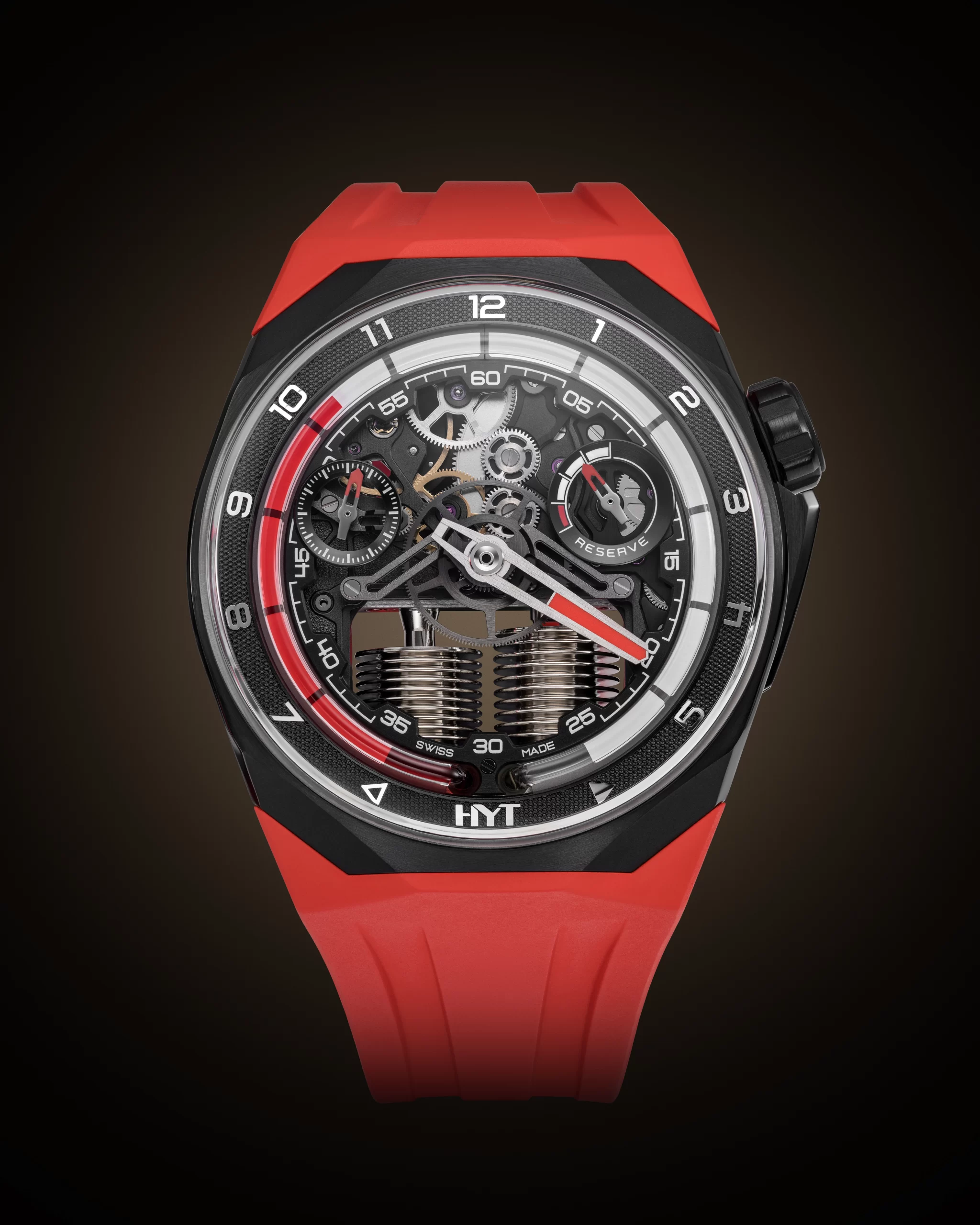
What if time could flow?
Answering it required years of technological development, the creation of components and processes that did not previously exist for watchmaking, the patience of early collectors and the willingness of retailers to support an idea that was far from conventional.
The company has also endured leadership changes and bankruptcy, while continuing to refine the technology at the heart of its identity.
Now, however, the challenge is changing.
The technology has been mastered.
The next stage is about imagination.
HYT’s co-founder describes that transition particularly well: the early years were dominated by the complexity of making the system work. Now, having mastered that complexity, the brand can focus once again on poetry.
That may be the most important thing to understand about HYT.
The liquid is not the destination.
It is a language.
And if HYT’s next decade delivers what this conversation hints at, the brand may eventually prove that its greatest innovation was never simply putting liquid inside a watch.
It was convincing us that there is no single correct way to show time.