Hublot MP-14 Origin by Jeff Koons: A Mechanical Universe

Hublot and Jeff Koons have turned the idea of creation into a mechanical work of art with the new MP-14 Origin by Jeff Koons. Unveiled in New York on 16 September 2026, the timepiece brings together sapphire architecture, gem-setting, contemporary art and Hublot’s high-horology expertise in an exceptionally complex 44 mm creation limited to just 30 pieces.

Rather than simply decorating a watch with artistic references, the collaboration attempts something considerably more ambitious: to make the watch itself behave like a miniature universe, with a central tourbillon acting as its mechanical point of origin and concentric rings appearing to expand around it.

A collaboration built around transformation

The partnership between Hublot and Jeff Koons brings together two creative disciplines that share an interest in transforming familiar ideas into something unexpected. Alongside the MP-14 Origin, the collaboration also introduces the Classic Fusion Balloon Dog, connecting Koons’ artistic vocabulary with Hublot’s watchmaking.

For the MP-14 Origin, that philosophy is expressed through an architecture combining sapphire, titanium and gem-set white gold. The result sits at the intersection of high jewellery and high watchmaking, while its visual concept is rooted in the creation and expansion of the cosmos.

The watch also represents an important technical development for Hublot: the introduction of the manufacture’s first automatic central tourbillon.

Why “MP-14”?

The name MP-14 is not simply a sequential designation. According to Hublot, the number 14 references an important moment in Jeff Koons’ early artistic career.

Koons held his first solo exhibition in 1980 at the New Museum in New York, which was then located at 65 Fifth Avenue at 14th Street. Hublot connects this address with the MP-14 name, making the number part of the artistic story behind the watch.

The MP-14 also belongs to Hublot’s Exceptional Timepieces collection, the brand’s experimental high-horology laboratory dedicated to unconventional architectures, advanced materials and radical mechanical concepts.

A miniature universe constructed in sapphire

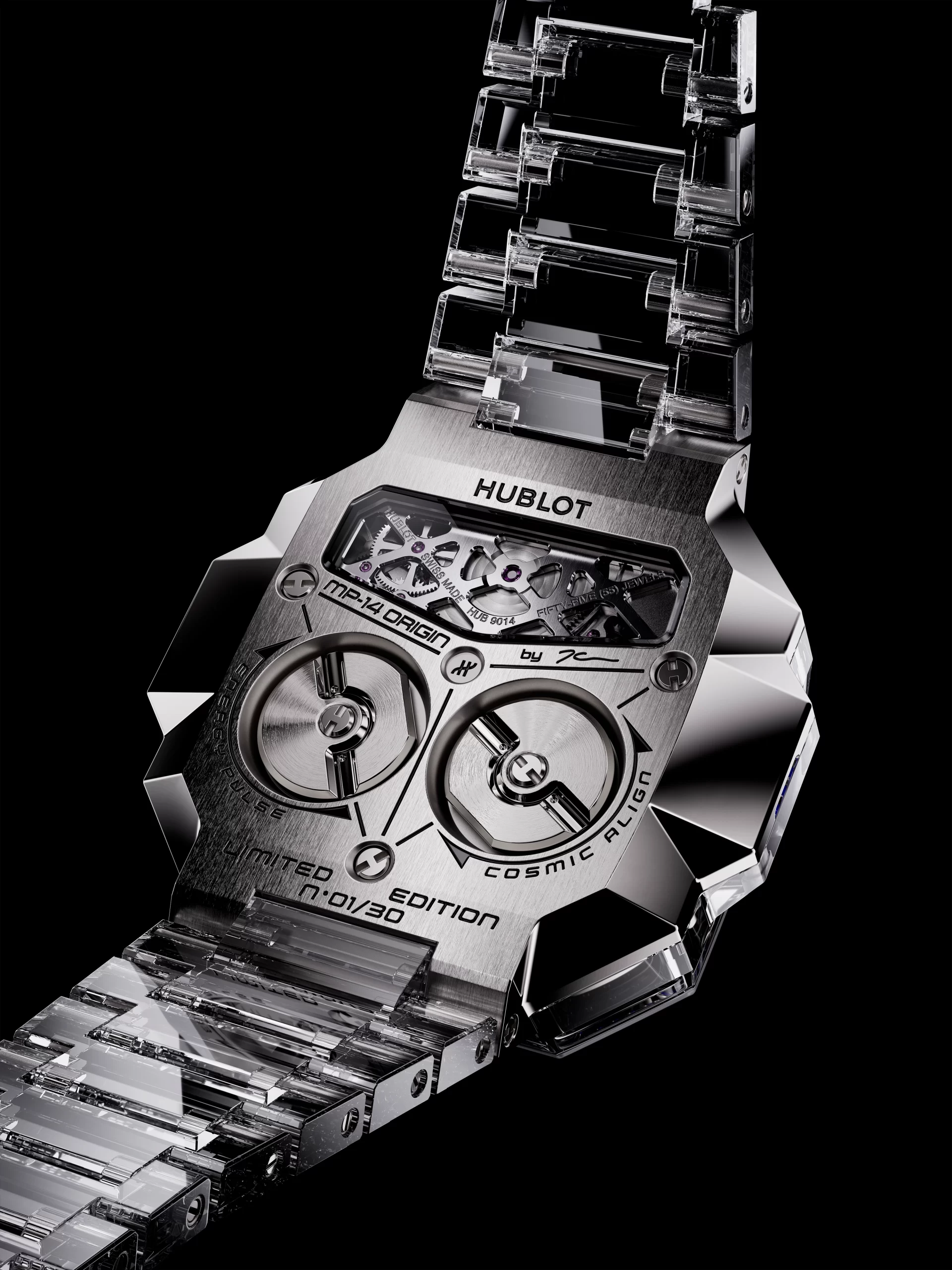
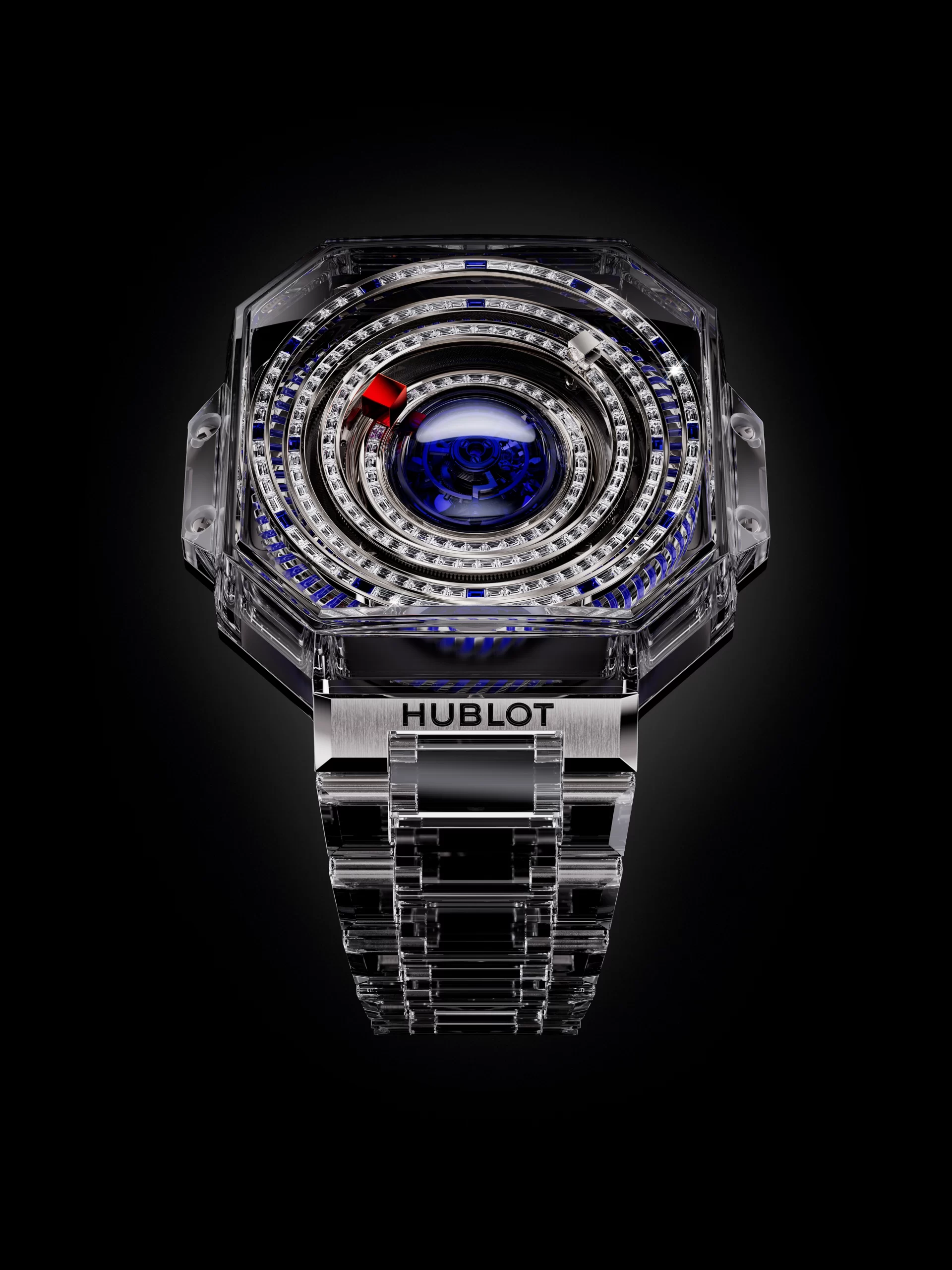
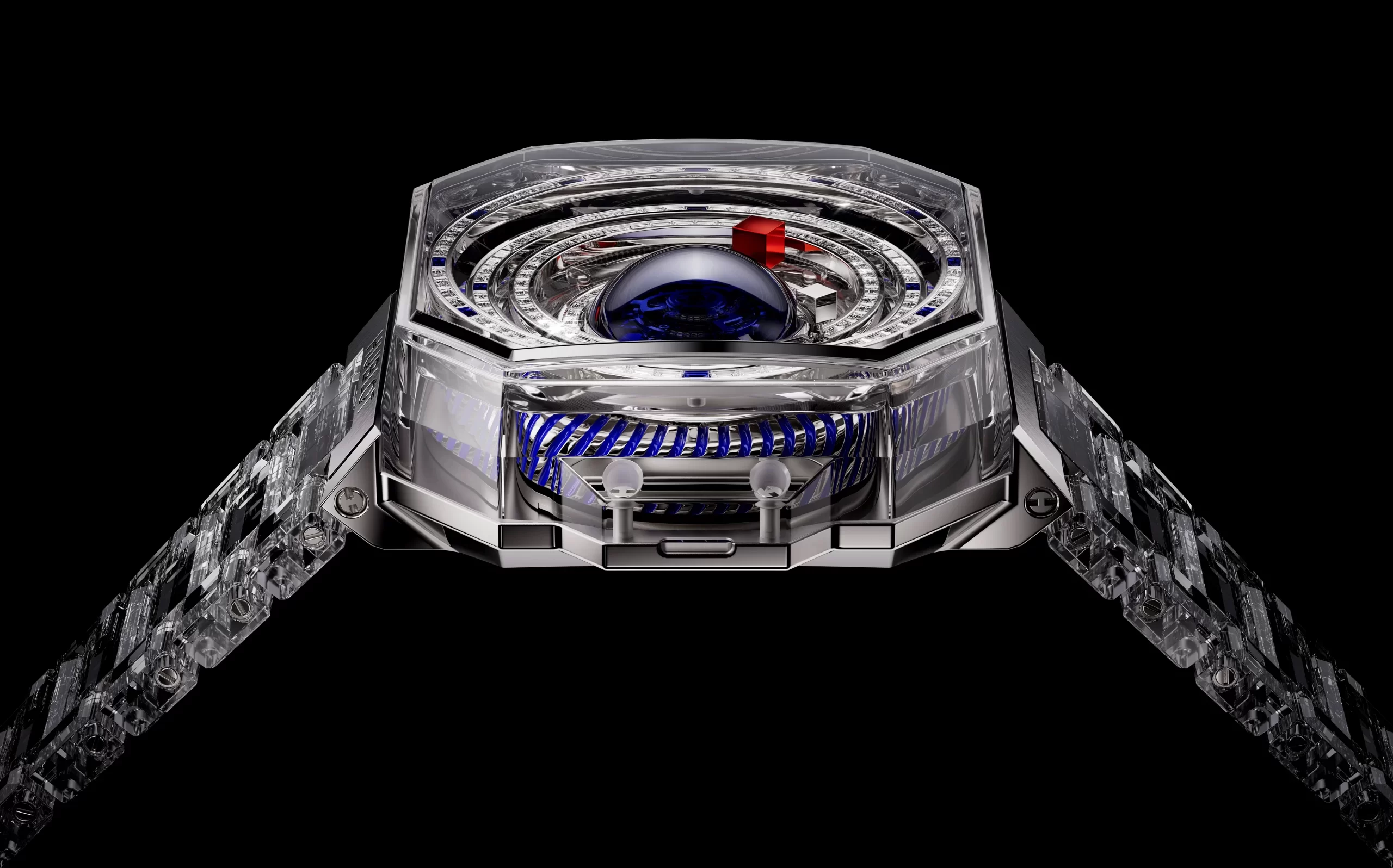
The MP-14 Origin measures 44 mm and uses an octagonal case made from polished sapphire crystal and titanium. Its transparent sapphire structure is central to the design rather than merely a material choice.

According to Hublot, machining the sapphire case requires approximately 534 hours. A titanium case back, H-shaped polished titanium screws and Hublot’s characteristic case “ears” at 3 and 9 o’clock complete the architecture.

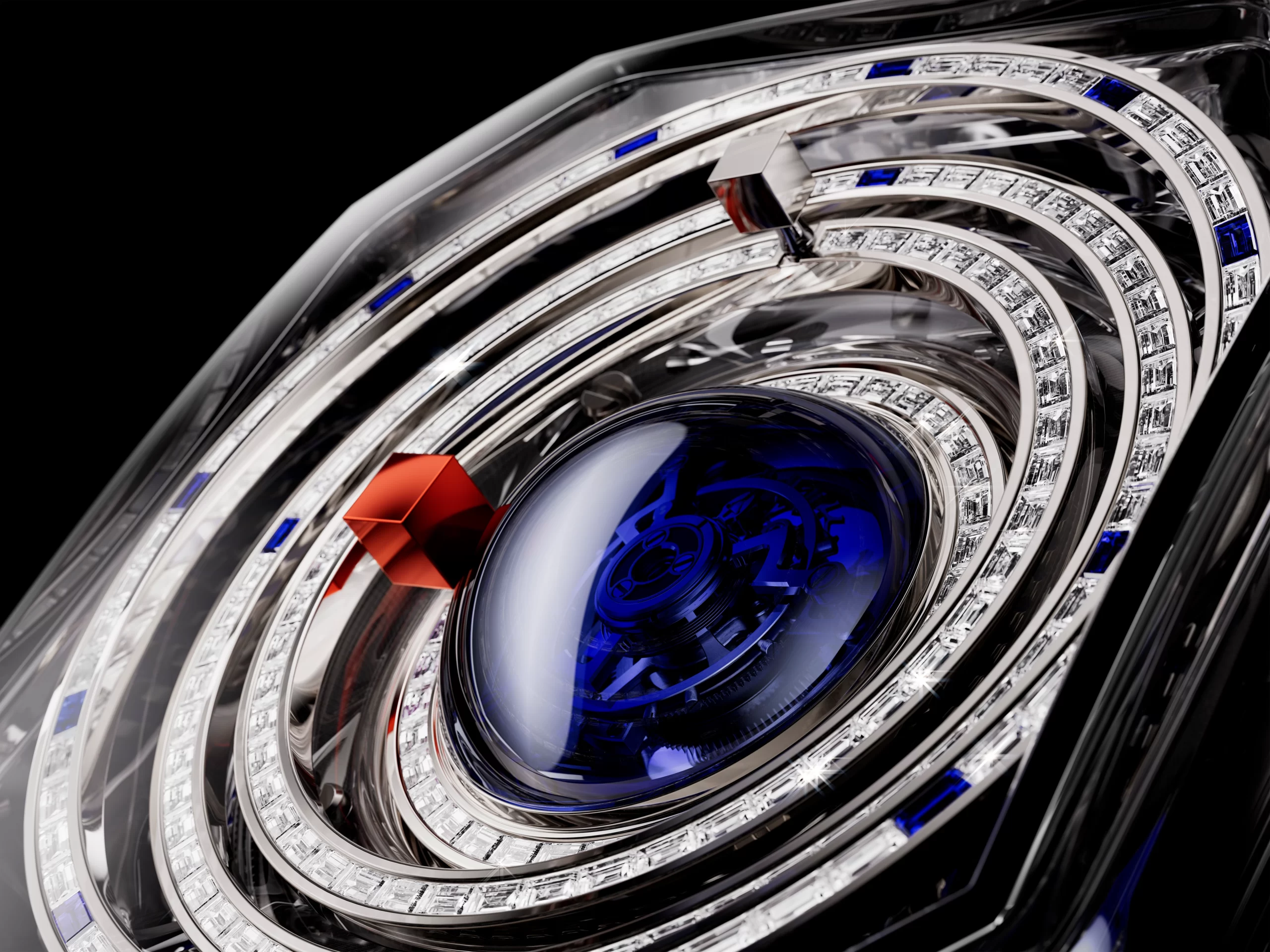
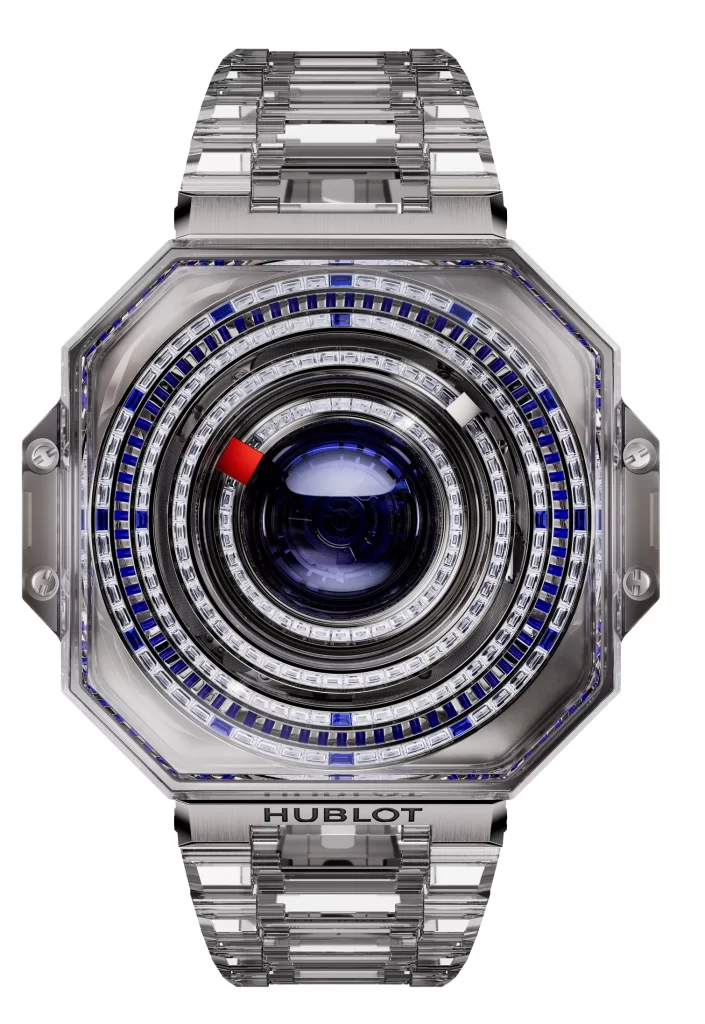
Inside, the transparent construction reveals a series of concentric rings that create the impression of orbital movement. The rings are crafted in white gold and set with baguette-cut diamonds and blue sapphires, gradually directing the eye towards the centre of the watch.

At that centre sits the tourbillon, positioned beneath a transparent sapphire dome. The dome takes inspiration from Jeff Koons’ Gazing Ball works and is hand-coated in translucent blue varnish by a micropainter.

It is a clever visual metaphor. Instead of representing the universe through a conventional celestial dial, Hublot places mechanical motion at the heart of the composition.

Time appears to orbit the movement

The MP-14 Origin takes an unconventional approach to displaying the hours and minutes.

Two suspended rotating rings carry floating indicator cubes. The hour indicator is a polished stainless-steel cube finished with translucent red varnish, while the minute indicator is represented by a polished grey stainless-steel cube.

Two additional rings remain fixed. Blue sapphires mark the quarters on the minute ring, while the hour ring uses blue sapphires to indicate the hours. Collectively, the four rings contain 202 gemstones, representing approximately 2.6 carats.

The result is a time display that deliberately avoids the familiar arrangement of hands moving around a stationary dial. Here, the indicators appear suspended within a layered mechanical environment.

The HUB9014: the mechanical heart

Driving this unusual architecture is Hublot’s HUB9014 manufacture movement.

It is an automatic central tourbillon equipped with a peripheral oscillating weight, operating at 3 Hz, or 21,600 vibrations per hour, with a 60-hour power reserve. The movement contains 594 components.

The peripheral winding system is particularly important to the design. By moving the oscillating mass away from the traditional central position, Hublot can preserve the open appearance of the movement while maintaining the visual continuity of the architecture.

The tourbillon cage sits beneath the sapphire dome, becoming the visual and mechanical centre of the watch. In the context of the Koons collaboration, Hublot describes this as the first pulse from which the surrounding structure appears to expand.
Even the winding system disappears into the architecture

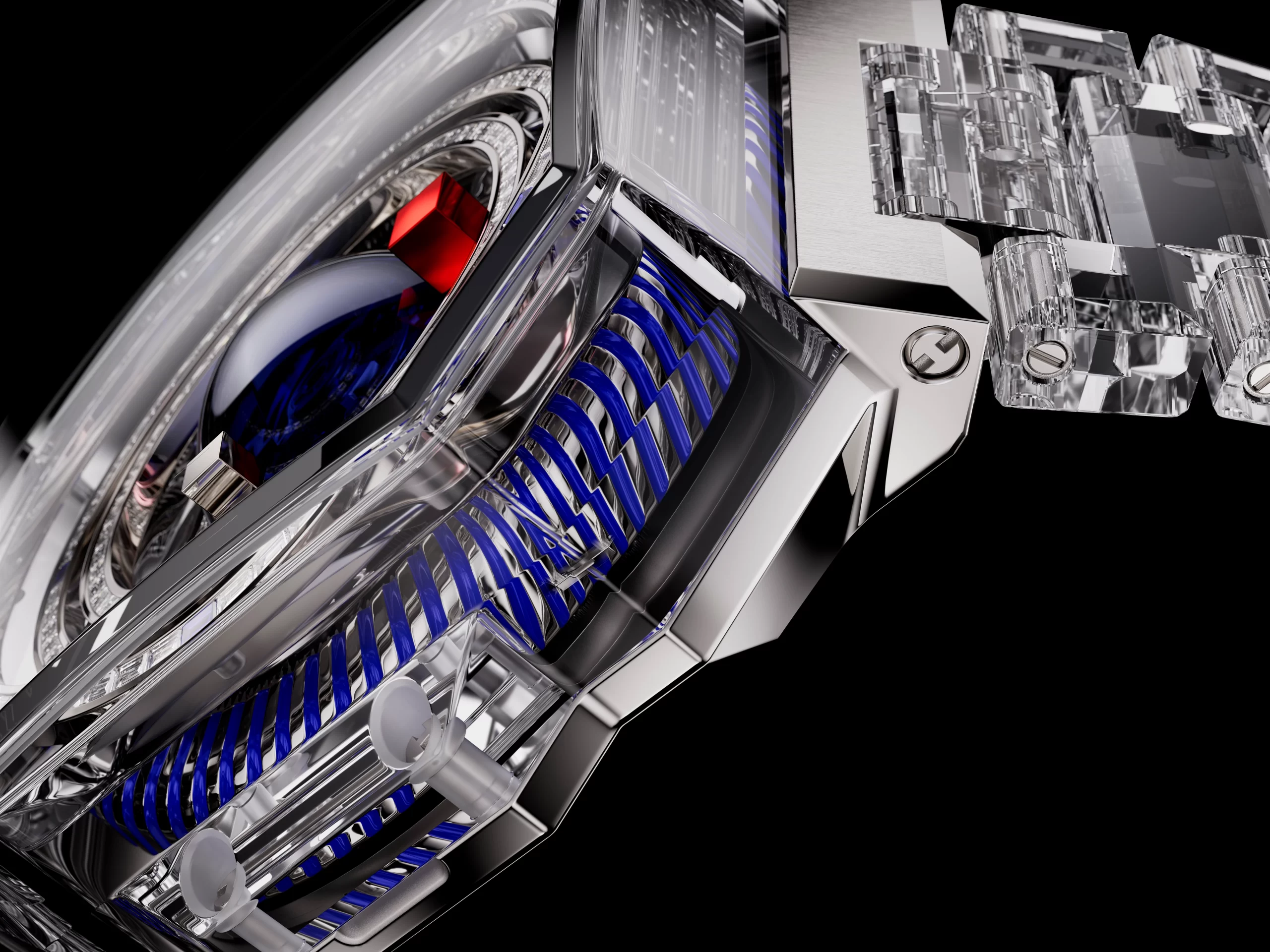
The MP-14 Origin takes its unusual construction a step further by concealing the functions normally associated with the crown.

Two hidden crown systems are integrated into the case, allowing the wearer to wind the watch and adjust the time without interrupting its clean architectural appearance.

The winding function is associated with the engraving “ENERGY PULSE”, while the time-setting function is marked “COSMIC ALIGN.”

It is the sort of detail that makes the watch less like a conventional timepiece and more like an engineered object whose functions have been absorbed into its design.

From watch to immersive presentation

Hublot extends the cosmic concept beyond the watch itself.

The presentation case uses an infinite mirror installation, incorporating LED illumination and one-way mirror technology to create an impression of limitless depth. Its octagonal geometry echoes the shape of the watch and is topped by a transparent dome, effectively turning the presentation environment into an extension of the timepiece’s architecture.

This matters because the MP-14 Origin is designed to be experienced as more than an object on the wrist. Its visual language continues from the sapphire case to the presentation environment, reinforcing the central idea of an expanding mechanical cosmos.

Jeff Koons’ interpretation of creation

For Koons, the MP-14 Origin represents a horological interpretation of creation itself, centred on the transformation of energy into form and form into time.

The central tourbillon becomes the starting point, while the surrounding mechanical structures suggest controlled expansion. Hublot’s press material specifically connects the concept to the Big Bang, translating that idea through mechanical movement, material tension and the interaction of light with the watch’s transparent architecture.

The concept is therefore not simply about putting a cosmic image on a dial. The movement, case, gemstones and rotating indicators all participate in the same visual narrative.

Technical specifications

Specification: Hublot MP-14 Origin by Jeff Koons
Reference: 914.NJ.0100.JX.9941
Edition: Limited to 30 pieces
Case: Polished sapphire crystal and titanium
Case size: 44 mm
Thickness: 20 mm
Water resistance: 3 ATM / 30 m
Winding system: Peripheral oscillating weight
Movement diameter: 39.20 mm
Movement thickness:14.65 mm
Components: 594
Jewels : 55
Frequency: 3 Hz / 21,600 A/h
Power reserve: 60 hours
Gem-setting: Baguette-cut diamonds and blue sapphires
Gemstone total: 202 stones / approximately 2.6 carats
Crystal: Sapphire
Case back: Polished and satin-finished titanium
Strap: Sapphire crystal and titanium deployant buckle


A 30-piece expression of experimental watchmaking

The Hublot MP-14 Origin by Jeff Koons is limited to just 30 pieces and is available through selected Hublot points of sale. The press release lists pricing at CHF 405,000, EUR 479,000, USD 488,000 and GBP 383,000.

At its most interesting, however, the MP-14 Origin is not about rarity or price. Its significance lies in how Hublot has attempted to make mechanical watchmaking itself tell the story.

The central tourbillon becomes the point of origin. The sapphire case provides the space. The gemstone-set rings create the impression of orbital structures. Floating cubes indicate the passage of hours and minutes. Even the winding and time-setting systems have been absorbed into the architecture.

In that sense, the MP-14 Origin does not simply depict a universe.

It builds one around the mechanism that makes the watch come alive.
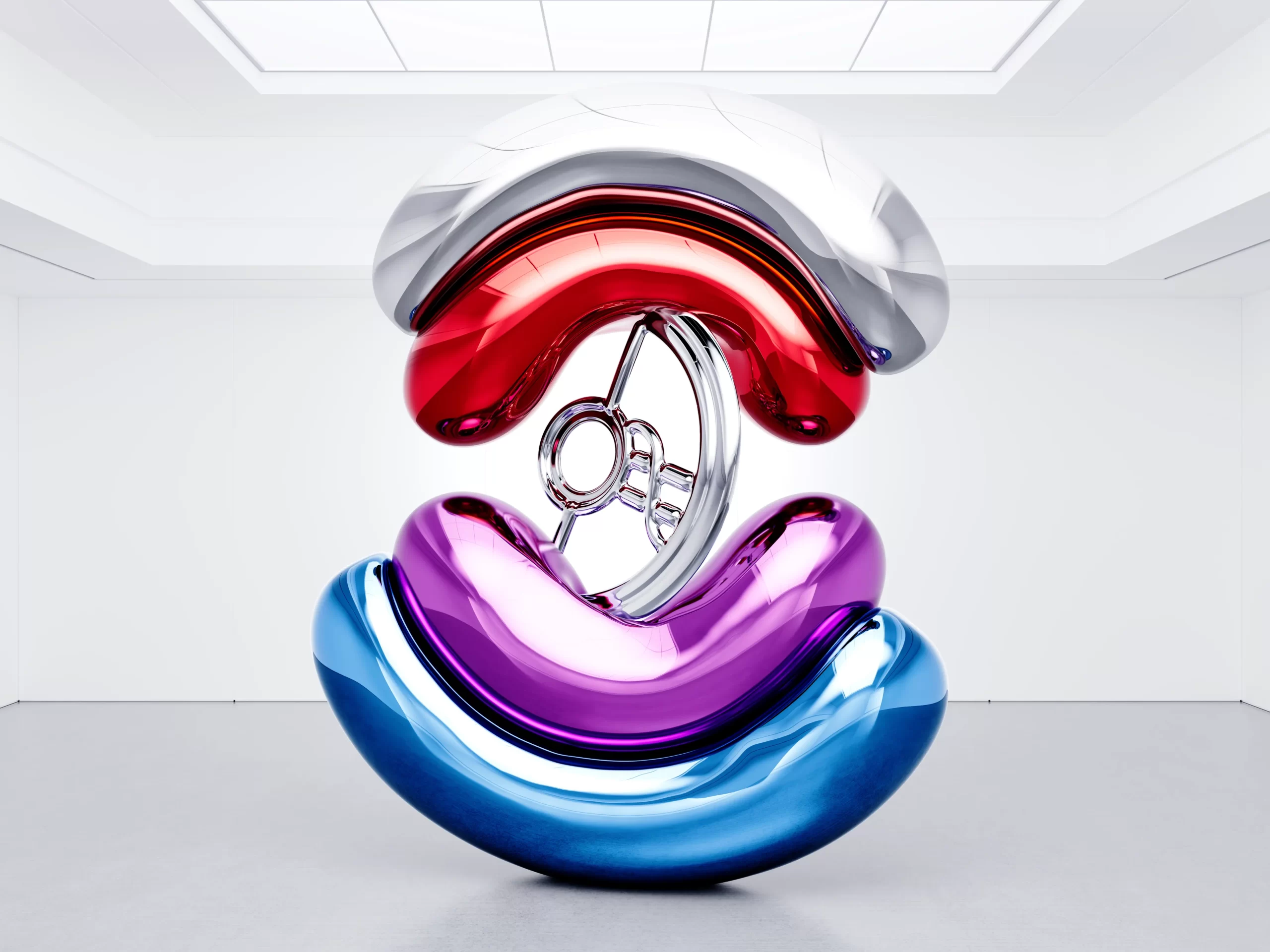
 

Hublot Classic Fusion Balloon Dog by Jeff Koons: Art Meets Watchmaking

Luxury watchmaking has never been content with simply telling time. The most interesting watches often exist somewhere between engineering, design and culture, and Hublot’s latest collaboration with Jeff Koons pushes that idea into distinctly sculptural territory.

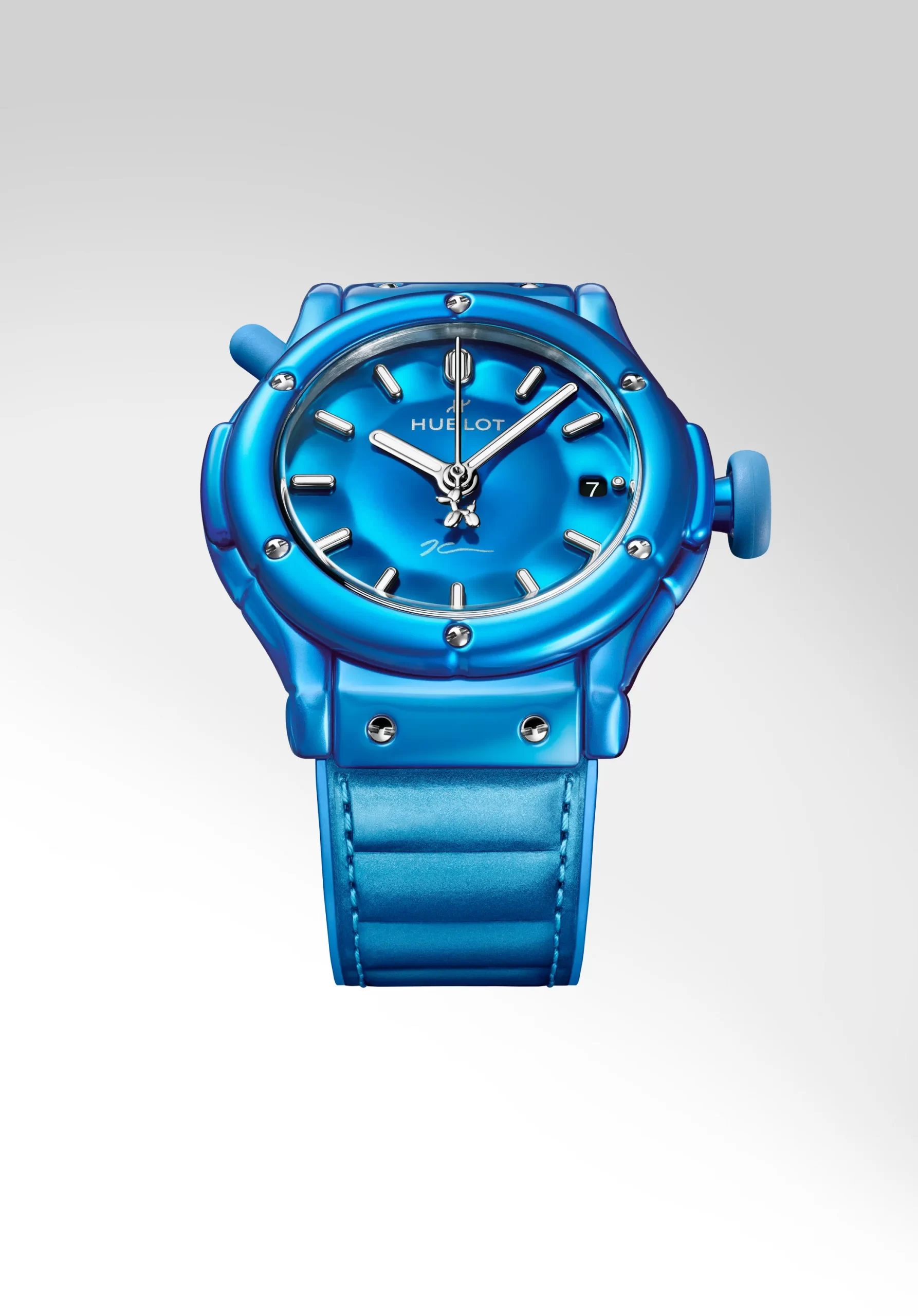
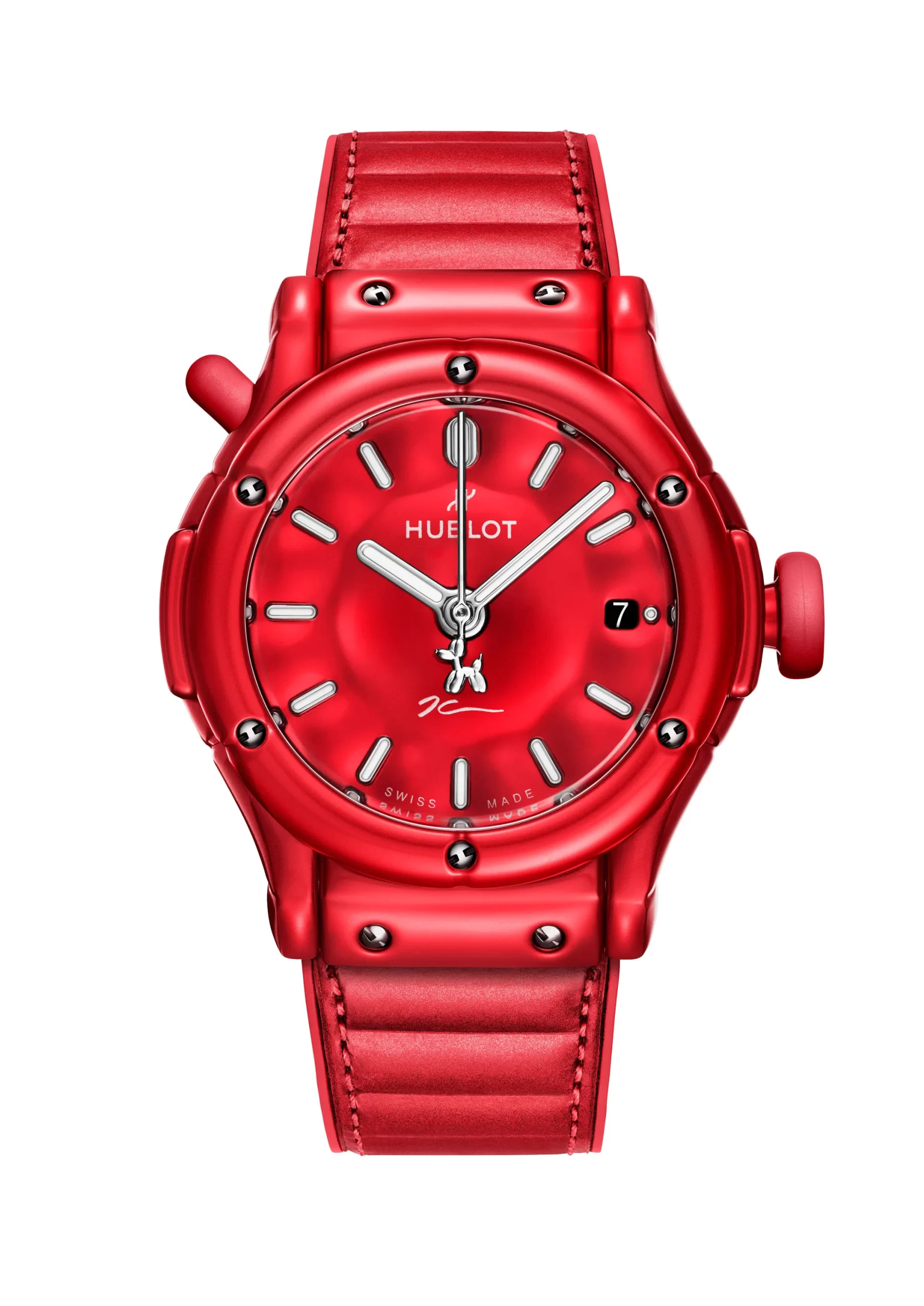
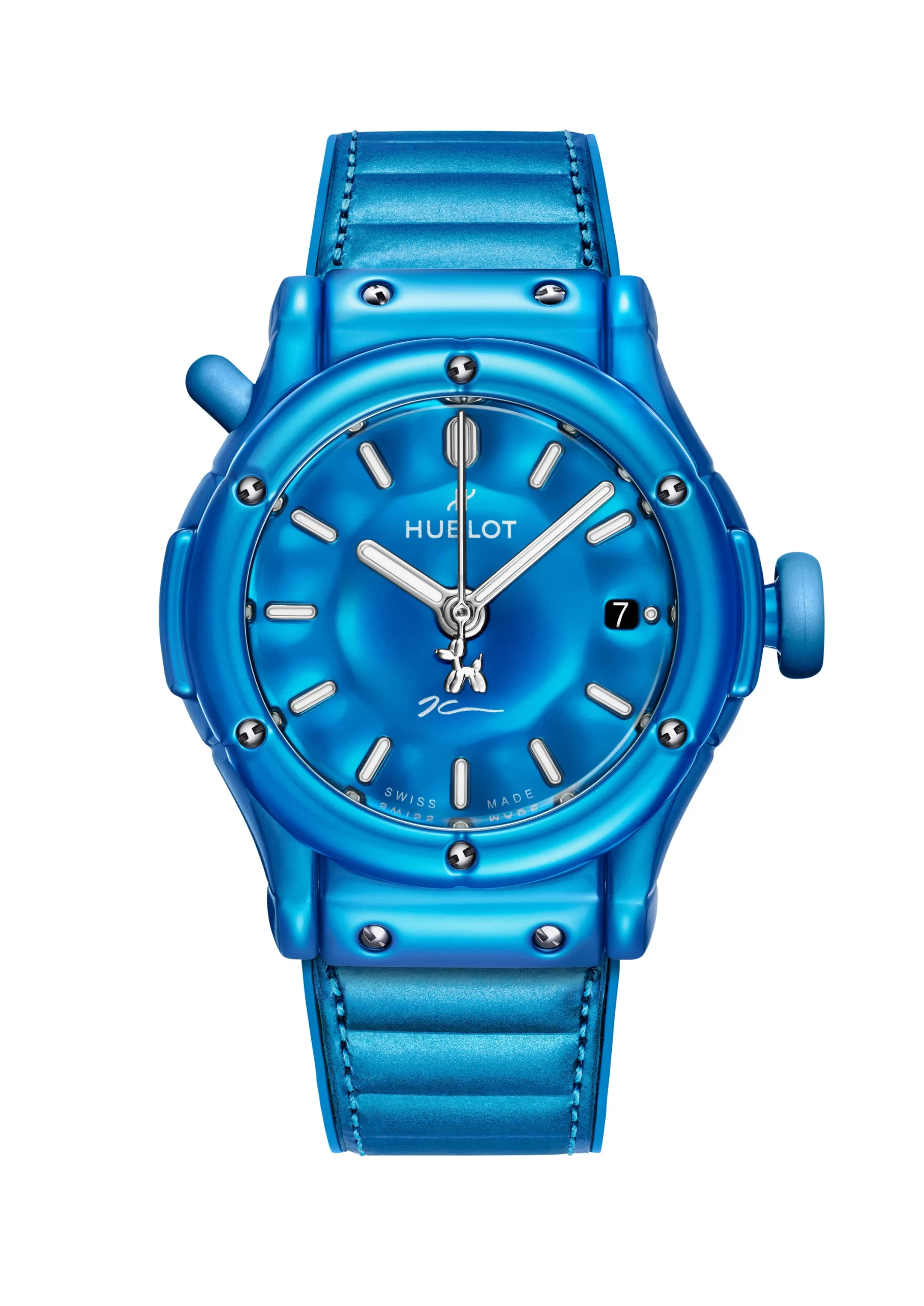
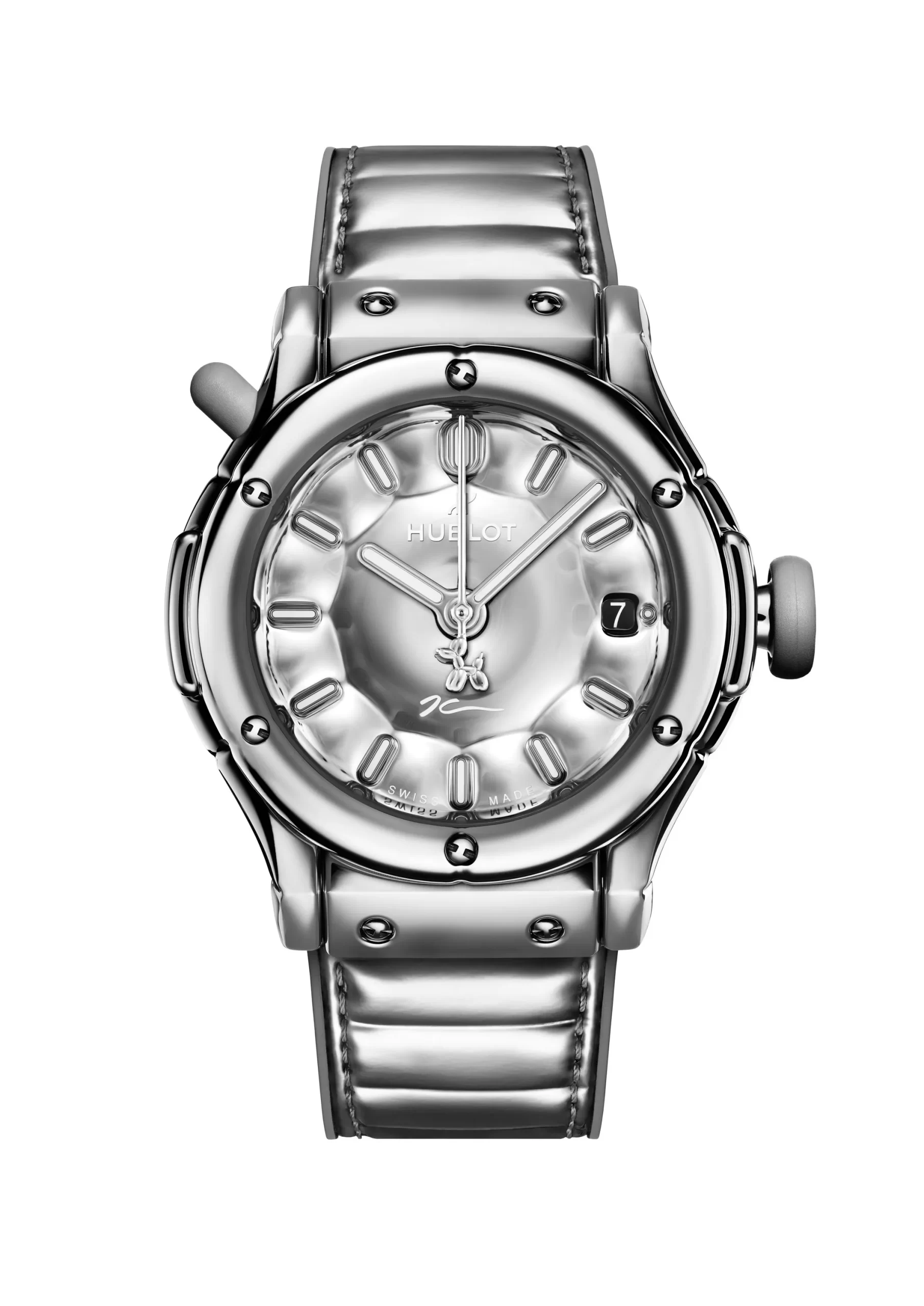
Unveiled in New York on 16 September 2026, the Hublot Classic Fusion Balloon Dog by Jeff Koons transforms Koons’ instantly recognisable Balloon Dog into a wristwatch. Available in mirror-polished stainless steel, red anodized aluminium and blue anodized aluminium, the collection is limited to 200 pieces in each edition.

The result is not simply a Classic Fusion decorated with references to an artwork. Hublot and Koons have rethought the architecture of the watch itself, creating a timepiece that appears almost as though it has been inflated.

From Balloon Sculpture to Wristwatch

Jeff Koons’ Balloon Dog, created between 1994 and 2000 as part of his Celebration series, takes one of the most familiar forms of childhood play and turns it into something permanent and monumental.

That transformation is central to Koons’ artistic language. Something temporary becomes enduring; something ordinary becomes iconic. Hublot sees a natural connection between that philosophy and its own approach to watchmaking, particularly its long-standing interest in combining unexpected materials, shapes and ideas.

For the Classic Fusion Balloon Dog, the challenge was therefore much greater than placing an artistic motif on an existing watch.

The 42mm Classic Fusion was fundamentally re-engineered around the visual language of an inflatable sculpture. Its normally sleek architecture gives way to rounded, convex and domed forms designed to create the impression of volume and internal pressure.

That distinction matters. This is not a conventional art-inspired dial. The artwork has influenced the physical architecture of the watch.

A Classic Fusion That Looks Inflated

Almost every visible component contributes to the illusion.

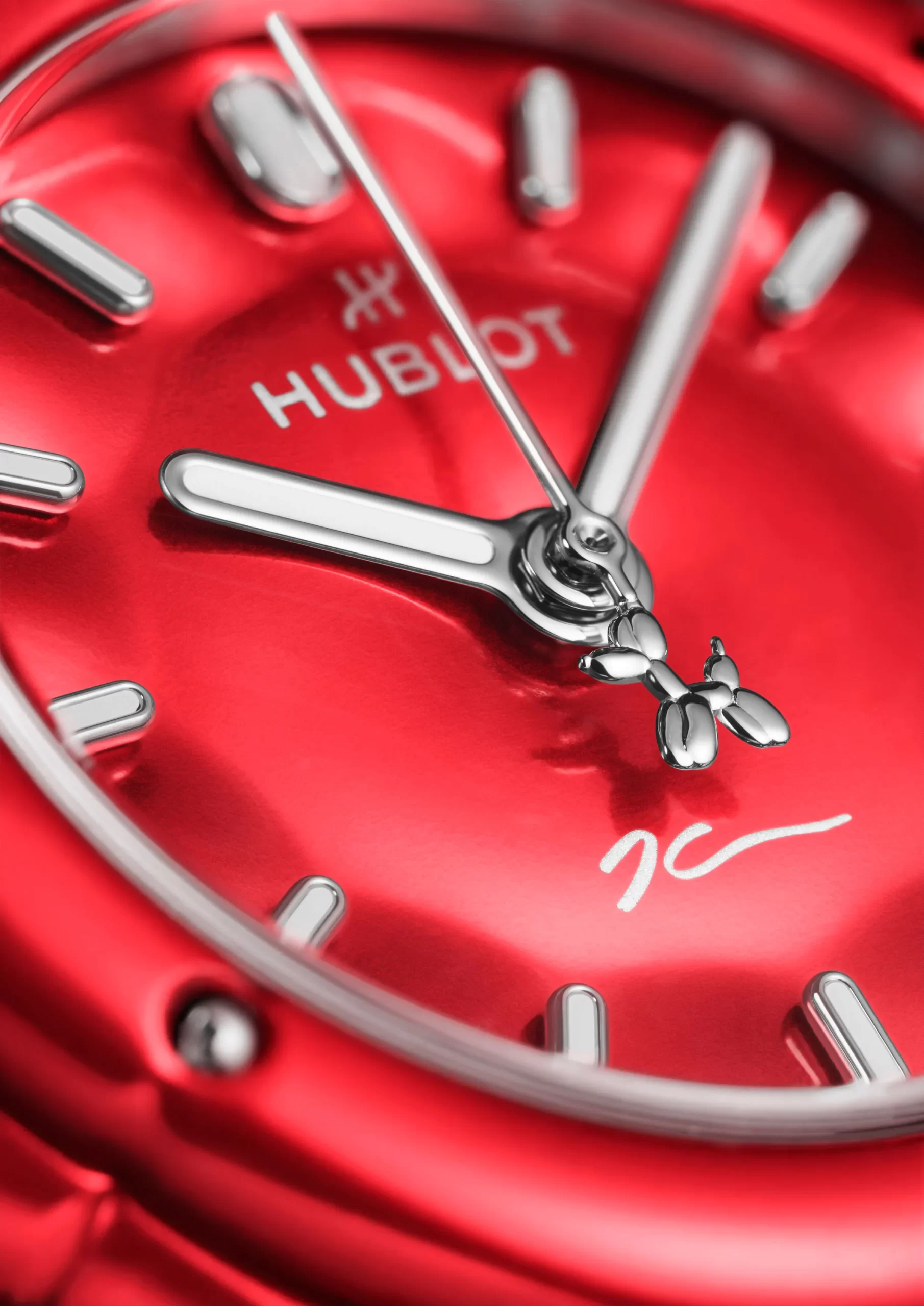
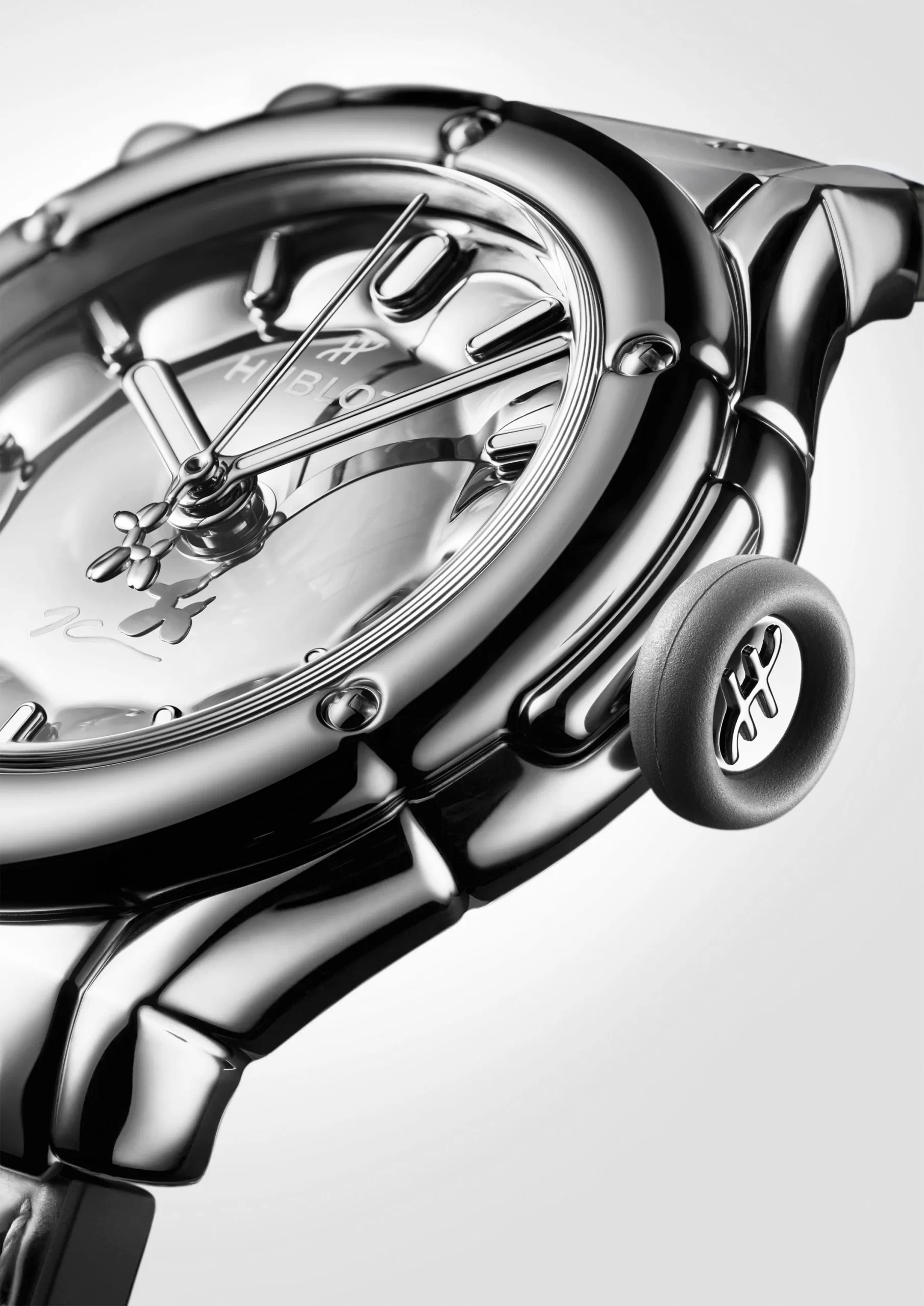
The sapphire crystal has a raised, domed profile, while the titanium H-shaped screws feature inflated heads. The dial itself adopts a convex, padded appearance, and the case follows the same rounded visual vocabulary.

Even the strap has been integrated into the concept. Its metallic leather and rubber construction continues the soft, padded aesthetic, while the attachment points have been softened rather than left with the sharper geometry traditionally associated with a sports-luxury watch.

Then come the details that make the connection to Balloon Dog unmistakable.

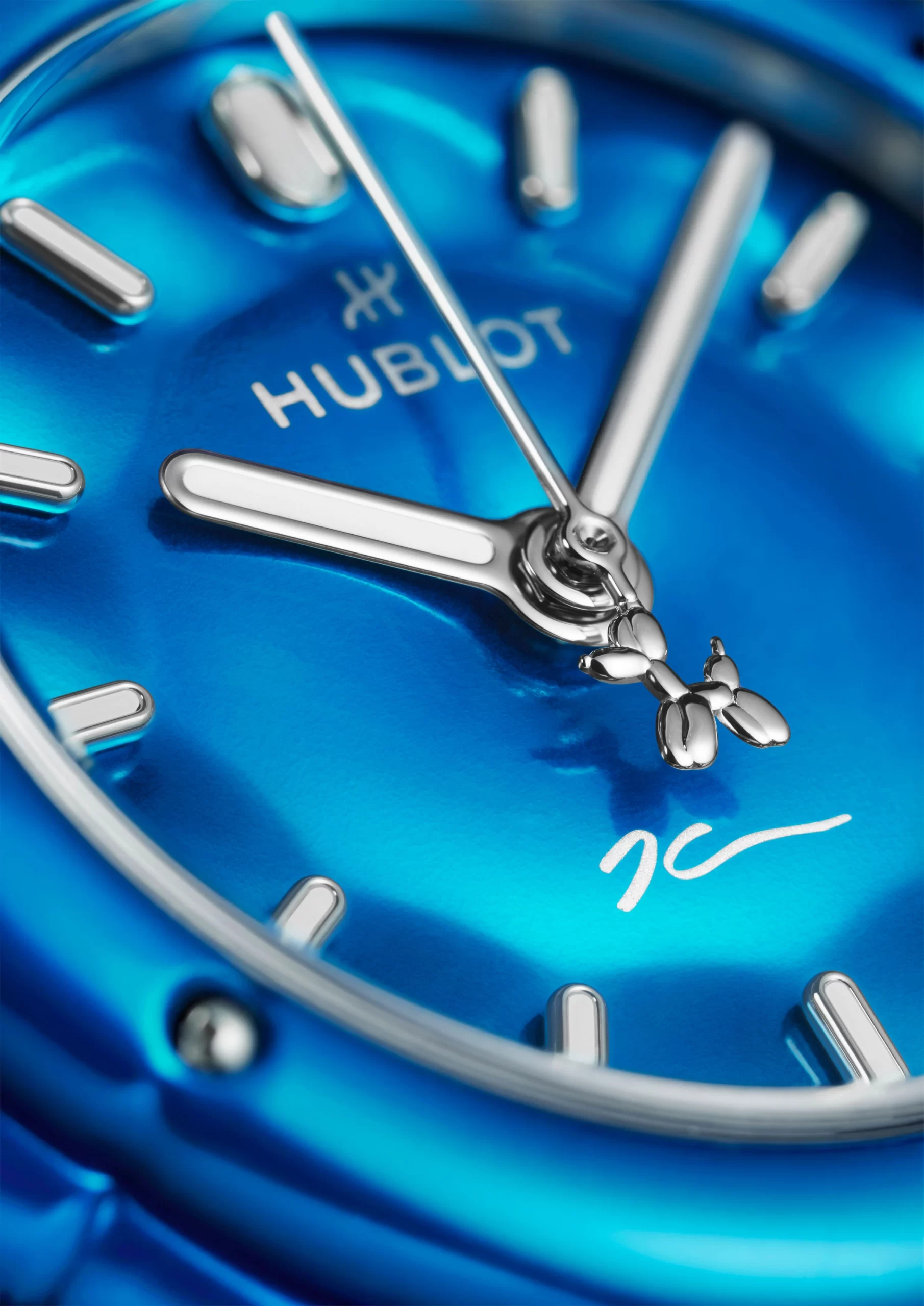
The crown is shaped like a balloon’s inflation valve. A flexible decorative “balloon tail” appears at 10:30, while the seconds hand carries a Balloon Dog-shaped counterweight. The hour and minute hands and dial indexes incorporate inflated Super-LumiNova elements.

It is playful, but the execution is anything but casual.

Three Interpretations, One Concept

Hublot has produced the Classic Fusion Balloon Dog in three distinct finishes.

Red

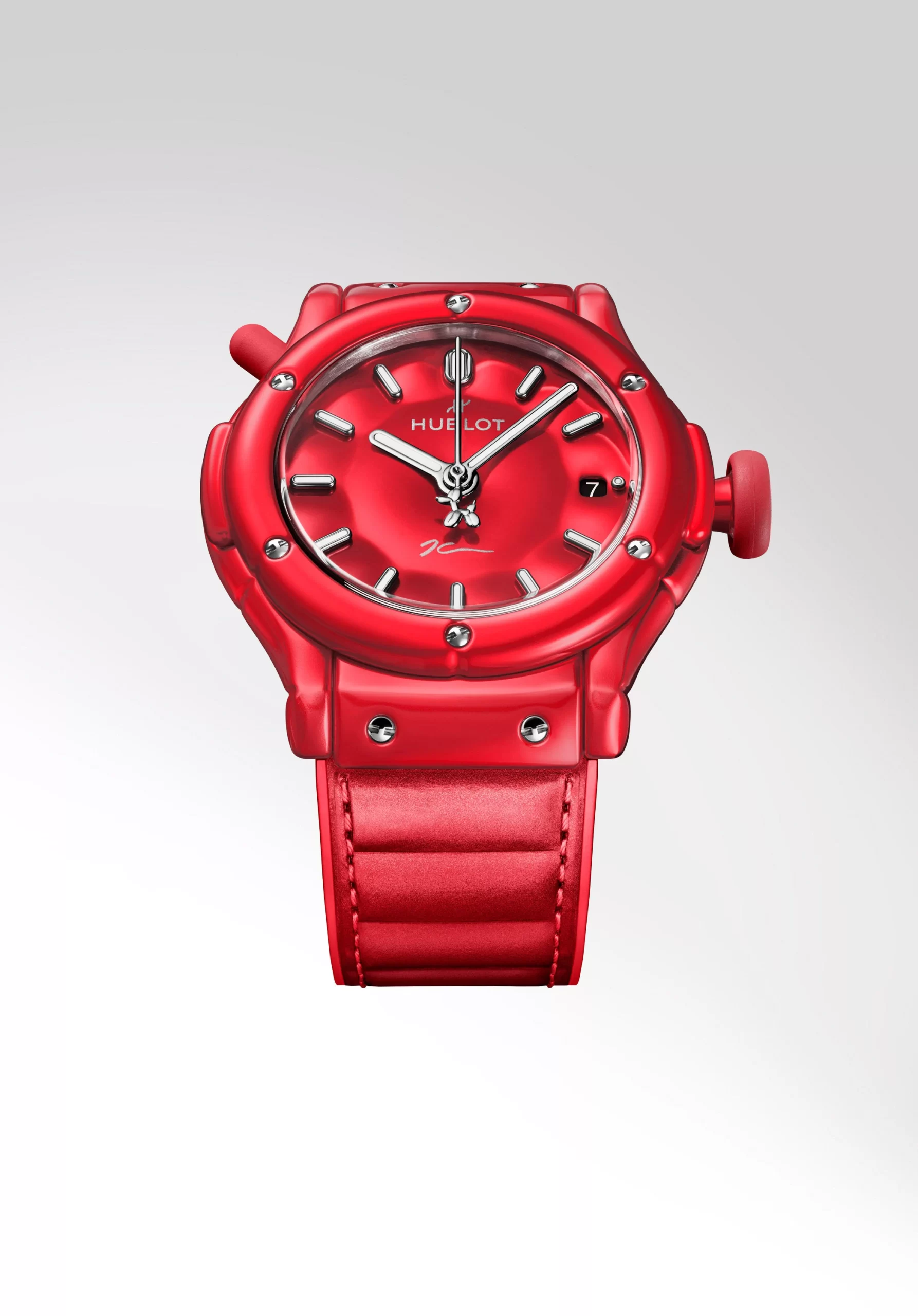
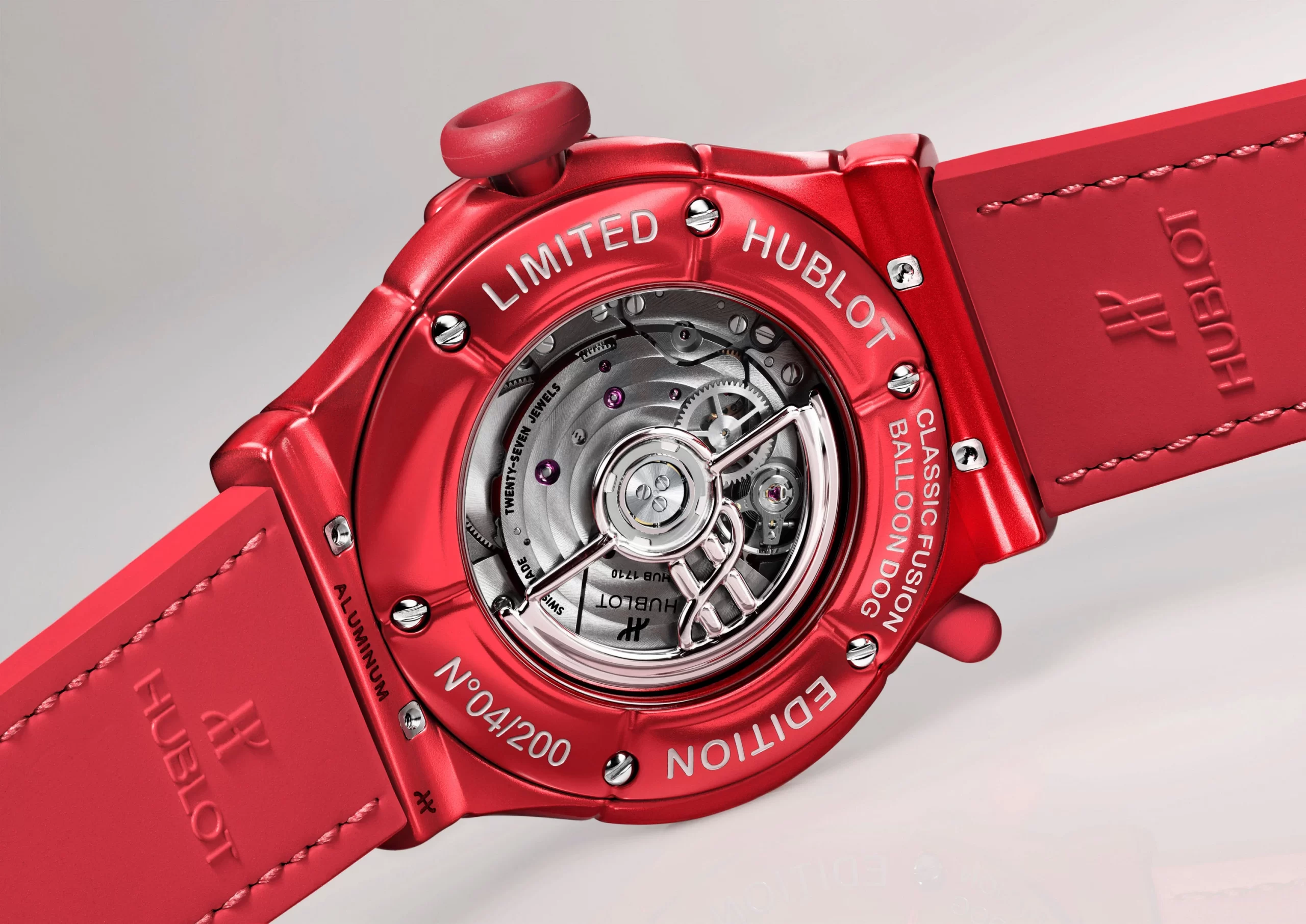
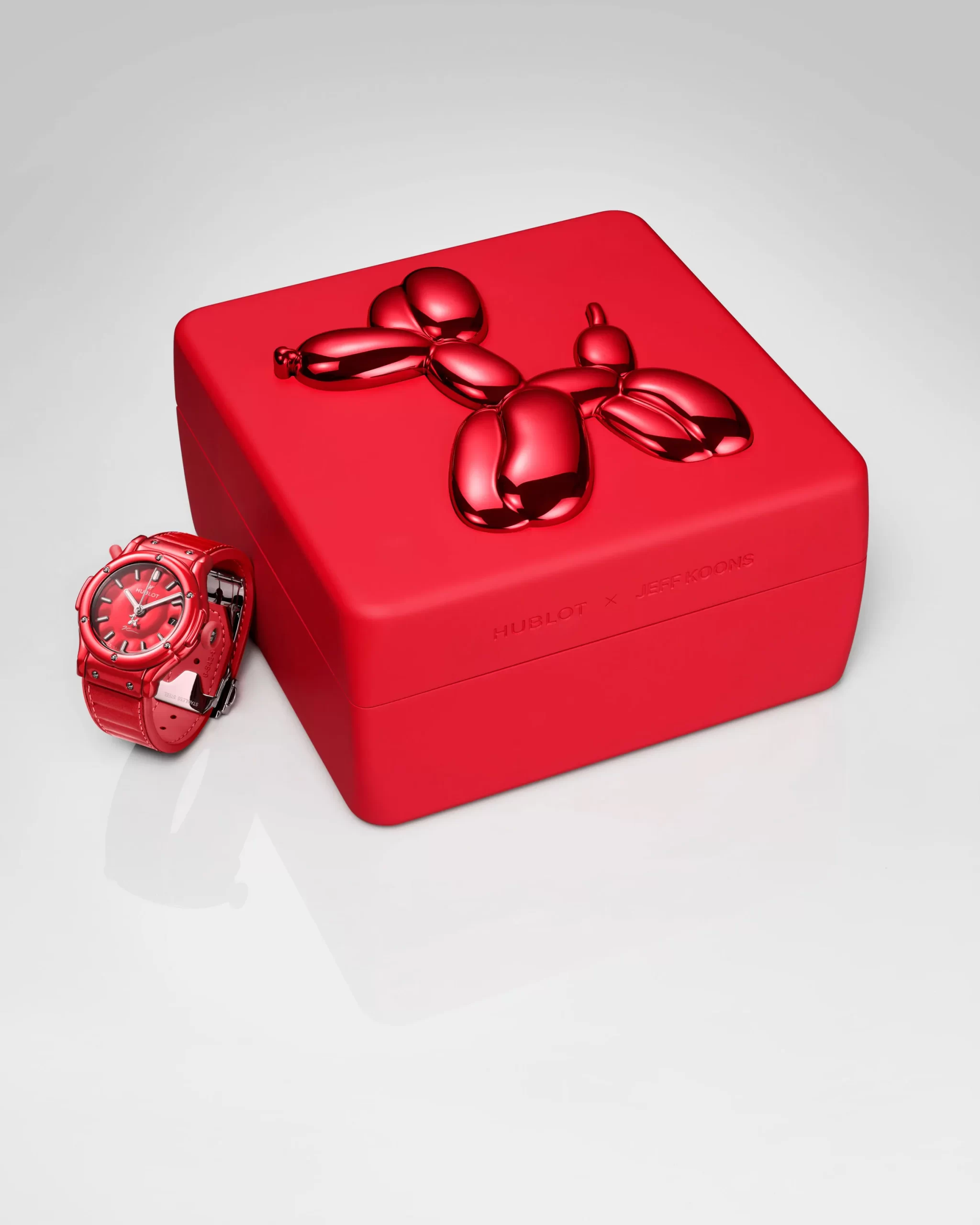
The red edition uses polished red anodized aluminium for the case, bezel and caseback, complemented by a red rubber balloon-tail detail. Its full red dial features domed appliques with 3D white Super-LumiNova and Jeff Koons’ signature at 6 o’clock.

Reference 542.UR.8170.NR.JKN26, it measures 42mm in diameter and 11mm thick, with 50 metres of water resistance.

Blue

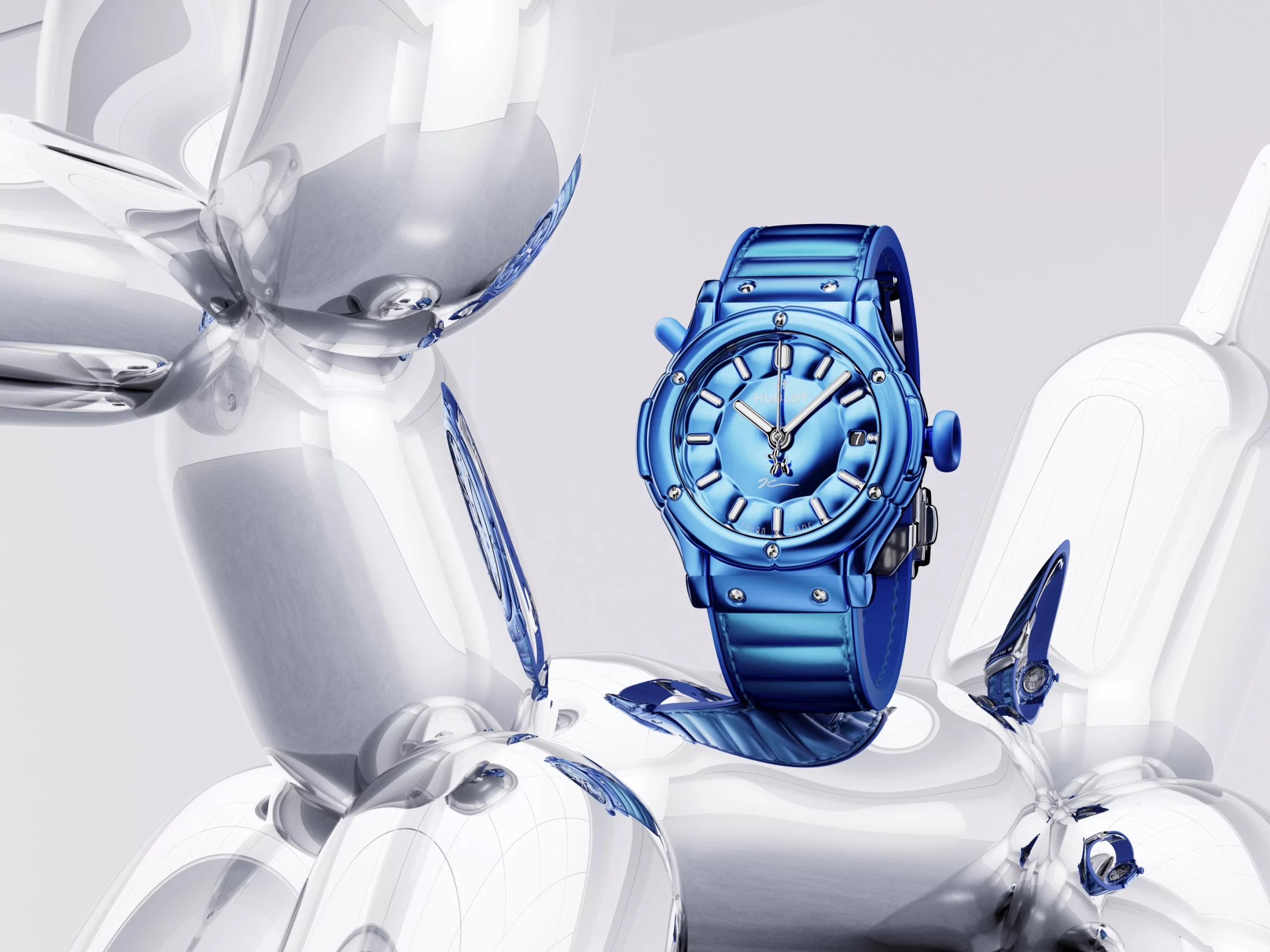
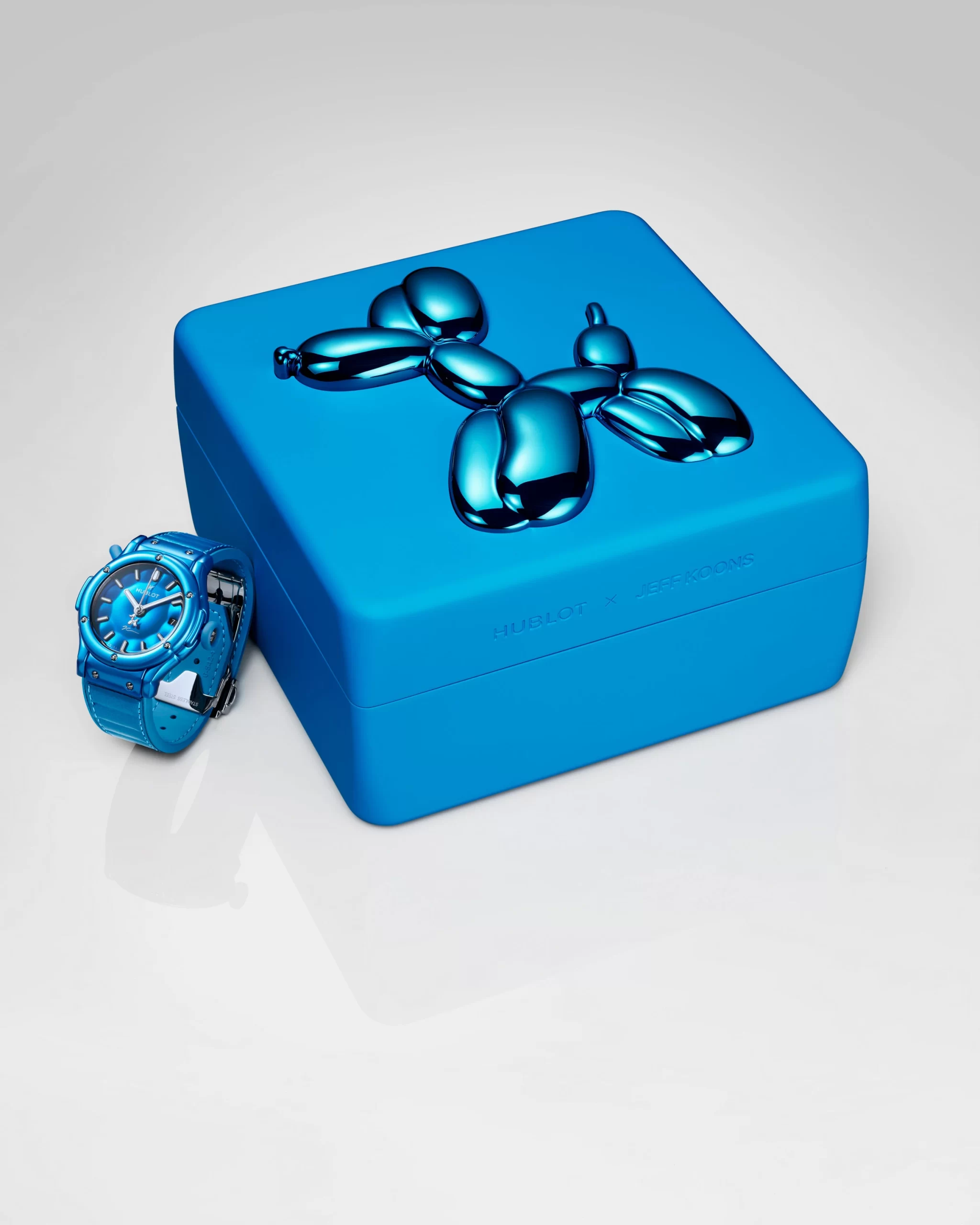
The blue version follows the same sculptural construction but uses polished blue anodized aluminium. A blue rubber balloon tail, blue dial and matching strap create a monochromatic interpretation of the concept.

Its reference is 542.UB.5170.NR.JKN26, with the same 42mm diameter, 11mm thickness and 5 ATM water resistance as the red edition.

Silver

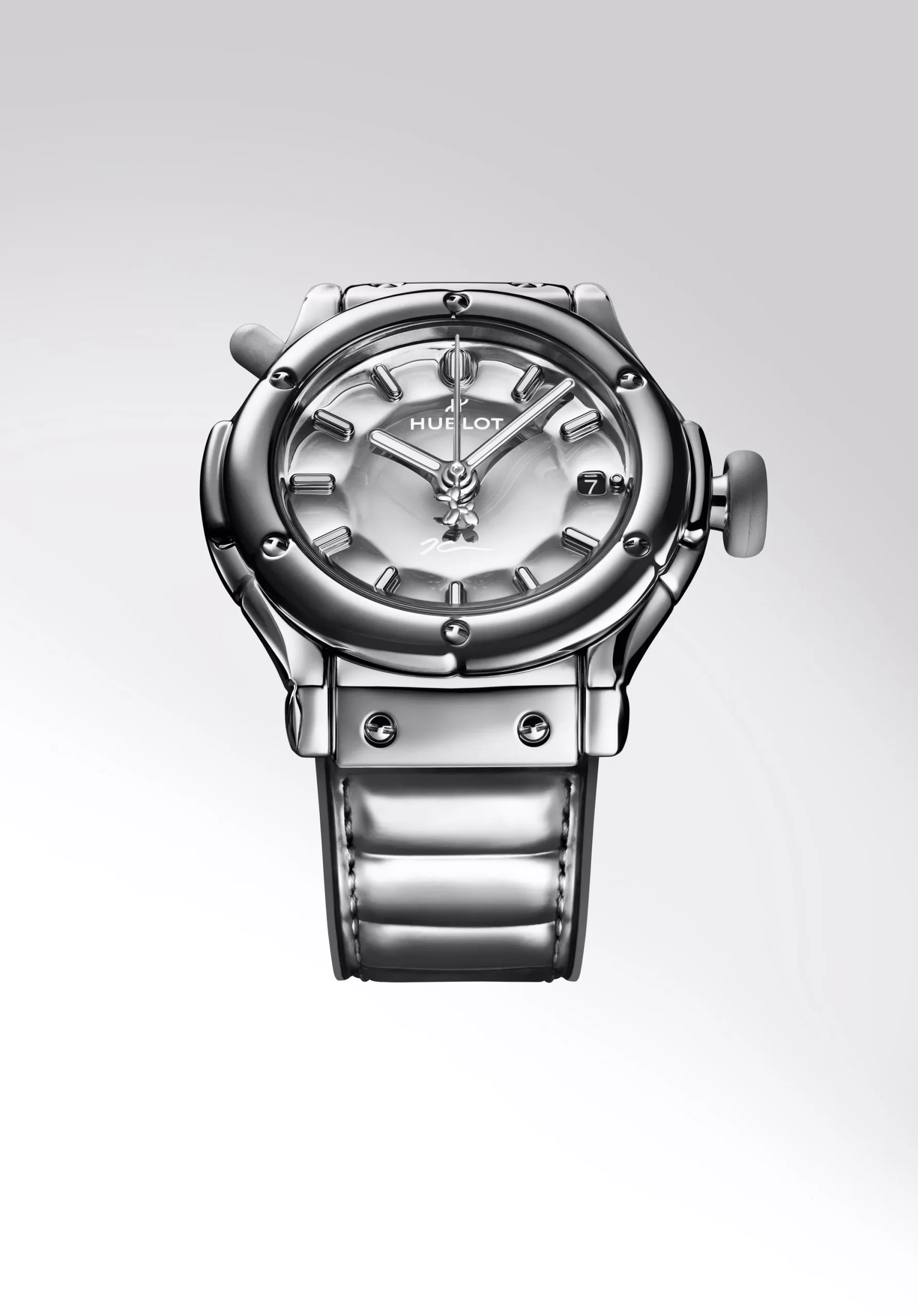
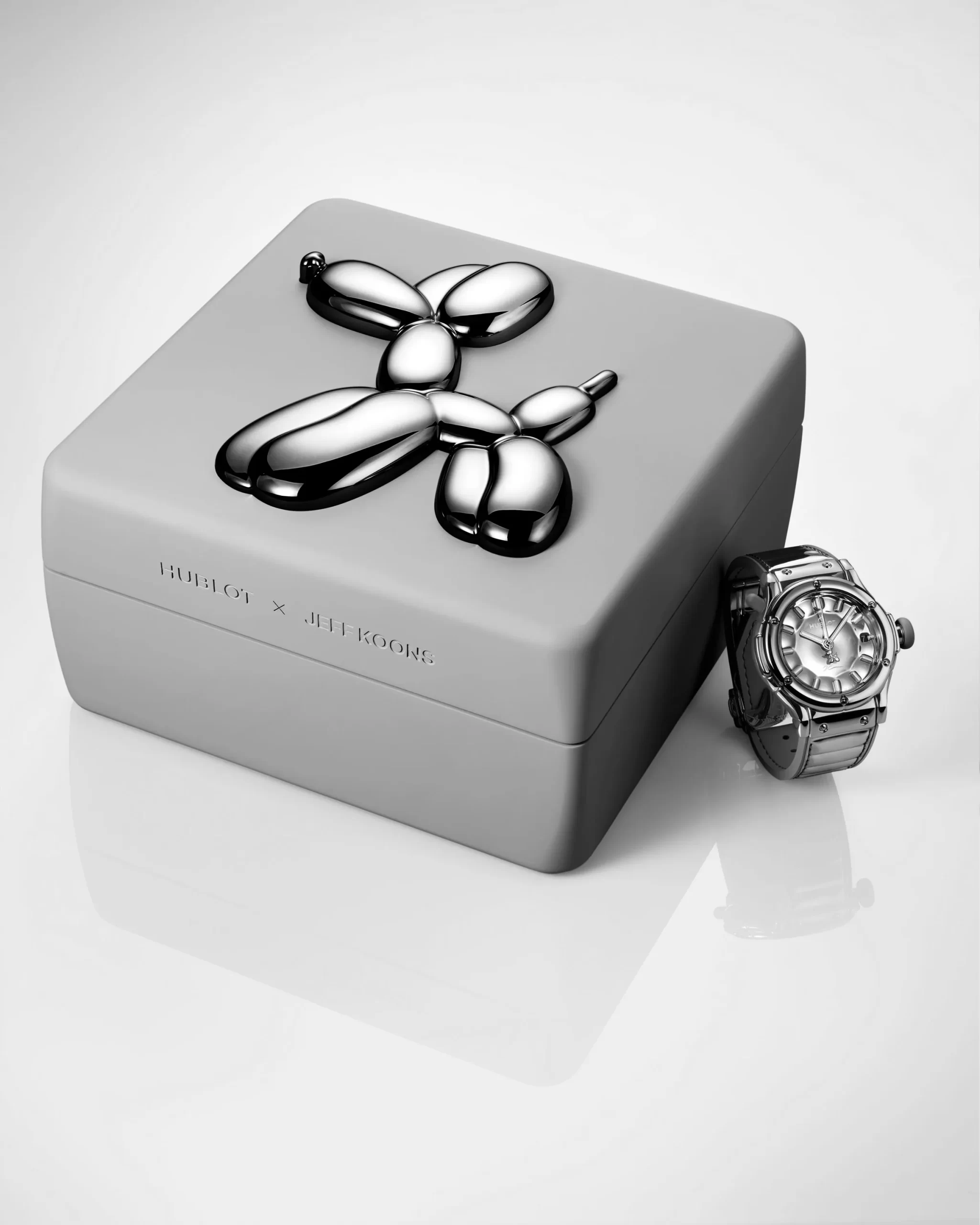
The third interpretation replaces colour with reflective metal. The 542.SX.0820.NR.JKN26 combines polished stainless steel with a rhodium-plated dial and grey accents.

Here, the mirror-like surface becomes particularly important. It echoes the reflective quality associated with Koons’ Balloon Dog sculptures while giving the watch a more restrained visual character.

All three versions are limited to 200 pieces.

The Horology Beneath the Sculpture

For all its artistic personality, the Balloon Dog remains a mechanical Hublot.

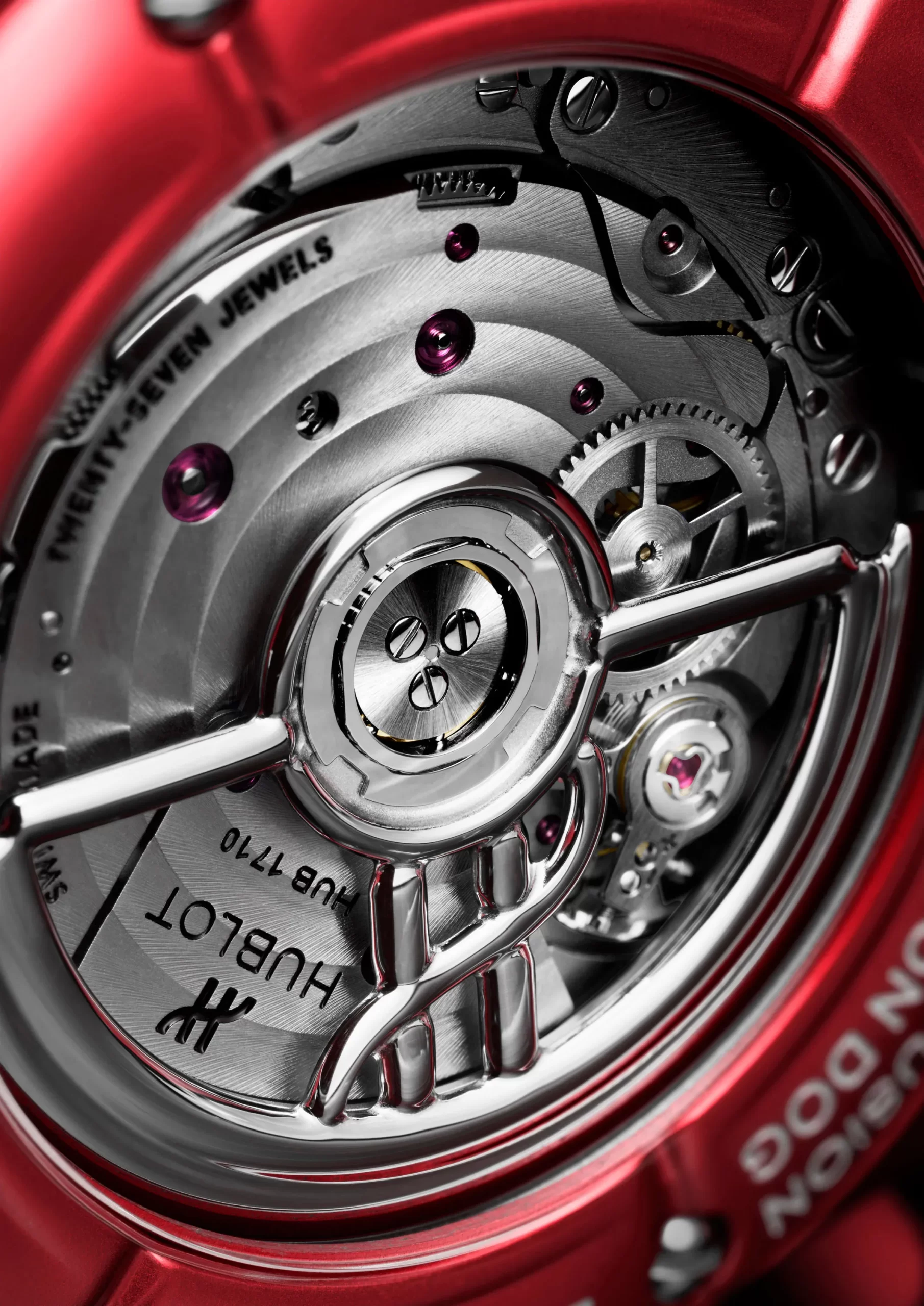
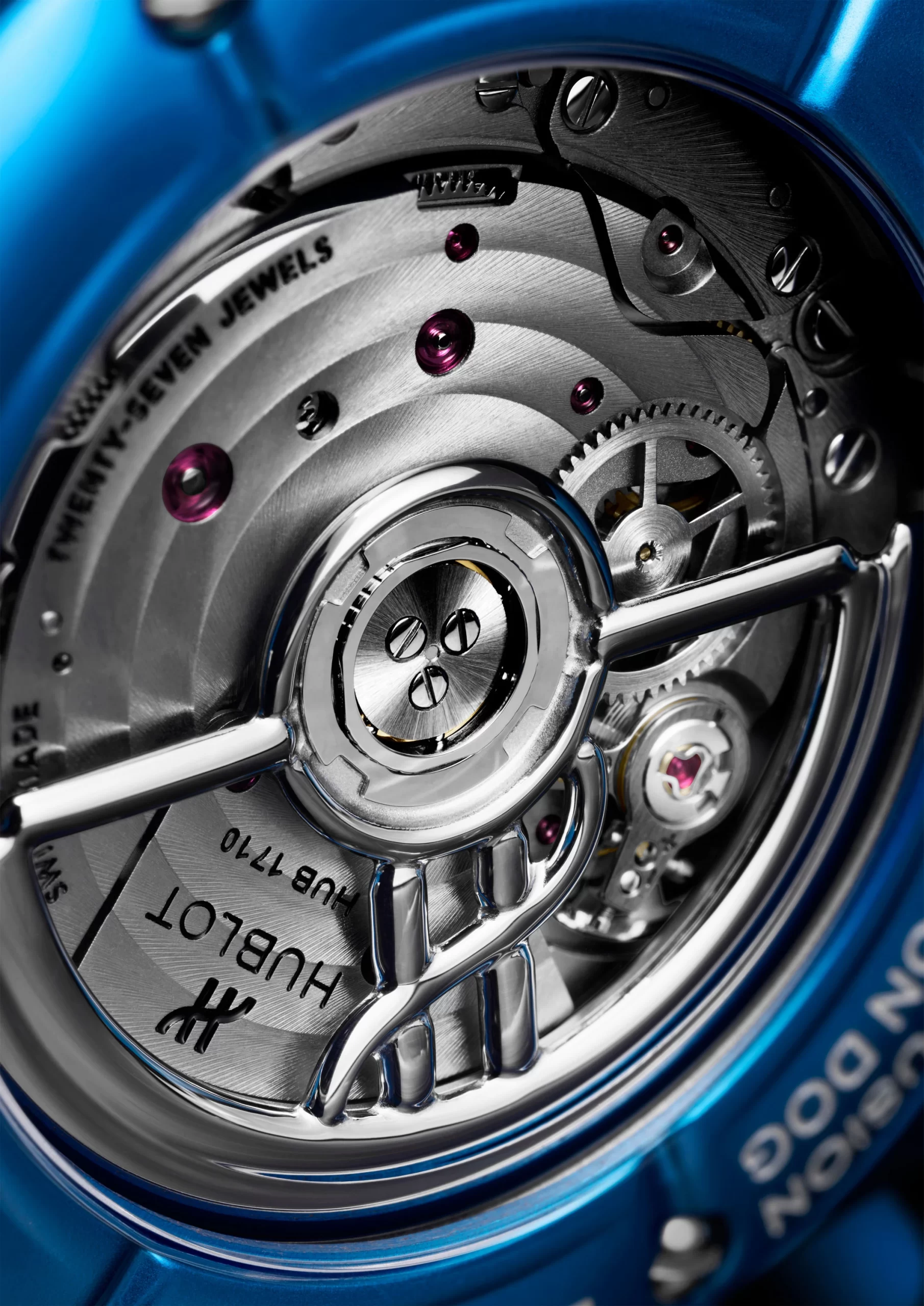
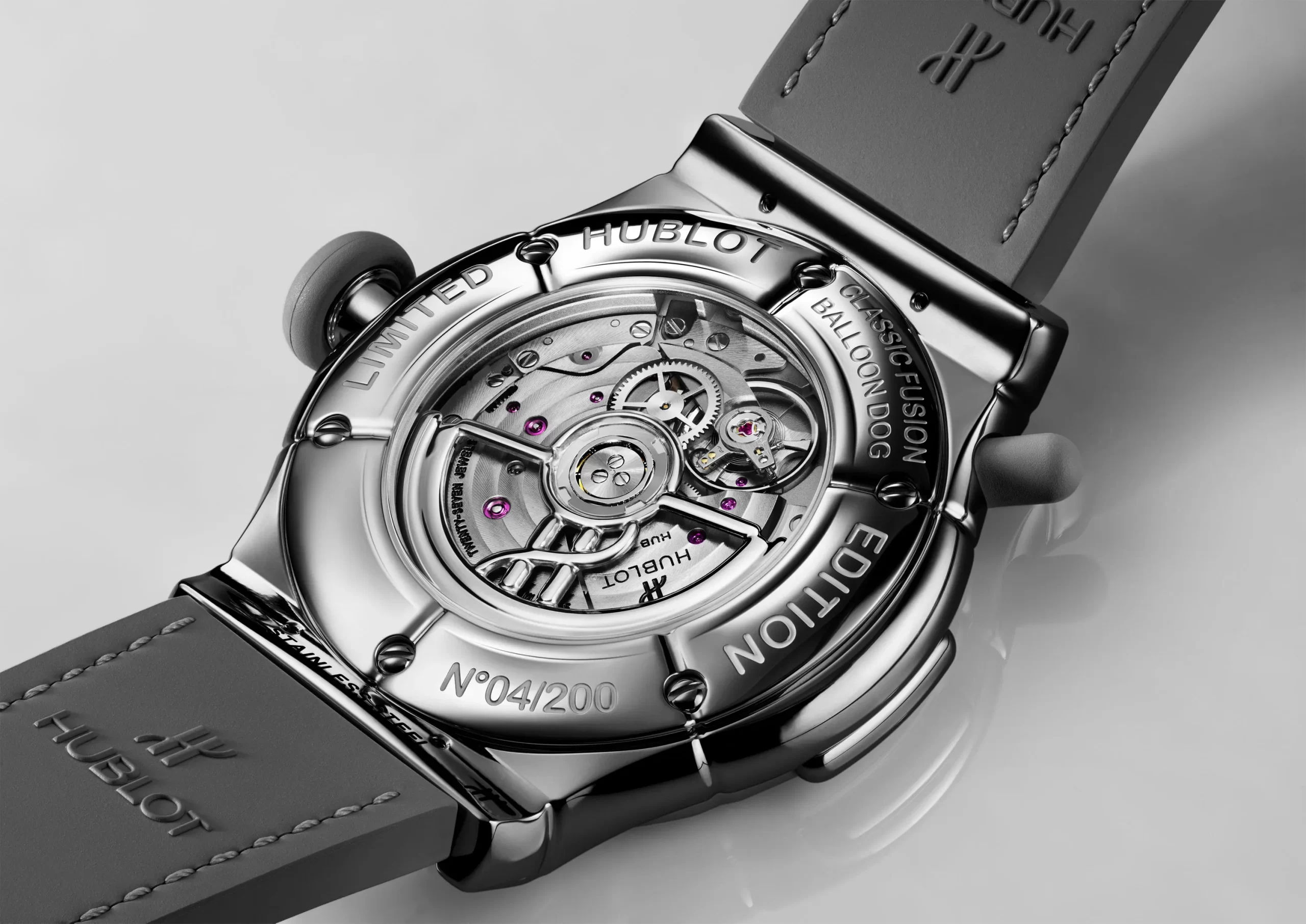
At its heart is the HUB1710 self-winding movement, with anthracite ruthenium-treated bridges and main plate. The movement incorporates a date display at 3 o’clock and a polished rhodium-plated oscillating weight designed with an inflated visual effect.

The technical specifications include:

  • Movement: Hublot HUB1710 automatic
  • Diameter: 25.6mm
  • Thickness: 3.7mm
  • Components: 185
  • Jewels: 27
  • Frequency: 4 Hz / 28,800 vibrations per hour
  • Power reserve: 50 hours
  • Date: 3 o’clock
  • Case diameter: 42mm
  • Water resistance: 50 metres

There is also an important technical point hidden beneath the playful exterior. The movement’s oscillating weight continues the visual language established by the case, creating a relationship between the mechanical heart of the watch and its external sculpture.

In other words, the Balloon Dog concept does not stop at the dial.

Where Art Meets Engineering

Perhaps the most interesting aspect of the collaboration is the amount of engineering required to make something apparently simple look simple.

Hublot states that the components were reimagined, reshaped and refined, with 5-axis CNC machining used to create the distinctive puffed forms before the components were finished by hand.

That combination of industrial precision and hand finishing is particularly appropriate for a collaboration with Koons. His sculptures are famous for their apparently flawless surfaces, yet achieving that simplicity requires considerable control over materials, proportions and finishing.

The same principle applies here.

The watch is supposed to look effortless. Making it look effortless is the difficult part.

More Than a Limited-Edition Watch

Hublot has also extended the Balloon Dog idea beyond the wrist.

Each watch comes in packaging inspired by the sculpture, featuring a chromed Balloon Dog with a colour-matched finish. Its rubber-effect painted surface continues the tactile and playful character of the timepiece.

The watches are conceived, developed and assembled at Hublot’s Manufacture in Nyon. They are also covered by the brand’s evolved 5+5 warranty programme for eligible watches purchased from 1 January 2026, providing a five-year basic warranty with the possibility of a further five-year extension through the Hublotista programme.

The watches are priced at CHF 20,800 / EUR 24,600 / USD 25,100 / GBP 19,700 across the three editions.

The Hublot Approach to Contemporary Art

The collaboration also makes sense within Hublot’s broader history.

Since 1980, the brand has built much of its identity around the idea of “Art of Fusion”, beginning with its combination of a gold case and rubber strap. The Big Bang subsequently expanded that philosophy through its layered construction, while the Classic Fusion established a different balance between contemporary design and restraint.

The Balloon Dog takes that philosophy into another dimension, quite literally.

Here, Hublot is not merely fusing materials. It is fusing watchmaking and sculpture, mechanical precision and visual emotion, childhood familiarity and contemporary luxury.

That is what makes the collaboration particularly relevant.

Jeff Koons

Few artists have transformed popular culture into iconography as profoundly as Jeff Koons. For over forty years, he has redefined contemporary art by taking everyday objects and elevating them through scale, transformation of material, craftsmanship with great precision and care. Known for works such as Balloon Dog, Rabbit and Puppy, Koons turns the ordinary into the extraordinary, the ephemeral into the permanent and the playful into the monumental. Beneath the reflective surfaces and universally recognizable forms lies a discipline rooted in the experience of feelings and sensation and a commitment to realizing a vision through execution. Behind their playful appearance lies a profound connection to human experience and our communal history, along with a celebration of this moment in time. His work revolves around themes of self- acceptance, empowerment, and transcendence. Mirror-polished surfaces, industrial precision and attention to detail have become his signature, transforming ephemeral objects into timeless iconic symbols.

Final Thoughts

The Hublot Classic Fusion Balloon Dog by Jeff Koons occupies an unusual space in modern watchmaking. It is recognisable as a Hublot, unmistakably connected to Koons, and yet neither identity completely dominates the other.

The familiar balloon animal has become a mechanical object. The Classic Fusion has been given curves, volume and a sense of movement that make it appear almost inflated. And beneath all that visual playfulness sits a serious automatic movement produced at Hublot’s Manufacture.

In a world where luxury watches can sometimes become exercises in adding more decoration, Hublot and Jeff Koons have taken a different route: they changed the shape of the idea itself.

And that may be the most interesting thing about this collaboration. Time has not simply been placed inside a work of art. It has been inflated into one.

Hublot Big Bang Original Soft Touch: All Red & All Black

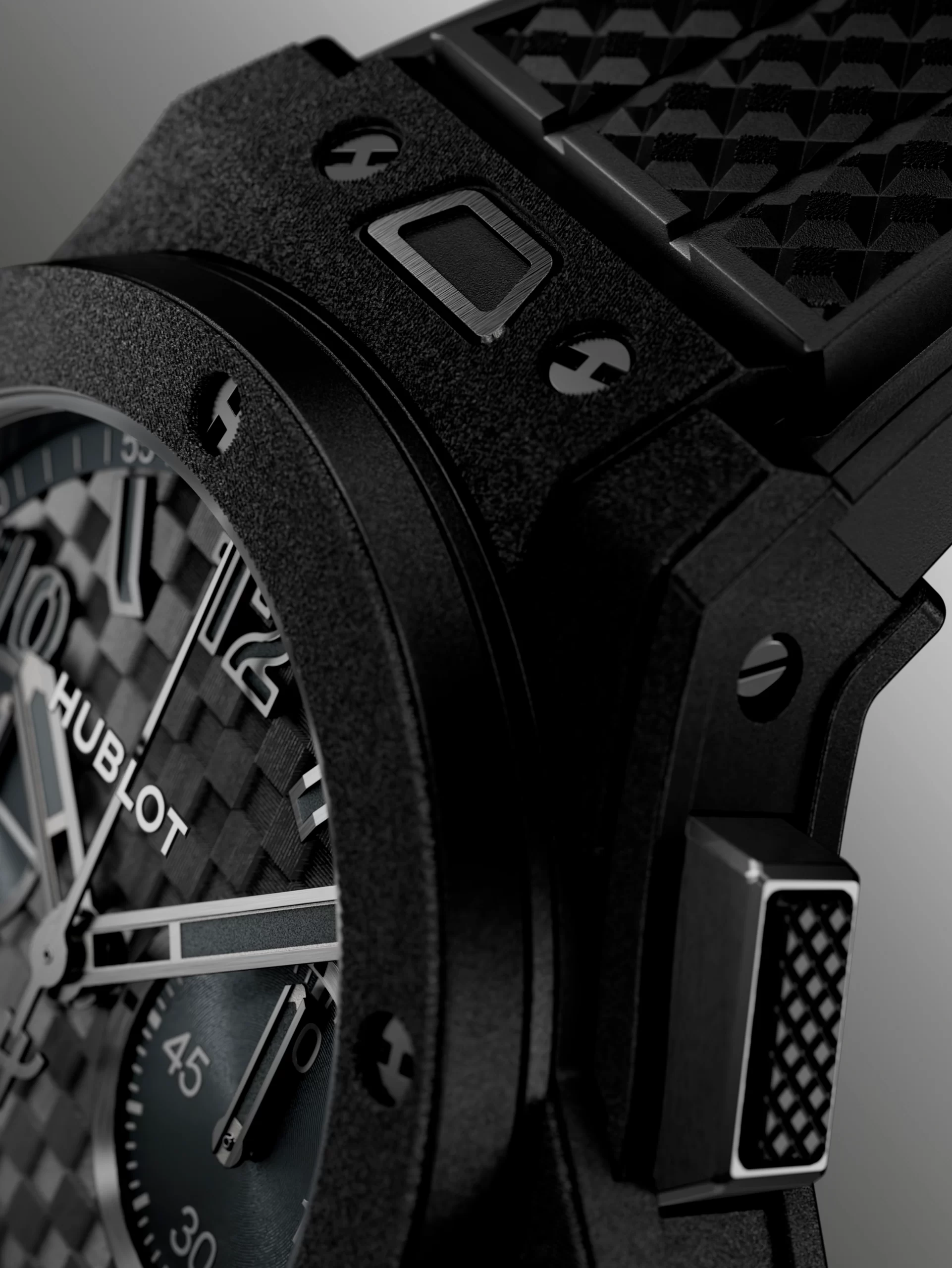
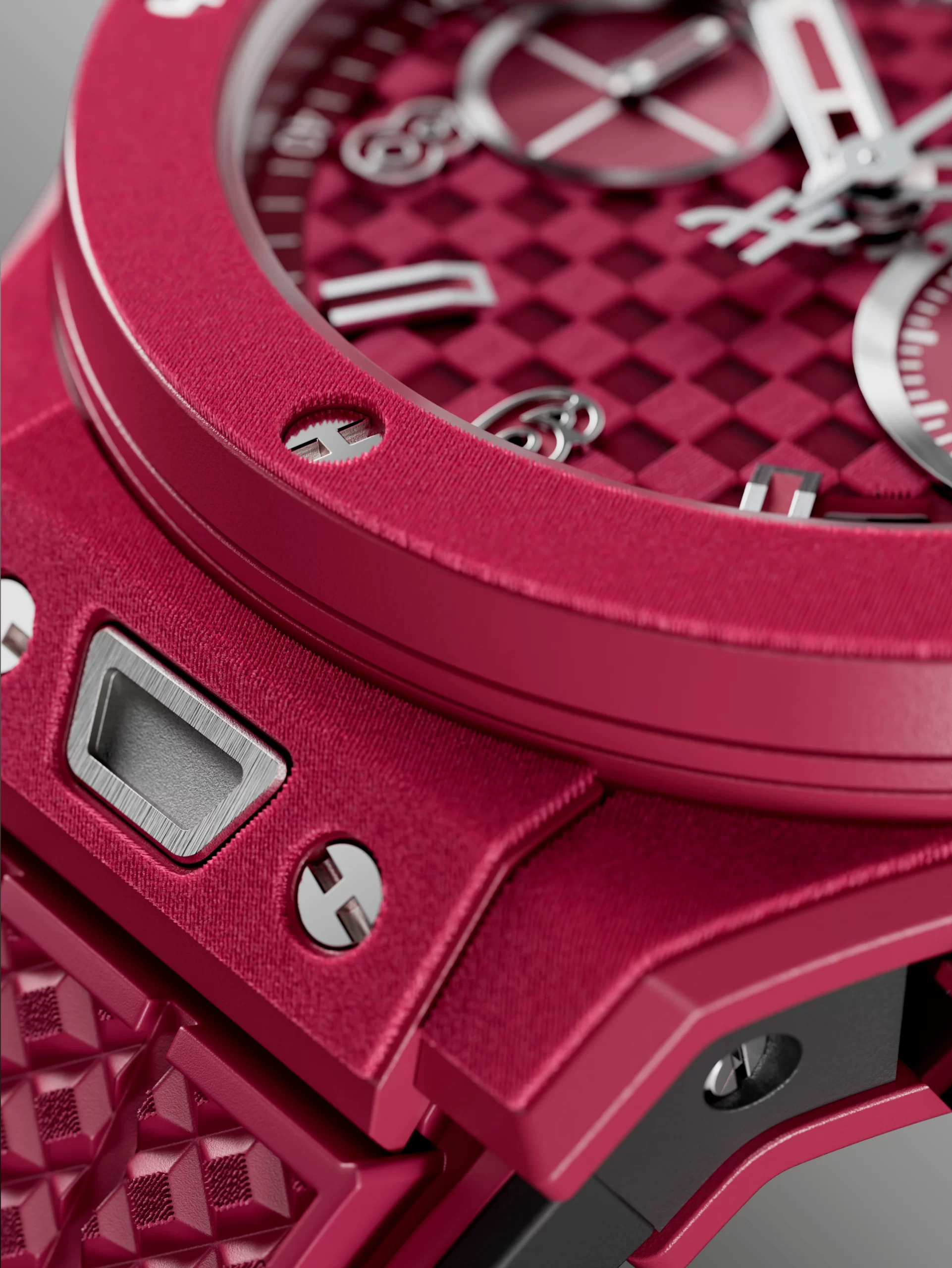
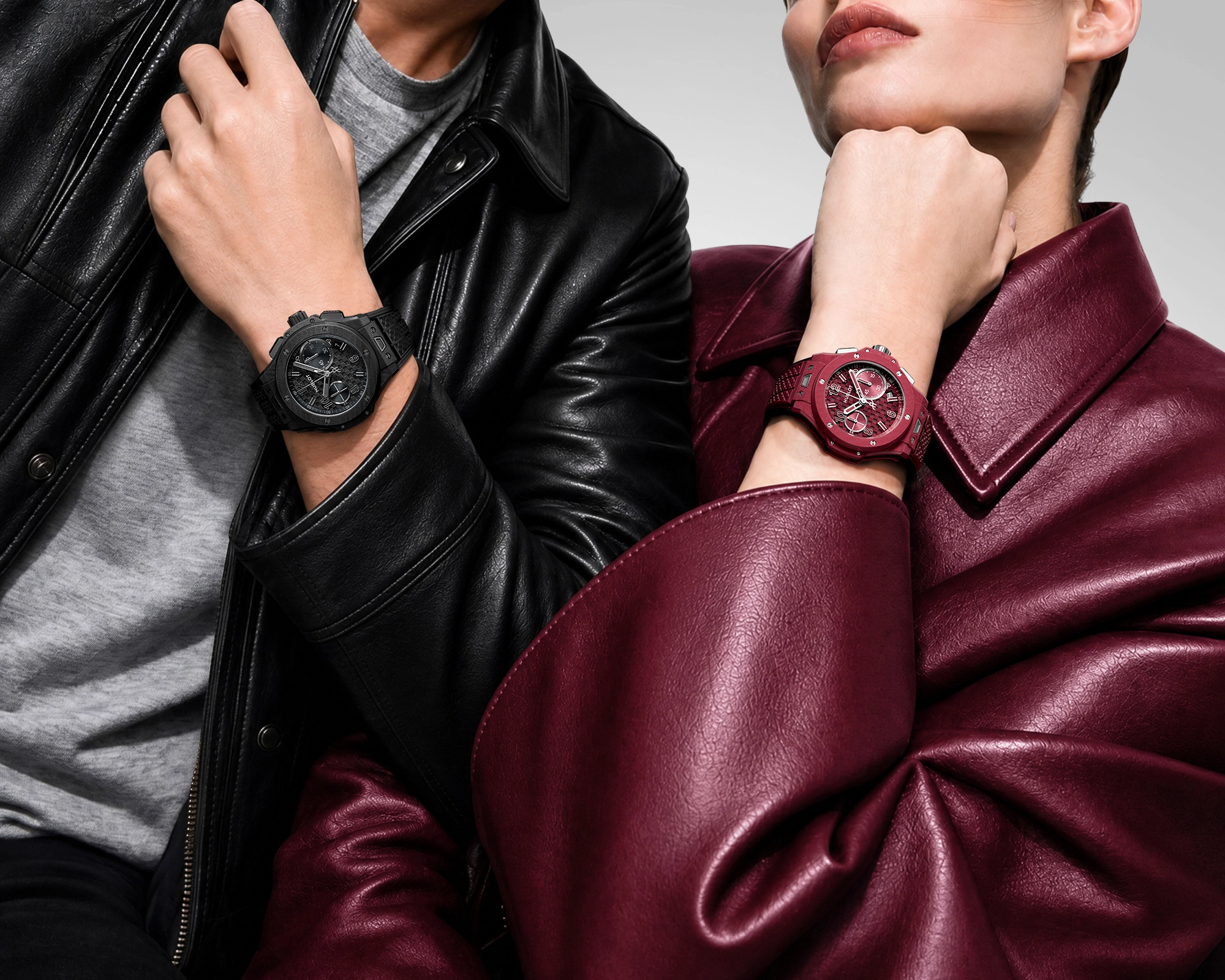
Hublot introduces the Big Bang Original Soft Touch, a new interpretation of its iconic Big Bang Original that brings a tactile dimension to the collection. Available in All Red and All Black, the new watches use an exclusive textured rubber compound across the case, bezel, dial and strap, creating a distinctive soft-touch surface. Hublot describes the material as neither a coating nor a surface treatment, but as a new approach to constructing the watch.

A New Sensory Expression of the Big Bang Original

The Big Bang Original Soft Touch remains rooted in the unmistakable design of the original Big Bang, introduced in 2005, while incorporating two decades of Hublot innovation. For the first time, the watch is designed not only to be seen, but also to be felt.

The defining feature is Hublot’s exclusive textured rubber compound. Developed using a dedicated overmoulding process, specially engineered tooling integrates the texture directly into the material during production. Its microscopic surface structure consists of thousands of fine micro-elements, creating a remarkably soft tactile finish while maintaining the durability and resistance associated with Hublot’s signature rubber.

The textured material extends across multiple elements of the watch, including the case, bezel, dial and strap. The result is a cohesive visual and tactile identity rather than a conventional surface treatment.

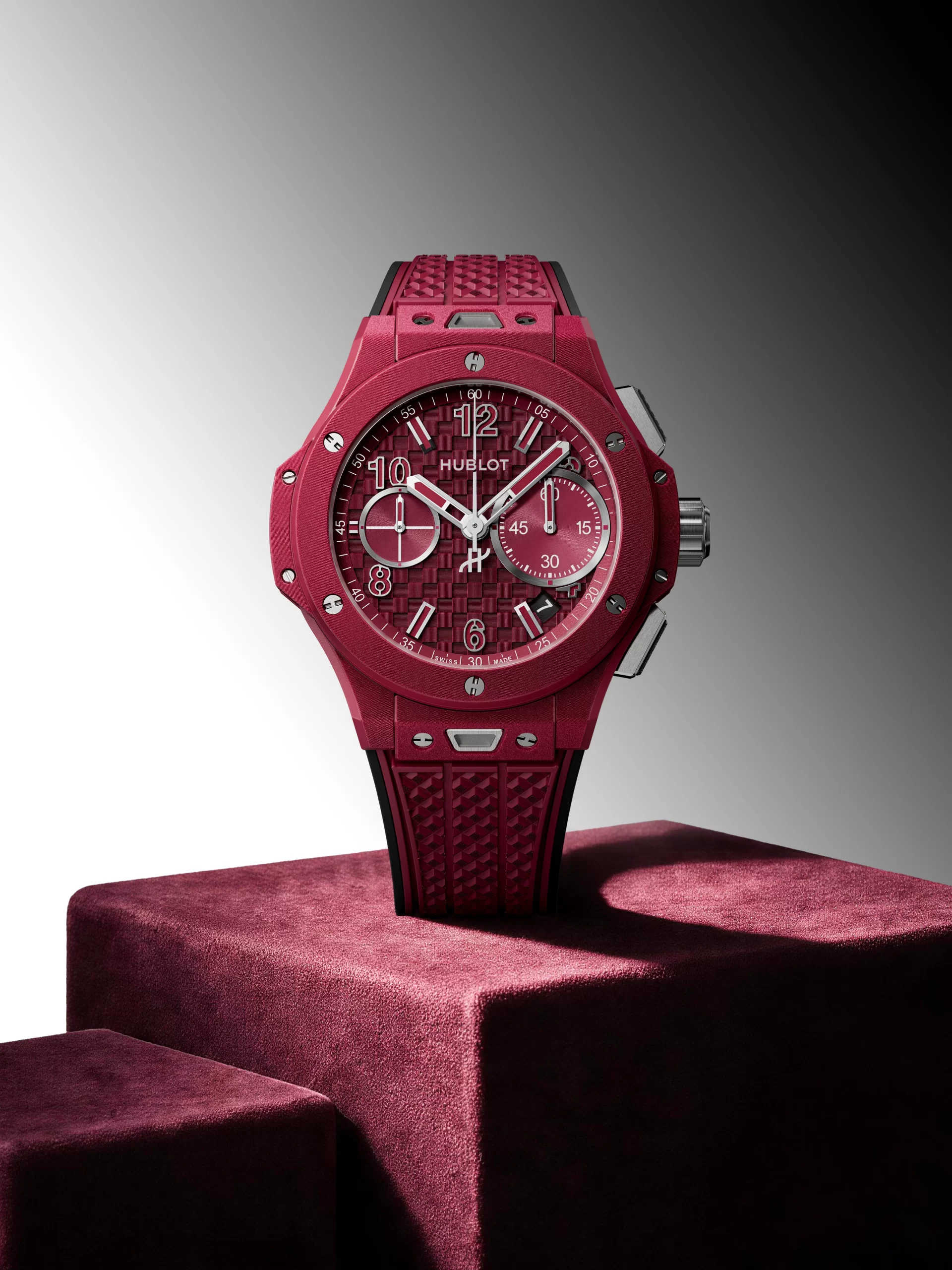
Big Bang Original Soft Touch All Red

The Big Bang Original Soft Touch All Red brings Hublot’s distinctive red aesthetic into this new tactile format. Hublot positions the model as a tribute to its material expertise, particularly its development of vividly coloured high-tech ceramic, introduced in 2018. The All Red Soft Touch instead creates its visual and tactile character through titanium combined with the exclusive soft-touch rubber.

The watch features a 43 mm titanium case overmoulded in red rubber with a velvet effect, with a matching red rubber dial with a velvet effect. The strap combines black rubber with red structured rubber with a velvet effect, and the watch is secured by a titanium deployant buckle clasp.

The official reference for the All Red model is 431.RXR.2770.RX.VEL. It has a water resistance rating of 100 metres / 10 ATM and uses a sapphire crystal with anti-reflective treatment.

Powered by the HUB1280 UNICO

Inside the Big Bang Original Soft Touch is Hublot’s HUB1280 UNICO Manufacture Self-winding Chronograph Flyback Movement with Column Wheel. The movement is developed entirely in-house and incorporates a column wheel, dual-clutch architecture, layered construction, an optimised gear train and a skeletonised tungsten rotor open-worked in the shape of an H.

The movement provides an approximately 72-hour power reserve. The HUB1280 UNICO has a thickness of 6.75 mm, a diameter of 30.00 mm, 354 components and 43 jewels, with a frequency of 4 Hz, or 28,800 vibrations per hour.

The 43 mm case combines the architecture of the original Big Bang with contemporary refinements, including bevelled edges, curved and smoother lugs, a rubber-clad crown and rectangular pushers with Hublot’s signature rubber inserts. The strap also incorporates Hublot’s One Click system for interchangeability.

All Black: A Monochromatic Classic Reimagined

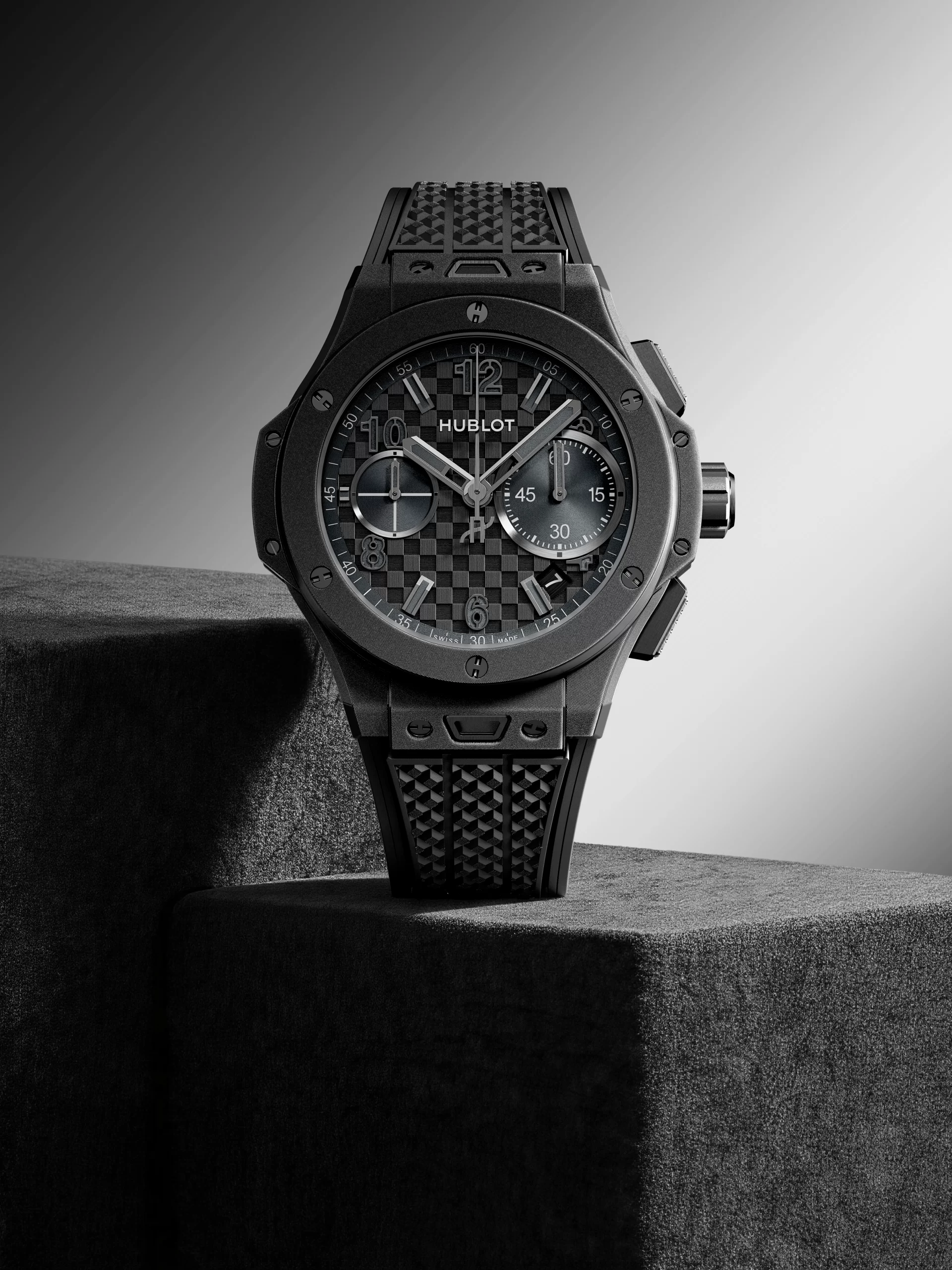
Alongside the All Red, Hublot introduces the Big Bang Original Soft Touch All Black. The model continues the history of Hublot’s All Black concept, which was introduced in 2006 as a monochromatic expression in which the absence of colour emphasised form, architecture and identity.

For the Soft Touch version, the monochromatic approach is combined with a deep black titanium case, black DLC-coated pushers and the new textured rubber construction. As with the All Red, the objective is not simply a change in colour, but a different sensory experience.

The All Black carries reference 431.RXN.2740.RX.VEL. It measures 43 mm in diameter and 13.2 mm in thickness, offers 100 metres / 10 ATM of water resistance and is powered by the HUB1280 UNICO Manufacture Self-winding Chronograph.

Material Innovation at the Hublot Manufacture

The Big Bang Original Soft Touch forms part of Hublot’s broader Art of Fusion approach to materials. The Manufacture has developed watches using materials including coloured ceramics, sapphire and Magic Gold, and the Soft Touch introduces another material-focused development centred on sensation as well as appearance.

The Big Bang Original Soft Touch is conceived, developed and assembled at the Hublot Manufacture in Nyon. Hublot also extends the tactile concept to the presentation case, which features a matching textured Hublot logo that echoes the surface of the watch’s soft-touch rubber.

The collection is available through selected Hublot points of sale and online.

Hublot Big Bang Original Soft Touch: Specifications

Specification All Red All Black
Reference 431.RXR.2770.RX.VEL 431.RXN.2740.RX.VEL
Case Titanium overmoulded in red rubber with velvet effect Titanium overmoulded in black rubber with velvet effect
Diameter 43 mm 43 mm
Thickness 13.2 mm 13.2 mm
Water resistance 100 m / 10 ATM 100 m / 10 ATM
Movement HUB1280 UNICO Manufacture Self-winding Chronograph Flyback HUB1280 UNICO Manufacture Self-winding Chronograph
Power reserve Approx. 72 hours 72 hours
Dial Red rubber with velvet effect Black rubber with velvet effect
Strap Black rubber and red structured rubber with velvet effect Black structured rubber with velvet effect

Conclusion

With the Big Bang Original Soft Touch, Hublot takes one of its most recognisable designs into a new sensory territory. The combination of the Big Bang’s established architecture, an exclusive textured rubber compound and the in-house HUB1280 UNICO movement gives the new collection a distinct identity centred on material innovation.

The All Red and All Black versions express the same concept through two of Hublot’s strongest colour signatures: one vivid and expressive, the other deliberately monochromatic. In both cases, the defining idea is simple: material innovation that can be seen, and felt.