Hublot MP-14 Origin by Jeff Koons: A Mechanical Universe

Hublot and Jeff Koons have turned the idea of creation into a mechanical work of art with the new MP-14 Origin by Jeff Koons. Unveiled in New York on 16 September 2026, the timepiece brings together sapphire architecture, gem-setting, contemporary art and Hublot’s high-horology expertise in an exceptionally complex 44 mm creation limited to just 30 pieces.

Rather than simply decorating a watch with artistic references, the collaboration attempts something considerably more ambitious: to make the watch itself behave like a miniature universe, with a central tourbillon acting as its mechanical point of origin and concentric rings appearing to expand around it.

A collaboration built around transformation

The partnership between Hublot and Jeff Koons brings together two creative disciplines that share an interest in transforming familiar ideas into something unexpected. Alongside the MP-14 Origin, the collaboration also introduces the Classic Fusion Balloon Dog, connecting Koons’ artistic vocabulary with Hublot’s watchmaking.

For the MP-14 Origin, that philosophy is expressed through an architecture combining sapphire, titanium and gem-set white gold. The result sits at the intersection of high jewellery and high watchmaking, while its visual concept is rooted in the creation and expansion of the cosmos.

The watch also represents an important technical development for Hublot: the introduction of the manufacture’s first automatic central tourbillon.

Why “MP-14”?

The name MP-14 is not simply a sequential designation. According to Hublot, the number 14 references an important moment in Jeff Koons’ early artistic career.

Koons held his first solo exhibition in 1980 at the New Museum in New York, which was then located at 65 Fifth Avenue at 14th Street. Hublot connects this address with the MP-14 name, making the number part of the artistic story behind the watch.

The MP-14 also belongs to Hublot’s Exceptional Timepieces collection, the brand’s experimental high-horology laboratory dedicated to unconventional architectures, advanced materials and radical mechanical concepts.

A miniature universe constructed in sapphire

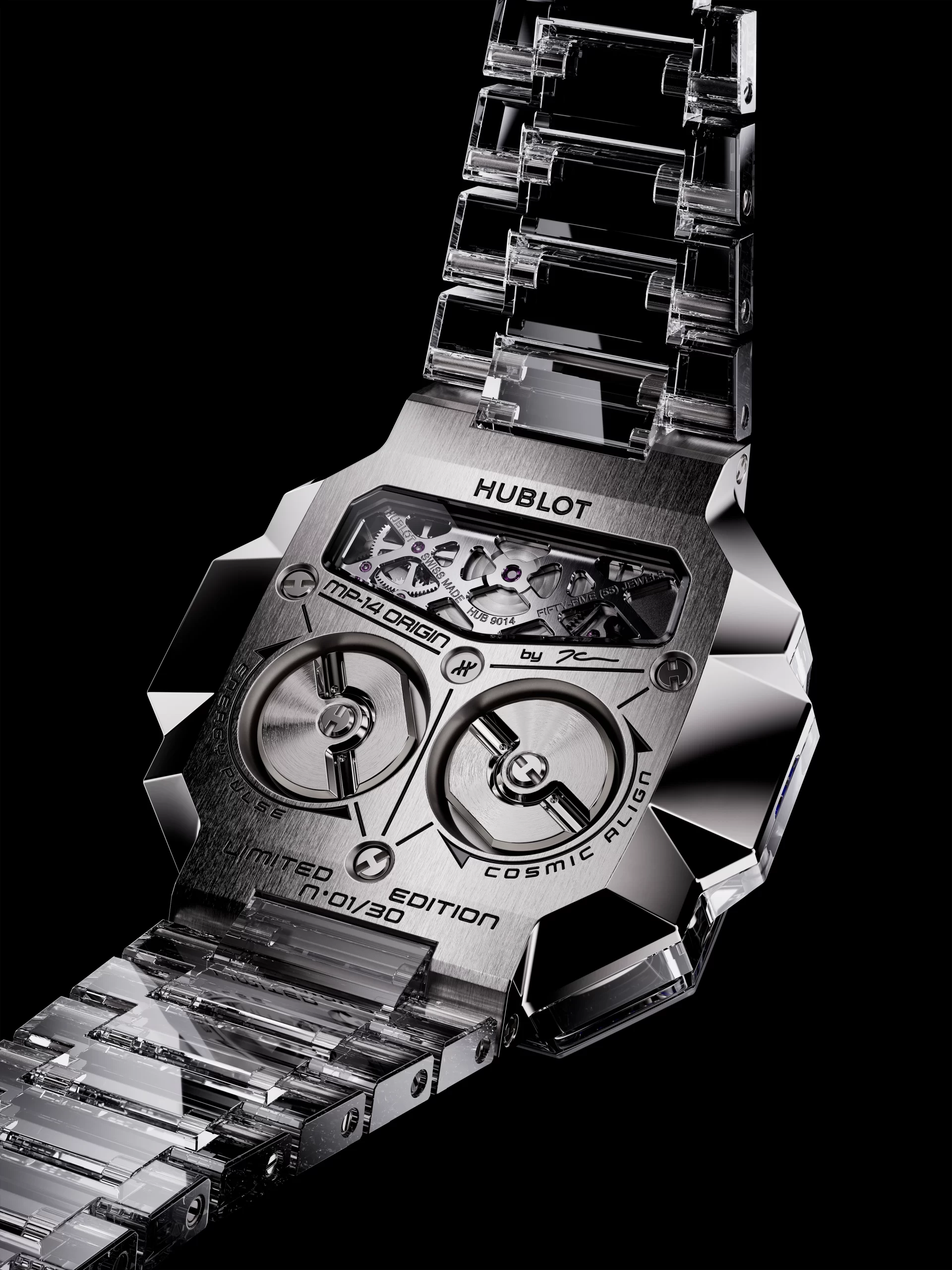
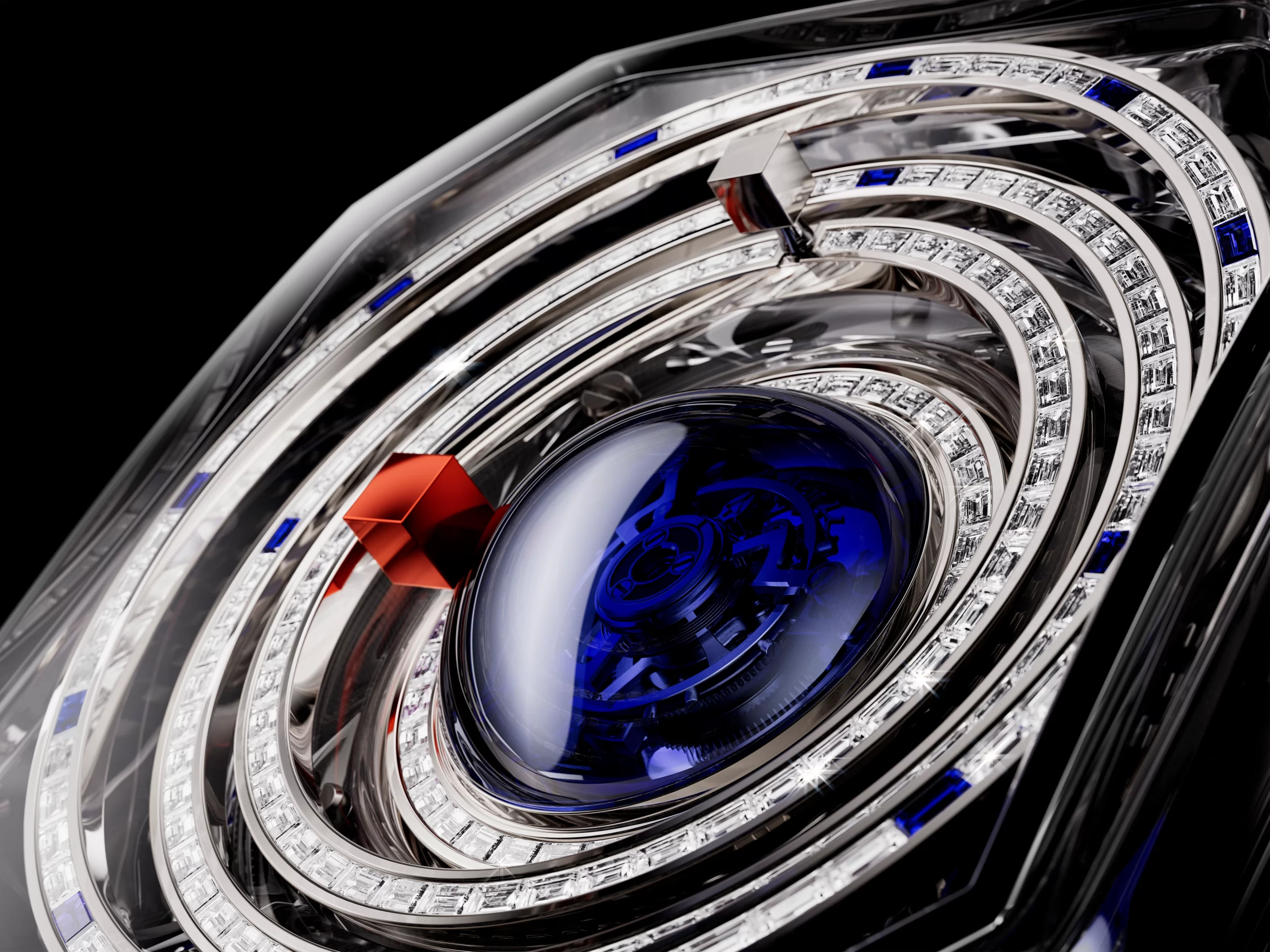
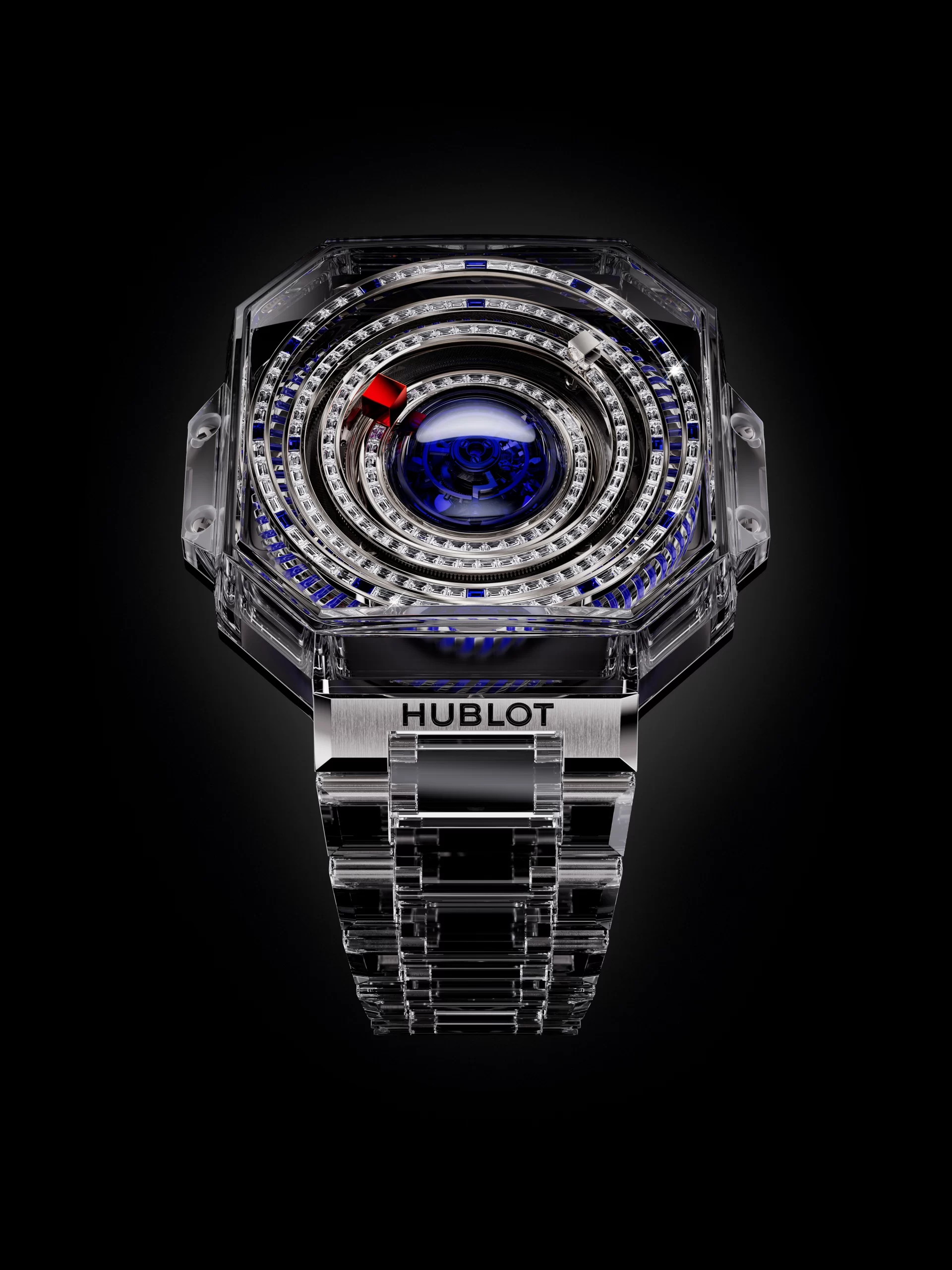
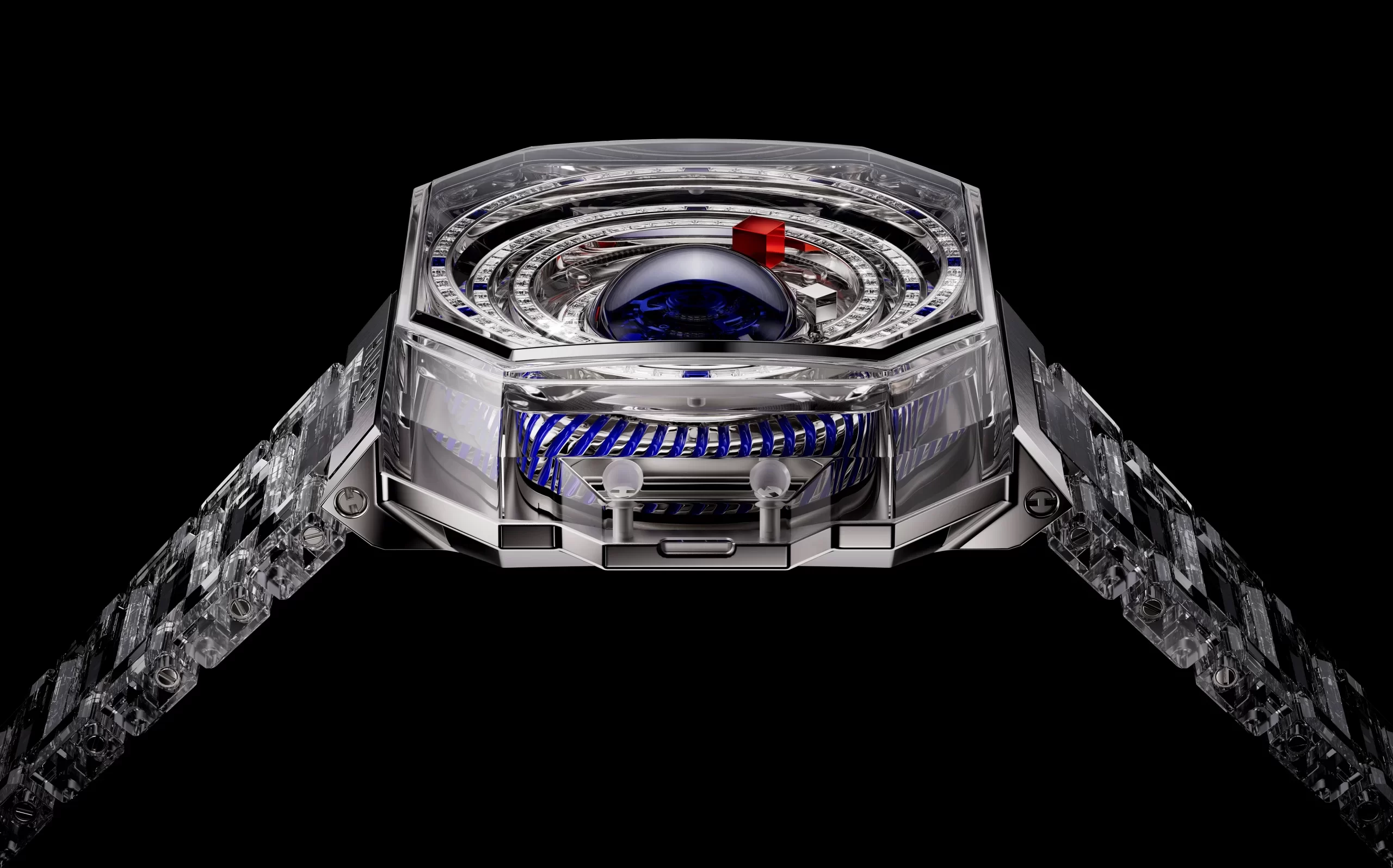
The MP-14 Origin measures 44 mm and uses an octagonal case made from polished sapphire crystal and titanium. Its transparent sapphire structure is central to the design rather than merely a material choice.

According to Hublot, machining the sapphire case requires approximately 534 hours. A titanium case back, H-shaped polished titanium screws and Hublot’s characteristic case “ears” at 3 and 9 o’clock complete the architecture.

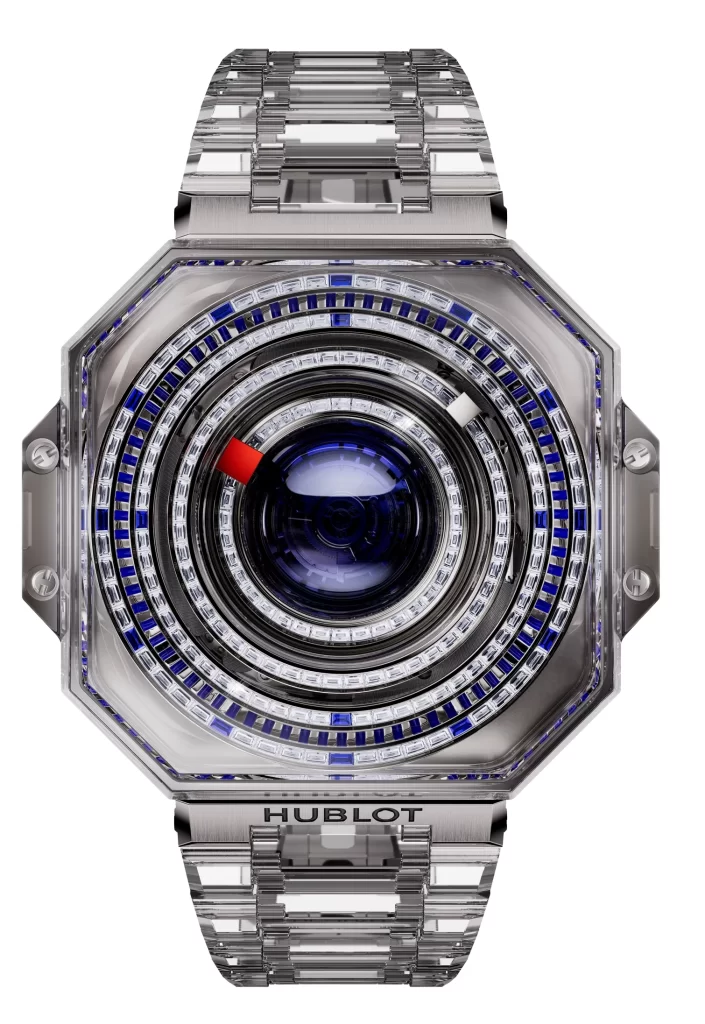
Inside, the transparent construction reveals a series of concentric rings that create the impression of orbital movement. The rings are crafted in white gold and set with baguette-cut diamonds and blue sapphires, gradually directing the eye towards the centre of the watch.

At that centre sits the tourbillon, positioned beneath a transparent sapphire dome. The dome takes inspiration from Jeff Koons’ Gazing Ball works and is hand-coated in translucent blue varnish by a micropainter.

It is a clever visual metaphor. Instead of representing the universe through a conventional celestial dial, Hublot places mechanical motion at the heart of the composition.

Time appears to orbit the movement

The MP-14 Origin takes an unconventional approach to displaying the hours and minutes.

Two suspended rotating rings carry floating indicator cubes. The hour indicator is a polished stainless-steel cube finished with translucent red varnish, while the minute indicator is represented by a polished grey stainless-steel cube.

Two additional rings remain fixed. Blue sapphires mark the quarters on the minute ring, while the hour ring uses blue sapphires to indicate the hours. Collectively, the four rings contain 202 gemstones, representing approximately 2.6 carats.

The result is a time display that deliberately avoids the familiar arrangement of hands moving around a stationary dial. Here, the indicators appear suspended within a layered mechanical environment.

The HUB9014: the mechanical heart

Driving this unusual architecture is Hublot’s HUB9014 manufacture movement.

It is an automatic central tourbillon equipped with a peripheral oscillating weight, operating at 3 Hz, or 21,600 vibrations per hour, with a 60-hour power reserve. The movement contains 594 components.

The peripheral winding system is particularly important to the design. By moving the oscillating mass away from the traditional central position, Hublot can preserve the open appearance of the movement while maintaining the visual continuity of the architecture.

The tourbillon cage sits beneath the sapphire dome, becoming the visual and mechanical centre of the watch. In the context of the Koons collaboration, Hublot describes this as the first pulse from which the surrounding structure appears to expand.
Even the winding system disappears into the architecture

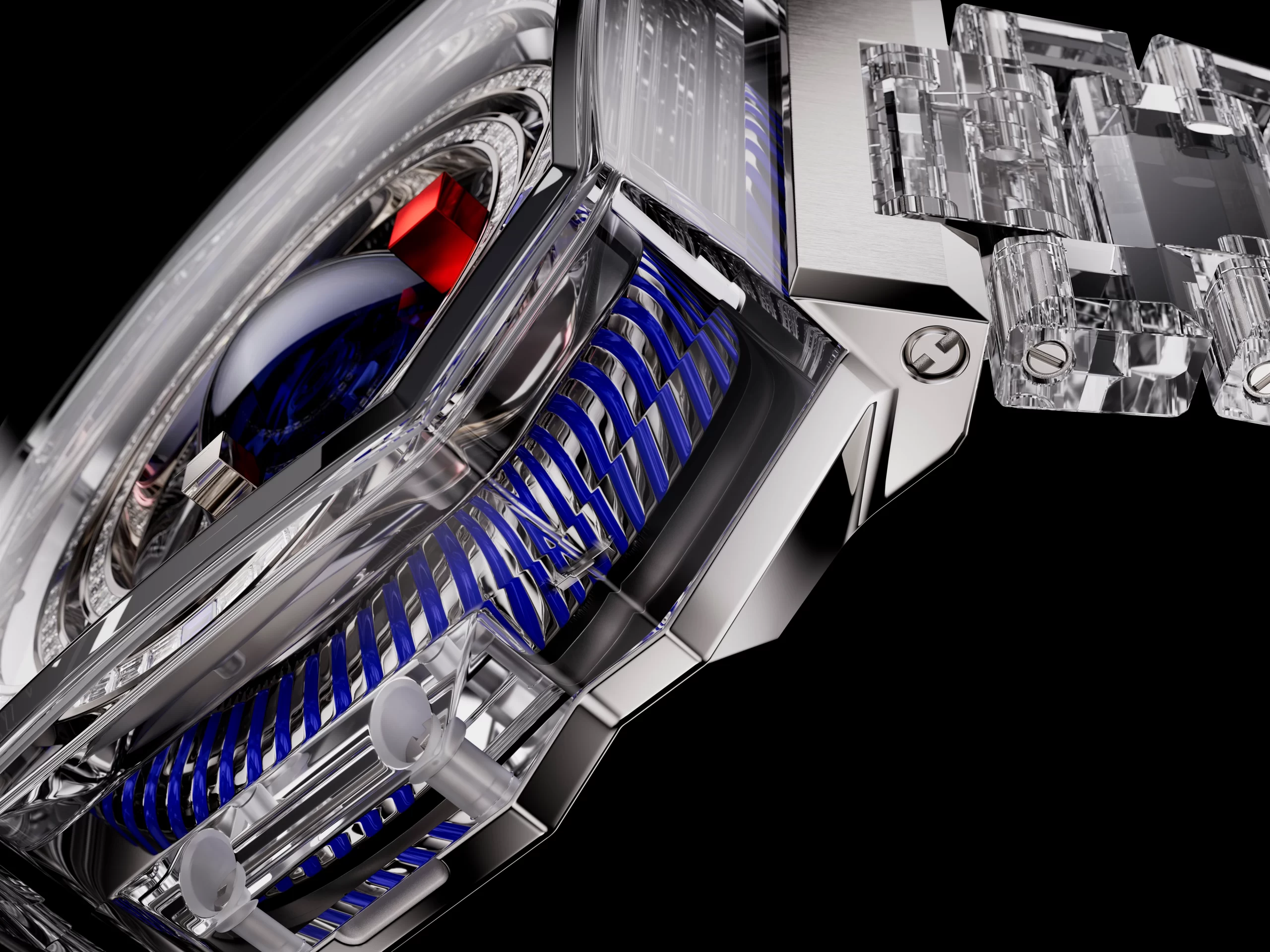
The MP-14 Origin takes its unusual construction a step further by concealing the functions normally associated with the crown.

Two hidden crown systems are integrated into the case, allowing the wearer to wind the watch and adjust the time without interrupting its clean architectural appearance.

The winding function is associated with the engraving “ENERGY PULSE”, while the time-setting function is marked “COSMIC ALIGN.”

It is the sort of detail that makes the watch less like a conventional timepiece and more like an engineered object whose functions have been absorbed into its design.

From watch to immersive presentation

Hublot extends the cosmic concept beyond the watch itself.

The presentation case uses an infinite mirror installation, incorporating LED illumination and one-way mirror technology to create an impression of limitless depth. Its octagonal geometry echoes the shape of the watch and is topped by a transparent dome, effectively turning the presentation environment into an extension of the timepiece’s architecture.

This matters because the MP-14 Origin is designed to be experienced as more than an object on the wrist. Its visual language continues from the sapphire case to the presentation environment, reinforcing the central idea of an expanding mechanical cosmos.

Jeff Koons’ interpretation of creation

For Koons, the MP-14 Origin represents a horological interpretation of creation itself, centred on the transformation of energy into form and form into time.

The central tourbillon becomes the starting point, while the surrounding mechanical structures suggest controlled expansion. Hublot’s press material specifically connects the concept to the Big Bang, translating that idea through mechanical movement, material tension and the interaction of light with the watch’s transparent architecture.

The concept is therefore not simply about putting a cosmic image on a dial. The movement, case, gemstones and rotating indicators all participate in the same visual narrative.

Technical specifications

Specification: Hublot MP-14 Origin by Jeff Koons
Reference: 914.NJ.0100.JX.9941
Edition: Limited to 30 pieces
Case: Polished sapphire crystal and titanium
Case size: 44 mm
Thickness: 20 mm
Water resistance: 3 ATM / 30 m
Winding system: Peripheral oscillating weight
Movement diameter: 39.20 mm
Movement thickness:14.65 mm
Components: 594
Jewels : 55
Frequency: 3 Hz / 21,600 A/h
Power reserve: 60 hours
Gem-setting: Baguette-cut diamonds and blue sapphires
Gemstone total: 202 stones / approximately 2.6 carats
Crystal: Sapphire
Case back: Polished and satin-finished titanium
Strap: Sapphire crystal and titanium deployant buckle


A 30-piece expression of experimental watchmaking

The Hublot MP-14 Origin by Jeff Koons is limited to just 30 pieces and is available through selected Hublot points of sale. The press release lists pricing at CHF 405,000, EUR 479,000, USD 488,000 and GBP 383,000.

At its most interesting, however, the MP-14 Origin is not about rarity or price. Its significance lies in how Hublot has attempted to make mechanical watchmaking itself tell the story.

The central tourbillon becomes the point of origin. The sapphire case provides the space. The gemstone-set rings create the impression of orbital structures. Floating cubes indicate the passage of hours and minutes. Even the winding and time-setting systems have been absorbed into the architecture.

In that sense, the MP-14 Origin does not simply depict a universe.

It builds one around the mechanism that makes the watch come alive.
 

Hublot Big Bang Summer 2026: Pastel Ceramic Innovation Meets Swiss Watchmaking

Most luxury watch launches follow a familiar formula. New dial colour. Slight case update. A movement you’ve probably seen before.

The Hublot Big Bang Summer 2026 collection takes a different approach.

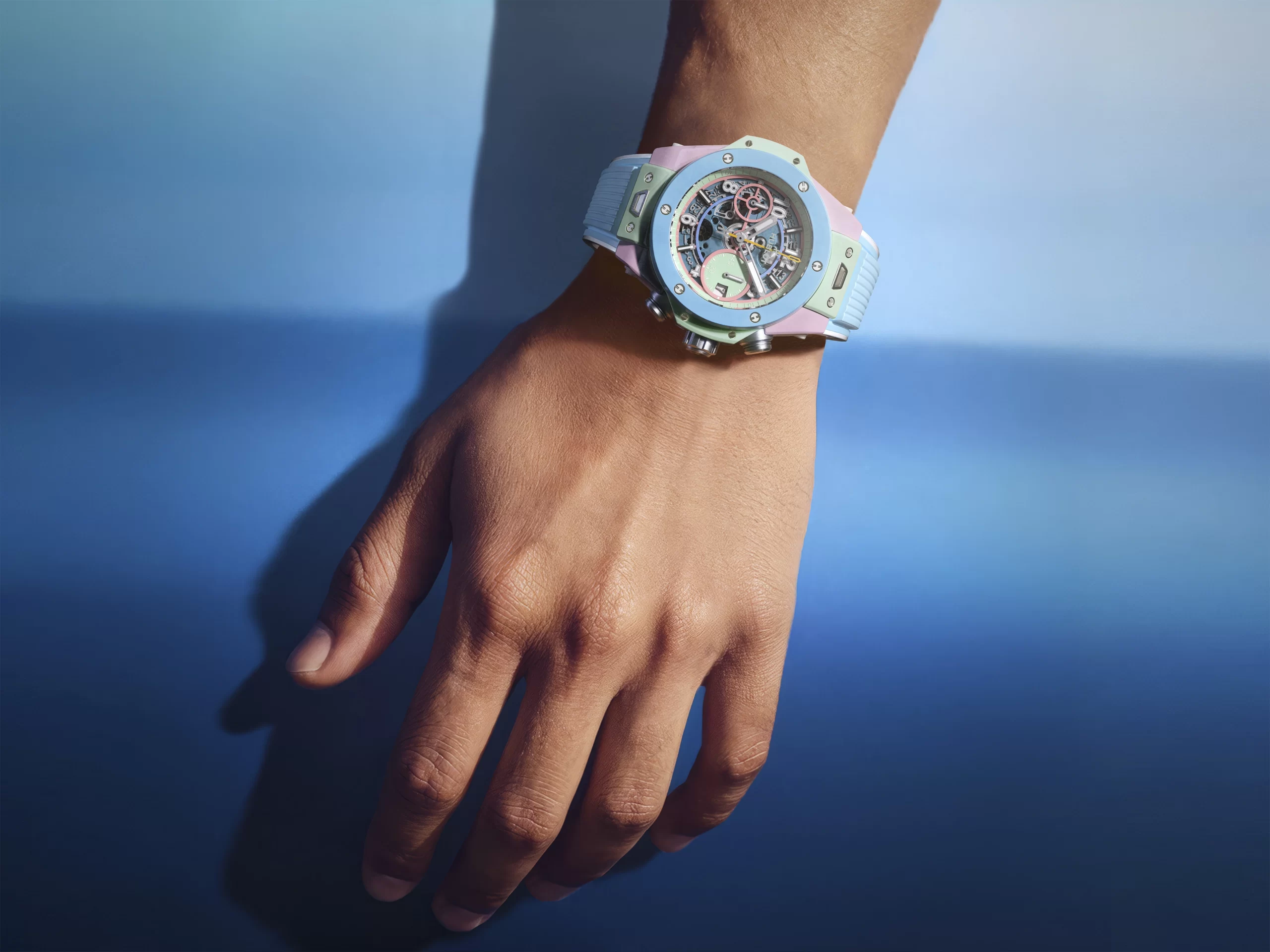
Inspired by the colours of the Mediterranean, Hublot’s latest seasonal release combines mint green, pink and sky blue ceramic in a bold expression of the brand’s expertise in materials innovation. At first glance, the collection feels playful and relaxed. Look closer, however, and you’ll find manufacture chronograph and tourbillon movements that showcase the technical side of modern Hublot watchmaking.

For a brand that has made summer part of its identity since 2017, the 2026 collection continues a tradition of turning seasonal inspiration into something genuinely distinctive.

A Celebration of Colour and Ceramic Innovation

At the heart of the Big Bang Summer 2026 collection is Hublot’s mastery of coloured ceramic.

The brand notes that since 2018 it has continuously expanded its palette of high-tech coloured ceramics, developing proprietary processes that allow vibrant colours to maintain durability, scratch resistance and long-term stability. According to Hublot, its ceramic is up to 300 Vickers harder than traditional ceramic while retaining exceptional resistance to everyday wear.

This expertise is on full display in the new Big Bang Summer models, where pink, mint green and sky blue ceramic components come together in a single case design inspired by Mediterranean landscapes, from soft sunrise tones to colourful seaside sunsets.

Big Bang Summer Multi-Colored Ceramic 42mm

Leading the collection is the Big Bang Summer Multi-Colored Ceramic 42mm, produced in a limited edition of 200 pieces worldwide.

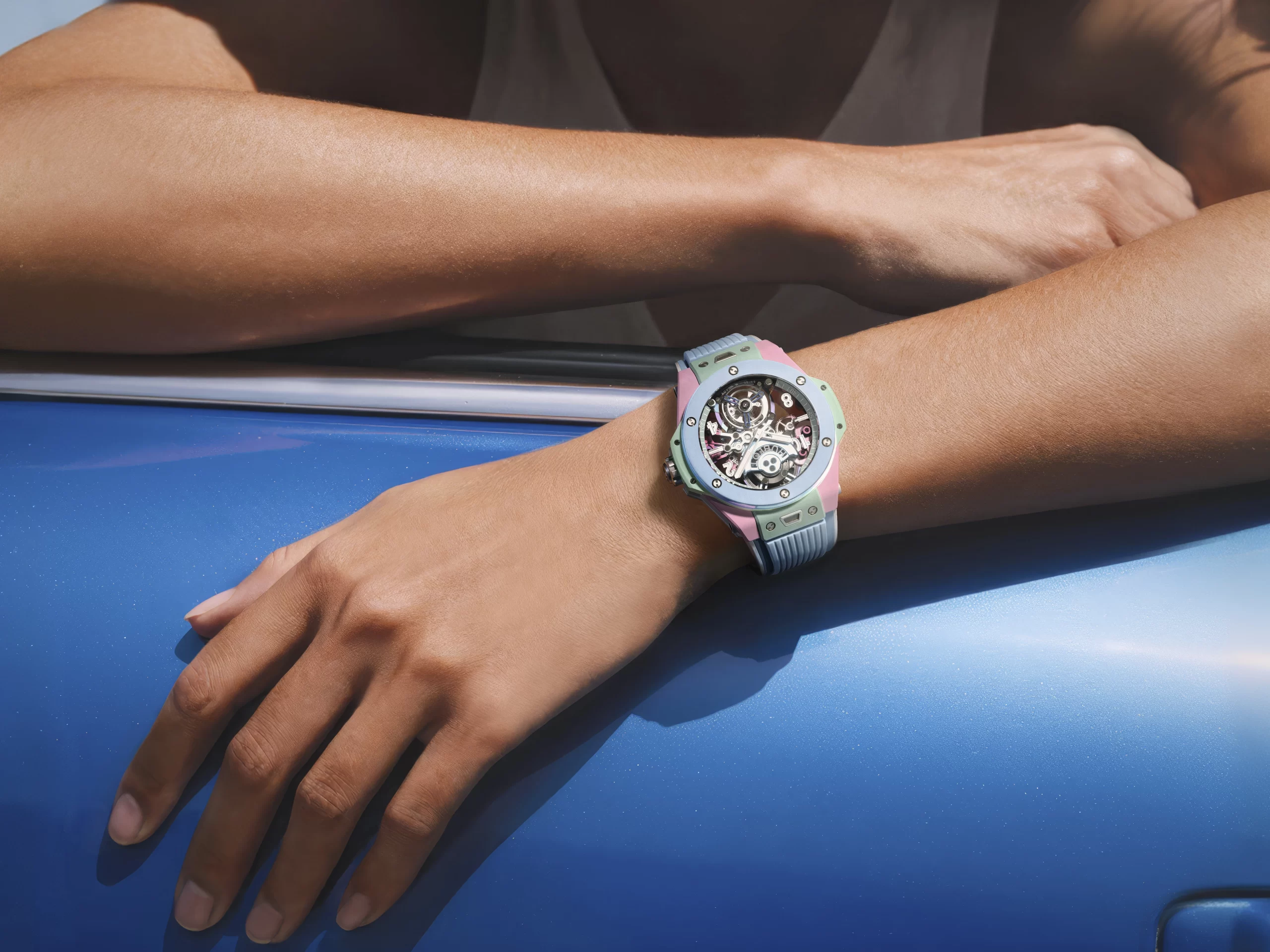
The watch features a case crafted from microblasted and polished pink and mint green ceramic, paired with a sky-blue ceramic bezel and matching caseback. The dial continues the colour theme with matte pink and mint green tones that echo the soft palette of the Mediterranean summer.

Powering the watch is Hublot’s manufacture HUB1280 Unico self-winding flyback chronograph movement with column wheel architecture. The calibre operates at 28,800 vibrations per hour and delivers approximately 72 hours of power reserve.

Each watch is supplied with interchangeable rubber straps in sky blue, mint green and pink, allowing owners to quickly change the look of the watch using Hublot’s One-Click strap system.

Big Bang Summer Multi-Colored Ceramic 44mm Tourbillon

For collectors seeking greater exclusivity, Hublot has created the Big Bang Summer Multi-Colored Ceramic 44mm Tourbillon, limited to just 10 pieces worldwide.

While it shares the same pastel ceramic colour palette as the chronograph model, this version adopts a more architectural appearance thanks to a transparent pink sapphire crystal dial that reveals the movement beneath. The transparency creates an impressive sense of depth while allowing the mechanical details to take centre stage.

The watch is powered by the manufacture HUB6035 automatic tourbillon movement. Visible through the sapphire architecture is a micro-rotor designed to optimise energy efficiency, while the movement provides approximately 72 hours of power reserve.

Like its chronograph counterpart, the Tourbillon is delivered with three interchangeable rubber straps in matching summer colours.

New Monochrome Ceramic Colours Join the Big Bang Collection

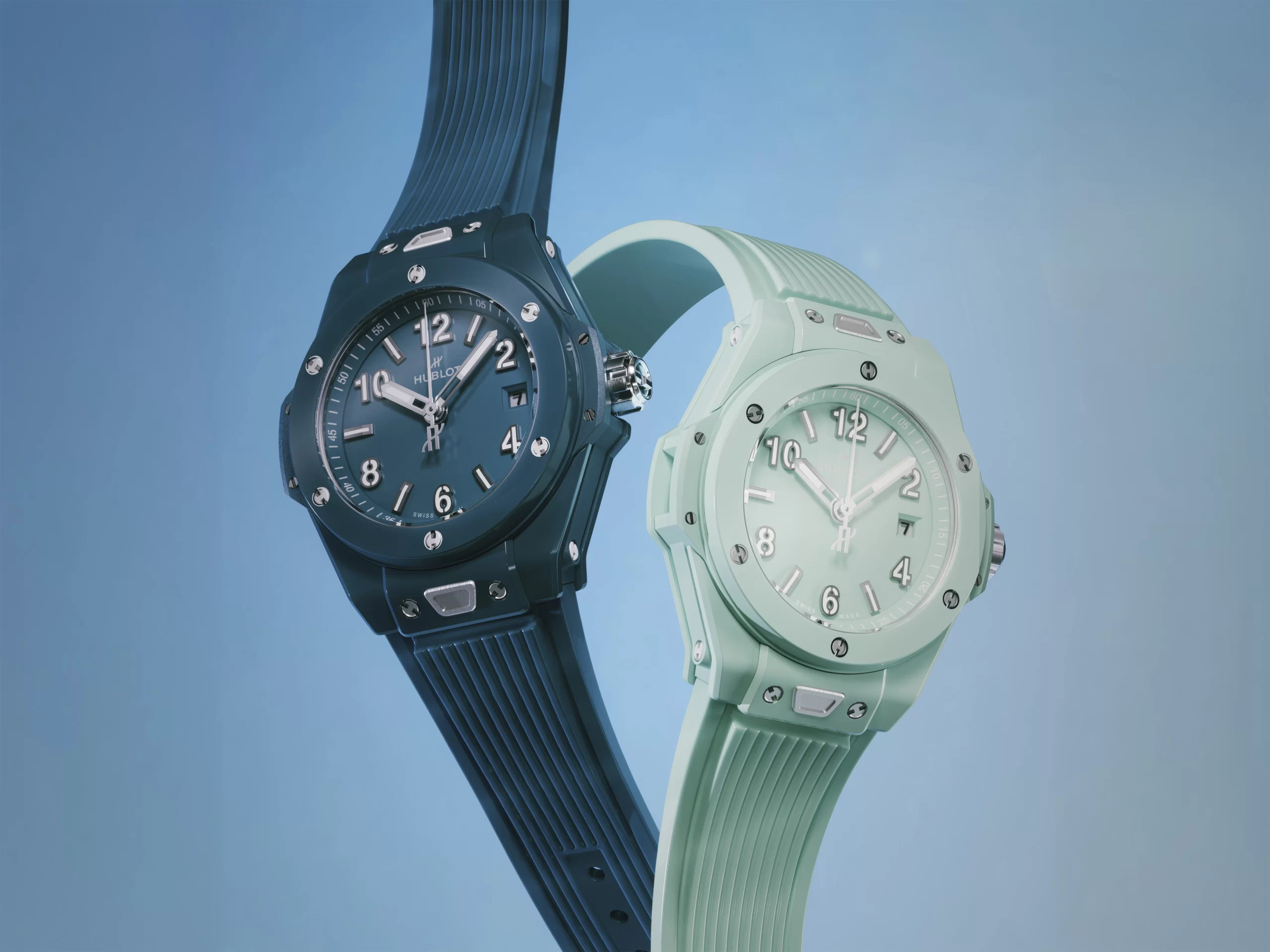
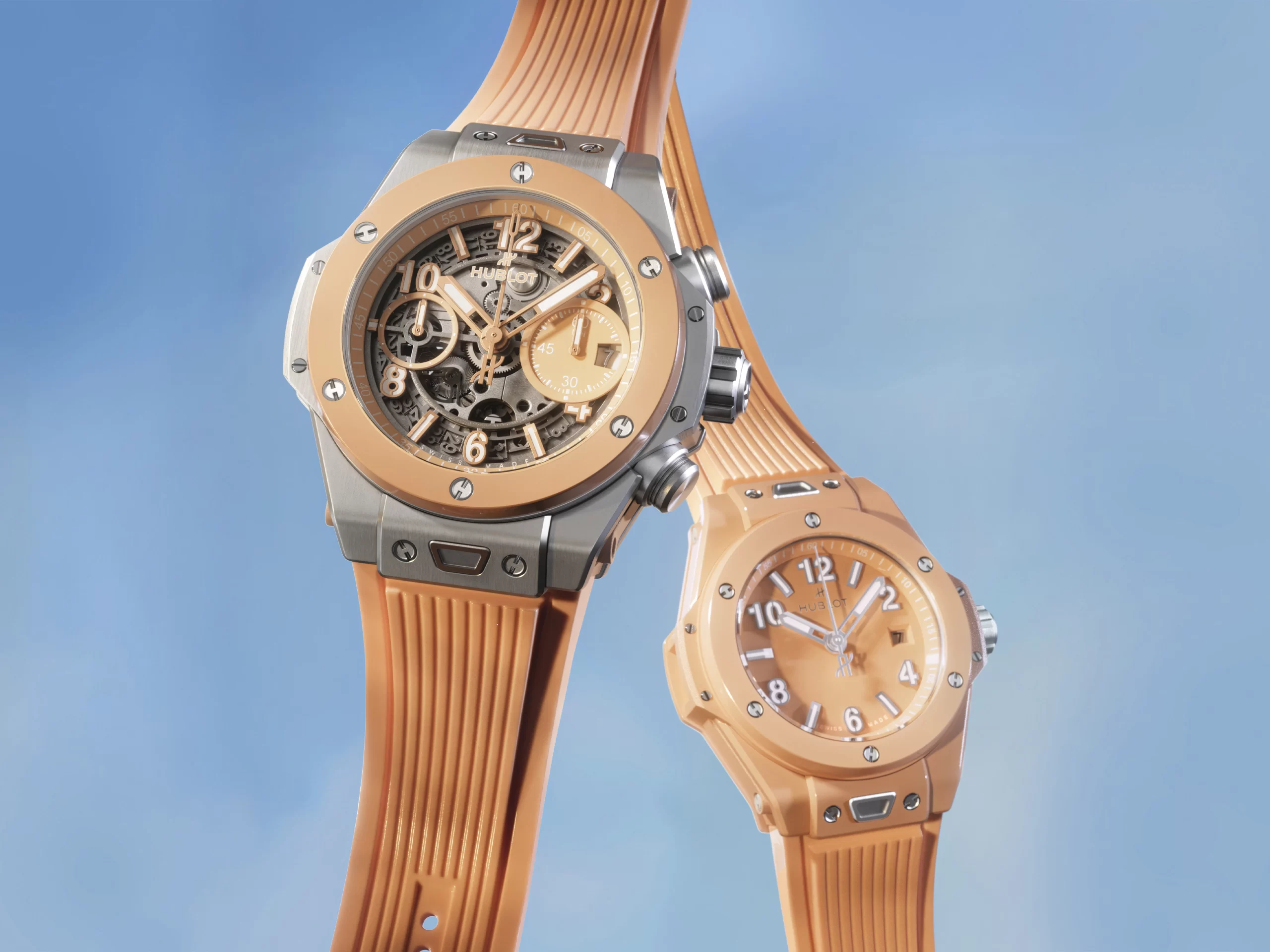
Alongside the limited-edition Summer models, Hublot has expanded the Big Bang collection with new monochrome ceramic references in Peach, Mint Green and Petrol Blue.

These watches present a softer expression of Hublot’s ceramic expertise while maintaining the bold character that has defined the Big Bang since its introduction.

A particularly notable addition is the 33mm Big Bang collection. For the first time in the history of the Big Bang, the 33mm model is offered without diamonds, allowing the monochromatic ceramic design to become the focal point. The watches are powered by the self-winding HUB1120 movement and are available in Peach, Mint Green and Petrol Blue ceramic.

Big Bang Titanium Peach Ceramic 42mm

Completing the line-up is the Big Bang Titanium Peach Ceramic 42mm.

Combining a satin-finished and polished titanium case with a polished peach ceramic bezel, the watch is powered by the manufacture HUB1280 Unico flyback chronograph movement. The peach theme extends across the skeletonised dial and structured rubber strap, creating a cohesive design while retaining the technical appeal associated with the Big Bang collection.

The watch offers approximately 72 hours of power reserve and 100 metres of water resistance.

Final Thoughts

The Hublot Big Bang Summer 2026 collection demonstrates the brand’s continued commitment to combining innovative materials with contemporary watchmaking.

While the vibrant pastel colours immediately capture attention, the collection is supported by manufacture chronograph and tourbillon movements, advanced ceramic technology and Hublot’s signature approach to design.

From the limited-edition multi-coloured ceramic models to the new monochrome Peach, Mint Green and Petrol Blue references, the collection offers a fresh interpretation of summer through the lens of modern Swiss watchmaking.

In a year filled with new luxury watch launches, the Big Bang Summer 2026 collection stands out not only for its colour palette, but also for the technical expertise that lies beneath it.

Rolex Oyster Perpetual 36: Colour, Done the Rolex Way

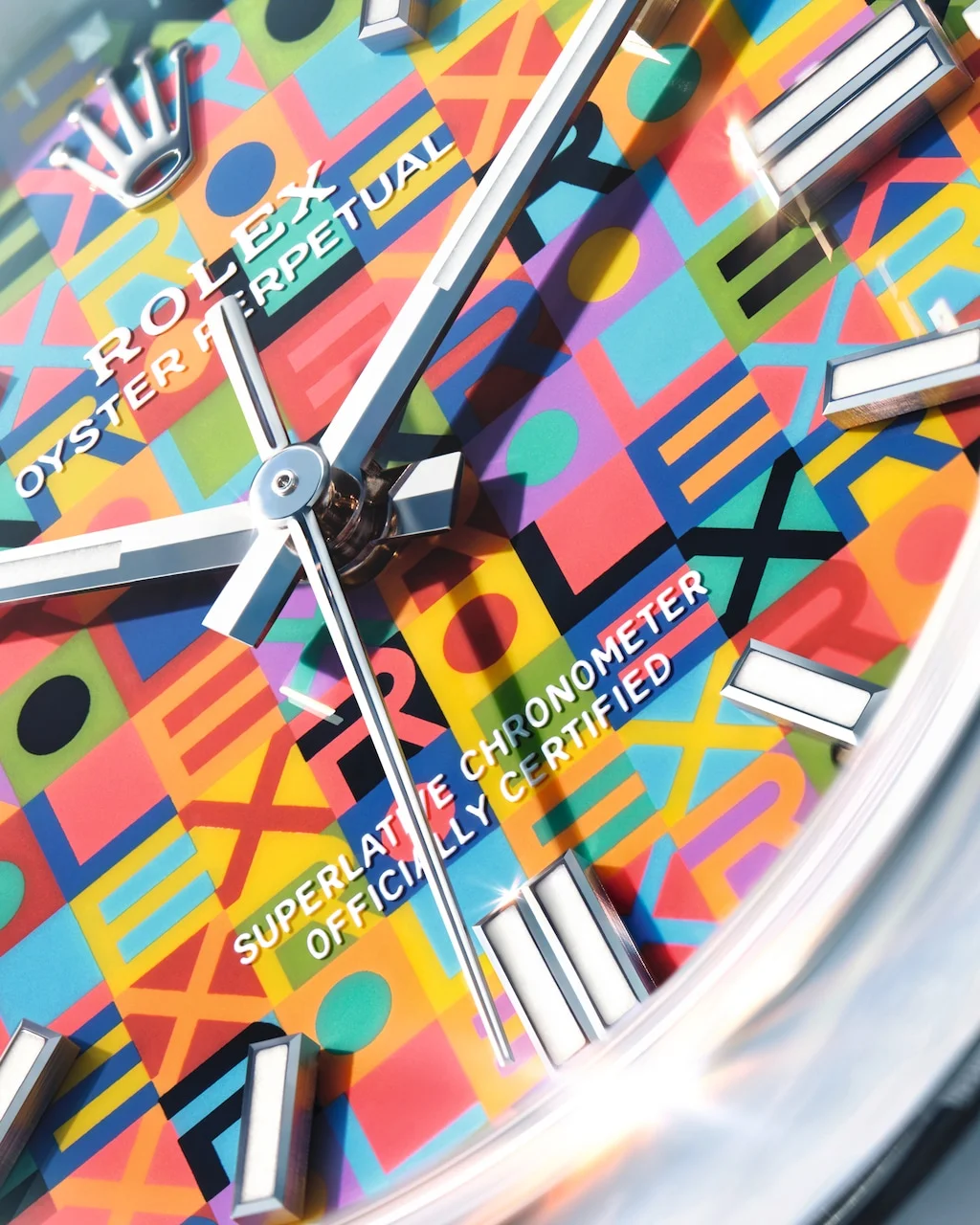
Rolex doesn’t usually play with colour like this.
And when it does, it’s never casual.

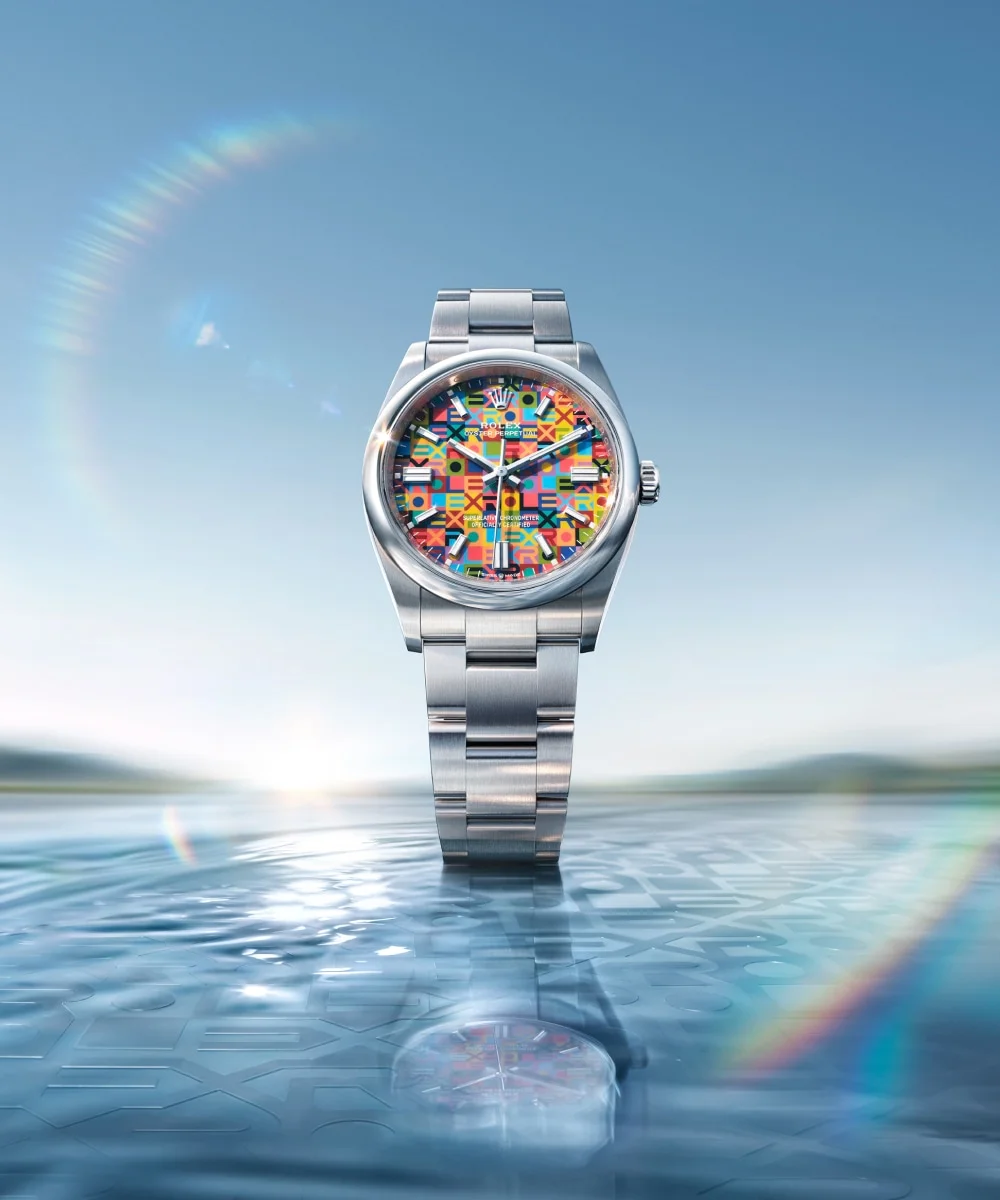
The new Rolex Oyster Perpetual 36 looks playful at first glance—but give it a moment, and it settles into something far more familiar.

This is still Rolex. Just… confidently more vibrant.

The POV

There’s a fine line between expressive and excessive. Most brands either cross it—or avoid it entirely.

Rolex walks it.

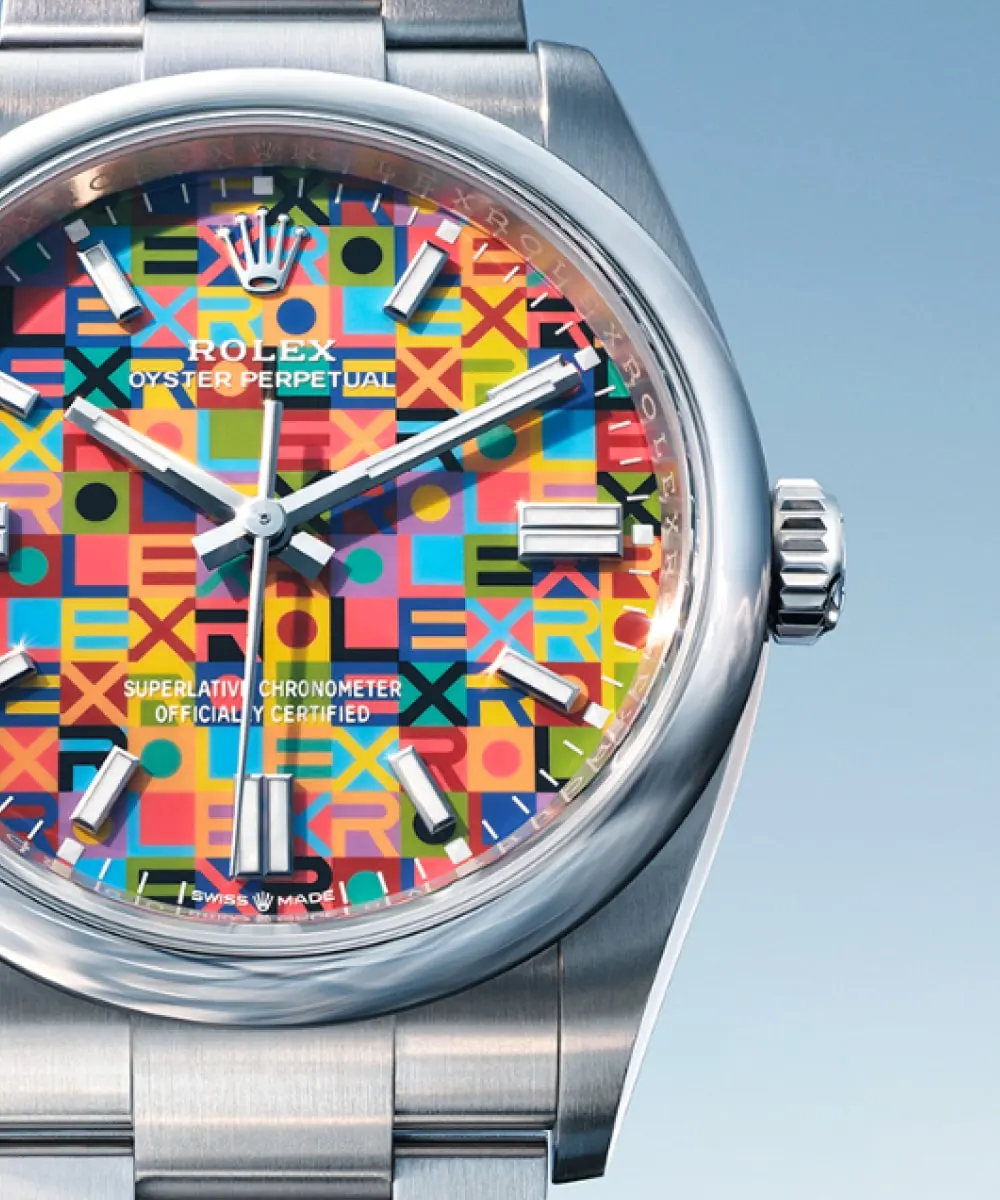
A multicolour dial. Repeated lettering. A motif that immediately draws the eye. On paper, this should feel like too much.

It doesn’t.

Because nothing here is random. The colours are measured. The layout is controlled. Even the repetition of the Rolex name feels structured rather than loud.

This isn’t Rolex chasing attention.
It’s Rolex exploring just how far it can go—without losing its identity.

What’s New

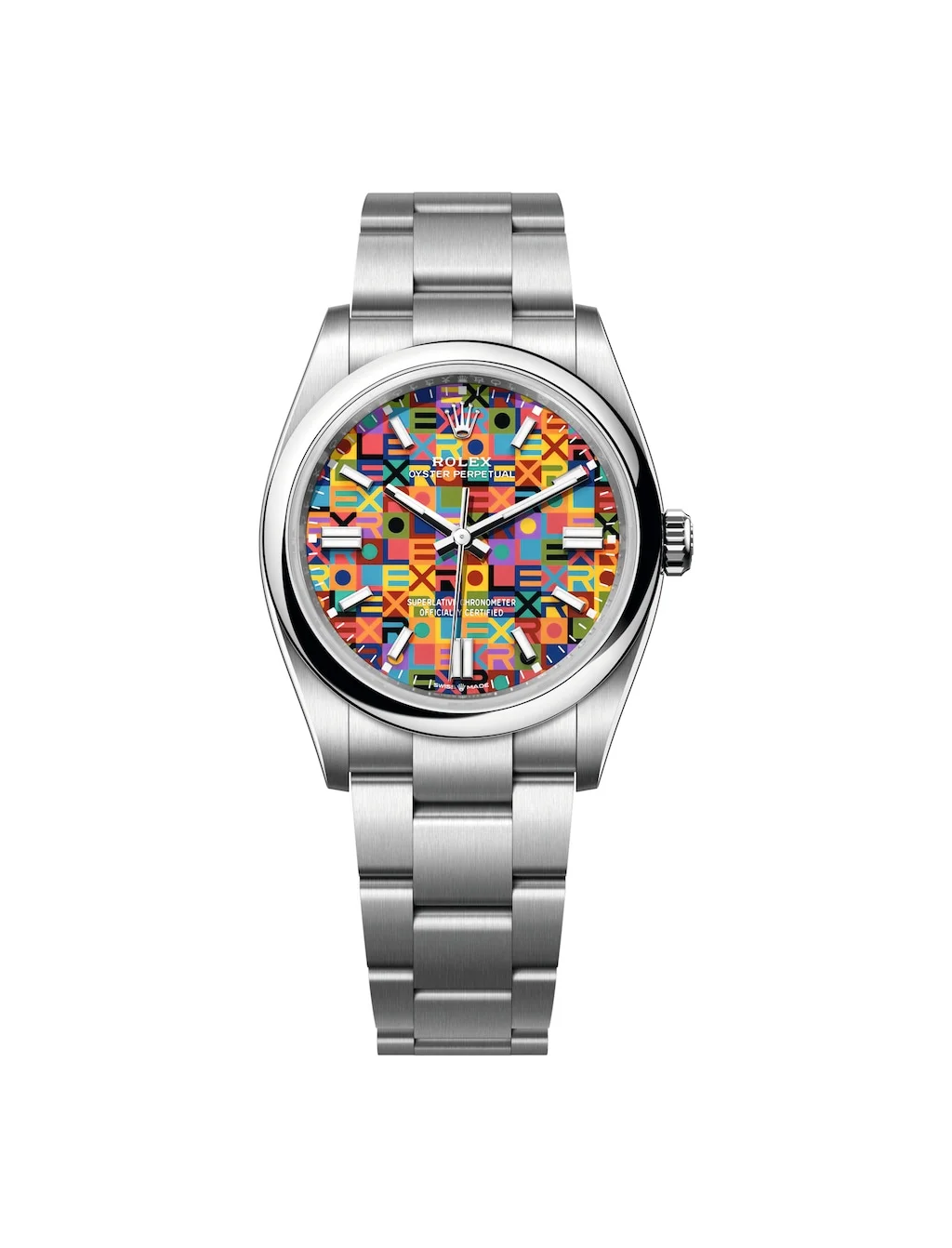
  • Multicolour lacquer dial with a revisited Jubilee motif
  • Rolex lettering repeated across the dial as part of the design
  • A colour palette that feels refined rather than loud
  • Classic 36mm Oyster case retained
  • Automatic movement with Superlative Chronometer certification
  • Oyster bracelet with Oysterclasp

No reinvention of the watch itself—just a shift in how it expresses itself.

Technical Breakdown

Movement (Under the Hood)

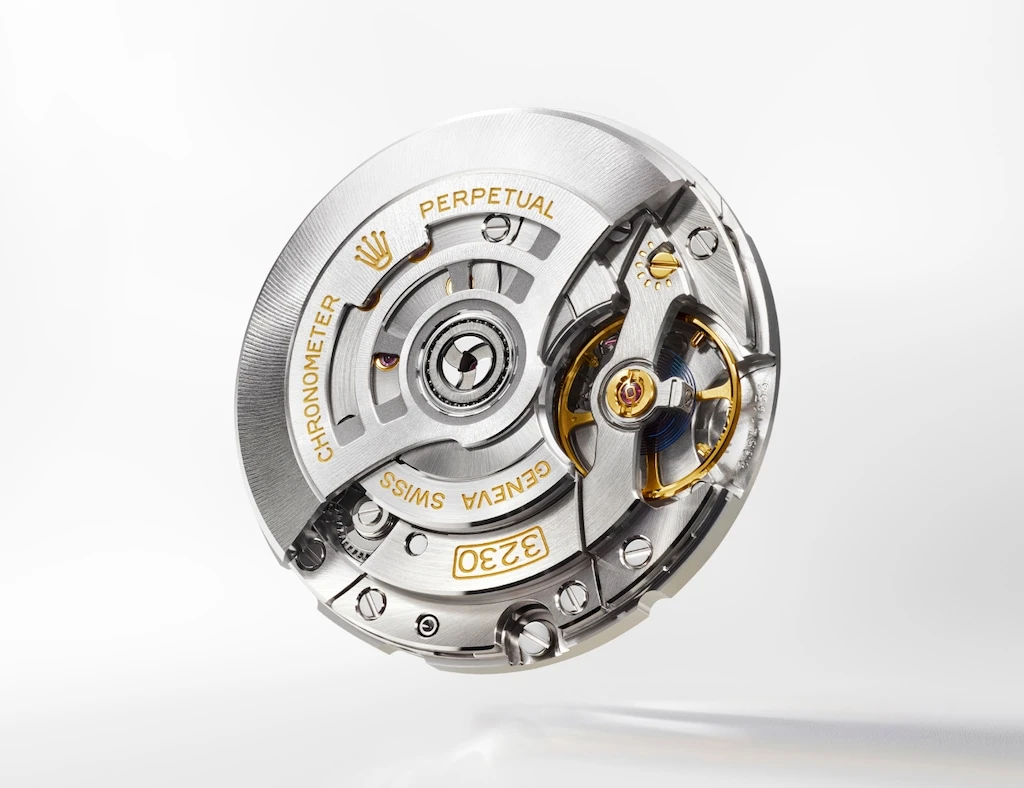
Inside, nothing flashy—just one of Rolex’s most reliable engines.

  • Calibre 3230 (in-house automatic movement)
  • Approx. 70-hour power reserve
  • Chronergy escapement for efficiency
  • Parachrom hairspring for shock and temperature resistance

In real terms:
You can take it off for a couple of days, put it back on, and it just keeps going.

Case & Build

This is where Rolex stays uncompromising.

  • 36mm Oyster case
  • Oystersteel (904L corrosion-resistant steel)
  • Screw-down crown with Twinlock system
  • Monobloc middle case construction
  • Water resistance: 100 metres

This is still a daily watch at heart—built to handle life, not just sit in a box.

Dial Construction (Where It Gets Interesting)

What looks playful is actually highly controlled.

  • Multiple layers of lacquer (built up gradually)
  • Controlled environment during production
  • Finished with varnish and polishing for depth

That colour isn’t applied—it’s built. Slowly, layer by layer.

Bracelet & Wearability

  • Oyster bracelet (three-piece solid links)
  • Oysterclasp with Easylink extension (5mm comfort adjustment)

Small detail, big impact—this is what makes it easy to wear every day.

Legibility & Everyday Use

  • Chromalight display (long-lasting blue lume)
  • Clean, highly legible dial layout

Even with all the colour, it still reads like a proper tool watch.

Certification

  • Superlative Chronometer certification
  • Precision: -2/+2 seconds per day

Rolex doesn’t just test the movement—it tests the finished watch.

Design Breakdown: Why This Works

1. The Colours
They’re not aggressive. They’re controlled, slightly softened, and intentionally balanced.

2. The Jubilee Motif
Less decoration, more structure. It gives the dial rhythm without overwhelming it.

3. The Rolex Lettering
This could have been too much. Instead, it becomes texture—part of the design rather than branding.

Why It Matters

Most watches try to stand out.
Rolex doesn’t need to.

So when it chooses to do something visually different, it’s worth paying attention.

This watch shows that Rolex can experiment—without ever looking like it’s trying too hard.

And that’s rare.

Who It’s For

  • Someone who already owns a classic Rolex
  • Someone ready for a bit of personality—but not chaos
  • Someone who values detail over obvious statements

This isn’t a first Rolex.
It’s a considered one.

EyesOnTime Verdict

This was a bold move—and it pays off.

What could have felt bright, busy, or overdone… doesn’t.

Instead, it comes together as something balanced, controlled, and entirely intentional.

This isn’t Rolex changing direction.
It’s Rolex stretching—just enough to remind you how good it is at staying itself.