Audemars Piguet’s Neo Frame Jumping Hour doesn’t tell time the way you expect—and that’s exactly the point.
With no traditional hands and a display that jumps every hour, it challenges how we read a watch altogether. Inspired by a 1929 design and shaped by Art Deco principles, this release blends heritage with modern engineering, powered by the new Calibre 7122.
But beyond the complication, this is a watch about intent—about doing less, but doing it better. And once you understand it, the question becomes simple: what more do you really need from a watch?
What is the Audemars Piguet Neo Frame Jumping Hour?
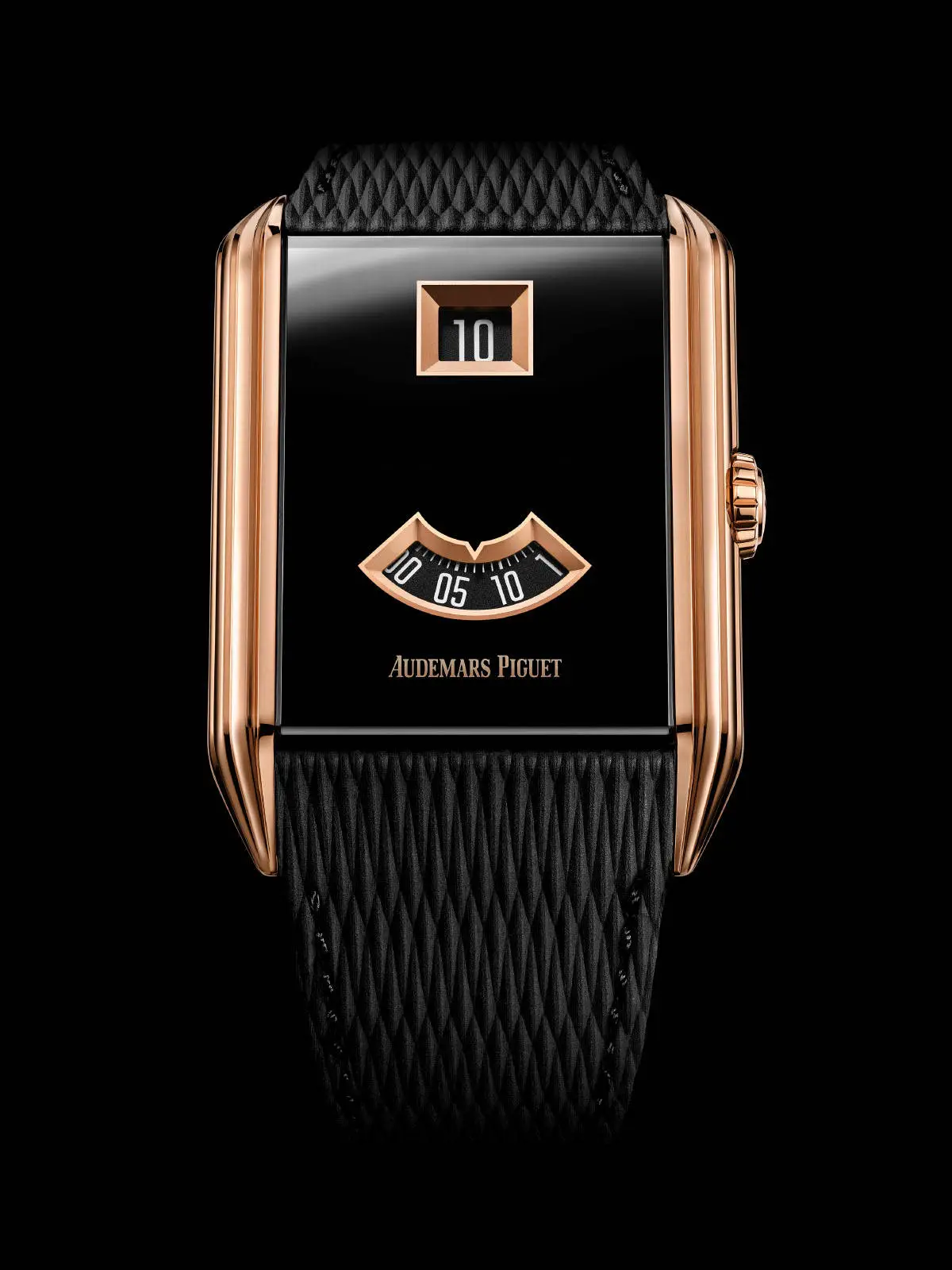
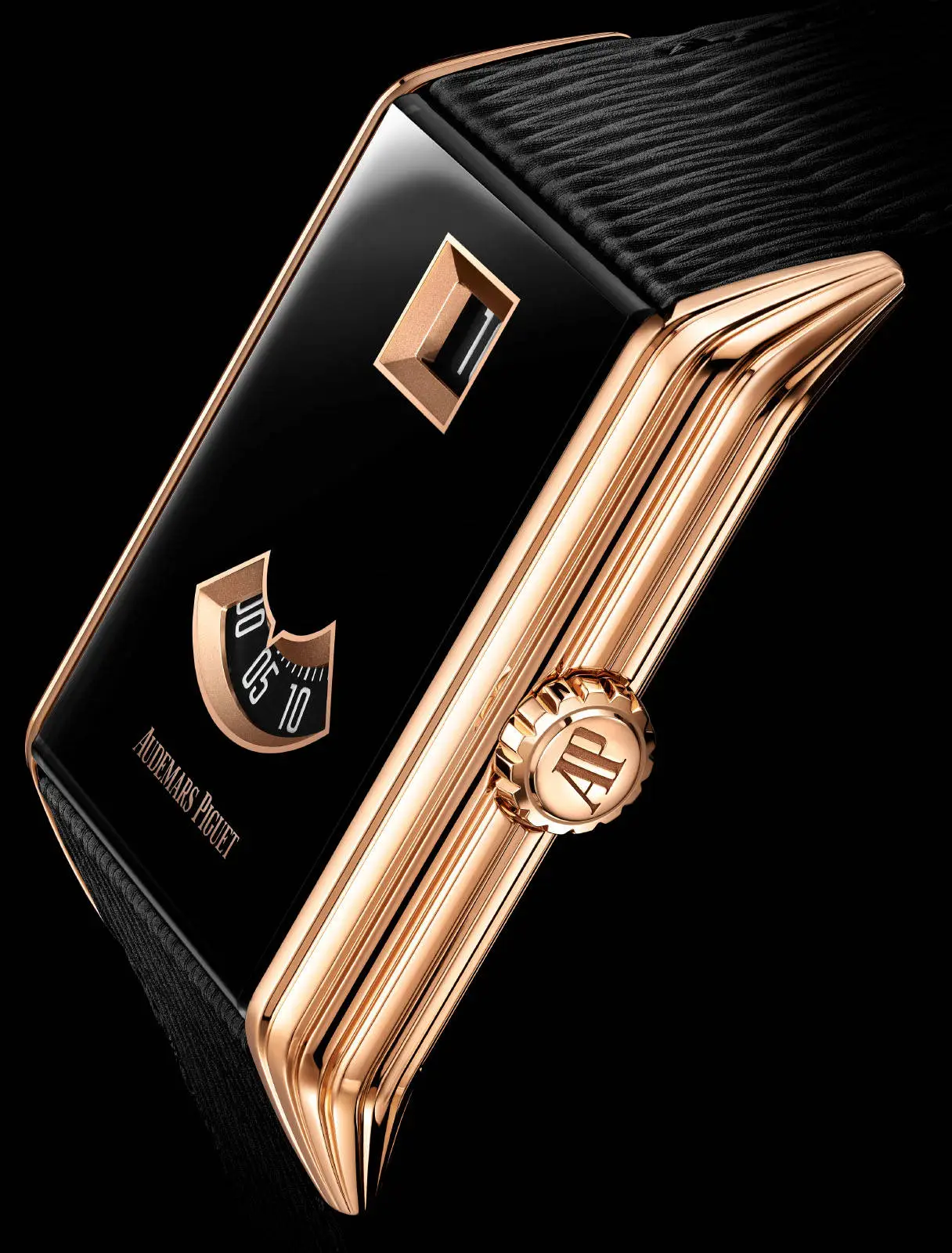
The Audemars Piguet Neo Frame Jumping Hour is a rectangular pink gold timepiece that replaces traditional hands with a digital-style display. The hour appears in an aperture and jumps instantly at the top of each hour, while the minutes are displayed progressively alongside it.
Powered by the in-house Calibre 7122, it represents the brand’s first selfwinding jumping hour movement—combining historical inspiration with contemporary watchmaking.

A Watch That Changes How You Read Time
This isn’t a watch you glance at. It’s one you interpret.
Instead of hands sweeping across a dial, time is revealed through two apertures. The hour disc snaps forward precisely every 60 minutes, while the minutes glide continuously. The result is a display that feels both mechanical and unexpectedly modern.
It slows you down, forcing a second look—and in doing so, makes time feel more deliberate.
How Does a Jumping Hour Watch Work?
A jumping hour watch displays time using rotating discs instead of traditional hands. The hour disc advances instantaneously at the top of each hour, while the minute disc moves in a continuous, progressive motion.
This system improves legibility and creates a distinctive digital-like display, while remaining entirely mechanical in execution.
Calibre 7122: A First for Audemars Piguet
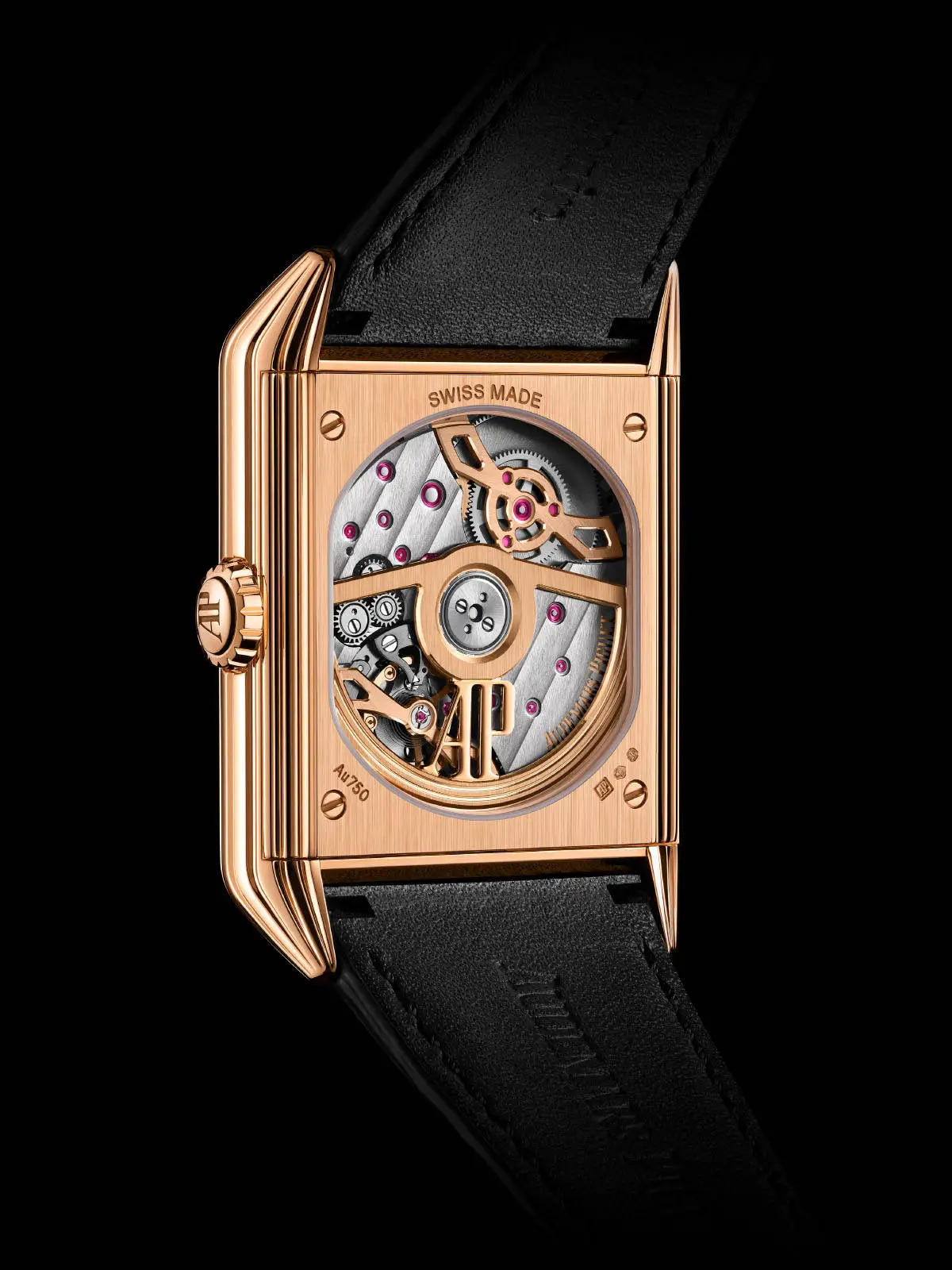
At the heart of the Neo Frame is Calibre 7122—Audemars Piguet’s first automatic jumping hour movement.
Developed entirely in-house, it combines precision with practicality:
- Instantaneous jumping hour mechanism
- 52-hour power reserve
- Shock-resistant system to prevent misalignment
- Titanium hour disc for durability
Visible through the sapphire caseback, the movement is finished with traditional Haute Horlogerie techniques, reinforcing that this watch is as serious mechanically as it is visually.
Inspired by 1929, Designed for Today
The Neo Frame draws from a 1929 Audemars Piguet timepiece (pre-model 1271), reinterpreted through the lens of modern craftsmanship.
Its design language is rooted in the Streamline Moderne movement—a late branch of Art Deco characterised by aerodynamic forms, curved lines, and architectural precision.
This influence is visible throughout:
- Vertical gadroons running along the case
- A rectangular pink gold profile with sculpted lugs
- A minimalist sapphire dial with two apertures
The result is a watch that feels less like an object, and more like a piece of design.
A Case Study in Restraint
What makes the Neo Frame compelling isn’t complexity—it’s clarity.
There are no extra elements competing for attention. No unnecessary layers. Just a refined display, a strong design identity, and a complication that serves a purpose.
Even the sapphire dial construction required a new approach to ensure durability and water resistance without compromising the open aesthetic.
This is watchmaking distilled.

Key Specifications
- Case: 18k pink gold, rectangular
- Size: 34.6 mm × 34 mm
- Thickness: 8.8 mm
- Movement: Calibre 7122 (selfwinding)
- Power Reserve: 52 hours
- Display: Jumping hour with trailing minutes
- Water Resistance: 20 metres
- Strap: Black calfskin leather
Why This Watch Matters
The Neo Frame Jumping Hour stands out not because it tries to do more—but because it chooses to do things differently.
It brings back a rare complication, pairs it with a strong design philosophy, and delivers it in a way that feels relevant today.
In a market that often leans on familiarity, this is a reminder that originality still matters.
Final Thoughts
Audemars Piguet hasn’t just revisited a complication—it has redefined how it fits into modern watchmaking.
The Neo Frame Jumping Hour is thoughtful, deliberate, and quietly confident. It doesn’t demand attention. It earns it.
And once you understand it, the question lingers:
What more do you need from a watch?