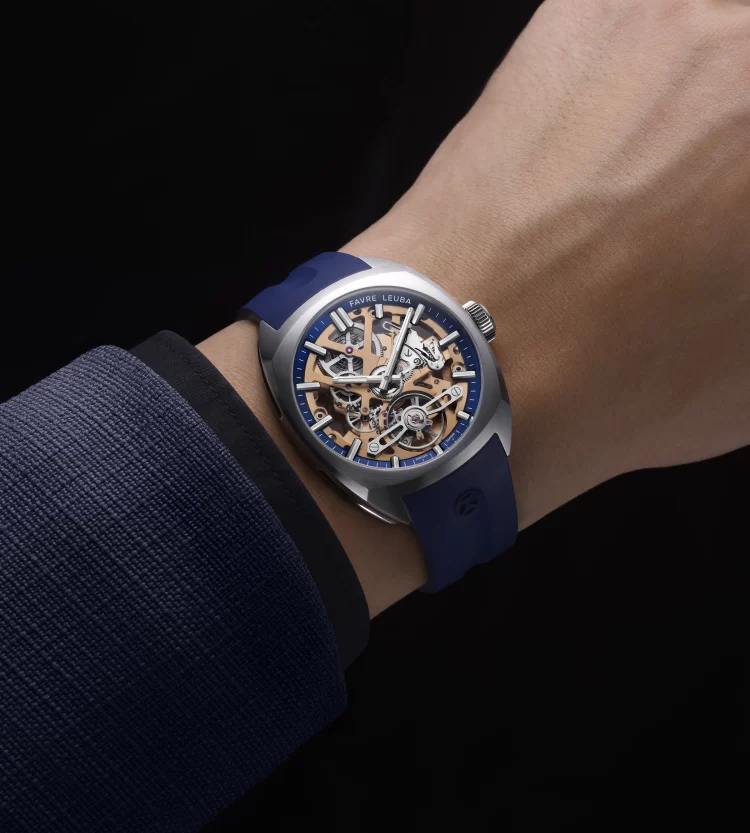
For the first time in its 288-year history, Favre Leuba introduces a fully skeletonized timepiece: the Chief Skeleton.
Thank you for reading this post, don't forget to subscribe!This striking model showcases the brand’s signature cushion-shaped case and a meticulously open worked manufacture movement, developed in collaboration with AMT.
Building on the momentum of the brand’s first-ever tourbillon – the Chief Tourbillon – presented earlier this year, the Chief Skeleton marks another major step in Favre Leuba’s ongoing journey.
The Chief Skeleton is offered in two variations: a gold-finished movement paired with a brushed and polished case, and an anthracite-finished movement housed in a DLC-coated black steel case.
“2025 is about maintaining the momentum and continuing to build on Favre Leuba’s pioneering legacy,” says Patrik Hoffmann, Chairman of Favre Leuba. “We introduce some of the most technically intricate and visually striking timepieces in our history. After our first-ever tourbillon presented earlier this year, we show a natural progression today with the Chief Skeleton, our first skeletonized model, inspired by the original Chief case design of the 1970s. These creations honor our heritage while marking significant milestones in our long history as one of the oldest watchmakers.”
A Modern Take on the Classic Skeleton
The Chief Skeleton retains the iconic cushion-shaped case of the Chief Collection, now given a presence all its own with the fully skeletonized movement it houses. Every component and aspect – bridge, gear, and aperture – is precisely crafted to ensure both architectural balance and visual elegance.
With its combination of brushed and polished finishes, the 40mm case creates a dynamic play of light, shadow, and texture. This mesmerizing effect is further enhanced by the curved sapphire crystal, where the anti-reflective coating improves visibility, providing a clear view of the openworked movement from every angle.
Revealing Favre Leuba’s First Skeleton Movement
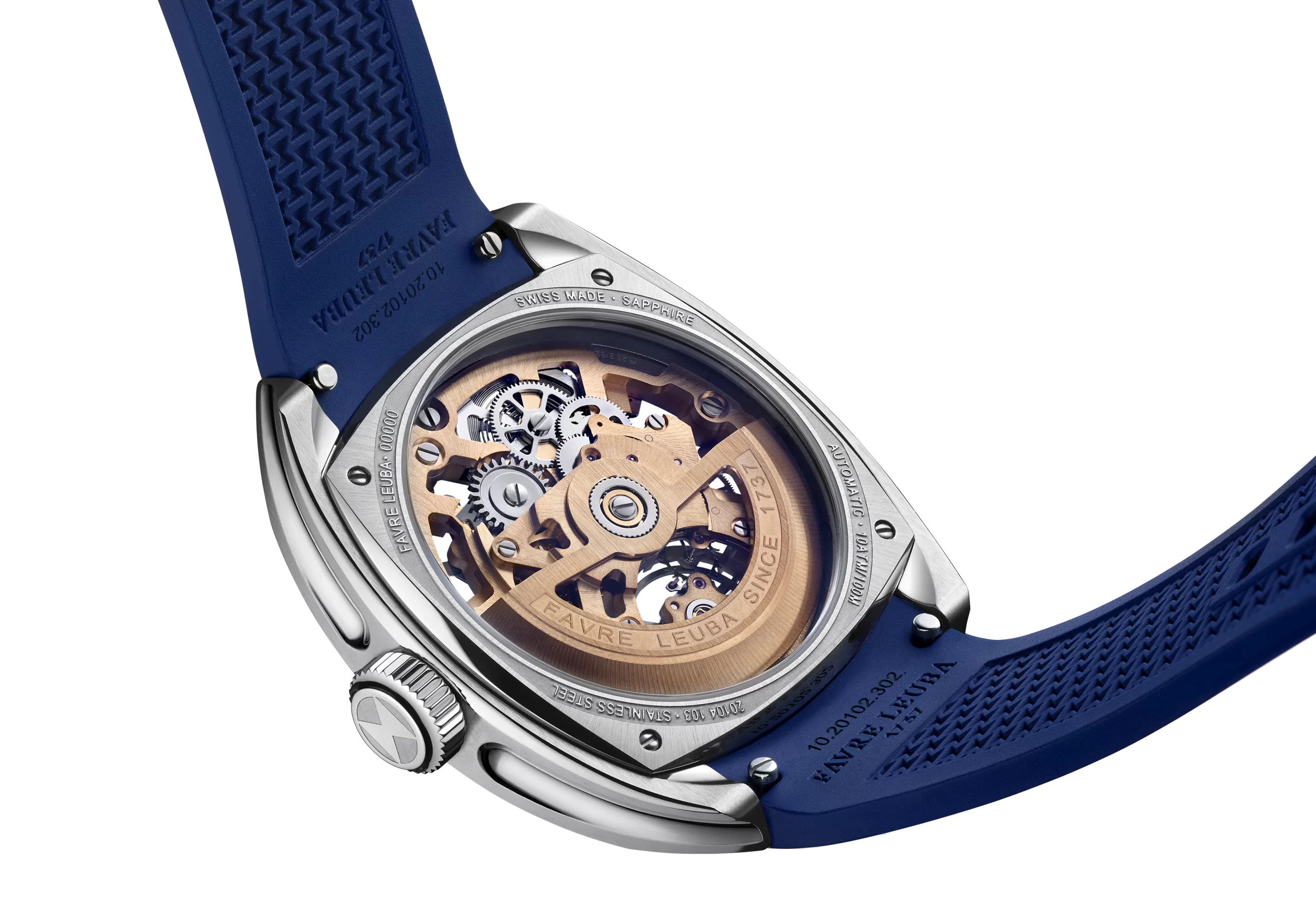
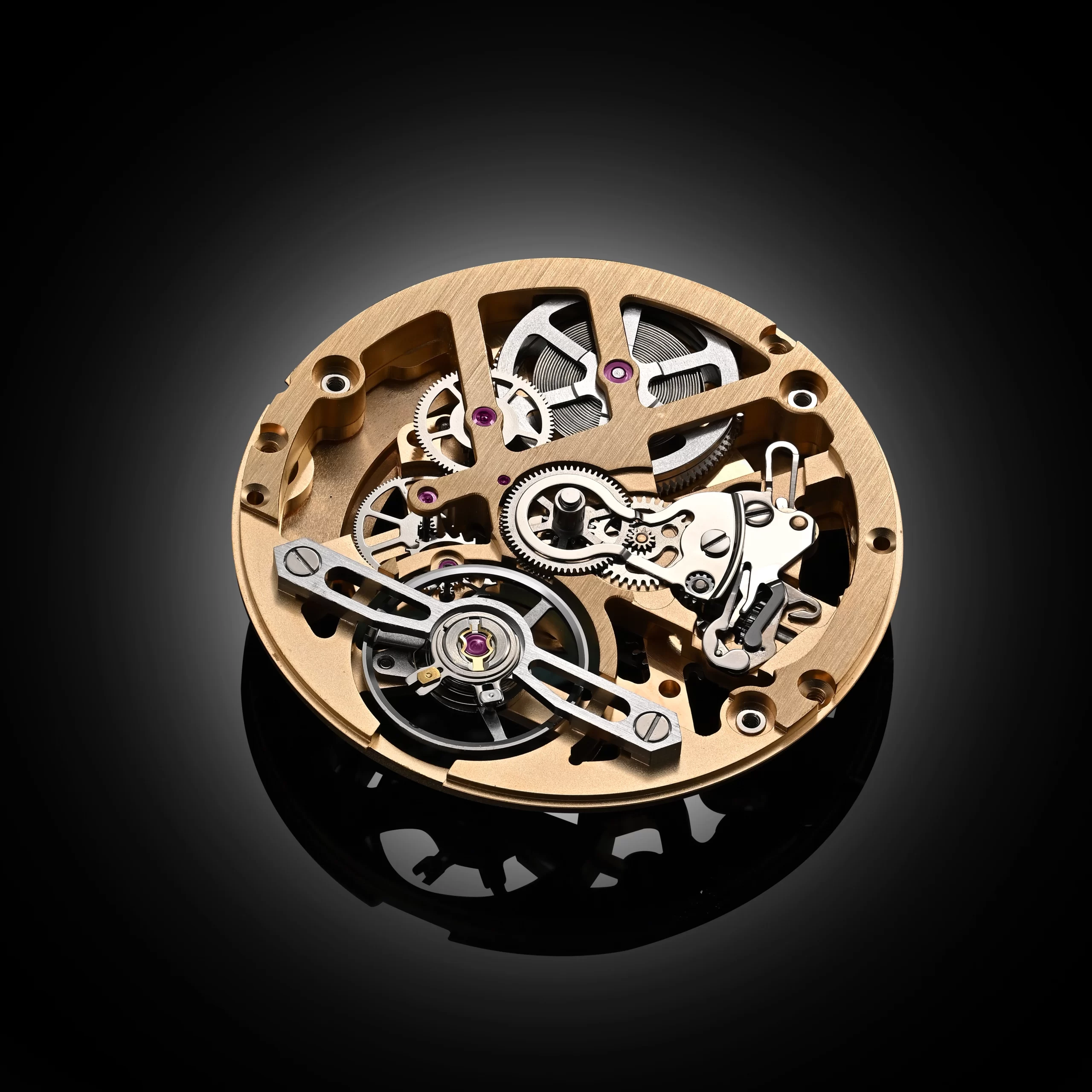
The custom-designed skeleton movement—finished in gold or anthracite—juxtaposes different textures, each contributing a distinct visual element. Snailing, a technique where a rotating tool creates a spiral pattern, adds a refined circular texture that enhances the movement’s depth and elegance. This intricate finish, along with satin and sandblasted surfaces, creates a dramatic visual display, drawing the eye to explore the openworked movement.
The multi-layered movement architecture includes a semi-exposed mainspring barrel at 12 o’clock and a balance wheel at 6 o’clock. The balance wheel bridge, with its horizontal brushing, is an exclusive Favre Leuba design that underscores the brand’s commitment to exceptional craftsmanship.
Operating at a frequency of 28,800 vibrations per hour, the movement provides a 41-hour power reserve. The skeletonized rotor features a satin finish and an engraved Favre Leuba wordmark. In the anthracite version, the rotor is coated with a matching black chrome (DLC) finish, creating a seamless visual connection with the case.
The open worked design not only reduces weight but also enhances the visibility of the movement, emphasizing the transparency of the watch’s mechanics.
Variants and Versatility
The Chief Skeleton is available in two configurations:
- Steel case with gold-finished movement – featuring either a green, blue, or black minute track, matched with a corresponding FKM rubber strap.
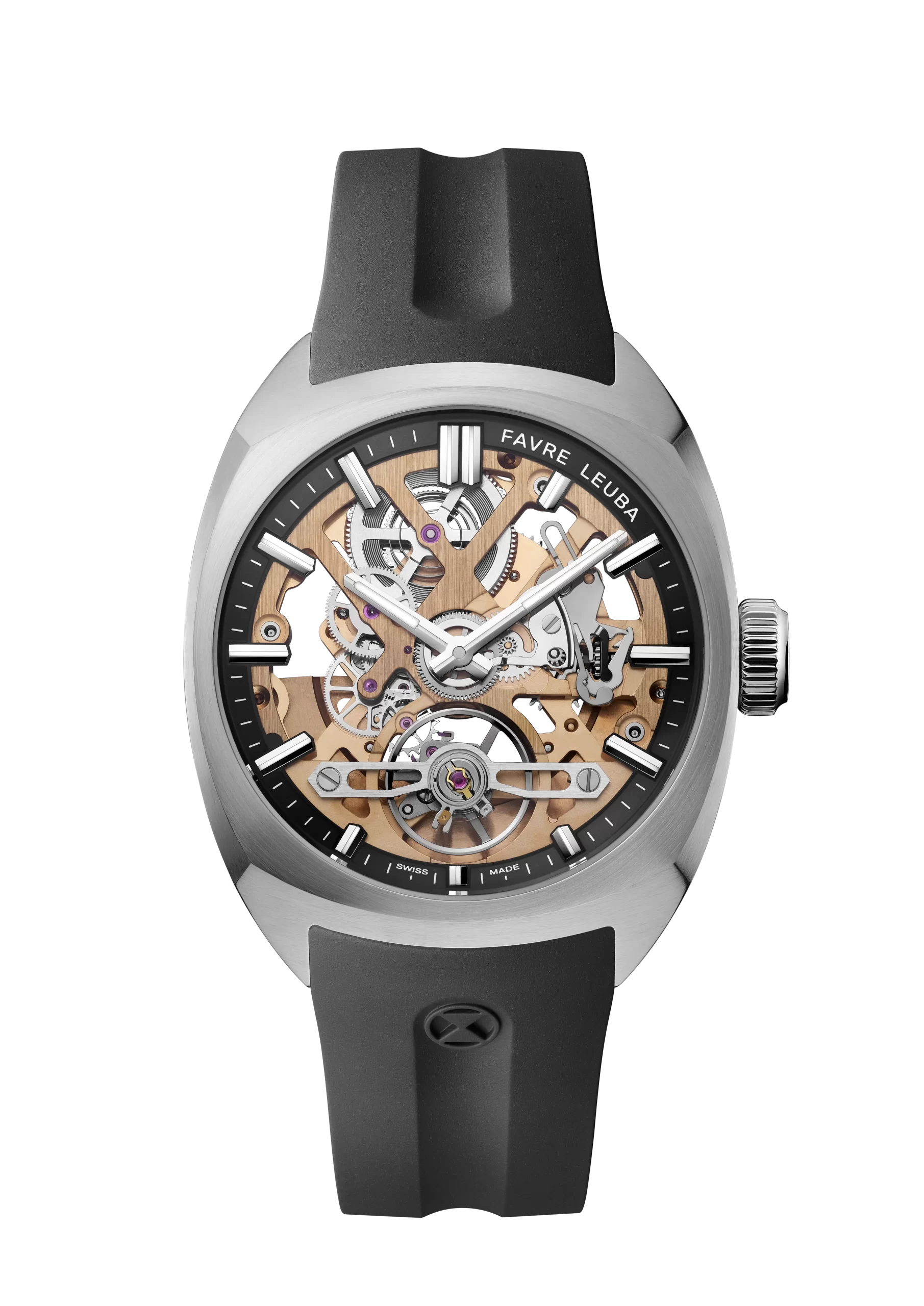
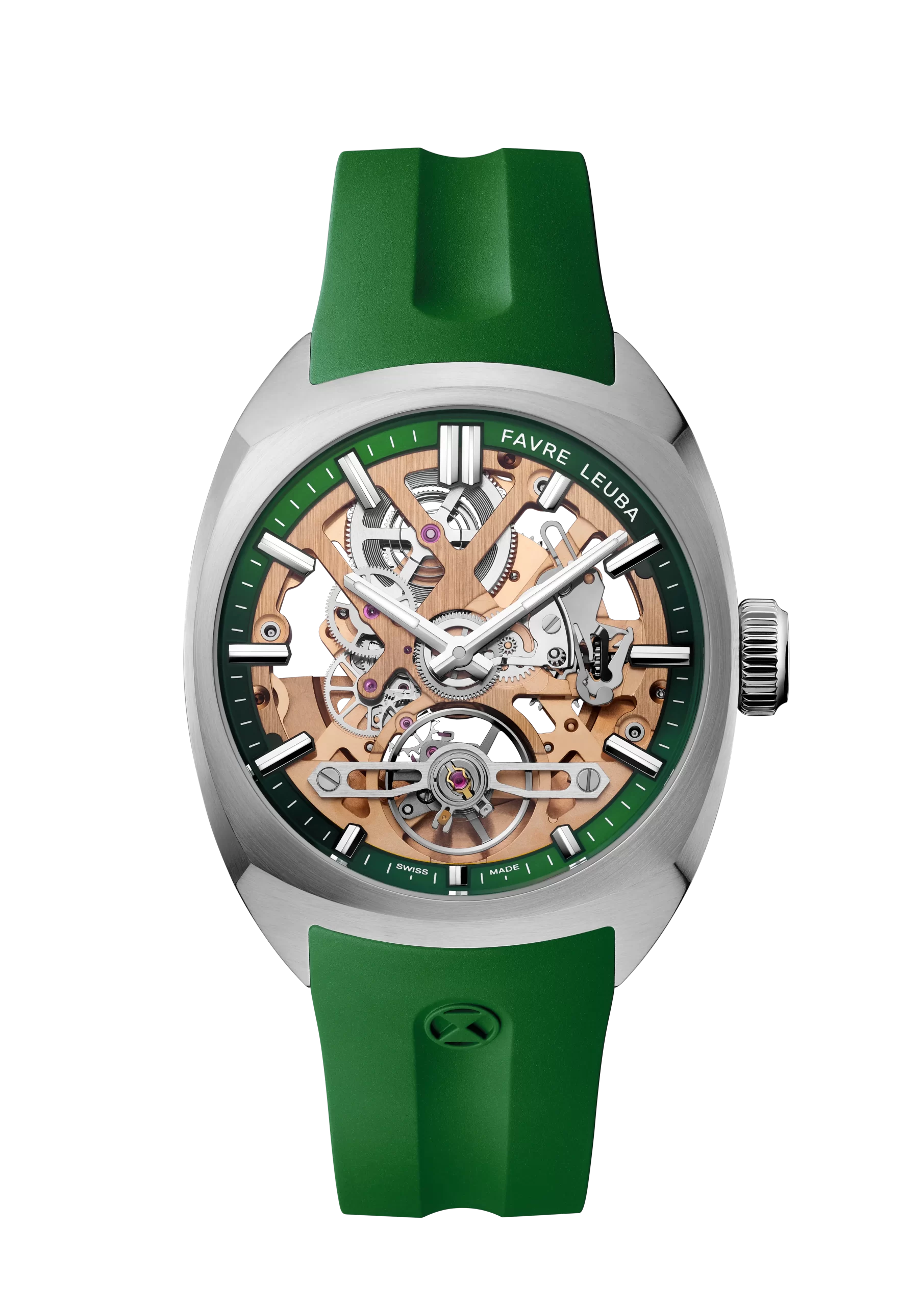
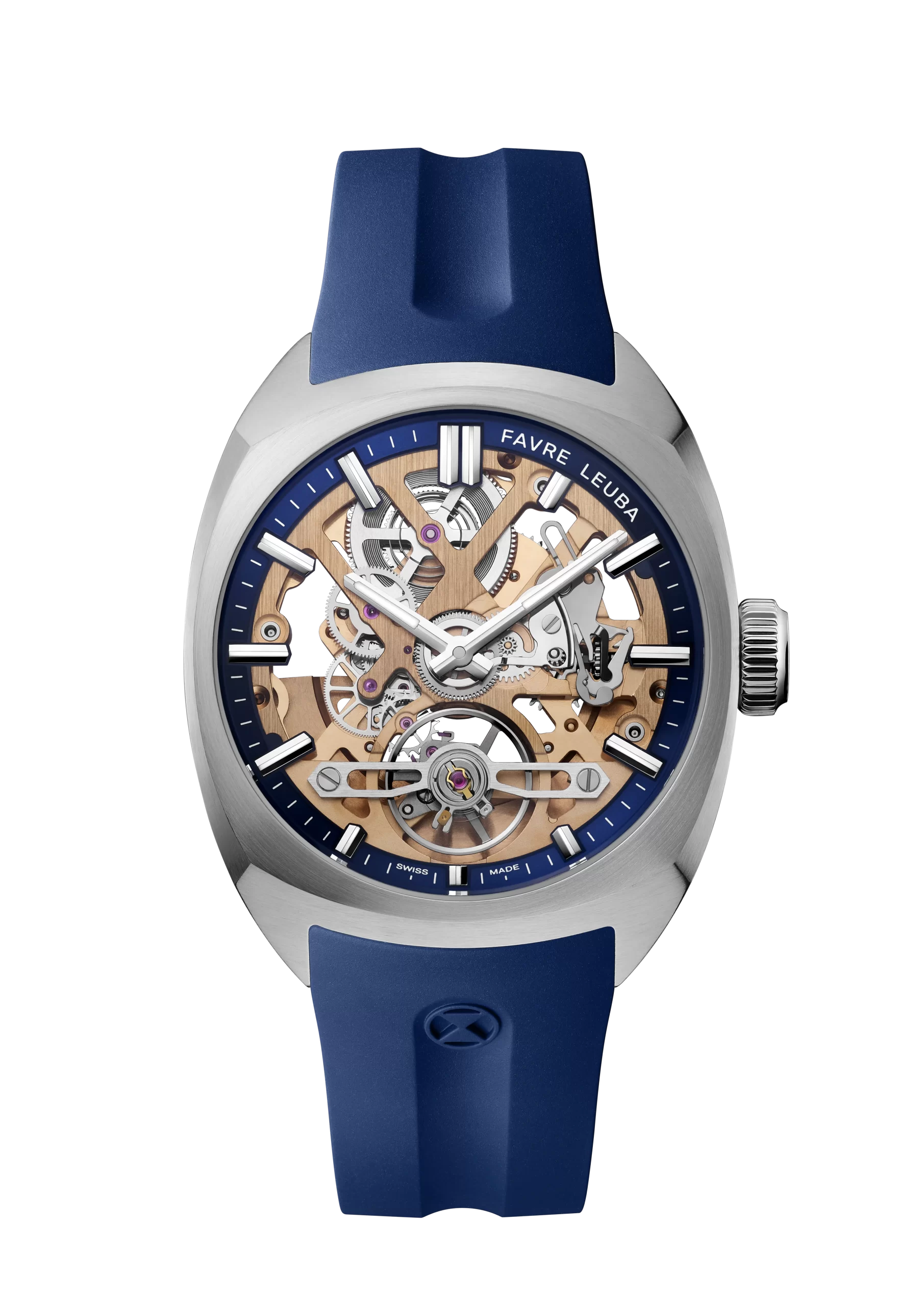
- Black DLC case with anthracite-finished movement – featuring either a green, blue, black, or ice blue minute track, matched with a corresponding FKM rubber strap.
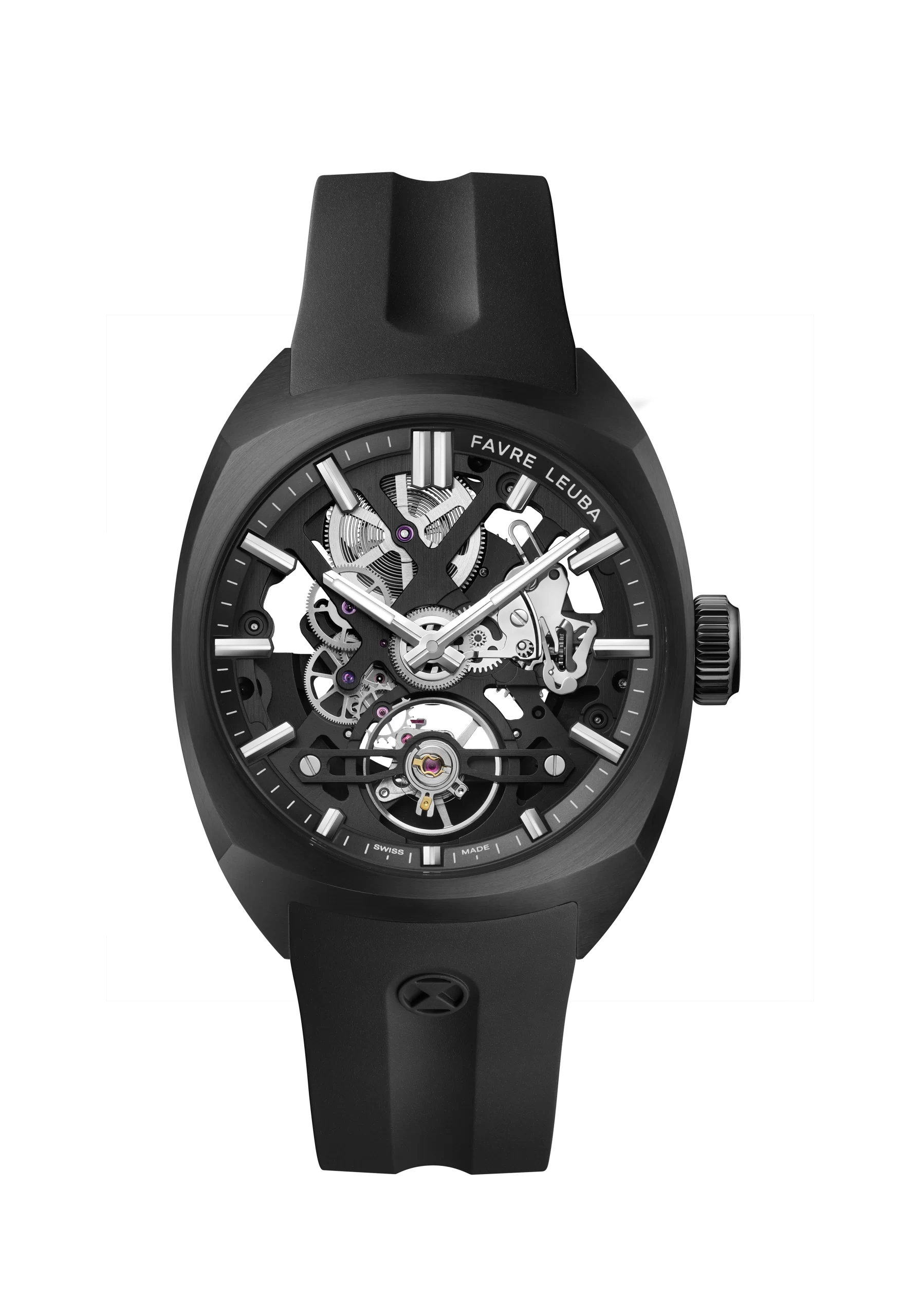
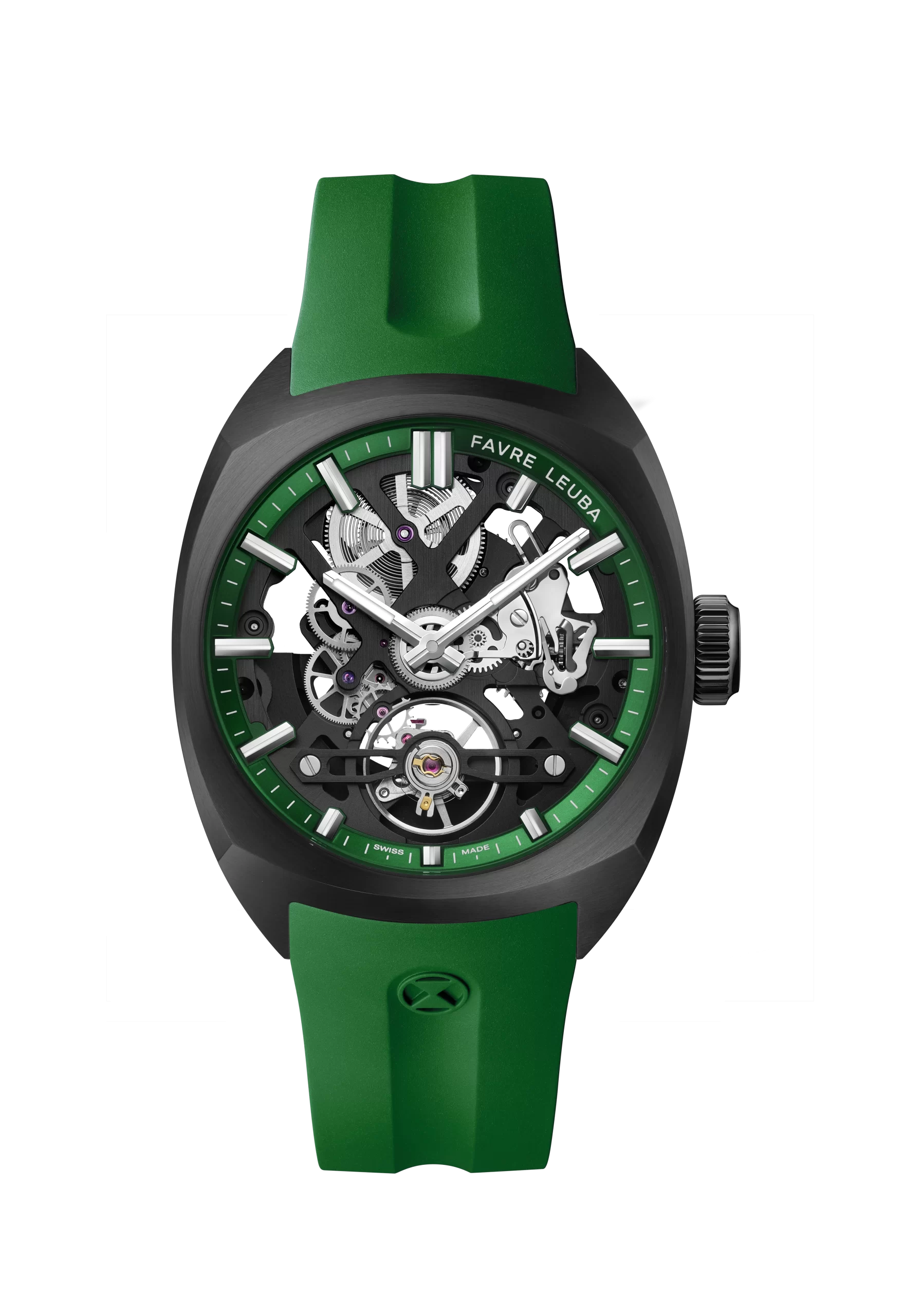
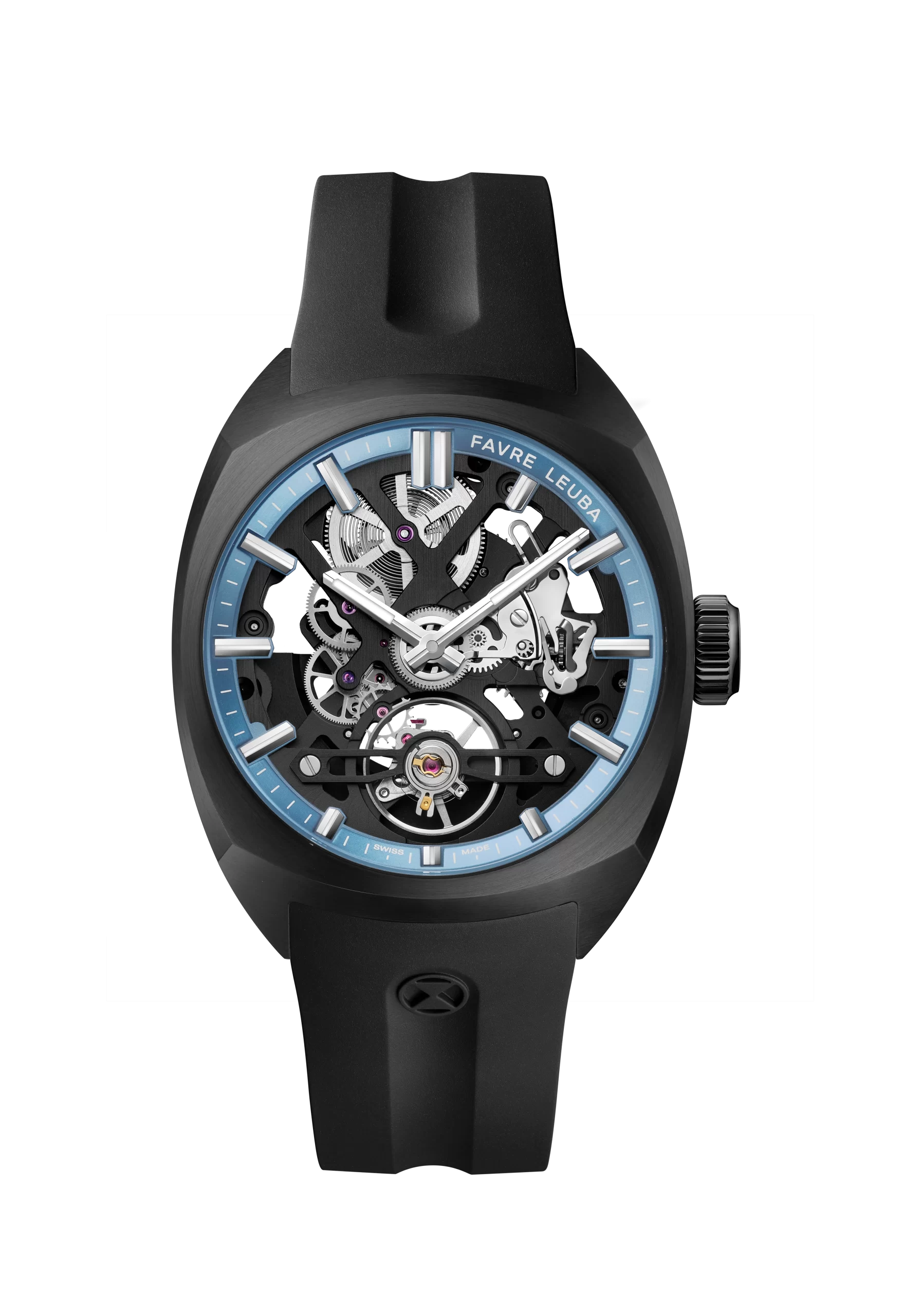
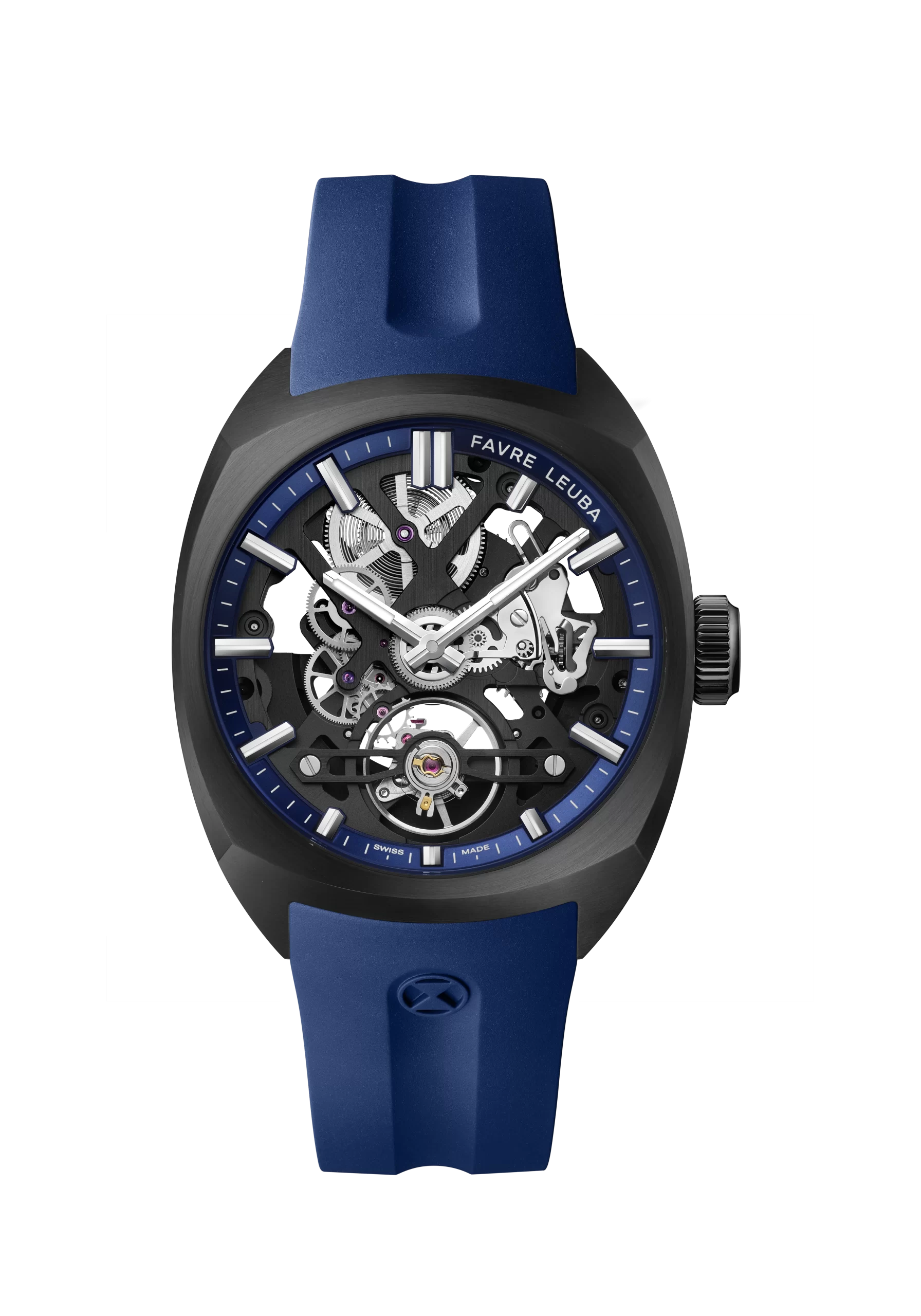
An integrated quick-change mechanism ensures effortless transitions between strap and bracelet, enhancing the watch’s versatility and adaptability to any occasion.
With the Chief Skeleton, Favre Leuba redefines the art of skeletonization, presenting a timepiece that seamlessly merges bold design with masterful craftsmanship. This launch marks a defining moment in the brand’s rich history, taking a bold step forward in its commitment to horological excellence.